Recently, I visited the CoSA – Center of Science Activities – museum in Graz, and it honestly surprised me in a very good way. I’ve been to a lot of museums before, mostly the kind where you walk through quiet rooms, read wall texts, and carefully don’t touch anything. Here CoSA felt completely different, but was also designed to be very different from a regular museum visit. It was playful, interactive, and at the same time still dealt with serious and important topics. That combination made the whole experience feel much more accessible and memorable for me and inspired me to now write about it. What stood out immediately was how much the museum invites you to participate and interact. That is what I lives of. Almost everything is interactive. You are encouraged to touch things, try them out and make decisions. Instead of just consuming information, you become part of the exhibition. It felt less like “learning facts” and more like discovering things through the experience you get while walking thought the exhibition itself. I noticed that this made it much easier to stay focused and curious while moving through the space.
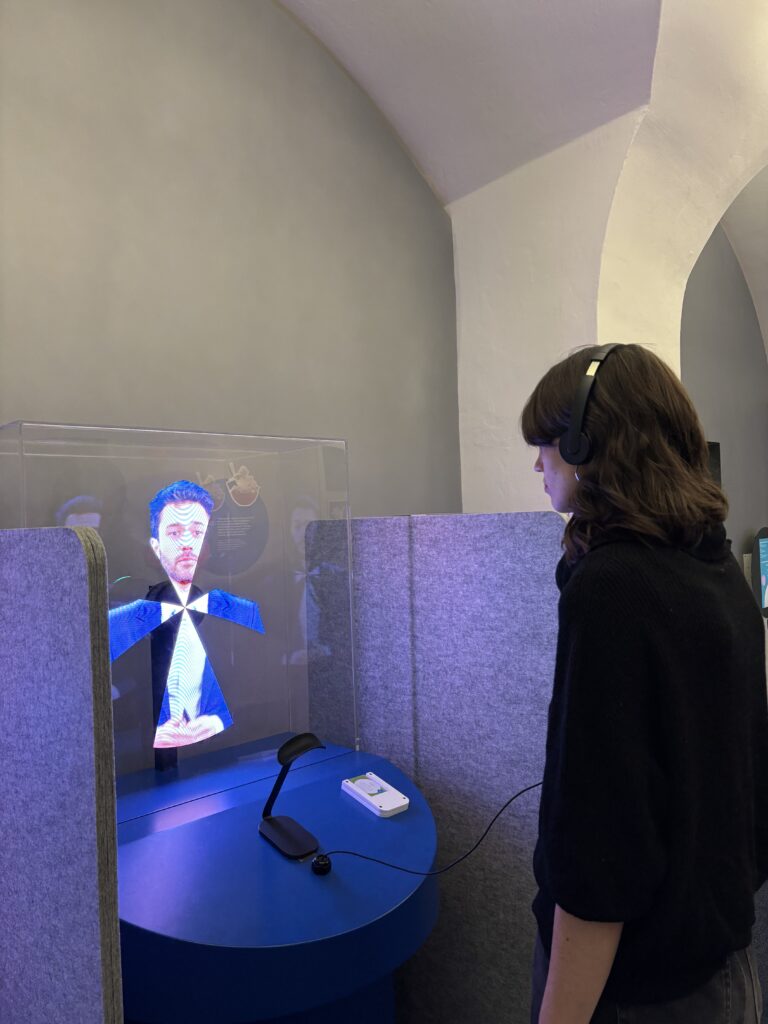
One part of the exhibition that really stuck with me and was a fun way to interact, was a system where you could collect points. Depending on how you interacted with certain stations, you would gain or lose points. What I found interesting was not the points themselves, but how differently people reacted to them. Some visitors were immediately motivated by the system. They tried to maximize their score, compared results, and took the tasks very seriously. Others didn’t care at all. They ignored the points, focused on the content, or even found the system a bit annoying. Seeing this made me think about motivation in general. The same mechanic can feel exciting to one person and completely meaningless to another. That’s something we often forget when designing exhibitions or interactive spaces.
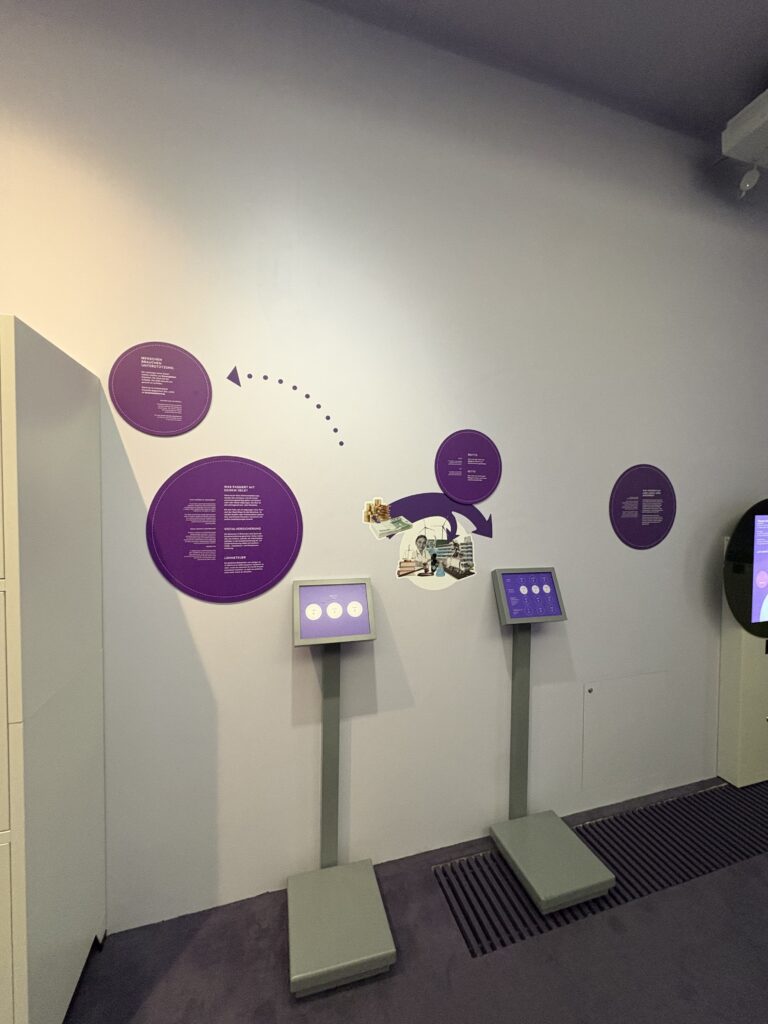
Whithin this museum I also realised what made it different then most other experiences. The space almost encourages you to behave more like a child again: to be curious, playful, and less afraid of doing something wrong. CoSA creates an environment where interaction feels allowed and even expected, which lowers that barrier a lot. Another thing I really appreciated was that the museum was simply fun to go through. It didn’t feel like a task or something I had to concentrate really hard on. Instead, I was able to walk through the exhibition easily, guided by my personal interest in ceratin topics or things rather than obligation. And still, important topics were communicated in a clear and understandable way. That balance between fun and content is something that’s actually very hard to achieve. This also made me think a lot about the exhibition we are planning for January, where works from the past year will be shown. Designing an exhibition like that is a challenge in itself: different topics, different formats, different levels of interaction. CoSA showed me that there is no single “right” way to design an exhibition space. Museums can be playful, interactive, and still meaningful in their own ways.