Continuing from the last blogposts, where I talked about what got me interested in open source as a master’s thesis topic: homelabbing. In this post, I want to talk about an intrinsic motivation, that kept me moving towards this.
Voluntary work is part of my day to day life. Since 2014, I have been part of the scouts, first as a child now as a guide. Once a week I run meet-ups for children form 7 to 10 years old, where we go out into the forest, play and teach them to be come a valuable part of society. Doing work like this takes much more time, than one would think, there is planning those 2 hour sessions, preparing before the kids come and cleaning up after they leave. There are weekend camps and a big summer camp to organise, the groups home needs to be tidy and there even is a course a scout leader must take, learning about communication and pedagogy. I give a huge part of my free time to the scout movement, and all for no pay.
In addition to big voluntary movements like the scouts, there are small communities like the “UX Graz” Community, which organise a meet up for people interested in UX design, every third Tuesday of the month. Everything is organised and run by volunteers. Every meet up is held at a different company, which provides the location, food and drinks, and there are two parts in every meet up, first there are some talks and second networking. For people attending it is completely free. Free food, free drinks, free knowledge transfer and free new contacts. (I have recently joined the organising team swell, so this is my second voluntary work.)
In my mind, there are a lot of parallels between voluntary work and open source. A small amount of people does work or creates something, that benefits a lot of others. And the work these people do is often overlooked. They act in the background often earning nothing more than respect and thanks from others. Especially in these times, it is hard t have a job, that doesn’t pay you money, next to your regular day job. Due to different reasons most people cant’t afford to work for free, still there are a bunch of people who do.
I hope to find a reason for people to work for free. In my opinion voluntary work provides a lot to society. Although sometimes I feel like the work volunteers do is under appreciated, especially youth organisations. Although to be fair, open source doesn’t mean free and open source projects aren’t always maintained by volunteers who aren’t getting paid. What drives people to give away their product for free? How can the value of voluntary work be communicated? Looking into the psychological and social aspect of people doing work just for the benefit of others, is something I would want to get into more.
In the last blogposts I have established, that public spaces offer a great opportunity for design to combat loneliness. Concepts like Third Places provide and ideal starting point for designers to tackle the loneliness issue ans shape social networks. Based on my current research I would say that designing against loneliness means designing for connection. But what is important when designing public spaces with the purpose of community building in mind? How do we design spaces to nurture connection? In the following I will take a closer look at design principles, guidelines and important aspects for spaces, installations and interactions and maybe even seemingly counterintuitive design approaches addressing the problem.
DESIGNING PLACES Designing places to combat loneliness and foster connection requires thoughtful consideration of how we interact with our environment. Accessibility is the foundation, ensuring that spaces are inclusive, safe, and easy to navigate for everyone, such as parks, libraries, or pocket spaces (a micro space serving a function different to the room or area it’s located in) seamlessly integrated into neighborhoods. Creating spaces that feel welcoming also starts with comfort – designing environments that invite people to stay. Incorporating nature boosts mental health and also fosters sociability. Adding elements of activation, like strategically placed seating, amenities, and refreshments, brings energy and encourages interaction. It’s also important to offer choice and flexibility. People have different needs – sometimes we crave stimulation, and other times we just want a quiet spot to rest. Spaces that adapt to these preferences are more likely to feel inclusive. Designing at a human scale (the proportion of space in relation to human dimension, eg. not making spaces too large or small) adds to this sense of comfort that naturally invite connection. A strong sense of place is equally essential. Spaces that reflect local culture and shared values signal belonging and create identity. Purposeful programming (placemaking), or giving a space a specific focus – like catering to a particular group with shared needs or interests – can lower barriers to connection. For example, a park designed with community gardening in mind brings people together over a shared activity, making it easier to strike up conversations and build connections [1,2,4]. The project “the loneliness lab” uses a metaphor to define the essential elements of place making. The physical environment is considered the „hardware“ (buildings, parks), the programming of these spaces is the „software“ (activities, events, services) and the policies and standards that bring people together and prevent loneliness are the „code“ [3]. Thoughtful integration of technology can also enhance these spaces, make them more accessible and extend the sense of community beyond the physical world. But technology should always support the space, not take over, and it needs to be used carefully so it doesn’t get in the way of the real human connections these spaces are meant to create. [2]
In practice this means understanding the unique needs of a community. Conducting a needs assessment helps identify gaps in existing spaces and uncovers the types of activities people value most. Collaboration is equally vital – partnering with local businesses, organizations, and community groups builds a support network that strengthens the foundation of these spaces. Securing funding through grants, sponsorships, and partnerships ensures their creation and long-term sustainability [2]. Third places are more than just physical spaces, they play a crucial role in reducing social isolation by encouraging meaningful connections and interactions. They also act as places for civic engagement, giving people opportunities to participate in and contribute to their communities. Beyond this, third places support well-being by providing spaces where people can relax, connect with others, and share experiences. They promote a sense of belonging, strengthen social bonds, and cultivate vibrant, inclusive communities [2].
SUCCESSFUL EXAMPLES “Gathering place” in Tulsa is a concept of a park that offers a diverse amount of activities from learning and education to events and culinary experiences: „Gathering Place aims to serve as a cornerstone for our vibrant community while improving social, economic, and environmental sustainability in Tulsa.“ https://www.gatheringplace.org/
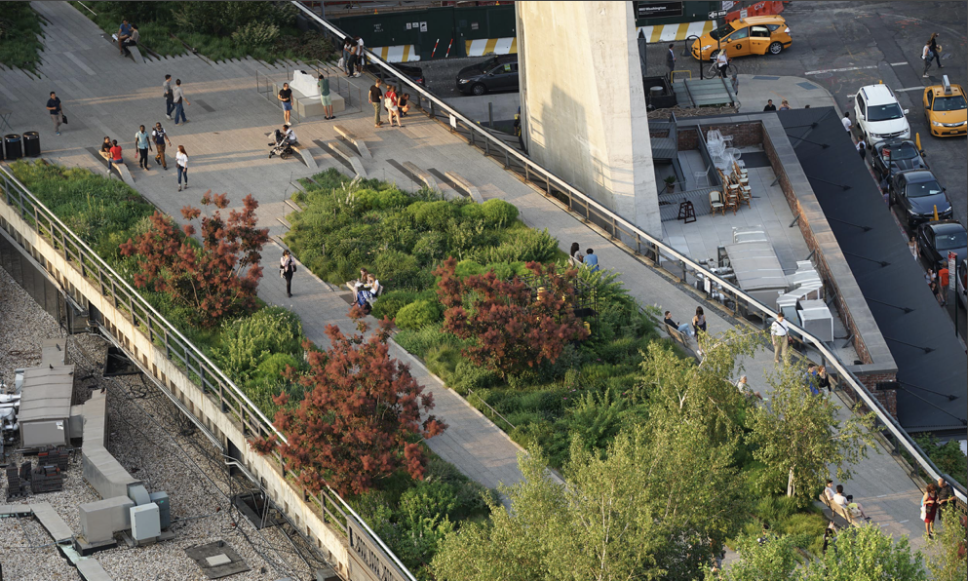
“The High Line” in New York used to be an old elevated abandoned railroad track and was transformed into a park and community space in the middle of the city. Ideas for dEsigns were created through contests by anyone who wanted to participate and much of it is therefore created by public participation. Most of it is supported by funding and it offers many activities from food, art, performance and nature: „The High Line is both a nonprofit organization and a public park on the West Side of Manhattan. Through our work with communities on and off the High Line, we’re devoted to reimagining the role public spaces have in creating connected, healthy neighborhoods and cities.“ https://www.thehighline.org/
The implications for interaction design projects could be developing design guidelines, such as workshops or a framework, to guide the creation of third spaces for urban planners, architects, community leaders or involved citizens. Another approach could be to create a platform that fosters the development of communities dedicated to designing third places tailored to their needs, thereby encouraging active citizen participation in urban planning.
Sources
HKS Architects, “Healing Loneliness: Six Ways to design for Social Connection and Community | HKS Architects,” HKS Architects, Jun. 24, 2024. https://www.hksinc.com/our-news/articles/healing-loneliness-six-ways-to-design-for-social-connection-and-community/
M. Abdelhamid, “Third place theory: creating community spaces,” Urban Design lab, Oct. 20, 2024. https://urbandesignlab.in/third-place-theory-creating-community-spaces/
“Knowledge on Loneliness — The Loneliness Lab | Loneliness in urban spaces,” The Loneliness Lab, Dec. 29, 2020. https://www.lonelinesslab.org/knowledge-hub
“Eleven Principles for Creating Great Community Places.” https://www.pps.org/article/11steps
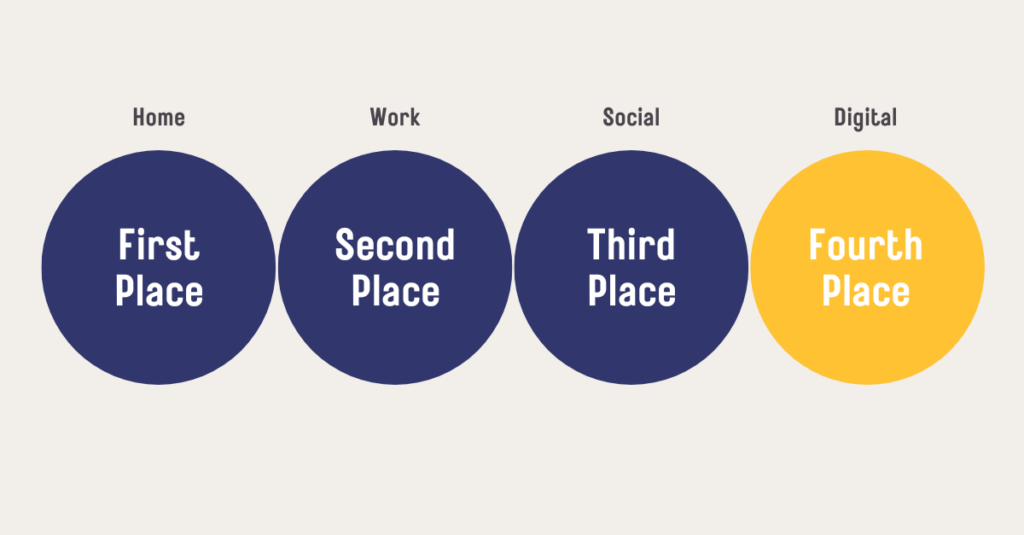
After discussing the concept of third places (informal gathering spots like cafes, libraries, and parks) I would now like to shine light on a relatively new idea that has emerged in the recent years: fourth spaces. While third places serve as a “home away from home,” fourth spaces are (depending on the definition) a response to the increasing blurring of physical and digital boundaries in our lives. They go beyond the physicality of third places, incorporating hybrid, inclusive, and adaptive elements to address the evolving ways people connect and build community today. But what exactly are fourth spaces, and how can they shape a sense of belonging?
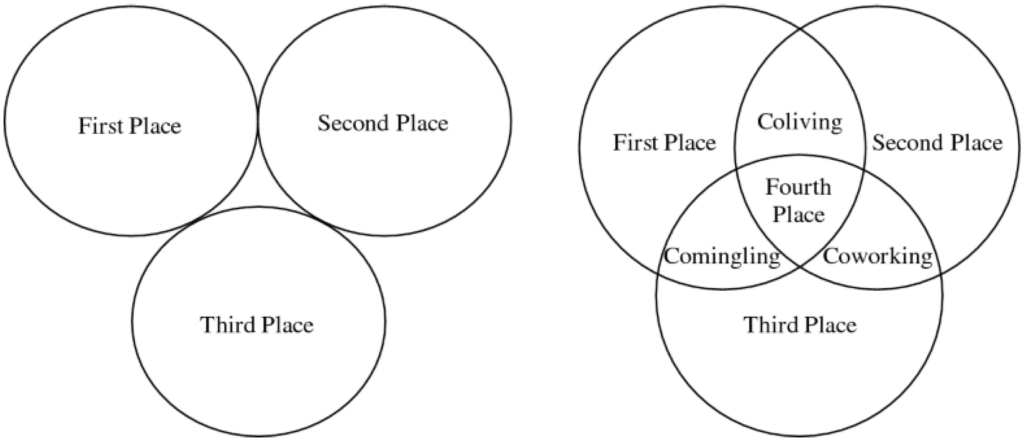
Definition Like with loneliness and Third Places there isn’t one single definition for fourth spaces. Some interpretations focus on the physical world and informal interactions in places that are undefined, similar to third places, while others place more emphasis on the digital world [3] and how it interacts with physical spaces. Fourth spaces can be seen as in-between places, blending traditional environments with digital layers. Not all definitions consider the digital aspect in the same way, but all highlight the role of these spaces in fostering spontaneous, casual connections that contribute to shared public life. [1, 2]
Fouth Places as the “in-between” [3]
Fourth Spaces as the digital realm [5]
Fourth spaces can counteract the impersonal aspects of “non-places” by embracing in-betweenness and publicness in their design. These spaces often include open, diverse layouts that are intentionally flexible, allowing people to adapt them for various uses that encourage spontaneous interactions.
Novel typologies – new forms of spatial design Fourth space frameworks blend elements from traditional public spaces with modern innovations, such as integrating green spaces into urban environments or combining digital and physical interactions. In the context of fourth spaces, typology focuses on creating new forms of environments that encourage interaction, creativity, and adaptability to meet modern societal needs. These strategies ensure inclusivity and dynamic social interactions, creating environments where diverse individuals can connect and feel a sense of shared experience. By doing so, fourth spaces move beyond sterile functionality, fostering creativity, community, and belonging. [3]
An example approach to actively creating a fourth space is a project called „The Commons“. It is described as: „A modern-day town square for communal meaning-making, personal discovery, and self-expression in the heart of San Francisco.“ This concept focuses mostly on creating a place that is versatile and open in its functionality and can become whatever it needs to be at any given time. So in reference to the earlier definition, this is less an approach of combining digital and real world places, and follows more the idea of in-between places and meaning-making. They themselves define Fourth spaces as follows: „A physical space that facilitates meaning-making through intentional programming and pluralistic discussion, where individuals explore questions of ultimate concern without seeking conclusive answers. It honors the authenticity and uniqueness of each person’s path while fostering deeper bonds through consistent encounters in a supportive holding environment.“ [4]
Designing Fourth spaces is not an easy task, since it is quite hard to grasp what exactly fourth places are and how they fit into our lives. In terms of digital Fourth spaces the concept is just now emerging and changing constantly. It is important to clearly define the Fourth space in order to utilize it for designing in the context of loneliness. Is a fourth space an in-between place with unlimited potential that needs to be programmed and directed? Or is it the digital world that has emerged in the past few years? And if so, do we integrate it into the real world and try to find ways to combine the two? Or is it maybe even those places where the two meet?
Sources
P. S. Aelbrecht, “‘Fourth places’: the contemporary public settings for informal social interaction among strangers,” Journal of Urban Design, vol. 21, no. 1, pp. 124–152, Jan. 2016, doi: 10.1080/13574809.2015.1106920.
“The fourth place and re-imagining the city | Urbanarium.” https://urbanarium.org/journal/fourth-place-and-re-imagining-city
D. Hardegger, “A First Holistic ‘4th Space’ Concept,” Mdpi, p. 72, Mar. 2022, doi: 10.3390/proceedings2022081072.
“The Commons” https://www.thesfcommons.com/
T. Masuku, “The fourth place,” Showit Blog, Jun. 15, 2024. https://ticamasuku.com/the-fourth-place/
How Can We Tie DIY and Interactive Technologies to Community Building?
Museums have long been seen as places of quiet reflection, where visitors admire static exhibits from a distance. However, a new wave of transformation is sweeping through these spaces, shifting the focus from passive observation to active participation. The power of DIY projects, interactive exhibits, and co-created spaces is reshaping how we experience culture, making museums more inclusive, dynamic, and community-driven than ever before.
The Shift from Passive Viewing to Active Participation
Hands-on activities
Modern museums have transformed from passive spaces into collaborative hubs where visitors actively shape their experiences. Through hands-on activities and DIY workshops, visitors become co-creators, contributing their voices to cultural narratives and fostering a deeper sense of belonging and inclusion [1]. These participatory initiatives provide platforms for self-expression and meaningful interaction, enabling diverse groups to share unique perspectives and cultivate shared ownership of museum spaces [3].
For marginalized groups, such efforts offer a powerful means of self-empowerment and storytelling, allowing individuals to showcase their creativity and lived experiences. By breaking down societal barriers, these activities foster inclusivity and encourage dialogue among people from varied backgrounds, enriching the cultural fabric of museums [3], [5].
Digital activities
Museums are increasingly using collaborative interactive activities to foster social connections among visitors. Tools like augmented reality, digital storytelling, and interactive displays encourage shared experiences that strengthen community bonds. For example, the Science Museum’s Disease Controller game in the Medicine and Communities gallery allows four players to collaboratively manage the spread of an epidemic in a city. Participants must make quick decisions, such as issuing public health campaigns or vaccinations, highlighting the challenges of urban health and the impact of infectious diseases [7]. These activities transform museums into vibrant spaces where visitors connect through shared exploration and learning.
Museums and Wellbeing
Museums are essential for promoting psychological and social well-being by providing restorative environments that encourage connections. Participatory activities like DIY projects and collaborative exhibits help foster identity, community and enhance self-esteem while reducing stress. Research shows that interactive and co-creative museum activities lead to personal growth, sense of accomplishment, and strengthen social bonds. [2], [4].
One great example is the Holburne Museum’s “Image – Peer Supported Museums Group” which is designed for individuals with lived experience of mental health challenges, providing a supportive environment to foster creativity and independence. The group engages in specialist artist-led workshops covering skills like bronze clay jewelry, acrylic painting, and printmaking, followed by independent development. Members aim to enhance creativity using museum collections, develop skills, exhibit their work, and promote inclusion and well-being through art. [6]
A Future of Collaborative Communities
Museums are evolving beyond their traditional role of showcasing artifacts, becoming spaces that foster collaboration and community engagement. By incorporating these participatory elements ensures that museums are not just institutions for knowledge but vibrant spaces for social connection and shared experiences [3]. These innovations allow museums to serve as community hubs, where shared experiences and social bonds are nurtured. The future of museums lies in their ability to empower visitors to actively shape the experience, fostering a sense of belonging and deeper understanding while building stronger, more connected communities.
References
[1] Moura, H., et al., “Collaborative Museums: An Approach to Co-Design,” ACM CSCW 2012, pp. 681–684, 2012.
[2] Šveb Dragija, M., and Jelinčić, D.A., “Can Museums Help Visitors Thrive?,” Behav. Sci., vol. 12, no. 458, pp. 1–17, 2022.
[3] Wallen, L., and Docherty-Hughes, J.R., “Caring Spaces: Individual and Social Wellbeing in Museum Community Engagement Experiences,” J. Museum Education, vol. 47, no. 1, pp. 93–102, 2022.
When talking about loneliness and human connection so called „third places“ often come up. The term was first coined by Ray Oldenburg who defined first places (home), second places (work) and finally the idea of third places, which he defines as spaces for „informal, free social interaction“, for example libraries, cafés, restaurants, museums etc. He even goes so far as to say that as places of free speech (and allowing a certain level of equality), third spaces can be seen as the “precursors of democracy“. They are places in which we meet friends and strangers, foster connections and create new ones [1]. This is especially interesting when talking about loneliness, since even small and short social interactions can improve mental wellbeing and create a feeling of belonging and connection [2].
When designing Third Places it is important to remember that they are dynamic spaces that are constantly changing, evolving and adapting: „A public space cannot be finished any more than the city in which it resides can be“ [3]. This also means that a key element of a good public space is good management, to be able to keep up with the needs and constant changes of the communities and people. Big issues when creating spaces (besides real estate prizes and restrictive regulations [4]) has been that much of the planning and building has been done from the top down, by experts such as architects and urban planners. The main factor however are the people: „Normal citizens are the best experts that you can ask for when planning how a place should be designed or used“ [3]. Citizen participation could therefor be an interesting topic for the design process of third places, asking questions like How can people be motivated to engage and participate in community building? And How can we make Third Spaces accessible for all people? [5]
“Libraries shouldn’t shush, they should roar” In her Talk Maarya Rehman makes an interesting case about libraries as good Third Places, even or especially in the digital age. She opens up an entirely new angle to think about libraries, describing her own experience when she was given the opportunity to reopen a library in Pakistan. Rehman states that a place like a library doesn’t have just one function and can be many different things to many different people, depending on their needs. Another important attribute – as mentioned previously – is that Third Places act as social levelers. This means that it doesn’t matter who a person is (where they come from, how much money they make, etc), in Third Places like libraries they are simply a citizen. Finally she makes the point, that the existence of these Places in the real world is as relevant as ever with a large amount of our lives shifting into the digital online world where our connections become intangible data and we are constantly overloaded with information. Libraries can take many forms and help people connect over one thing at a time. Be it a common interest or a shared problem that can be solved together. [6, 7]
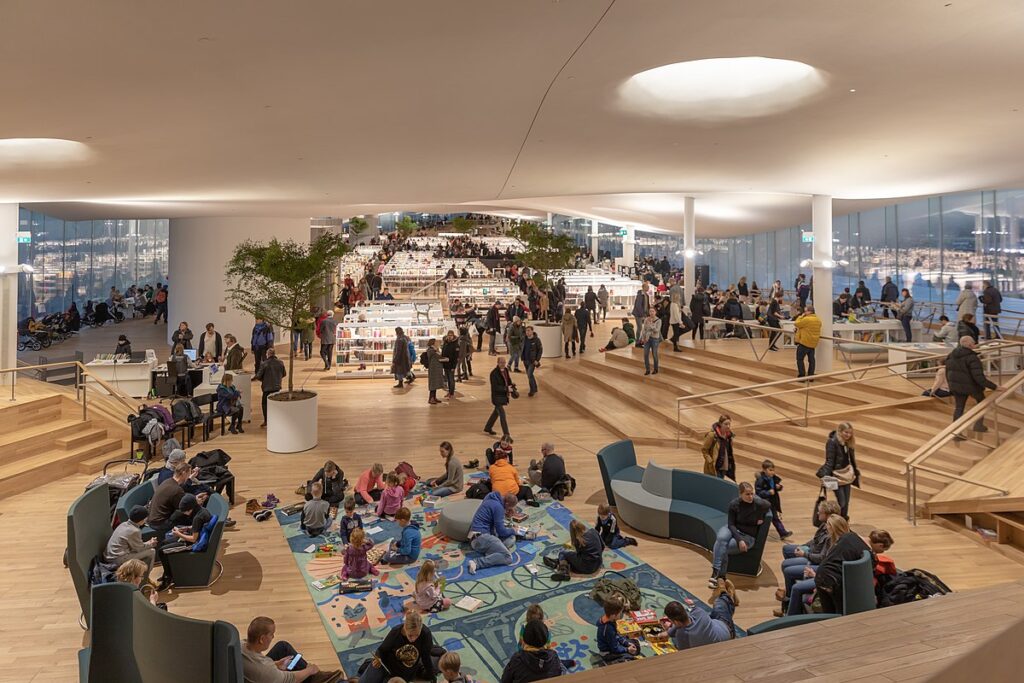
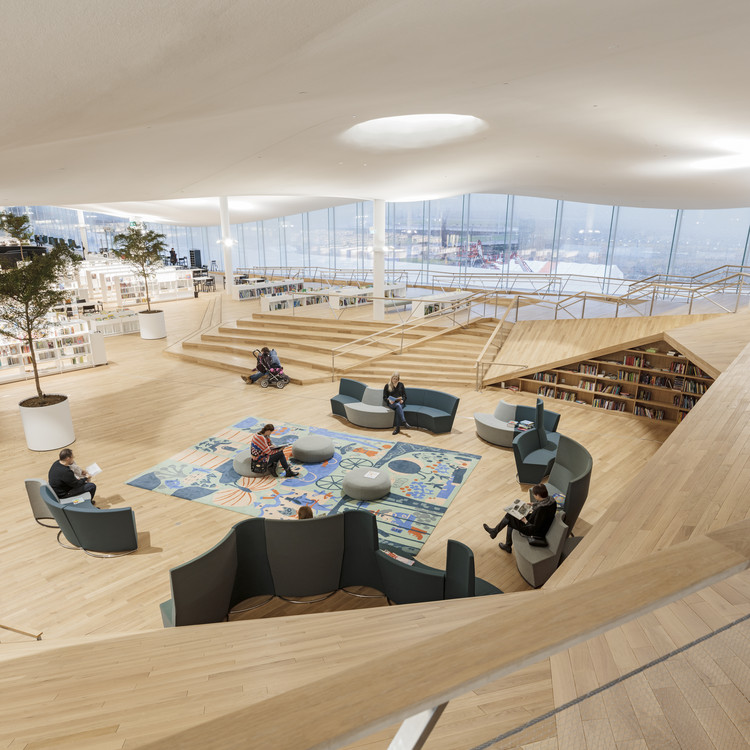
Several places have taken up this idea and basic concept of a library and adapted it to their needs. One of the most famous examples is Finland with its Oodi library, that not only rents out books, but is an entire three story building detected to bringing people together for creative collaboration, co-working and connecting [7]. It has a restaurant and cafe for people to eat and chat, but also several different areas of creative work like sewing machines. It is a small ecosystem with everything that is needed for different types of communities and connection. It makes co-working possible but also offers workshops for people to learn and bond over new experiences. Studios with expensive equipment can be rented to work on projects and create together. It is also inclusive to all generations offering family solutions for people with children. All in all it is an incredibly diverse place, designed for many types of different interaction and existing for many different people and a very interesting starting point for thinking about the potentials of public spaces.
R. Oldenburg, The great good place: Cafes, Coffee Shops, Bookstores, Bars, Hair Salons, and Other Hangouts at the Heart of a Community. Da Capo Press, 1999.
J. Murray, “Are third places the cure for loneliness?,” Wondermind, May 16, 2024. https://www.wondermind.com/article/third-place/
“To make a great third place, get out of the way.” https://www.pps.org/article/to-create-a-great-third-place-get-out-of-the-way
C. Diaz and S. M. Butler, “‘Third places’ as community builders,” Brookings, Sep. 14, 2016. [Online]. Available: https://www.brookings.edu/articles/third-places-as-community-builders/
M. Lerner, “Redefining third spaces: Modern approaches to informal urban gathering places – Urban Land Magazine,” Urban Land, Aug. 16, 2024. https://urbanland.uli.org/redefining-third-spaces-modern-approaches-to-informal-urban-gathering-places
M. Rehman, “Libraries – the good (third) place,” TED Talks. [Online]. Available: https://www.ted.com/talks/maarya_rehman_libraries_the_good_third_place?subtitle=en
A few months ago, I came across a TikTok where someone discussed the Theory of the Third Place and argued that Generation Z no longer has a true Third Place. Instead, he suggested, our phones have become the new “third place.” I briefly got stuck on this TikTok because I had never heard of it before but found the topic really interesting. Now that I’ve started researching the topic of loneliness and social isolation, I’m realizing how important these third places are for people, especially young people and their mental health.
What is a Third Place?
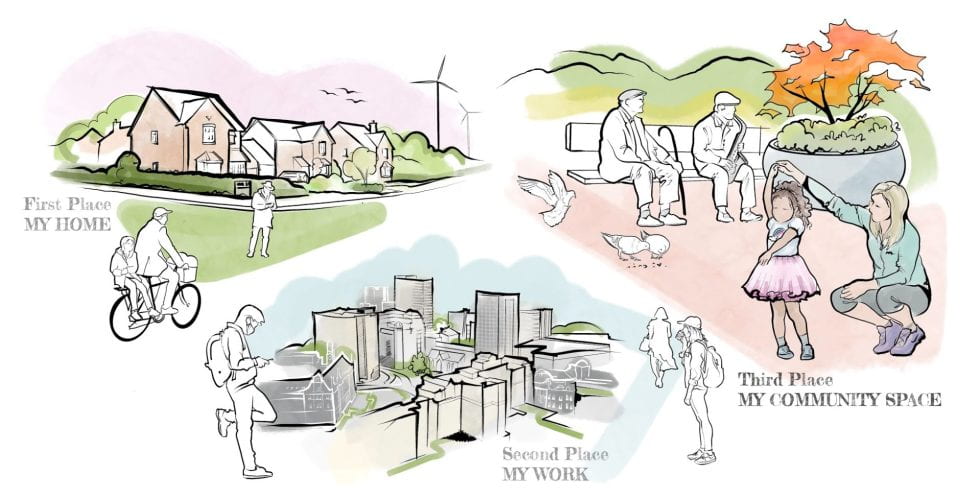
The term Third Places originates in the book “The Great Good Place” (1989) by the sociologist Ray Oldenburg. His Third Place Theory revolves around the concept that our lives are shaped by three key environments: the first place, the second place, and the third place. 1
The first place: HOME
The first place refers to where individuals live and develop their private lives. It is typically associated with privacy, a sense of solitude, and personal ownership. A home serves as a crucial foundation, offering stability, comfort, and a space for shaping one’s identity. 2
The second place: WORK
The second place refers to the workplace, where people spend a substantial part of their time. It is characterized by productivity, professional responsibilities, and a structured setting. Workplaces play a vital role in providing financial security and fostering career growth. 2
The third place: COMMUNITY
A third place is distinct from both home and work, serving as a space where people can regularly gather and connect with friends, neighbors, coworkers, or even strangers. 3 Oldenburg states it as a “a space for informal, free social interaction, essential to democracy” 1 It encompasses locations such as cafes, libraries, parks, community hubs, and other shared spaces. These environments foster social connections, open dialogue, and a sense of community. 2 Some even call the third places the living room of society. 4
Source: “2021 Cat A – My Third Place,” IFLA Europe Youth Competition, 2021, https://iflaeurope.eu/index.php/youth/entry/my-third-place-60edb5efb7ebc2.73333502
Oldenburg identifies the following nine characteristics for third places:
“Neutral ground: In a third place people can easily join in or disengage from the conversation.
Leveler: All people, regardless of class and status, are welcome and intermingle.
Engaging Conversation: Talk is the main activity and provides the greatest value. The rules are simple: Don’t dominate the conversation, be sensitive to others’ feelings, speak on topics of general interest, and avoid trying to instruct.
Accessibility and accommodation: People can wander in almost any time of day or night and find someone to talk to.
Regulars: The people who frequent the place give it character, set the tone, and welcome both old timers and newcomers.
Low profile: The decor is plain and unimpressive, discouraging pretension and self-consciousness.
Playful mood: Displays of wit are encouraged. The congenial environment makes it feel like a home away from home.” 1
Why are they so important?
Third places are more than just physical spaces — they are vital social hubs that contribute significantly to individual well-being and the strength of society as a whole. Here are the functions they serve:
Encouraging Social Interaction These spaces offer an inviting setting where individuals can come together, engage in conversation, and build meaningful relationships outside their typical social networks.
Inspiring Creativity Third places bring together individuals from different backgrounds, creating dynamic environments that encourage the sharing of ideas and inspire creativity and innovation.
Cultivating a Sense of Belonging Third places help individuals feel valued and accepted, creating a strong sense of belonging that enhances community bonds.
Supporting Personal Development Through shared experiences, exposure to new perspectives, and opportunities for learning, these spaces contribute to personal growth and self-improvement.
Building Stronger Communities By hosting gatherings and events, third places act as pillars for community cohesion, helping to create more resilient and united neighborhoods. 2
Third places play a crucial role in promoting health and well-being across all stages of life by providing essential social support. Despite often being overlooked, they are key to addressing pressing societal challenges like isolation, crime, education, addiction, physical inactivity, malnutrition, and sociopolitical polarization. Strengthening these spaces in both cities and suburbs could help rebuild social connections, foster a sense of community and offering opportunities for meaningful in-person interactions, dialogue, and shared experiences. 56 7
Examples of Third Places
Oodi Library in Helsinki
“Helsinki Central Library Oodi is a living meeting place at Kansalaistori square, right at the heart of Helsinki. Oodi provides its users with knowledge, new skills and stories, and is an easy place to access for learning, story immersion, work and relaxation. It is a library of a new era, a living and functional meeting place open for all.” 8
“The High Line is both a nonprofit organization and a public park on the West Side of Manhattan. Through our work with communities on and off the High Line, we’re devoted to reimagining the role public spaces have in creating connected, healthy neighborhoods and cities. Built on a historic, elevated rail line, the High Line was always intended to be more than a park. You can walk through gardens, view art, experience a performance, savor delicious food, or connect with friends and neighbors-all while enjoying a unique perspective of New York City.” 9
Unfortunately, limited public transportation, suburban zoning laws, and rising real estate costs often place these spaces far from residential areas, making car access a necessity and reducing their accessibility. The shift to digital interactions has further diminished these community-focused spaces, leaving many isolated.
But especially in today’s fast-paced digital age, third places are more essential than ever as a counterbalance to the isolating effects of technology, the relentless pace of modern life, and the growing emphasis on work and productivity. 5 6
Video
I also found this interesting YouTube Video from Elliot Sang explaining the issue with Third Places also in a historical context:
Sources:
[1] R. Oldenburg, The Great Good Place: Cafes, Coffee Shops, Bookstores, Bars, Hair Salons and Other Hangouts at the Heart of a Community, New York: Marlowe & Company, 1999.
[2] N. G. Er, „The Third Place Theory – Nazlı Gizem Er – medium“, Medium, 11. September 2023. [Online]. Verfügbar unter: https://medium.com/@gzm.err/the-third-place-theory-ae0dcee927b6#:~:text=The%20Third%20Place%20Theory%20reminds,to%20our%20overall%20well%2Dbeing.
[3] V. Mehta und J. K. Bosson, „Third Places and the Social Life of Streets“, SAGE Publications, 2010. doi: 10.1177/0013916509344677.
[4] A. Mondry, “In praise of loud, stinky bars,” Shelterforce, May 24, 2012. [Online]. Available: https://shelterforce.org/2012/05/24/in_praise_of_loud_stinky_bars/. [Accessed: Jan. 13, 2025].
[5] E. Klinenberg, Palaces for the People: How Social Infrastructure Can Help Fight Inequality, Polarization, and the Decline of Civic Life, New York, NY: Crown Publishing Group, 2018.
[6] Aquizoncolquitt, „Third Places: What Are They and Why Are They Important to American Culture? | English Language Institute“, 1. November 2023. https://esl.uchicago.edu/2023/11/01/third-places-what-are-they-and-why-are-they-important-to-american-culture/
[7] C. Diaz und S. M. Butler, „“Third places” as community builders“, Brookings, 14. September 2016. [Online]. Verfügbar unter: https://www.brookings.edu/articles/third-places-as-community-builders/
[8] „What is Oodi? – Oodi“, Oodi, 25. Januar 2024. https://oodihelsinki.fi/en/what-is-oodi/
[9] The High Line, „Overview | The High Line“, The High Line, 15. Januar 2025. https://www.thehighline.org/about/
Museums today are not only repositories of artifacts and history but dynamic spaces for community interaction, learning, and inspiration. Engagement, often described as the depth of a visitor’s emotional, intellectual, and physical connection with an institution’s offerings, is a multifaceted concept that extends beyond mere attendance. As Ed Rodley discusses in his article “Defining ‘Engagement’,” the term encompasses both the individual’s immersive experience and the reciprocal interaction between the museum and its audience. This dual perspective highlights the importance of creating spaces where visitors are not only recipients of information but active participants, contributing to a shared cultural dialogue [9]. By designing meaningful experiences tailored to diverse age groups — children, adults, and seniors — museums can inspire curiosity, provide learning opportunities, and build lasting relationships with their audiences.
The Importance of Multi-Generational Engagement
In a world that’s becoming increasingly diverse in terms of age and interests, museums must design experiences that cater to different learning needs. The ability to connect with visitors from varied backgrounds and life stages not only enhances the relevance of museums but also strengthens the role of these institutions as community hubs. While children may crave interaction and sensory stimulation, adults often seek intellectual depth and critical engagement. Seniors, on the other hand, benefit from programs that emphasize accessibility, comfort, and intergenerational connection. Creating museum spaces that accommodate all these needs ensures that museums remain engaging for everyone, regardless of age.
Understanding the Audience
Children: Spark Curiosity and Play Children thrive in interactive, sensory-rich environments that encourage exploration and play. Features such as tactile displays, hands-on workshops, and augmented reality experiences provide opportunities for active engagement. For example, children’s areas in science and history museums combine education with fun, allowing children to learn by doing. The integration of digital technologies and gamification has become central in creating these captivating experiences [1].
Adults: Encourage Depth and Discovery Adults often seek intellectual engagement, context, and connections to broader societal issues. Guided tours, audio guides, and themed events tailored to specific interests offer platforms for deeper understanding. Offering flexible experiences, such as evening talks and workshops, allows adults to explore topics at their own pace while connecting with like-minded individuals [2].
Seniors: Foster Connection and Comfort For senior visitors, accessibility, comfort, and meaningful interaction are key. Gentle-paced tours, comfortable seating, and programs that promote reminiscence and storytelling create welcoming spaces. Intergenerational programs also offer seniors the opportunity to engage with younger generations, enhancing the experience for both groups [3].
Strategies for Engagement Across Generations
Co-creation with Communities: Involving community members in the design and development of museum programs ensures that exhibits and events resonate with diverse age groups. This participatory approach ensures that museums adapt to the changing needs of their audiences [4].
Intergenerational Programs: Activities that bring together different generations—such as family days or joint art projects—help to build stronger community connections while addressing the needs of all age groups.
Technological Adaptation: Mobile apps, virtual reality, and other technologies allow museums to offer personalized, adaptive experiences that cater to individual preferences and accessibility needs.
Continuous Feedback: Gathering feedback from visitors across all age groups helps to refine programming and maintain its relevance. Surveys, focus groups, and online reviews provide invaluable insights for future initiatives [5].
Challenges and Opportunities
One challenge in designing for diverse audiences is balancing the needs of different age groups without diluting the experience. Tailored content, adaptive technologies, and modular exhibit designs can address this. Another consideration is ensuring accessibility for all visitors, from physical accommodations to cognitive inclusivity. Research highlights the importance of visitor studies in understanding audience engagement. Insights from studies, such as those examining the impact of cultural capital and motivations, can guide museums in designing experiences that resonate deeply with visitors [7][8].
Conclusion
Engaging audiences across generations requires thoughtful design, community involvement, and a commitment to inclusivity. By addressing the unique needs of children, adults, and seniors, museums can create spaces that not only educate but also inspire and connect communities. As we move forward, let’s envision museums as vibrant hubs where all generations can come together to share, learn, and grow.
[6] C. Jones, “Enhancing our understanding of museum audiences: Visitor studies in the twenty-first century,” Museum & Society, vol. 13, no. 4, pp. 539-544, 2015.
[7] B. Taheri, A. Jafari, and K. O’Gorman, “Keeping your audience: Presenting a visitor engagement scale,” Tourism Management, Pre-print Draft, 2025.
[8] G. Black, The Engaging Museum: Developing museums for visitor involvement, London: Routledge, 2005.
This research is about the need for systemic change to combat environmental crises, emphasising that functioning ecosystems are essential for life and climate resilience. The research seeks to investigate how ecocentric philosophies, particularly those rooted in sustainable land use, can inspire innovative design interventions that support large-scale ecological restoration.
This investigation objective is to propose an analysis on the role design can play in addressing the interconnected crises of climate change and biodiversity loss. I also want to explore how ecocentric design principles can foster coexistence with nature by integrating approaches like permaculture and regenerative farming into scalable solutions.
Background
Today we stand in front of a huge task of saving the world. We are currently in the midst of a nature and climate crisis. Since 1970, two-thirds of the world’s wildlife populations have declined, and there has never been a more urgent need to restore damaged ecosystems than now (Almond et.al. 2022). We know that functioning ecosystems are essential for all life on Earth, since nature acts as a buffer against climate change.
We are less resilient to climate changes the less intact nature we have. Though trying to combat both these crisises, we see that they are intertwined in ways that makes change very difficult (Det Norske Vitenskapsakademi, 12:04). UN´s nature panel, IPBES range “changed areal usage” as the biggest threat to the biological diversity (NTNU Event, 2022, 7:50).
Why biodiversity is important – with Sir David Attenborough explaines some of the fundamentals on why we need to protect our nature.
Ecocentrism:
A worldview that sees all of nature as having inherent value, and is centred on nature rather than on humans. Also known as biocentrism. See anthropocentrism.
Research question: How ecocentric design can help us coexist with nature
The central research question driving the work is how ecocentric design principles can be used to promote coexistence with nature? This inquiry aims to bridge the gap between ecological theory and design strategies that empower individuals and communities to live in harmony with their environments.
How to solve it?
Trying to come up with solutions to these global problems is a tough job. It seems that we need deeprooted value change among the entire population. WWF writes in the Living Planet report 2022 that
It’s not too late for nature to recover, but we need big, bold solutions. Restoring nature will require unprecedented conservation efforts that meet the scale of the nature loss crisis, and an urgent transformation of our food, energy and finance systems. (Almond et.al. 2022)
WWF also lists these actions as the main solutions to these crisises:
TRANSFORMING CONSERVATION
TRANSFORMING OUR FOOD SYSTEM
TRANSFORMING OUR ENERGY SYSTEM
TRANSFORMING FINANCE
These are of course some very big systematical changes that I alone cannot take on by myself. Nevertheless, I aim to learn how I as a designer can contribute to these already existing movements.
When trying to explore some solutions on my own I have gotten an interest in topics like permaculture, regenerative farming, and sustainable land use. These are some of the more important areas that I think is crucial so learn about if I am to understand the interconnected problems.
Looking at possible solutions in the start, there are many different roads to go. For example, I could aim for an implementation framework that outlines actionable steps for integrating ecocentric practices into broader societal contexts. This solution is a very broad and vague one, but which also allows me to get the broad aspect early on, so I can dive deeper into a smaller and more defined area later in my anctual thesis.
Another possible solution is to explore how integrating approaches like permaculture and regenerative farming into scalable solutions. This could be looking at existing small-scale solutions (for example small sustainable communities) and see what can we learn from these and how to scale this up to be accessible for the greater societies.
Another way to go is to look in to existing methodology being used by cooperations with similar intentions on how to battle these huge societal problems. This could be to see how for example Green Peace, WWF, UN, NGOs, the different nations and even how political parties work with communication, value change, spreading knowledge and actually making a positive impact. This approach to my researching could help me navigate in this very broad theme – as well as giving me tools to learn more and more efficient.
The road and challenges ahead
As described above, my motivation for this theme is my personal desire to work against the interconnected crises of climate change and biodiversity loss – and learn as much as possible about what can be done. I believe that design is a powerful tool that can play a big part in the solution. This is what I aim to find out in this research.
The main challenges ahead that I can see is that I tend to go extremely broad in framing the problem – making the research task a very difficult one. Because of my desire to “save the whole world”, I find it difficult to close doors on themes and problems I find important. But since this topic is a very large and interconnected one – my main task in the start will be to narrow it down to a tangible amount I can work with. Another challenge is to work alone, whereas I have found working in groups much better – where I can spar and discuss with others.
If enough people realise that we have influence and can make an impact in this very big world, we can make actual change. Though I must admit that I also feel lost, scared and hopeless when facing such a wicked problem, I hope that through this research, I will be able to gain more knowledge and confidence – and restore hope that we will be able to turn our course to a better one.
In an increasingly urbanized and digital world, public spaces are no longer the main place for community and interaction they once were. However, while global connectedness has rapidly increased thanks to modern technology, smartphones and social media many people, despite being surrounded by others, feel disconnected, isolated and lonely. Public spaces, like parks, libraries, and cafés, have always served as places where people come together. But as our lives become more fast-paced and technology-driven, these spaces are not the first choice for seeking connection, with most digital online solutions being more convenient and accessible.
I find the paradox of a rapidly evolving world, where global connectedness and interaction are increasing, yet loneliness is at an all-time high, to be a fascinating premise. It is a topic that – at least to a certain degree – almost everyone is affected by, and understanding what differentiates different kinds of interaction and connection (e.g. online and face to face) will only become more important in the future, especially for interaction designers. I see designing connection and interaction as an important starting point to tackling many different societal issues, loneliness being only one of them.
Interaction design is the practice of designing the way people interact with technology, environments, and most importantly: each other. It therefore offers the potential to rethink how public spaces function. By creating interactive experiences, design can invite people to slow down, engage with their surroundings, and connect with others in creative and meaningful ways. With the increasing issue of loneliness, the principles of interaction design and the potential of public spaces I want to ask and aim to answer the question how design can combat loneliness by reshaping the way we interact in public spaces.
When diving deeper into the topic of loneliness, several sub-questions arise for further exploration and understanding. To tackle loneliness at its core, it is important to understand what loneliness is exactly and what the root causes are. These foundational questions help define the phenomenon and uncover why it emerges in various contexts. The effects should also be looked at more closely, posing questions such as: What does loneliness do to us? – physically, emotionally, and socially. Especially when it comes to exploring and developing possible solutions exploring the flip side, will be important. Questions like What is connection? How do we connect? and examining the mechanisms of building (meaningful) bonds are important. Researching on a broader scale, learning about basic human needs and how communities are built is another important aspect that should be considered.
More specific topics for interaction design could include reimagining third spaces like parks or cafes to encourage interactions, designing interactive and participatory experiences, or developing digital platforms that prioritize meaningful engagement over superficial connections. Additionally, incorporating haptic and sensory elements, such as touch-based installations or shared experiences, can evoke a stronger feeling of presence and connection. It’s essential to ask whether the spaces we design truly foster connection, and whether technological connectedness actually equals connection – fulfilling our need to be understood and supported. Some interesting ideas for design spaces with connection and community in mind have already been implemented. In many cities, including Graz, places like „Repair Cafés“ [1] can be found. These are spaces where people can not only fix their broken items, but also socialize, connect and learn from each other. “Maggie Centers” [2] provide a place for people affected by cancer in which they can come together, talk, connect and bond over workshops and activities.
It is important to keep in mind that loneliness is a very large and hard to grasp topic. There is existing research, however the approaches and understanding of the topic still vary. Even a general consensus on how to define the term itself hasn’t been found. It can mean different things to different people and it can have various root causes, which means a solution could look very different for many people. An interesting approach could therefore be focusing on human needs in terms of social connection, belonging and purpose, which are things that directly contrast loneliness. When working on possible solutions it is important to keep in mind that there is no one cure, since loneliness as well as connection are complex and deeply personal.
In the upcoming blogposts, I will explore the broader topic of loneliness, connection, and community to gain a solid understanding and foundation of the topic. From there, I will investigate more specific elements of the research question by taking a look at spaces and environments that foster social interaction, such as third and fourth spaces, as well as principles of designing for connection and belonging. I will also look at case studies and examples of successful design interventions to draw inspiration. This journey will ideally give valuable insights and opportunities for addressing loneliness through thoughtful and intentional interaction design.
Repair Café: https://www.repaircafe-graz.at/ Maggie Centers: https://www.maggies.org/our-centres/ The UK has recently launched a campaign to end loneliness:https://www.campaigntoendloneliness.org/ The loneliness lab is a global collective of people and organizations on a mission to design connection:https://www.lonelinesslab.org/
Public spaces like parks, squares, and plazas are essential to urban life. These areas should offer opportunities for relaxation, escaping the busy city life and connection with others. But, most of the time people are for themselves, lacking meaningful interactions. This phenomenon is particularly striking in urban neighborhoods, where anonymity is growing, and the sense of community is shrinking. However, several studies have shown that belonging to a community has a positive effect on people’s mental and physical health (Cramer, Pawsey 2023), (Kitchen, Williams, Chowhan 2011). Baumeister and Leary (1995) describe belonging even as a fundamental human motivation.
Therefore, the research investigates if interactive installations have the potential to transform the public space into an environment that breaks the social isolation by creating playful experiences that invites people to interact with the installation itself and create a space that encourage social engagement. Can such shared experiences between different people of different background and ages help to strengthen the sense of belonging, strengthen the community and connection within a neighborhood and create a space where people come together?
Personal motivation I am living in a new neighborhood with a great nice park as the center of it, which actually could be a great place of community and interactions. However, the park is rarely used by residents of the neighborhood, primarily due to its lack of amenities. Only few weeks ago few benches were installed, but overall, the space remains largely uninviting.
Next steps In the next step, I would like to take a closer look at urban design with a focus on public spaces. How are they defined and what must be considered when constructing a public space. I also want to focus on the social dimensions of public spaces. In the second part of research I will dive deeper into the design aspect. That includes learning about interactive installations, the different types available, tools and methods used to create them and studying best practices.
Bringing all these topics into a cohesive concept and finding a type or direction for interactive installations that can be universally used in different public spaces, can be challenges during this research.
Literature K. M. Cramer and H. Pawsey, „Happiness and sense of community belonging in the world value survey“, Current Research in Ecological And Social Psychology, Bd. 4, S. 100101, Jan. 2023, doi: 10.1016/j.cresp.2023.100101.
P. Kitchen, A. Williams and J. Chowhan, „Sense of Community Belonging and Health in Canada: A Regional Analysis“, Social Indicators Research, Bd. 107, Nr. 1, S. 103–126, März 2011, doi: 10.1007/s11205-011-9830-9.
Baumeister, Roy F. and Leary, Mark R., “The Need to Belong: Desire for Interpersonal Attachments as a Fundamental Human Motivation”, Psychological Bulletin 1995, Vol. 117, No. 3, 497-529