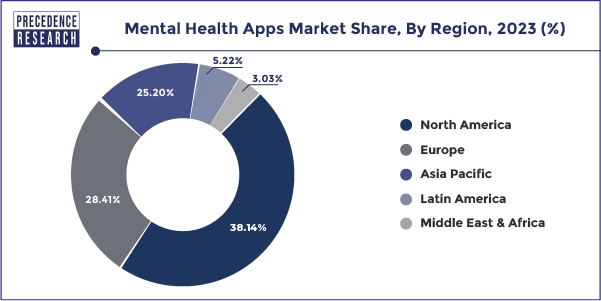
Artificial intelligence is revolutionizing mental health care by breaking down barriers like cost, stigma, and accessibility. With features like chatbots, biofeedback, and voice analysis, AI offers innovative solutions for mental health support. While AI can’t replace human therapists, its ability to complement traditional care makes it a valuable tool.
Venture capital reports reveal that mental health is the fastest-growing marketplace category, with a growth rate exceeding 200% in 2023. This surge reflects a rising demand for accessible mental health solutions as AI continues to play a critical role in meeting that need.
How AI Powers Mental Health Apps
AI-Driven Chatbots
AI chatbots provide immediate, tailored support for users in need:
- Wysa offers CBT-based exercises and mindfulness prompts, creating a safe space for users to manage stress and anxiety.
- Woebot adapts its conversations to users’ emotions, providing tools for real-time mental health management.
- Cass combines emotional support and psychoeducation, offering adaptive responses that cater to individual needs.
In May 2024, Inflection AI launched Pi, a bot designed for emotional support and conversational companionship. Unlike other chatbots, Pi openly acknowledges its limitations, avoiding the pretense of being human while focusing on honest and straightforward interactions.
Wearables and Biofeedback
Wearable devices enhance AI’s ability to provide real-time insights into users’ mental states:
- Moodfit and Spring Health use wearable data, like heart rate and stress levels, to deliver personalized mental health strategies.
- Kintsugi analyzes vocal biomarkers to detect signs of anxiety or depression, offering users actionable insights based on their voice patterns.
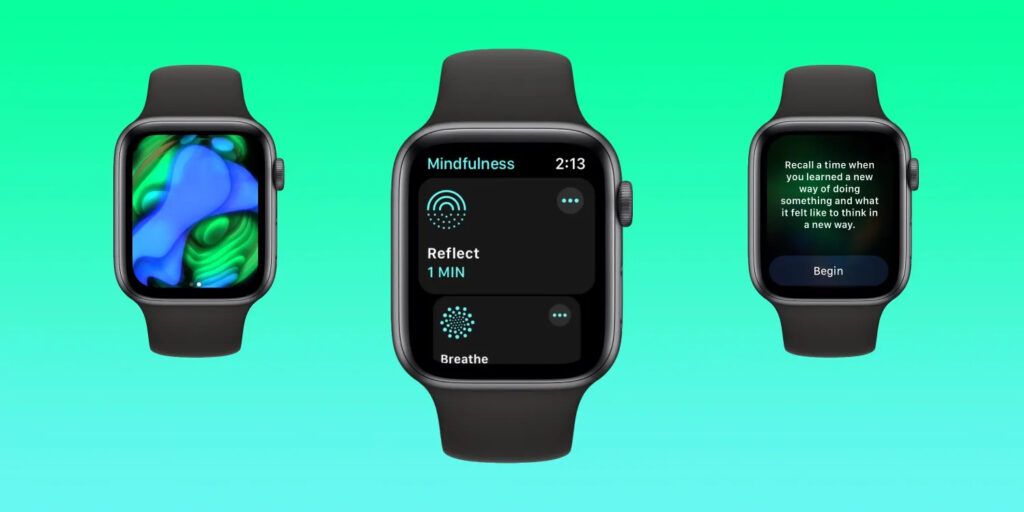
These integrations bridge the gap between physical and emotional health, empowering users to take control of their well-being.
Opportunities in AI Mental Health Care
AI’s advantages lie in its ability to make mental health support more accessible, personalized, and inclusive:
- Immediate and affordable: tools like Headspace’s Ebb and Wysa provide around-the-clock support at a fraction of the cost of traditional therapy.
- Engagement and effectiveness: a 2022 review found that AI tools could improve engagement and reduce symptoms of anxiety and depression. However, experts emphasize that AI works best as a supplement, not a substitute, for traditional therapy. As Dr. Chris Mosunic of Calm explains, “Having a human in the driver’s seat with improved therapy AI tools might be just the right blend to maximize engagement, efficacy, and safety.”
- Personalized support: apps like Woebot and Youper adapt their recommendations to the user’s changing emotional needs, creating a more tailored experience.

Challenges and Ethical Considerations
While AI offers promising solutions, it also presents challenges:
- Limited empathy: AI tools often lack the emotional depth of human therapists, which can leave users feeling unsupported in complex situations.
- Bias and inclusivity: non-diverse training data can lead to biased responses, potentially failing marginalized communities that rely more heavily on these tools due to systemic barriers.
- Privacy concerns: AI tools require access to sensitive data. Apps like Talkspace use encryption to protect user information, but trust in data security remains a significant hurdle.
As these tools evolve, balancing innovation with ethical responsibility will be critical – a topic that will be explored further in upcoming articles.
Sources
- A. Fiske, P. Henningsen, & A. Buyx. (2019). Your robot therapist will see you now: Ethical implications of embodied artificial intelligence in psychiatry, psychology, and psychotherapy. Journal of Medical Internet Research, 21(5), e13216. https://doi.org/10.2196/13216
- A. Thakkar, A. Gupta, & A. De Sousa. (2024). Artificial intelligence in positive mental health: A narrative review. Frontiers in Digital Health, 6. https://doi.org/10.3389/fdgth.2024.1280235
- “Can AI help with mental health? Here’s what you need to know.” Calm. Accessed: Jan. 4, 2025. [Online.] Available: https://www.calm.com/blog/ai-mental-health
- “Meet Ebb | AI Mental Health Companion.” Headspace. Accessed: Jan. 4, 2025. [Online.] Available: https://www.headspace.com/ai-mental-health-companion
- P. Gual-Montolio, I. Jaén, V. Martínez-Borba, D. Castilla, & C. Suso-Ribera. (2022). Using artificial intelligence to enhance ongoing psychological interventions for emotional problems in real- or close to real-time: A systematic review. International Journal of Environmental Research and Public Health, 19(13), 7737. https://doi.org/10.3390/ijerph19137737
- “Rise of AI therapists.” VML. Accessed: Jan. 4, 2025. [Online.] Available: https://www.vml.com/insight/rise-of-ai-therapists