#07 Permaculture

Having explored different aspects of the nature and climate crisis and the difficulties with trying to combat them, I want to look into other possible solutions. Through researching this topic, I have come by the term “permaculture” and want to explore it further. Permaculture is already connected with design, through “the 12 permaculture design principles”. These I will look into further below.


Permaculture, prior Permanent Agriculture, is systems for growing crops, plants, etc. that cause little damage to the environment and can therefore continue for a long time. Permaculture aims to develop a landscape that will be self-sustaining and productive for generations (Cambridge, n.d.).
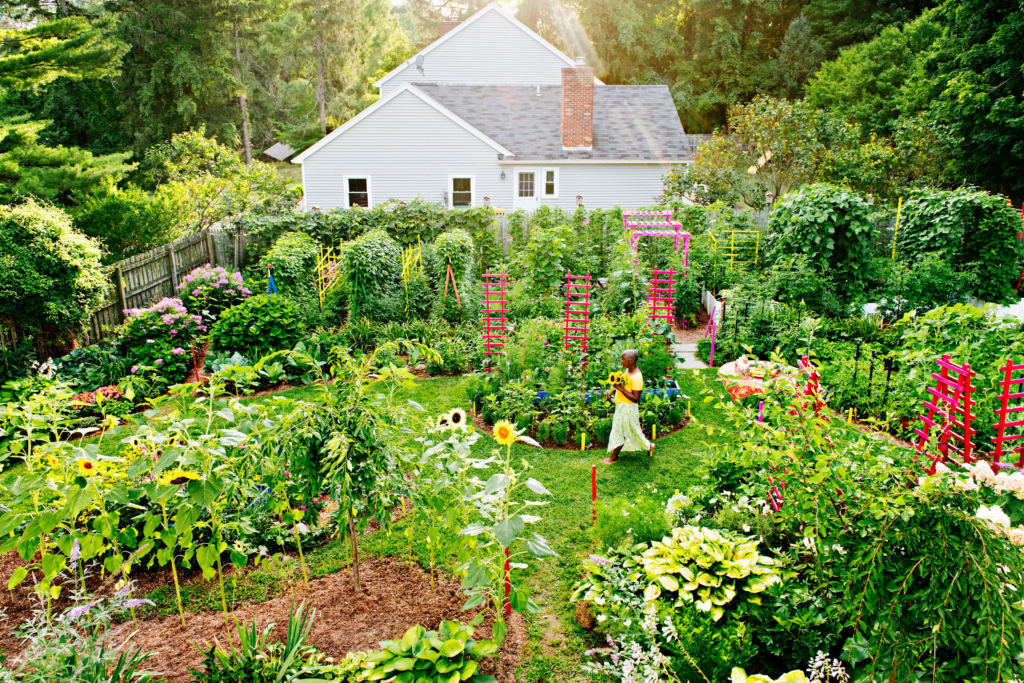

Permaculture is not only a gardening system, the Permaculture Magazine explains it as:

  1. An innovative framework for creating sustainable ways of living
  2. It is a practical method of developing ecologically harmonious, efficient and productive systems that can be used by anyone, anywhere

They also write that permaculture focuses on sustainable ways to grow food, build homes, establish communities, and reduce environmental harm. Its principles are continuously evolving, shaped by people around the world in diverse climates and cultures. It promotes resourcefulness and self-sufficiency, offering an ecological design framework rather than a rigid doctrine or belief system. Permaculture helps us address local and global challenges with practical solutions.

The permaculture principles are as following:

  • Observe and interact
  • Catch and store energy
  • Obtain a yield
  • Apply self regulation and accept feedback
  • Produce no waste
  • Use renewable resources and services
  • Design from pattern to detail
  • Integrate rather than segregate
  • Use small and slow solutions
  • Use and value diversity
  • Use edges and value the marginal
  • Creatively use and respond to change

These principles are more like guidelines rather than rules. That means they can be applied to anything from designing your garden to designing an organisation.

The world is in crisis, permaculture gives people the tools and confidence to respond

Permaculture Association

The Permaculture Association is contributing by offering permaculture courses, and contributed in creating the 52 Climate Action page together with 8 other organisations to promote permaculture based solutions to climate change (52 Climate Action, n.d.). This webpage helps people understand their personal power in tackling climate change by showing them tangible, doable actions that anyone can do.
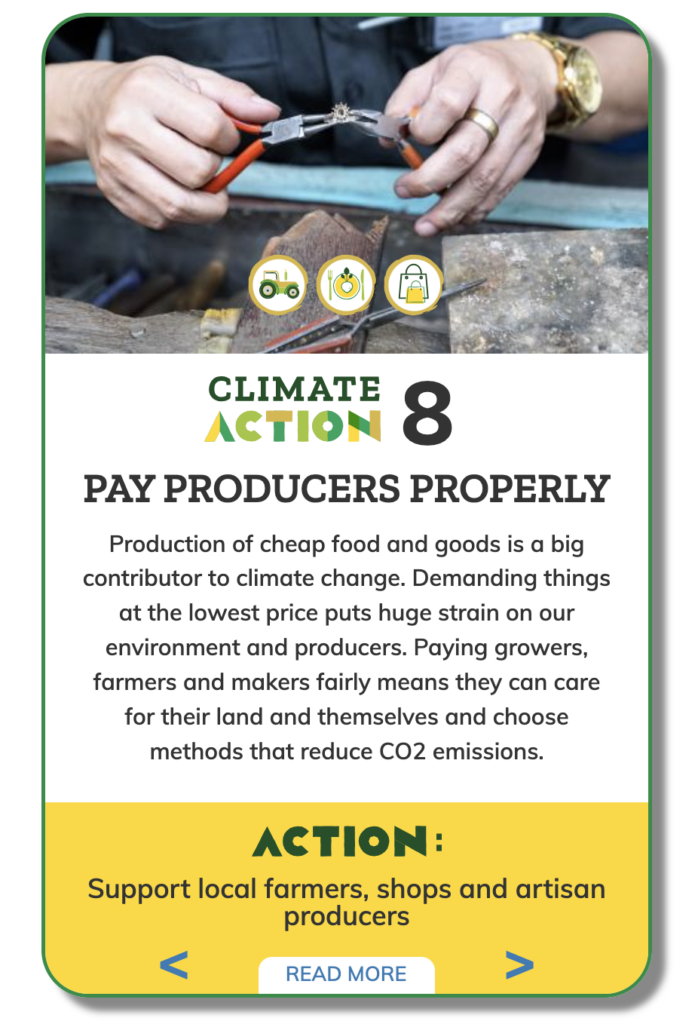
This is an example of one of the 52 actions on this webpage. These 52 actions are chosen as they are powerful, realistic, up-beat and fun – a big contrast to the doomsday crisis news we hear all the time.

By looking at for example how the Permaculture Association´s projects contribute to solving the nature and climate crisis, I may find where I can contribute – as they come with smaller and more tangible solutions that even I myself can participate in. By combining permaculture with design, I can contribute to addressing the climate and nature crisis by creating sustainable, self-sufficient systems that work in harmony with the environment. Using the 12 permaculture design principles, I can develop solutions with a much more tangible framework that can lead me to create something actually useful.

In conclusion, permaculture provides a hopeful and actionable approach to combating the climate crisis. Whether applied to urban planning, agriculture, or community initiatives, these principles offer a practical framework for tackling environmental challenges while fostering innovation and sustainability. By integrating these principles into design, I personally can use this as an inspiration or a framework for a possible design solution.


Sources:

Cambridge. (n.d.). Permaculture. Cambridge Dictionary. Retrieved from https://dictionary.cambridge.org/dictionary/english/permaculture

Permaculture Magazine. (n.d.). What is Permaculture? Retrieved from https://www.permaculture.co.uk/what-is-permaculture/

Permaculture Association. (n.d.). Retrieved form https://www.permaculture.org.uk/index.php

52 Climate Actions. (n.d.). About. Retrieved from https://www.52climateactions.com/about
#06 The Dark Side of Land Use

The most significant threat to biodiversity is land development, not climate change as some might believe

Bernt-Erik Sæther, director of the Centre for Biodiversity Dynamics

The UN’s biodiversity panel, IPBES, ranks “land-use change” as the greatest threat to biodiversity (NTNU Event, 2022, 7:50). In 2022, WWF published a comprehensive report on the frequency and scale of biodiversity and climate changes. The report discusses the “2022 global Living Planet Index,” which shows an average decline of 69% in monitored wildlife populations between 1970 and 2018 (Almond et al., 2022, p. 12). It also highlights how the biodiversity and climate crises are interconnected, like two sides of the same coin—solving one requires addressing the other (Almond et al., 2022, p. 4).

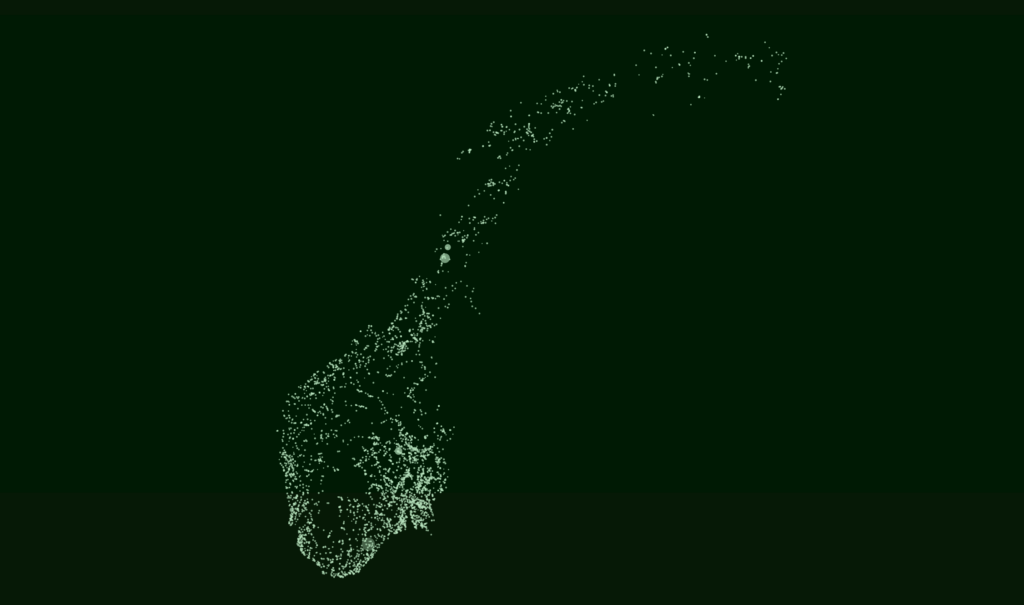
An article titled Norway in Red, White, and Gray from the Norwegian Broadcasting Cooperation (NRK) used artificial intelligence to map 44,000 instances of environmental encroachment in Norway over the past five years (Mon et al., 2023).

Image from NRK´s report (Mon et al., 2023)

However, according to biology researcher Ivar Herfindal from Norwegian University of Science and Technology (NTNU)´s Department of Biology, this mapping only provides a skeletal overview of environmental impacts (NTNU Event, 2024, 22:40). He emphasises that satellite images do not reveal which species are affected by development, requiring more detailed investigations. This means that we have lost a lot more than this map can show us.

The NRK series The Inspector featuring Bård Tufte Johansen, also highlights nature loss, showing how various infrastructure developments—such as roads, wind power, and industry—gradually consume Norwegian nature piece by piece (NRK, 2024). This leads to habitat fragmentation and species extinction.

In his lecture “Why Can’t We Sacrifice Nature for the Green Transition?” professor Dag Hessen argues that nature is often compromised in favour of shorter travel times (Det Norske Vitenskapsakademi, 2023, 12:04). In an interview with Naturviterne, Hessen also emphasises that public engagement and awareness are crucial in influencing political decision-makers and driving change (Hundere, 2024).

But is is not only animals and plants that suffer from the nature shrinking. Humans also have a need for higher biodiversity and bigger green spaces around them – especially those living in urban areas. Urban living provides access to education, healthcare, and diverse cultures, but it often comes at the cost of health and well-being. Studies have linked urban environments—characterised by limited greenspace and high pollution—to increased rates of depression, anxiety, and attention disorders (McDonnell, et. al., 2024). Chronic conditions like cardiovascular disease, high blood pressure, and obesity are also more prevalent in cities. To counter these effects, researchers highlight the benefits of exposure to nature, which can improve cognitive function, mood, and creativity while promoting physical health by encouraging exercise, reducing stress, and lowering blood pressure. Additionally, natural spaces foster social interactions and help combat loneliness.

Despite national environmental goals aimed at preserving important outdoor recreation areas, only 45% of the population in cities and towns have adequate access to nearby nature and walking trails. In the largest cities, this percentage is even lower (WWF, 2021).


Area neutrality involves restoring areas of nature to compensate for the loss of natural land, due to development elsewhere.


Bernt-Erik Sæther, the director of the Centre for Biodiversity Dynamics CBD, discusses in a talk at Arendalsuka – the largest political gathering in Norway – how here is currently a lack of an overarching strategy to identify and regulate which parts of Norway’s natural areas should be preserved (NTNU Event, 2022, 13:33). A strong national framework for regulating land development is needed. Since much of the decision-making power lies with municipalities or landowners, each municipality is left to make decisions independently, often without considering the broader picture.

However, the government is now working on a government report on nature, which is expected to outline how concepts such as area neutrality, nature positivity, and natural accounting will be implemented in Norway (regjeringen.no, 2023). A recent survey also shows that 80 Norwegian municipalities have plans to become “area neutral” (Nyhus, 2023). This is on the foundations of the COP15 in 2022, where governments from around the world came together to agree on a new set of goals to guide global action through 2030 to halt and reverse nature loss (UN, 2022).

Conclusion

Only if Norway and other states establish clear goals to prevent nature loss, define precise terms, and create reliable indicators to measure biodiversity loss, can they effectively strengthen the decline in biodiversity. However, policy alone is not enough – public engagement and awareness are crucial in influencing political decision-makers and driving change.


Sources:

Almond, R.E.A., Grooten, M., Juffe Bignoli,  D. & Petersen, T. (Eds). WWF, Gland, Switzerland. (2022). Living Planet Report 2022 – Building a nature- positive society. WWF. Retrieved from https://media.wwf.no/assets/attachments/lpr_2022_full_report_2023-02-09-115529_ahtx.pdf?_gl=1*16u778x*_up*MQ..*_ga*NjA1MTQ4ODUxLjE3MTQ2NTM5MTQ.*_ga_BB7Z1P8XYM*MTcxNDY1MzkxNC4xLjAuMTcxNDY1MzkxNC4wLjAuMA

Det Norske Vitenskapsakademi. (2023, 8th of November). Dag O. Hessen: Hvorfor kan vi ikke ofre naturen for det grønne skiftet? [Video]. Youtube. Retrieved from https://www.youtube.com/watch?v=rOa2GFtmfu8

McDonnell, Amy S. & Strayer, David L (2024). The influence of a walk in nature on human resting brain activity: a randomized controlled trial. Retrieved from https://www.nature.com/articles/s41598-024-78508-x

Mon, S. T., Solvang, R., Støstad, M. N. (2023). Norge i rødt, hvitt og grått. Retrieved from
https://www.nrk.no/dokumentar/xl/nrk-avslorer_-44.000-inngrep-i-norsk-natur-pa-fem-ar-1.16573560

NRK. (2024). Oppsynsmannen – NRK TV. https://tv.nrk.no/serie/oppsynsmannen

NTNU Event (2022, 16th of August). Hvem bestemmer over norsk natur? – Arendalsuka 2022 [Video].  Youtube. Retrieved from https://www.youtube.com/watch?v=j16EJiCrxSA

Regjeringen.no (2023, 29th of June) Naturavtalen. Retrieved from
https://www.regjeringen.no/no/tema/klima-og-miljo/naturmangfold/innsiktsartikler-naturmangfold/det-globale-kunming-montreal-rammeverket-for-naturmangfold-naturavtalen/id2987476/

UN. (2022). UN Biodiversity Conference (COP 15). Retrieved from https://www.unep.org/un-biodiversity-conference-cop-15

#05 Challenges in Implementing Environmental Policies

While international agreements set the necessary frameworks, their implementation on national and local levels presents challenges. OECDs Climate Action Monitor from 2023 show how many OECD countries have pledged a net-zero target, but only a few of them have made it into law. In 2022, countries slowed down their climate efforts, even bactracking some of the climate action. This was due to geopolitical and macroeconomic shocks from the energy crisis – which also led to countries increasing fossil fuel support to new record levels (OECD, 2023).

In Norway, the government is still working on how they will adhere to the COP15 agreement (regjeringen.no, 2023). However, until formal legislation is in place, actually adhering to the agreement remains voluntary. The municipality of Trondheim in Norway has initiated efforts to implement the agreement. Although a challenge with voluntary follow-up is that it does not guarantee effectiveness, as each municipality makes independent decisions— for example, an industrial company that is denied permission in one municipality may simply establish itself in a neighbouring municipality instead (NTNU Event, 2022, 22:40). Therefore, experts argue that effective engagement and grassroots action are crucial for fostering political commitment and ensuring long-term sustainability (Hundere, 2024).

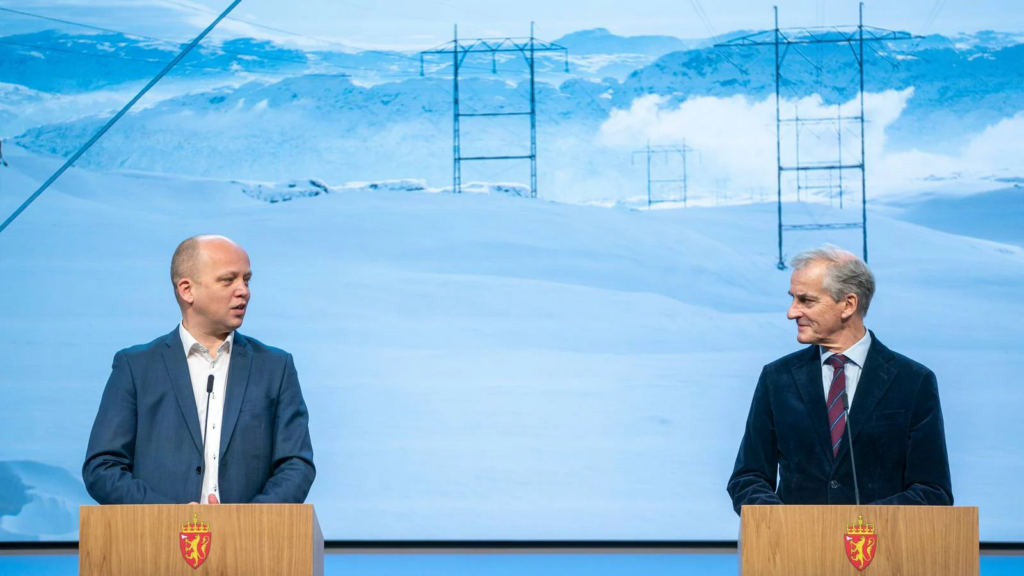
Another example of visible challenges in implementing environmental policies, is the ongoing Norwegian government crisis. It caused by one of Labor Party´s proposal of implementing 3 of the directives from EU´s 4th clean energy package – to show EU cooperation in these scary times. The Centre Party is very against this, due to the consequenses this may have for Norwegian sovereinity. The leader of Senterungdommen, Nils Forren argues: “Norway is an important energy supplier to Europe and should not approach the bureaucrats in Brussels cap in hand. We must prioritise Norwegian interests first and not give away more sovereignty“.

Centre Party-EXIT: Behind closed doors, Trygve Slagsvold Vedum has made it clear that the Centre Party will under no circumstances accept that the Labour/Centre Party government implements the three EU directives under his leadership.
Photo: Terje Pedersen / NTB

This fear of implementing the 4th energy package from the EU, is not irrational. The previous year have shown both Norway and the entire EU how high electricity prices feel like. Many of the Norwegian citizens have blamed our EEA cooperation for the reason of the high electricity prices in Norway – since we are fundamentally self sufficient with waterpower. The criticism of implementing the directives from EU is also regarding our lessened autonomy of our own nature. The fear is that Norway is forced to build solar and wind energy to support the constant higher demand of energy in Europe, sacrificing our nature and biodiversity.

On the other side, with the increasing tensions in the world with Russia waging war, and China and USA waging trade war, the labour party argues that we need to stay close to and strengthen the EU – and that these kind of sacrifices has to be made for the greater good.

How can design help drive political change?

Design can play a crucial role in bridging the gap between policy and action. A design-driven approach can provide ways to communicate complex policies, engage stakeholders, and foster a shared sense of responsibility. For example, the UN encourages cultural influencers and storytellers to participate in the #GenerationRestoration movement, recognising the power of storytelling to drive behavioural change (United Nations, 2019).

Design can help visualise the intrinsic value of nature, promote sustainable lifestyles, and facilitate local community engagement. Even small-scale initiatives that embrace an ecocentric perspective can inspire broader societal shifts.

Conclusion

Political change is crucial for addressing the environmental crises, but it requires persistent efforts at all levels. International agreements like COP15 and the UN Decade on Ecosystem Restoration provide a solid foundation, but their success depends on effective implementation and sufficient public engagement. A for design as a tool, I belive it can act as a powerful mechanism in shaping public perception, influencing policy decisions, and fostering a more sustainable future. The remaining question then is… how exactly?


Sources:

Hundere, T. (2024, February 2). Engasjement kan redusere tap av natur og løse naturkrisen. Naturviterne. Retrieved from https://www.naturviterne.no/naturviterpodden/engasjement-kan-redusere-tap-av-natur-og-lose-naturkrisen

NTNU Event (2022, 16. august). Hvem bestemmer over norsk natur? – Arendalsuka 2022 [Video].  Youtube. https://www.youtube.com/watch?v=j16EJiCrxSA

OECD. (2023). The Climate Action Monitor 2023. Retrieved from https://www.oecd.org/en/publications/2023/11/the-climate-action-monitor-2023_d9ee6e77.html

Regjeringen.no. (2023). Det globale Kunming-Montreal-rammeverket for naturmangfold (Naturavtalen). Retrieved from https://www.regjeringen.no/no/tema/klima-og-miljo/naturmangfold/innsiktsartikler-naturmangfold/det-globale-kunming-montreal-rammeverket-for-naturmangfold-naturavtalen/id2987476/

United Nations. (2019). Strategy of the UN Decade on Ecosystem Restoration. Retrieved from https://www.decadeonrestoration.org/strategy

#04 The Need for Political Change

The number of people exposed to extreme heat is rising rapidly. From 2018 to 2022, over half a billion people in the Organisation for Economic Co-operation and Development (OECD) and partner countries experienced temperatures above 35°C—an 11.3% increase from 1981-2010. In 2022 alone, more than 45% faced at least two weeks of extreme heat (OECD, 2023). Agricultural droughts are intensifying, wildfires have been raging at unprecedented scales with a record-breaking land area burnt and increasing mean temperatures alter rainfall patterns affecting agricultural production and increasing vulnerability. These are just some of the climate impacts OECD have measured the last decades, showing how they are accelerating and becoming even more extreme (OECD, 2023).

There is progress but more ambition and efforts are needed to achieve carbon neutrality by 2050

Political change is essential to addressing these environmental crises we face today. However, achieving meaningful change is a complex and challenging process. Despite the international agreements and national policies, actually seeing these commitments through is difficult.

The role of circular economy and renewable energy

A shift towards a circular economy, inspired by nature’s regenerative processes, could significantly reduce environmental pressures. Greenpeace highlights that transitioning to a circular economy can help preserve resources and minimise waste by promoting reuse and recycling (Holden, 2023). They also write how political will is the only thing missing for this kind of green transition.

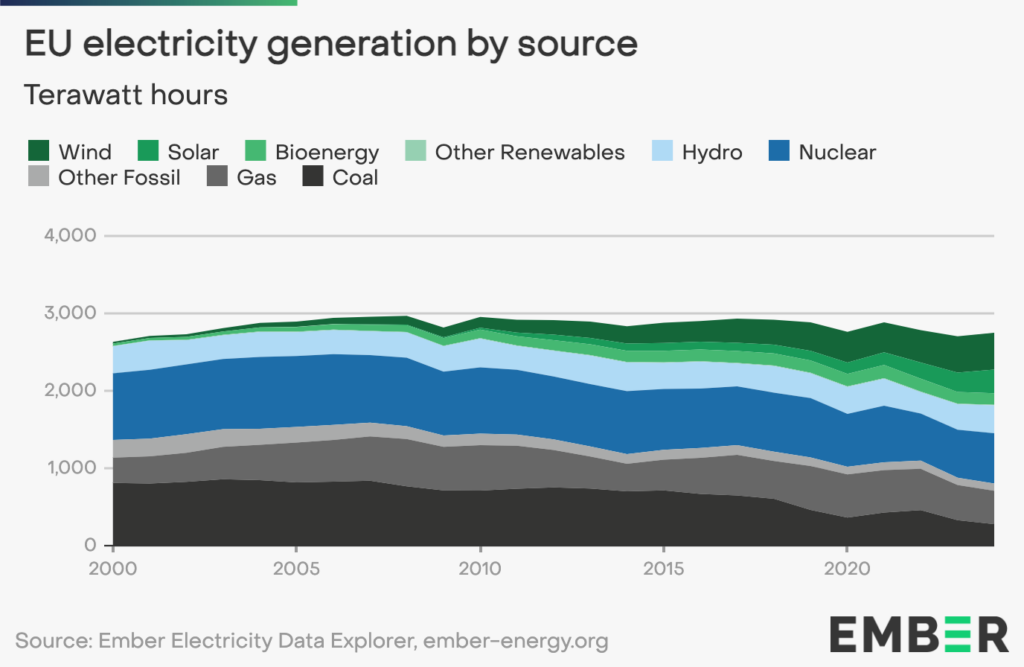
In the energy sector, the EU has made significant steps. Renewable energy sources such as solar and wind now accounting for 22% of total electricity production in 2022, a large increase from previous years. From 2010 to 2022, the EU’s production of solar and wind power increased from 163 to 624 TWh. (Øystese, 2023).

Above we see a graph that shows the changes in EU´s energy source from year 2000 until today (Ember, n.d.). This shows us how the coal usage has been cut in half, and how much renewables have been upscaled. So change is actually doable. But is it quick enough?

The need for political change

Environmental crises, including biodiversity loss and climate change, demand urgent and coordinated political action. The UN has recognised this need by declaring 2021-2030 as the Decade on Ecosystem Restoration, emphasising the importance of preventing, halting, and reversing ecosystem degradation (United Nations, 2019). This initiative highlights the necessity for swift action to combat the climate crisis and biodiversity loss, focusing on fostering a culture of restoration and educating future generations.

Similarly, the Kunming-Montreal Global Biodiversity Framework, adopted at COP15 in December 2022, aims to halt and reverse nature loss. This agreement sets ambitious global targets for conservation, sustainable management, and tackling ecosystem degradation (regjeringen.no, 2023). A key concept introduced in the agreement is “land neutrality,” emphasising the need to balance development with conservation efforts.

What we see is a huge effort on making a sufficient change in makro scale – but are the countries themselves able to see them through? And how much do these environmental policies affect the average EU citizen? What I want to find out is if these policies are actually implemented, and if so, are they making sufficient change? I also wonder If the real fight is the value-change of the citizens these policies affect. If so, this is where I would focus my energy on as a designer.


Sources:

Ember. (n.d.). Electricity Data Explorer. Retrieved from https://ember-energy.org/data/electricity-data-explorer/

Greenpeace. (2023, November 6). Det grønne skiftet i Norge mangler bare politisk vilje. Retrieved from https://www.greenpeace.org/norway/nyheter/energi/det-gronne-skiftet-i-norge-mangler-bare-politisk-vilje/

Nyhus, Håvard. (2025). Sp-ordførarar vil ha Sp-exit: – Elles er vi eit parti utan ryggrad. Retrieved from https://www.nrk.no/vestland/sp-ordforarar-vil-ha-sp-exit_-_-elles-er-vi-eit-parti-utan-ryggrad-1.17221337

OECD. (2023). The Climate Action Monitor 2023. Retrieved from https://www.oecd.org/en/publications/2023/11/the-climate-action-monitor-2023_d9ee6e77.html

Regjeringen.no. (2023). Det globale Kunming-Montreal-rammeverket for naturmangfold (Naturavtalen). Retrieved from https://www.regjeringen.no/no/tema/klima-og-miljo/naturmangfold/innsiktsartikler-naturmangfold/det-globale-kunming-montreal-rammeverket-for-naturmangfold-naturavtalen/id2987476/

United Nations. (2019). Strategy of the UN Decade on Ecosystem Restoration. Retrieved from https://www.decadeonrestoration.org/strategy

WWF. (n.d.). Politisk påvirkning og policy-arbeid. Slik arbeider WWF. Retrieved from https://www.wwf.no/slik-arbeider-wwf/en-politikk-for-mer-natur

Øystese, Kirsten. (22nd March, 2023). I 18 EU-land står sol og vind for mer enn 15 prosent av strøm-produksjonen. Energi og Klima. Retrieved from https://www.energiogklima.no/nyhet/i-18-eu-land-star-sol-og-vind-for-mer-enn-15-prosent-av-strom-produksjonen


#03 Understanding the bigger picture

In my research journey, it is essential to take a step back and examine the broader environmental challenges we face today. Reports from key organisations such as WWF, the United Nations (UN), and the Intergovernmental Science-Policy Platform on Biodiversity and Ecosystem Services (IPBES) provide good and reliable insights into the state of our planet and the actions needed to reverse the damage. In this post, I will summarise key findings from these sources and identify potential areas where design can play a transformative role.

Key Insights from WWF, UN, and IPBES Reports

The WWF Living Planet Report 2022 highlights a 69% decline in monitored wildlife populations between 1970 and 2018, emphasising the urgent need for systemic change (Almond et al., 2022). It identifies biodiversity loss and climate change as interconnected crises, stressing that addressing one requires tackling the other simultaneously. WWF proposes transformative solutions in conservation, food systems, energy, and finance to mitigate these issues.

The UN Decade on Ecosystem Restoration (2019-2030) aims to prevent, halt, and reverse ecosystem degradation worldwide (United Nations, 2019). The strategy emphasise the importance of cultural engagement and empowering future generations. These aspects align closely with the potential of design to foster behavioural change and community engagement.

IPBES identifies “changed land use” as the most significant threat to biodiversity, with habitat destruction being a primary driver of species decline (NTNU Event, 2022).

The IPBES conceptual framework underscores the complex interplay between natural systems and human societies, highlighting the need for integrated approaches that bridge ecological and social dimensions (IPBES, 2015).

Pressing Environmental Challenges and Proposed Solutions

Key challenges identified by these reports include:

  • Land Use Changes: Urban expansion, deforestation, and industrial activities continue to fragment ecosystems and degrade habitats (NTNU Event, 2024).
  • Food Systems: Intensive agriculture contributes to deforestation, soil degradation, and biodiversity loss, necessitating a shift toward sustainable practices such as regenerative farming (Almond et al., 2022).
  • Energy Transition: While renewable energy is crucial, infrastructure development must minimize ecological harm (Det Norske Vitenskaps-Akademi, 2023).
  • Public Awareness and Engagement: Reports stress the importance of mobilising public support and creating awareness through storytelling and education to drive political and behavioural change (Hundere, 2024).


Where Design Can Play a Transformative Role

Design holds the potential to bridge the gap between scientific knowledge and public engagement by:

  • Communication and Storytelling: Utilizing speculative design and behavioral science to create compelling narratives that inspire action, such as visual campaigns and immersive experiences.
  • Urban Planning and Land Use: Implementing nature-positive design principles in urban environments to balance human needs with ecological preservation. This also intertwines with sustainable architecture.
  • Sustainable Product and System Design: Developing solutions that align with regenerative agricultural practices and circular economy models to reduce environmental footprints.

In conclusion, understanding the bigger picture is crucial for identifying where design can contribute to addressing environmental challenges. By getting insights from leading environmental organisations, I can lean on their key findings to quicker understand the most important and pressing issues and solutions to these. This is also how I plan to create a more narrow and tangible area for me to research in.


Sources:

Almond, R.E.A., Grooten, M., Juffe Bignoli, D. & Petersen, T. (Eds). WWF, Gland, Switzerland. (2022). Living Planet Report 2022 – Building a nature-positive society. Retrieved from https://media.wwf.no/assets/attachments/lpr_2022_full_report_2023-02-09-115529_ahtx.pdf

Det Norske Videnskaps-Akademi. (2023). Hvorfor kan vi ikke ofre naturen for det grønne skiftet? Retrieved from https://www.youtube.com/watch?v=rOa2GFtmfu8

Hundere, Torbjørn (2024, 02. februar). Engasjement kan redusere tap av natur og løse naturkrisen. Naturviterne. Retrieved from https://www.naturviterne.no/naturviterpodden/engasjement-kan-redusere-tap-av-natur-og-lose-naturkrisen

IPBES´s Journal Articles (2015). The IPBES Conceptual Framework – connecting nature and people. The Intergovernmental Science-Policy Platform on Biodiversity and Ecosystem Services (IPBES). Retrieved from https://www.ipbes.net/resources/journal-articles

NTNU Event. (2022). Naturen som forsvinner – hva betyr det? Youtube. Retrieved from https://www.youtube.com/watch?v=srRhPF8JLK0

United Nations. (2019). Strategy of the UN Decade on Ecosystem Restoration. Retrieved from https://www.decadeonrestoration.org/strategy

#02 Methodology – how can design contribute

As I continue my research into ecocentric solutions to combat environmental crises, I’m realizing the critical importance of methodology. The scale and complexity of these interconnected issues make it very difficult for me to keep my ground and navigate through it all. I am also a person who finds it very hard to close doors on topics that I find relevant or of importance. In this case – I would need years to cover everything of relevance. Another factor that can become an issue is that I am very personally invested in this topic, which can also make me loose structure. Therefore I see it very necessary to create some guidelines for myself on how to keep a red thread throughout my research journey.

A design-centric approach provides the framework I need to navigate this vast topic, as if I am researching the nature and climate crisis with a set of “design-glasses”. Rather than getting overwhelmed by the enormity of climate change and biodiversity loss, I can focus on how design as a discipline contributes to systemic change of all the sub-topics I pass by. Design is not just about creating objects or visuals; it’s about solving problems through innovative thinking and human-centered approaches. By keeping this perspective at the core of my work, I aim to explore where and how design can address the root causes of these crises, rather than simply reacting to the symptoms.

Methodology also helps me set clear goals and define boundaries for my research. It’s tempting to explore every avenue—politics, agriculture, conservation, energy systems—but a design lens keeps me grounded. It reminds me to ask: how can design principles or interventions make a tangible difference here? For example, I am particularly interested in speculative design and behavioral science, both of which have immense potential to influence societal values and inspire change. These methods allow me to imagine and communicate alternative futures, bridging the gap between ecological ideals and practical action.

Moreover, having a structured methodology gives me the guidelines I need to evaluate my findings and ensure consistency. It helps me stay connected to my central research question: how can ecocentric design foster coexistence with nature? By focusing on design as both a process and an outcome, I can turn broad, systemic problems into manageable, design-driven challenges.

In essence, this methodology is my compass. It keeps me from feeling lost amidst the enormity of the issues, ensuring that my work remains coherent, purposeful, and ultimately impactful. With this foundation, I hope to uncover meaningful ways for design to contribute to a more sustainable and ecocentric world.


Speculative Design is a design practice that involves creating hypothetical artifacts and immersive scenarios to explore and critique potential future developments. This approach is a form of critical design, and encourages reflection on the societal, ethical, and environmental implications of emerging technologies and systems (Neeley, 2024).

Behavioral science is an interdisciplinary field that studies human actions, often seeking to generalize about human behavior in society. It encompasses disciplines such as psychology, sociology, and anthropology, aiming to understand and predict human behavior through systematic observation and experimentation (Augustyn, 2020).


Sources:

Neeley, J. Paul (19th June, 2024). What is Speculative Design?. School of Critical Design. Retrieved 10.01.25 from https://www.critical.design/post/what-is-speculative-design

Augustyn, Adam (31st Jan., 2020). Behavioural Science. Britannica. Retrieved 10.01.25. from https://www.britannica.com/science/behavioral-science?utm_source=chatgpt.com

#01 How ecocentric design can help us coexist with nature

Topic and objective

This research is about the need for systemic change to combat environmental crises, emphasising that functioning ecosystems are essential for life and climate resilience. The research seeks to investigate how ecocentric philosophies, particularly those rooted in sustainable land use, can inspire innovative design interventions that support large-scale ecological restoration.

This investigation objective is to propose an analysis on the role design can play in addressing the interconnected crises of climate change and biodiversity loss. I also want to explore how ecocentric design principles can foster coexistence with nature by integrating approaches like permaculture and regenerative farming into scalable solutions.


Background

Today we stand in front of a huge task of saving the world. We are currently in the midst of a nature and climate crisis. Since 1970, two-thirds of the world’s wildlife populations have declined, and there has never been a more urgent need to restore damaged ecosystems than now (Almond et.al. 2022). We know that functioning ecosystems are essential for all life on Earth, since nature acts as a buffer against climate change.

We are less resilient to climate changes the less intact nature we have. Though trying to combat both these crisises, we see that they are intertwined in ways that makes change very difficult (Det Norske Vitenskapsakademi, 12:04). UN´s nature panel, IPBES range “changed areal usage” as the biggest threat to the biological diversity (NTNU Event, 2022, 7:50).

Why biodiversity is important – with Sir David Attenborough explaines some of the fundamentals on why we need to protect our nature.


Ecocentrism:

A worldview that sees all of nature as having inherent value, and is centred on nature rather than on humans. Also known as biocentrism. See anthropocentrism.


Research question: How ecocentric design can help us coexist with nature

The central research question driving the work is how ecocentric design principles can be used to promote coexistence with nature? This inquiry aims to bridge the gap between ecological theory and design strategies that empower individuals and communities to live in harmony with their environments.


How to solve it?

Trying to come up with solutions to these global problems is a tough job. It seems that we need deeprooted value change among the entire population. WWF writes in the Living Planet report 2022 that

It’s not too late for nature to recover, but we need big, bold solutions. Restoring nature will require unprecedented conservation efforts that meet the scale of the nature loss crisis, and an urgent transformation of our food, energy and finance systems. (Almond et.al. 2022)

WWF also lists these actions as the main solutions to these crisises:

  • TRANSFORMING CONSERVATION
  • TRANSFORMING OUR FOOD SYSTEM
  • TRANSFORMING OUR ENERGY SYSTEM
  • TRANSFORMING FINANCE

These are of course some very big systematical changes that I alone cannot take on by myself. Nevertheless, I aim to learn how I as a designer can contribute to these already existing movements.


When trying to explore some solutions on my own I have gotten an interest in topics like permaculture, regenerative farming, and sustainable land use. These are some of the more important areas that I think is crucial so learn about if I am to understand the interconnected problems.

Looking at possible solutions in the start, there are many different roads to go. For example, I could aim for an implementation framework that outlines actionable steps for integrating ecocentric practices into broader societal contexts. This solution is a very broad and vague one, but which also allows me to get the broad aspect early on, so I can dive deeper into a smaller and more defined area later in my anctual thesis.

Another possible solution is to explore how integrating approaches like permaculture and regenerative farming into scalable solutions. This could be looking at existing small-scale solutions (for example small sustainable communities) and see what can we learn from these and how to scale this up to be accessible for the greater societies.

Another way to go is to look in to existing methodology being used by cooperations with similar intentions on how to battle these huge societal problems. This could be to see how for example Green Peace, WWF, UN, NGOs, the different nations and even how political parties work with communication, value change, spreading knowledge and actually making a positive impact. This approach to my researching could help me navigate in this very broad theme – as well as giving me tools to learn more and more efficient.


The road and challenges ahead

As described above, my motivation for this theme is my personal desire to work against the interconnected crises of climate change and biodiversity loss – and learn as much as possible about what can be done. I believe that design is a powerful tool that can play a big part in the solution. This is what I aim to find out in this research.

The main challenges ahead that I can see is that I tend to go extremely broad in framing the problem – making the research task a very difficult one. Because of my desire to “save the whole world”, I find it difficult to close doors on themes and problems I find important. But since this topic is a very large and interconnected one – my main task in the start will be to narrow it down to a tangible amount I can work with. Another challenge is to work alone, whereas I have found working in groups much better – where I can spar and discuss with others.

If enough people realise that we have influence and can make an impact in this very big world, we can make actual change. Though I must admit that I also feel lost, scared and hopeless when facing such a wicked problem, I hope that through this research, I will be able to gain more knowledge and confidence – and restore hope that we will be able to turn our course to a better one.


Sources

Almond, R.E.A., Grooten, M., Juffe Bignoli, D. & Petersen, T. (Eds). WWF, Gland, Switzerland. (2022). Living Planet Report 2022 – Building a nature- positive society. WWF https://media.wwf.no/assets/attachments/lpr_2022_full_report_2023-02-09-115529_ahtx.pdf?_gl=1*16u778x*_up*MQ.._gaNjA1MTQ4ODUxLjE3MTQ2NTM5MTQ._ga_BB7Z1P8XYMMTcxNDY1MzkxNC4xLjAuMTcxNDY1MzkxNC4wLjAuMA

Det Norske Vitenskapsakademi (12:04) Dag O. Hessen [Video]. Youtube. Hvorfor kan vi ikke ofre naturen for det grønne skiftet? https://www.youtube.com/watch?v=rOa2GFtmfu8

NTNU Event (2022, 16th of August). Hvem bestemmer over norsk natur? – Arendalsuka 2022 [Video]. Youtube. https://www.youtube.com/watch?v=j16EJiCrxSA

Permaculture Research Institute (2024) What is Permaculture? https://www.permaculturenews.org/what-is-permaculture/

The Royal Society (11th Oct., 2021) Why is biodiversity important – with Sir David Attenborough. Youtube. https://www.youtube.com/watch?v=GlWNuzrqe7U&t=5s