#04 Impact of Loneliness on Health

Social connection and satisfying relationships are fundamental for development, reproduction and survival. The impact of social influences on health and well-being has been extensively investigated through diverse scientific methodologies like epidemiological studies, network analyses, clinical trials and controlled experiments. Consistent evidence indicates that loneliness and social isolation negatively affect mental, physical, and cognitive health, with the most compelling findings linking these factors to an increased risk of premature mortality. 1 Several meta-analyses find that the risk of all-cause mortality is increased by 26 %. Moreover, these findings were consistent across various factors, including age, gender, cause of death, country of origin, and baseline health status 

Existing research makes a difference in all-cause mortality and cause-specific mortality, particularly when talking about cardiovascular diseases or strokes. All-cause mortality refers to the collective risk of death from all conditions associated with loneliness, while cause-specific mortality focuses on the risk of dying from a specific condition closely linked to loneliness or social isolation. 

Research has explored the individual and combined effects of loneliness and social isolation on mortality risk. While both factors independently correlate with higher mortality, studies suggest that social isolation is the stronger predictor when both are analyzed together. For example, some studies show that only social isolation remained significant after controlling for demographic, socio-economic, and health factors. 3 Beller and Wagner observed that loneliness and social isolation interact synergistically: greater social isolation amplifies the impact of loneliness on mortality, while higher loneliness intensifies the effect of social isolation. 4

The impact of social relationships on mortality risk can be compared to other well-established lifestyle risk factors like physical activity, alcohol consumption, smoking cigarettes, air pollution or obesity. 5
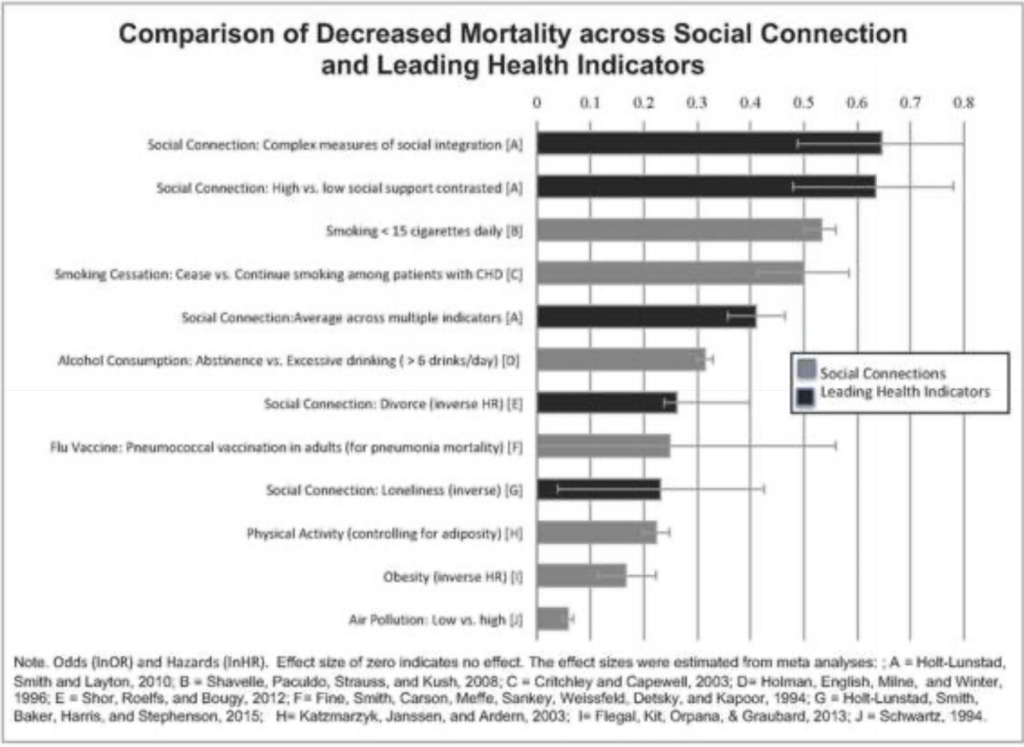
Comparison of Decreased Mortality across social connection and leading health indicators 3

Physical health

In addition to their association with increased mortality risk, social isolation and loneliness are linked to various health issues, including cardiovascular diseases, stroke, functional decline, and, to some extent, reduced immune function and diabetes. 3

Cardiovascular diseases
Cardiovascular diseases include diseases affecting the heart or blood vessels like heart attacks or strokes. A meta-analysis which is based on 23 different studies shows that loneliness and social isolation are linked to a 29 % higher risk of coronary heart disease and a 32 % higher risk of stroke. These associations were observed in both genders and remained significant regardless of traditional heart disease risk factors. Studies show that loneliness is linked to an increased risk of high blood pressure, particularly among middle-aged and older adults, and inflammatory reactivity. 3

Functional and motor decline
Loneliness is linked to increased functional and motor decline, including greater difficulty with activities of daily living and reduced muscle strength, mobility, and motor performance. 6 It remains unclear whether loneliness contributes to functional decline directly or indirectly through processes like cardiovascular diseases or inflammation. 

Diabetes and cholesterol
Few studies have linked loneliness to developing diabetes for men. A cross-sectional study in Switzerland shows that lonely people have a 40 % higher chance of developing diabetes and 31 % higher chance to have higher cholesterol levels. 8

Cognitive Health

Cognitive function encompasses a range of mental processes that enable an individual to acquire knowledge, reason, and carry out plans. These processes include perception, memory, learning, attention, decision-making, and language skills. 9

Cognitive decline
Several studies have explored the relationship between loneliness and/or social isolation, and cognitive decline, especially in older adults. Even though some studies show a link between loneliness and cognitive decline, they cannot agree on what part of the cognitive function is affected. 3

Alzheimer’s and Dementia
Most evidence suggests a correlation between loneliness and dementia, comparable to the other dementia risk factors like physical activity, low education and late-life-depression. 10 While a study from 2018 found no association between loneliness and dementia, there are other studies showing that there is a link between loneliness and developing dementia. To address the potential problem of reversed causality – where early-stage dementia leads to difficulties engaging in social interactions and therefore people feeling lonely – the study doesn’t include people in those early stages. 3

Mental health

A wide range of literature shows a significant relationship between loneliness and mental health issues like depression and anxiety as well as suicide and suicidal ideations. 3

Depression and Anxiety
Lonely individuals tend to experience more depressive symptoms and report being less happy, less satisfied, and more pessimistic. Additionally, loneliness and depression share common features, such as feelings of helplessness and emotional pain. 11 Another study also shows an association between poor social connection and social anxiety in both adolescents and adults. 1

Suicide and Suicidal Ideation
Studies indicate a connection between loneliness and suicide. A study of individuals who have attempted suicide found that loneliness is frequently cited as a contributing factor. 12

Taking loneliness seriously

Research shows that loneliness affects health, but the relationship is also bidirectional – some health conditions such as poor physical health, disabilities, or hearing loss, can also increase the likelihood of loneliness. The reported evidence highlights that loneliness should be taken more seriously as a risk factor for various health problems. 3


Sources

[1] J. Holt-Lunstad und Department of Psychology, Brigham Young University, Provo, Utah, USA, „Social Connection as a Public Health Issue: The Evidence and a Systemic Framework for Prioritizing the “Social” in Social Determinants of Health“, 2022. [Online]. Verfügbar unter: https://doi.org/10.1146/annurev-publhealth-052020-110732

[2] J. Holt-Lunstad, T. B. Smith, M. Baker, T. Harris, and D. Stephenson, “Loneliness and social isolation as risk factors for mortality: A meta-analytic review,” *Perspect. Psychol. Sci.*, vol. 10, no. 2, pp. 227–237, Mar. 2015, doi: 10.1177/1745691614568352. PMID: 25910392.

[3] J. Baarck, M. Kovacic und Joint Research Centre (JRC), „The Relationship between Loneliness and Health“, Publications Office of the European Union, literature review, 2022. doi: 10.2760/90915.

[4] J. Beller and A. Wagner, “Loneliness, social isolation, their synergistic interaction, and mortality,” Health Psychol., vol. 37, no. 9, pp. 808–813, Sep. 2018, doi: 10.1037/hea0000605. PMID: 30138019.

[5] J. Holt-Lunstad, T. F. Robles und D. A. Sbarra, „Advancing social connection as a public health priority in the United States.“, American Psychologist, Bd. 72, Nr. 6, S. 517–530, Sep. 2017, doi: 10.1037/amp0000103.

[6] K. Beaton and K. Grimmer, “Tools that assess functional decline: systematic literature review update,” Clin. Interv. Aging, vol. 8, pp. 485–494, 2013. Available at: https://doi.org/10.2147/CIA.S42528.

[7] A. S. Buchman et al., “Loneliness and the rate of motor decline in old age: the Rush Memory and Aging Project, a community-based cohort study,” BMC Geriatr., vol. 10, no. 1, p. 77, 2010. Available at: https://doi.org/10.1186/1471-2318-10-77. 

[8] R. A. Richard, S. Rohrmann, C. L. Vandeleur, M. Schmid, J. Barth, and M. Eichholzer, “Loneliness is adversely associated with physical and mental health and lifestyle factors: Results from a Swiss national survey,” PLoS One, vol. 12, no. 7, p. e0181442, Jul. 2017, doi: 10.1371/journal.pone.0181442. PMID: 28715478; PMCID: PMC5513556.

[9] K. Kiely, “Cognitive function,” in Encyclopedia of Quality of Life and Well-Being Research, A. C. Michalos, Ed., Dordrecht: Springer Netherlands, 2014, pp. 483–484. Available at: https://doi.org/10.1007/978-94-007-0753-5_2939.

[10] J. S. Kuiper, M. Zuidersma, R. C. Oude Voshaar, S. U. Zuidema, E. R. van den Heuvel, R. P. Stolk, and N. Smidt, “Social relationships and risk of dementia: A systematic review and meta-analysis of longitudinal cohort studies,” Ageing Res. Rev., vol. 22, pp. 39–57, Jul. 2015, doi: 10.1016/j.arr.2015.04.006. PMID: 25956016. 

[11] R. Mushtaq, S. Shoib, T. Shah und S. Mushtaq, „Relationship Between Loneliness, Psychiatric Disorders and Physical Health ? A Review on the Psychological Aspects of Loneliness“, JOURNAL OF CLINICAL AND DIAGNOSTIC RESEARCH, Jan. 2014, doi: 10.7860/jcdr/2014/10077.4828.

[12] L. M. Heinrich, E. Gullone und School of Psychology, Psychiatry, and Psychological Medicine, Faculty of Medicine, Nursing, and Health Sciences, Monash University, VIC 3800, Australia, „The clinical significance of loneliness: A literature review“, 2006. [Online]. Verfügbar unter: https://doi.org/10.1016/j.cpr.2006.04.002
#03 Are we living in an epidemic of loneliness?

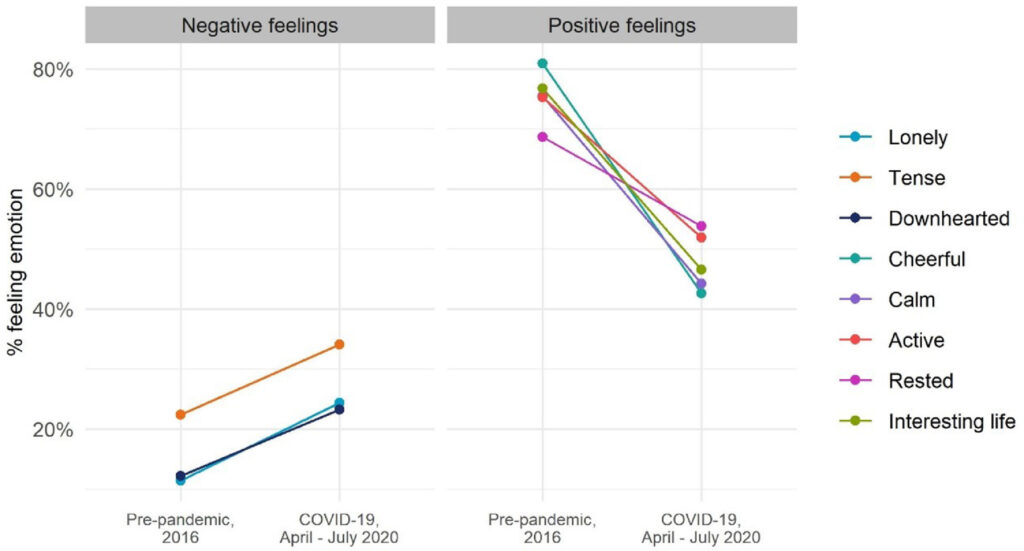
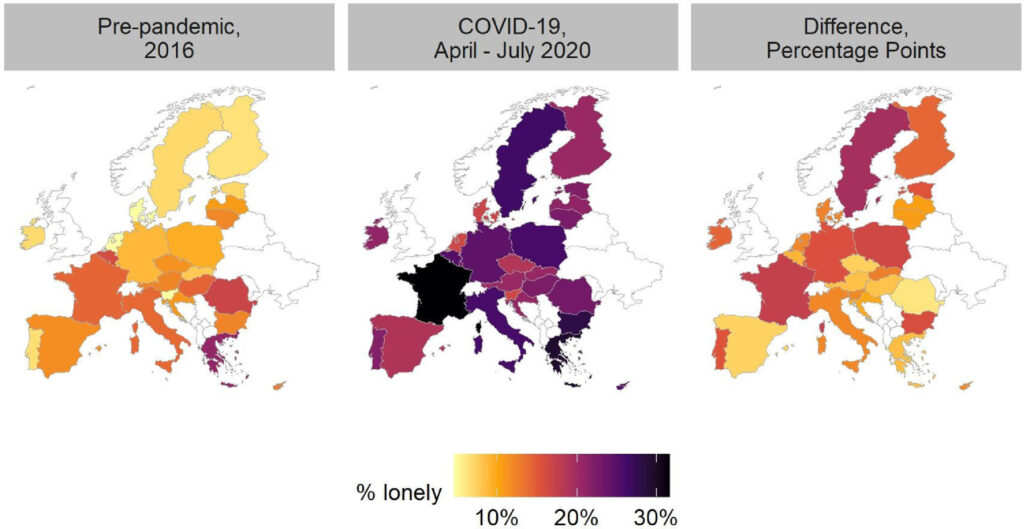
The heightened risk of loneliness during the COVID-19 pandemic has brought increased attention to the issue, leading to loneliness and social isolation being recognized as serious public health concerns.A study conducted by the IFO Institute and the European Commission reveals that in 2016, 12 % of people in the European Union frequently experienced the feeling of loneliness. During the initial months of lockdown, this figure increased to 25%. 2

Source: Loneliness in Europe before and during the COVID-19 pandemic 2

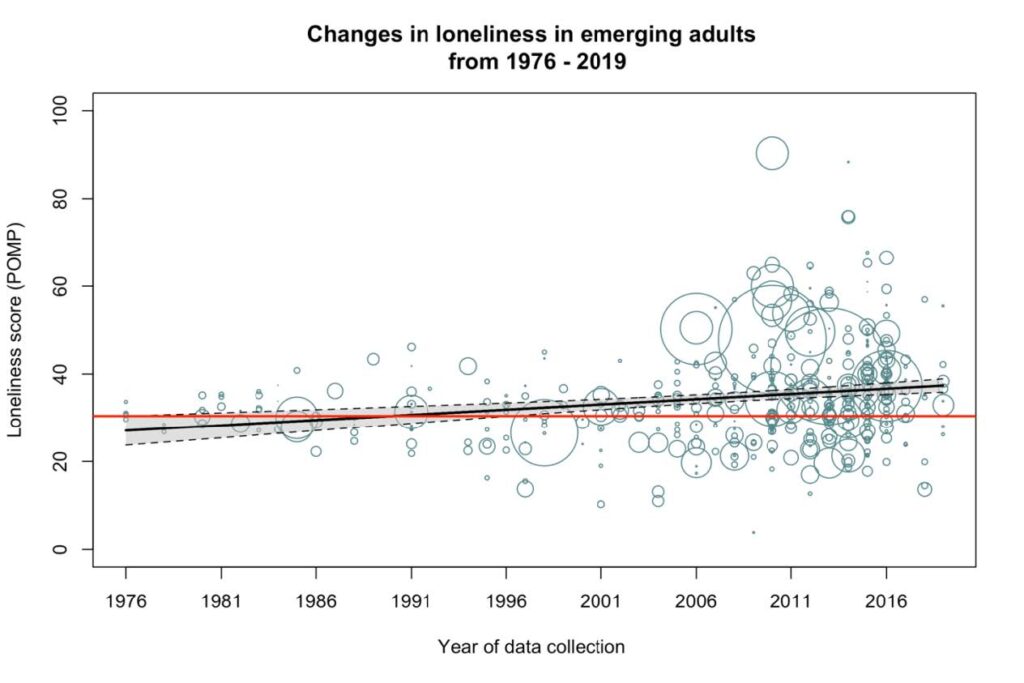
Some researchers even claim that we are living in an epidemic of loneliness right now. However, loneliness is not a modern-day phenomenon. A study by the American Psychological Association analyzed 345 studies comprising 437 independent samples, with a total of 124,855 young adults completing the UCLA Loneliness Scale between 1976 and 2019. Over these 43 years, the study revealed a gradual increase in loneliness. Even though there was constant increase in loneliness, talking about an epidemic of loneliness might be exaggerated. 3

Source: Is Loneliness in Emerging Adults Increasing Over Time? A Preregistered Cross-Temporal Meta-Analysis and Systematic Review 3

Who is at highest risk for loneliness?

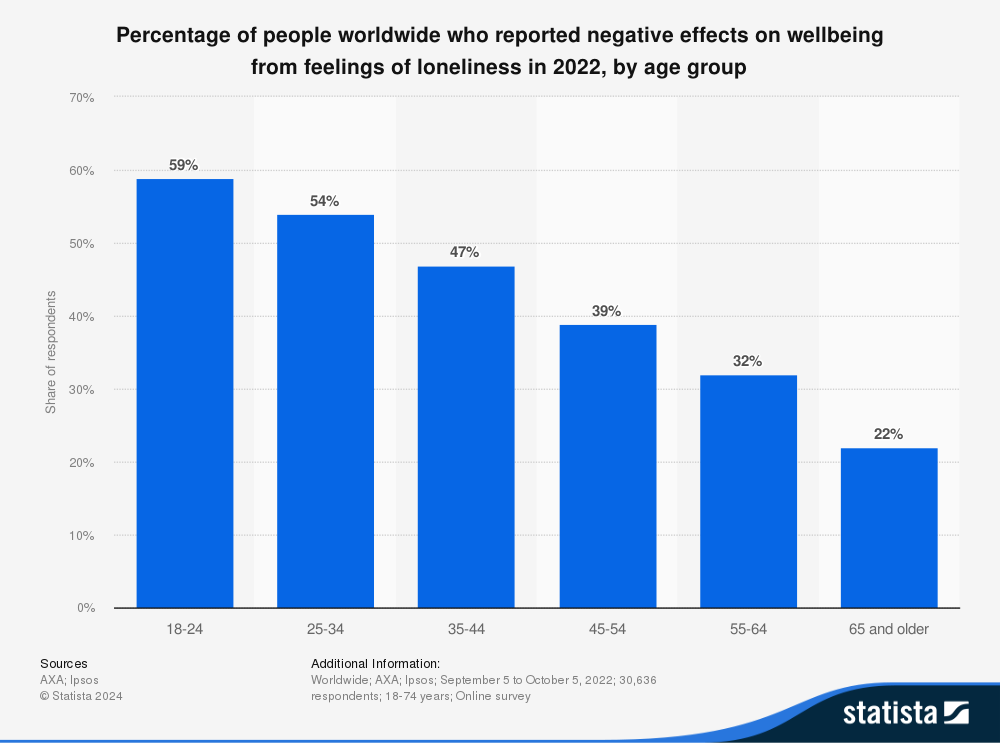
Age is a frequently studied aspect in connection with loneliness. For a long time, the focus was on older people, as they have a particularly high risk of being affected by loneliness. However more recent studied showed that there is a u-shaped relationship between age and loneliness, because also young people are highly affected by loneliness these days. 4

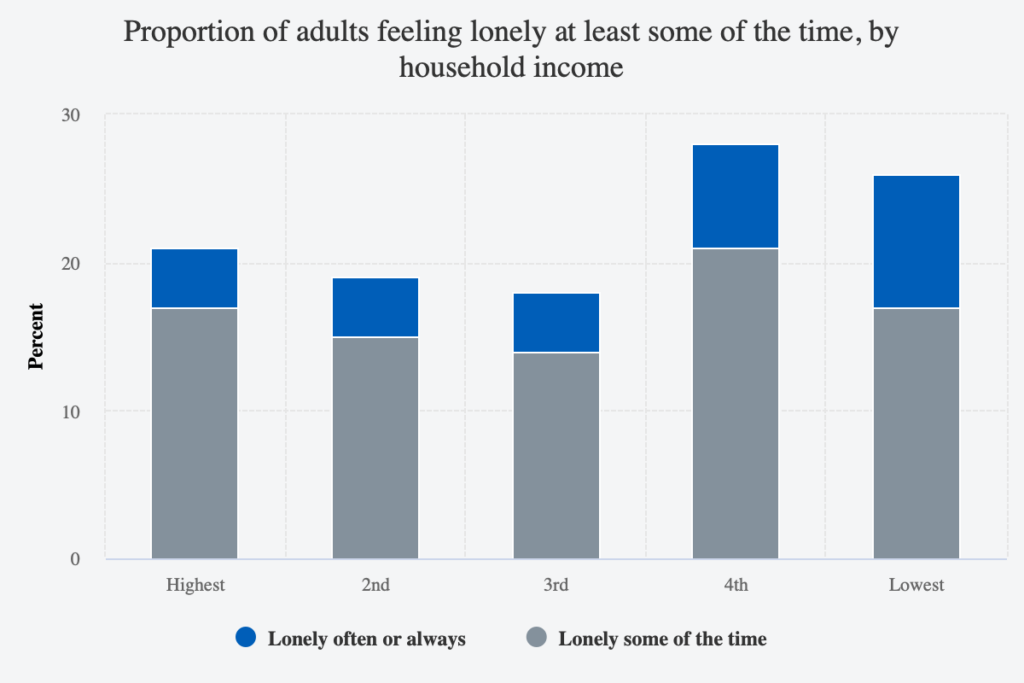
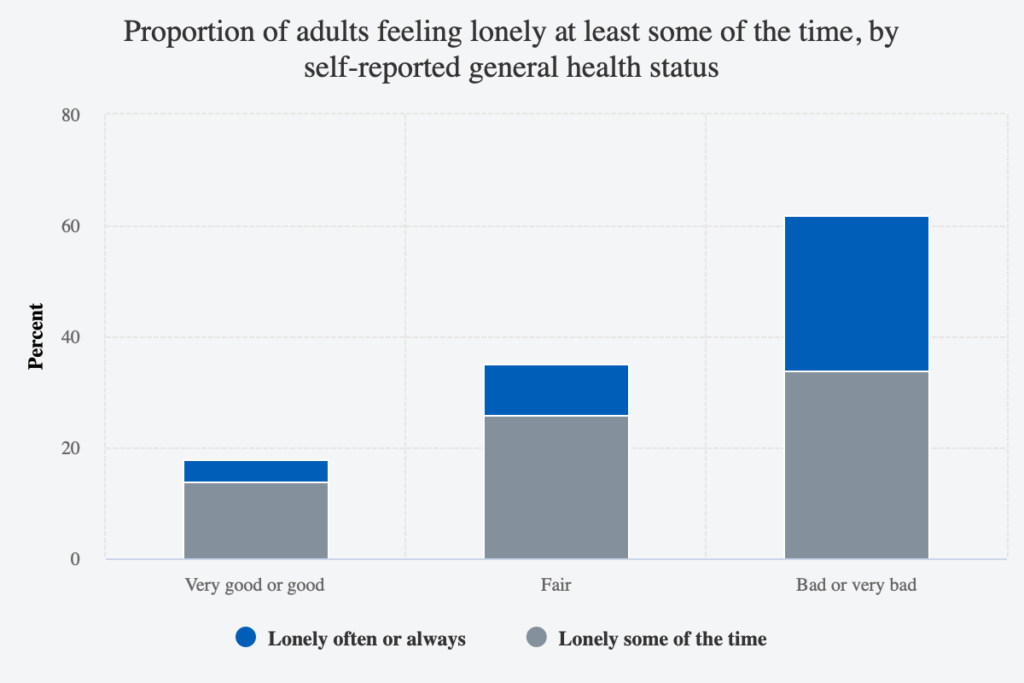
Examining socio-economic factors such as income, health, and living conditions, several studies indicate that individuals with lower income levels are more likely to experience loneliness. Similarly, those who report poor health tend to feel lonelier compared to individuals with good health. Furthermore, research shows that individuals living alone are more likely to experience loneliness. 2 5  

Source: Health Survey for England 2021: Loneliness and Wellbeing 5

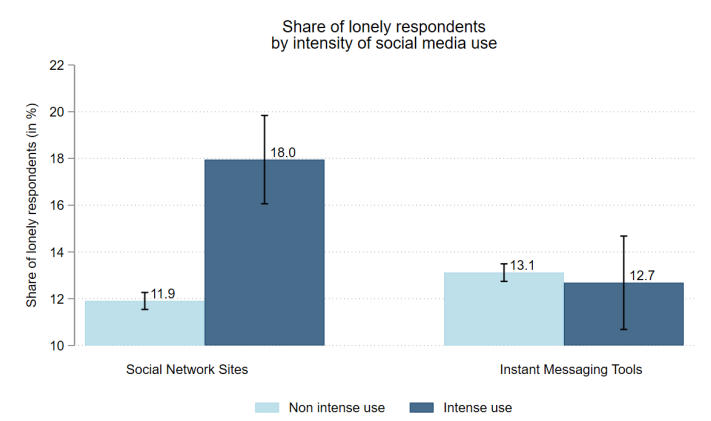
Additionally, technology, particularly social media, has a significant impact on our relationships and social interactions. Even though we are more connected than ever, people tend to feel more lonely nowadays. Excessive social media use (in the study from the European commission excessive means two or more hours per day on social media) can contribute to feelings of loneliness, a fear of missing out, and a lack of meaningful social connection. 6 7

Source: EU Loneliness Survey, 2022 6

Since several studies show the negative impact of loneliness on health and its growing significance in public health, several governments and institutions — such as the government of United Kingdom and Japan, the Ministry of Health in the Netherlands, and the European Commission — are developing strategies to combat loneliness. 

The next blog post explains which impact loneliness has on our health.


Sources

[1] JRC, „Loneliness and social connectedness: insights from a new EU-wide survey“, 2023.

[2] J. Baarck, B. D’Hombres und G. Tintori, „Loneliness in Europe before and during the COVID-19 pandemic“, Health Policy, Bd. 126, Nr. 11, S. 1124–1129, Sep. 2022, doi: 10.1016/j.healthpol.2022.09.002.

[3] S. Buecker u. a., „Is Loneliness in Emerging Adults Increasing Over Time? A Preregistered Cross-Temporal Meta-Analysis and Systematic Review“, journal-article, 2021. doi: 10.1037/bul0000332.

[4] S. V. Schnepf, B. D’Hombres und C. Mauri, Hrsg., Loneliness in Europe. 2024. doi: 10.1007/978-3-031-66582-0.

[5] NHS Digital, Health Survey for England 2021: Loneliness and Wellbeing. Available: https://digital.nhs.uk/data-and-information/publications/statistical/health-survey-for-england/2021-part-2/loneliness-and-wellbeing. Accessed: Jan. 7, 2025.

[6] B. Dhombres, M. Kovacic, S. V. Schnepf, and Z. Blaskó, Loneliness and social media use in the European Union, European Commission, 2024, JRC135806.

[7] V. H. Murthy, „Our Epidemic of Loneliness and Isolation: The U.S. Surgeon General’s Advisory on the Healing Effects of Social Connection and Community“, 2023. [Online]. Verfügbar unter: https://www.hhs.gov/sites/default/files/surgeon-general-social-connection-advisory.pdf

#02 Loneliness?

Loneliness is a universal human experience, yet it manifests in ways that are deeply personal and varied. What exactly is loneliness, and how can we better understand its dimensions and impact?

What is Loneliness?

Several studies describe a different definition of loneliness. As a discrepancy between the social interactions and relationships an individual desires and those they currently experience, which leads to a negative feeling of being alone. Here, however, being alone is not the same as feeling lonely. It is described as a perceived lack of social contact, 2 or as the unavailability or unwillingness of others to engage in social and emotional experiences 3, or as a condition in which an individual can interact with others but does not do it. 4

Loneliness is a multidimensional phenomenon due to its variations in intensity, causes, and circumstances. Therefore, it can be distinguished between three types of loneliness: emotional loneliness, social loneliness and collective loneliness.

Emotional loneliness “results from the lack of a close, intimate attachment to another person”. Someone, like a spouse or best friend, whom one can rely on for emotional support during hard times and validates one’s values.

Social loneliness is the absence of quality relationships with family or a group of friends who share the same interests and activities. 6  

Collective loneliness pertains to an individual’s sense of disconnection from their valued social identities or “active network” (e.g., group, school, team, or national identity), where one can engage with like-minded others, even if only at a distance, within the broader social context. 7

How to measure Loneliness?

Since loneliness is a subjective experience, its measurement can be challenging. It cannot be directly observed, and there are no objective indicators to assess it. As a result, loneliness is typically measured through self-reported methods, such as surveys and questionnaires. There are two types of measuring loneliness: direct and indirect. 

Direct Measures: People are asked directly if they are feeling lonely in a certain period of time. 

Indirect Measures: People are asked several questions but without using words like lonely or loneliness. The questions are about feelings and experiences related to loneliness. Like the wish to have someone to rely on or talk to about private topics. 

Over the time several scales have been developed for measuring loneliness. The two most known ones are the “University of California Los Angeles Loneliness Scale” created by Russell and Peplau and the and the “De Jong Gierveld Loneliness Scale” created by De Jong Gierveld and Kamphuis. 8

University of California Los Angeles Loneliness Scale (UCLA Loneliness Scale)

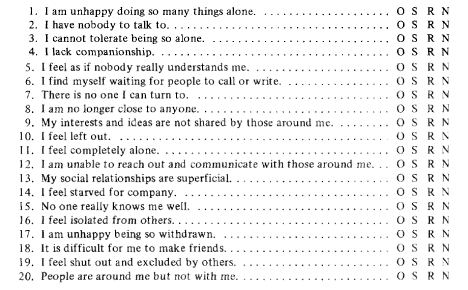
The survey consists of 20 statements, and respondents are required to indicate how frequently each statement applies to them. O: I often feel this way, S: I sometimes feel this way, R: I rarely feel this way, N: I never feel this way.  9

Source: D. W. Russell, L. A. Peplau: Developing a Measure of Loneliness
De Jong Gierveld Loneliness Scale

The original survey consists of eleven statements, in 2000 they created a shortened version with only six statements. Three of the statements are positively formulated and the other three are negatively formulated. The statements need to be answered with “no”, “more or less” or “yes”. This survey also considers the difference between emotional loneliness and social loneliness. 8

6 questions: 

  • I experience a general sense of emptiness.
  • I miss having people around.
  • I often feel rejected.
  • There are plenty of people I can rely on when I have problems.
  • There are many people I can trust completely.
  • There are enough people I feel close to.

What is Social isolation?

Loneliness and social isolation are frequently discussed in tandem or treated as synonymous concepts. 2 However, loneliness describes a subjective experience, whereas social isolation is an objective situation where someone is alone or lacks meaningful social interactions. 10 A person who has little contact to the family, friends or other people of a community is socially isolated. 11

Since belonging is seen as a fundamental human motivation. 12 A core aspect shared by most individuals is the need for love, acceptance, and understanding, which often motivates significant efforts to avoid experiencing loneliness. 


Sources:

[1] L. A. Peplau and D. Perlman, “Loneliness,” in Encyclopedia of Mental Health, H. S. Friedman, Ed., vol. 1, San Diego: Academic Press, 1998, pp. 571–581.

[2] G. C. Wenger, The Supportive Network: Coping with Old Age, 1st ed. Allen and Unwin, London, 1984

[3] K. S. Rook, “Research on social support, loneliness, and social isolation: Toward an integration,” Review of Personality & Social Psychology, vol. 5, pp. 239–264, 1984.

[4] S. Shalev, “On loneliness and alienation,” Isr. J. Psychiatry Rel. Sci., vol. 5, pp. 236–245, 1988.

[5] L. M. Heinrich, E. Gullone und School of Psychology, Psychiatry, and Psychological Medicine, Faculty of Medicine, Nursing, and Health Sciences, Monash University, VIC 3800, Australia, „The clinical significance of loneliness: A literature review“, 2006. doi: 10.1016/j.cpr.2006.04.002.

[6] R. S. Weiss, Loneliness: the experience of emotional and social isolation. 1974. [Online]. Verfügbar unter: http://psycnet.apa.org/record/1974-22306-000

[7] S. Cacioppo, A. J. Grippo, S. London, L. Goossens und J. T. Cacioppo, „Loneliness: Clinical Import and Interventions“, The Author(s), 2015. doi: 10.1177/1745691615570616.

[8] S. V. Schnepf, B. D’Hombres und C. Mauri, Hrsg., Loneliness in Europe. 2024. doi: 10.1007/978-3-031-66582-0.

[9] D. W. Russell, L. A. Peplau, Iowa State University, University of California, Los Angeles und Letitia Anne Peplau, „Developing a Measure of Loneliness“, Journal Of Personality Assessment, Juli 1978, doi: 10.1207/s15327752jpa4203_11.

[10] J. de Jong Gierveld, “Developing and testing a model of loneliness,” J. Personal. Soc. Psychol., vol. 53, pp. 119–128, 1987.

[11] C. Victor, S. Scambler, J. Bond und A. Bowling, „Being alone in later life: loneliness, social isolation and living alone“, Reviews in Clinical Gerontology, Bd. 10, Nr. 4, S. 407–417, Nov. 2000, doi: 10.1017/s0959259800104101.[12] Baumeister, Roy F. and Leary, Mark R., “The Need to Belong: Desire for Interpersonal Attachments as a Fundamental Human Motivation”, Psychological Bulletin 1995, Vol. 117, No. 3, 497-529

#01 Breaking social isolation in public spaces

Public spaces like parks, squares, and plazas are essential to urban life. These areas should offer opportunities for relaxation, escaping the busy city life and connection with others. But, most of the time people are for themselves, lacking meaningful interactions. This phenomenon is particularly striking in urban neighborhoods, where anonymity is growing, and the sense of community is shrinking. However, several studies have shown that belonging to a community has a positive effect on people’s mental and physical health (Cramer, Pawsey 2023), (Kitchen, Williams, Chowhan 2011). Baumeister and Leary (1995) describe belonging even as a fundamental human motivation. 

Therefore, the research investigates if interactive installations have the potential to transform the public space into an environment that breaks the social isolation by creating playful experiences that invites people to interact with the installation itself and create a space that encourage social engagement. Can such shared experiences between different people of different background and ages help to strengthen the sense of belonging, strengthen the community and connection within a neighborhood and create a space where people come together?

Source: https://dcist.com/story/18/12/07/let-there-be-light-two-interactive-art-installations-brighten-yards-park/
Source: https://www.portals.org/portal/vilnius

Personal motivation
I am living in a new neighborhood with a great nice park as the center of it, which actually could be a great place of community and interactions. However, the park is rarely used by residents of the neighborhood, primarily due to its lack of amenities. Only few weeks ago few benches were installed, but overall, the space remains largely uninviting.

Next steps
In the next step, I would like to take a closer look at urban design with a focus on public spaces. How are they defined and what must be considered when constructing a public space. I also want to focus on the social dimensions of public spaces. In the second part of research I will dive deeper into the design aspect. That includes learning about interactive installations, the different types available, tools and methods used to create them and studying best practices.

Bringing all these topics into a cohesive concept and finding a type or direction for interactive installations that can be universally used in different public spaces, can be challenges during this research.


Literature
K. M. Cramer and H. Pawsey, „Happiness and sense of community belonging in the world value survey“, Current Research in Ecological And Social Psychology, Bd. 4, S. 100101, Jan. 2023, doi: 10.1016/j.cresp.2023.100101.

P. Kitchen, A. Williams and J. Chowhan, „Sense of Community Belonging and Health in Canada: A Regional Analysis“, Social Indicators Research, Bd. 107, Nr. 1, S. 103–126, März 2011, doi: 10.1007/s11205-011-9830-9.

Baumeister, Roy F. and Leary, Mark R., “The Need to Belong: Desire for Interpersonal Attachments as a Fundamental Human Motivation”, Psychological Bulletin 1995, Vol. 117, No. 3, 497-529