Last semester, I explored how interaction design can combat loneliness – or more optimistically, how it can foster meaningful connection. With that in mind, I was particularly looking forward to the talk “Digital Intimacy: Feeling Human in an Artificial World” by Lutz Schmitt. It turned out to be a deeply thought-provoking session that challenged not only how I think about technology and intimacy, but also how I view my role as a designer.
Schmitt began by unpacking the idea of intimacy. Often, we associate intimacy with physical closeness or romantic relationships, but he broadened the concept: intimacy is really about emotional presence, trust, and vulnerability. With that foundation, he posed a compelling question: how can we design for that kind of closeness when people are physically apart?
To answer this, Schmitt presented a range of tools aimed at bridging emotional distance. These included connected sex toys, wearable devices like vibrating wristbands that signal touch or presence, and products like PillowTalk, which lets you hear your partner’s heartbeat remotely. What struck me was the emphasis on “small intimacies” – a gentle reminder that sometimes it’s the subtle gestures, that carry the deepest emotional weight.
One of the most impactful moments was Schmitt’s discussion of the “privacy paradox.” He pointed out that while these technologies can feel deeply personal, they also involve the sharing of incredibly sensitive data. In our pursuit of emotional closeness through digital means, we may be compromising privacy in ways we don’t fully understand. As designers, it’s tempting to focus on what’s emotionally compelling without fully considering the ethical implications. Schmitt’s reminder was clear: emotional design isn’t just about connection – it’s about responsibility.
A particularly complex and concerning topic was the growing use of AI companions. Schmitt described how people, especially those feeling isolated, are increasingly forming bonds with AI agents such as Replika. These tools are designed to feel responsive, empathetic, and emotionally supportive – and in many cases, users begin to treat them as if they were real relationships. While this might provide short-term comfort or serve as a form of accessible mental health support, I find this trend deeply problematic. These interactions can lead to a kind of emotional dependency, where users withdraw from real-world relationships and instead engage with systems that at the end of the day serve corporate interests, not human well-being.
What I appreciated most was the balanced tone of the talk and its honesty. Schmitt didn’t romanticize technology, but he didn’t dismiss it either. Instead, he encouraged us to reflect more deeply: how do our tools make people feel – not just functionally, but emotionally, physically, and psychologically? For me, the talk was both inspiring and unsettling. It highlighted the immense power designers have to shape human connection, while also reminding us of the ethical terrain we’re navigating. In short, “Digital Intimacy” wasn’t just about tools or interfaces – it was a call to design with empathy, with care, and with a clear-eyed view of the trade-offs we ask users to make.
At this year’s WebExpo in Prague, one of the talks that stood out most to me was Nadieh Bremer’s session titled “Creating an Effective & Beautiful Data Visualisation from Scratch.” With no prior experience using d3.js, I didn’t quite know what to expect. I was mainly curious about how data visualisation could be approached from a design perspective. But what Nadieh shared was much more than a technical intro, it felt like a live deep dive into creative thinking, problem-solving, and visual storytelling.
What set this talk apart was its format. Rather than giving a traditional slide-based talk, Nadieh did a live coding session. She started with a completely empty browser window and built the data visualisation from the ground up using d3.js. This format made the talk feel refreshingly honest and grounded. It was engaging to watch her work through the logic in real time – narrating each decision as she went, pointing out potential issues, and offering insight into how she solves problems as they arise. This transparency made the whole process feel approachable, even though I was unfamiliar with the tool.
What I appreciated most was how she balanced the technical with the creative. It wasn’t just about writing functional code; it was about shaping something visually appealing and meaningful. Nadieh showed how, with a bit of imagination, SVG can be used in unconventional and expressive ways. The result wasn’t a generic bar chart or pie graph – it was a visually rich and thoughtfully composed visualisation that clearly communicated the underlying data while also looking beautiful.
Her message about simplification really resonated with me. I often struggle with the tendency to include too much information in my designs, believing that more content adds value. Nadieh’s approach showed the opposite: that complexity can be made understandable through clarity, and that thoughtful visual design can make even dense data feel intuitive. She emphasized that effective data visualisation doesn’t just display information – it tells a story. And when done well, it can communicate more with less.
Beyond the content, I also want to mention how well-structured and calm her presentation style was. Live coding can be stressful to watch (and probably to do), but she created a relaxed atmosphere that made it easy to follow along. Even when something didn’t work immediately, she explained why and showed how to fix it – normalizing the trial-and-error nature of coding.
Overall, this talk was a highlight of WebExpo for me. It was both inspiring and informative, offering practical insights into a tool I hadn’t encountered before. It made me want to experiment with data visualisation myself and gave me a clearer sense of how design can play a crucial role in making complex information understandable, and even beautiful.
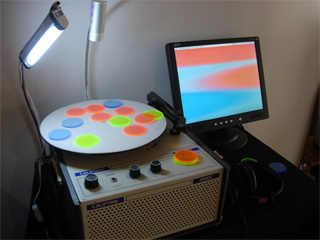
The paper introduces spinCycle, an interactive music performance system by Spencer Kiser. It uses a turntable and colored plexiglass disks which are placed on the spinning turntable. A camera tracks their color and position and transforms those visual patterns into sound in real time. This System creates a unique mix of visual design, sound and interactivity.
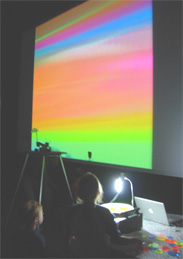
On the technical side, spinCycle uses a webcam to capture the rotating disks, and a patch built in Max/MSP/Jitter processes the video feed. The system applies edge detection to identify when and where each color appears, triggering the corresponding sound connected to the color. A live visual feed is projected during the performance, so the audience can directly see how the visual patterns control the music and therefore the connection between color and sound.
The system can function as a drum machine or sine wave generator. In the drum machine version, each color triggers a different sound (kick, snare, hi-hat). In the sine wave version, each color is hard coded to a sine wave. In this option it is also possible to overlap disks to form secondary colors and harmonies.
I found it fascinating that the idea of connecting color and sound goes back to ancient cultures, including the Chinese and Persians. In the west, Sir Isaac Newton tried to map colors to musical tones with his “Opticks” in 1704. He made a connection between their mathematical relationship to each other and the relationship between the notes of the musical scale.
My thoughts on spinCycle
I think spinCycle is a fun concept that nicely blends visual art, physical interaction, and sound design. Coming from a visual design background, I sometimes find it challenging to fully grasp the logic behind sound design. That’s why I like this approach of using visual patterns to generate sound which creates a direct and intuitive connection between what you see and what you hear.
What I especially like is that the interface seems very playful and intuitive. It invites you to experiment with colors and spatial arrangements, making sound creation feel more like visual composition. For me, this is a fun and experimental way to make sound design more approachable for visual designers. I also find it fascinating to consider how each color can take on a mood or character through its associated sound. Many people naturally associate colors with certain emotions, and by layering sound onto color, it adds a new emotional dimension. For instance, a soft sine wave could enhance the calmness often associated with blue, while a sharp snare might amplify the energy or urgency linked to red. This creates an opportunity to explore how visual and auditory elements can work together to express emotion in a multisensory way.
However, after reading the paper, I still have some technical questions. While the concept is clear, I feel the technical implementation — especially the way video input is converted into sound — isn’t described in much detail. Since I’ve worked with Max/MSP before, I’m really curious to see how the patch is built. It would be helpful to see how the video tracking, color detection, and sound triggering are structured within the patch.
Overall I think spinCycle is a very fun and creative tool, which I would love to try it myself.
In my last ten blog posts I researched about loneliness and social isolation, focusing on how we as interaction designers can combat loneliness and how we can design for connection. I started by defining loneliness and social isolation, discussing how they are measured, and sharing statistics on who is most affected and their impact on mental and physical health. I then introduced the Theory of Third Places, and how important public spaces are for well-being and social connectedness. This led to an exploration of Human-Centered Design for public spaces and how interaction design can help shape these environments to encourage social interactions. Since a large part of our lives takes place online already, I want to take a more analog approach but still does not forego a digital aspect. This brought me to interactive installations and how they can strengthen social interactions in public spaces. I looked at how to design engaging interactive installations and key factors to consider ensuring people participate and connect with each other.
Prototyping
The first task in Design & Research 2 was to create three lo-fi prototypes, ideally linked to our Master thesis. To be honest, I am not sure if I want to continue with this topic for my Master Thesis, but for now my three prototypes are connected to it.
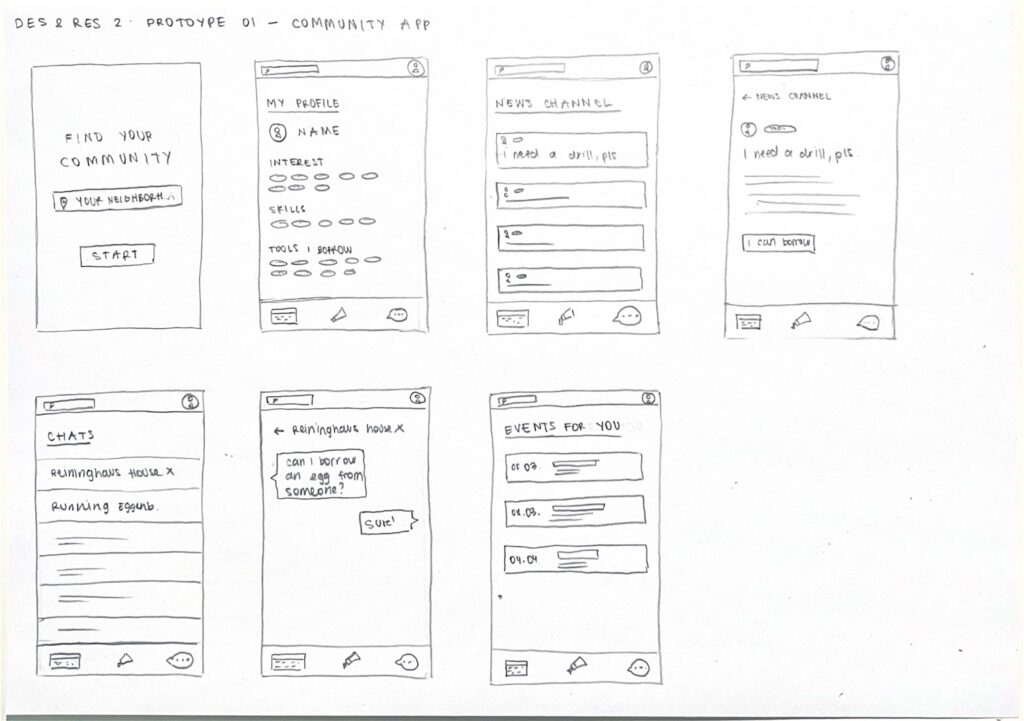
Prototype 01 – COMMUNITY APP
Although I wanted to take a more analog approach to the topic of loneliness, I wrote down all ideas that came to my mind and the first one was a community app. An app where you can connect with people in your neighborhood. You can find people with the same interests and hobbies, borrow tools you don’t own, arrange pet sitters while you are on vacation, get help with household repairs and discover local events.
Prototype 02 – SMART SOCIAL BENCH
A bench equipped with a small display that lights up when someone sits down, signaling an invitation for others to join. The display offers small conversation prompts such as “Tell me about your day” or “What’s your favorite song?” to encourage interaction. Additionally, a two-player mini games are included to further facilitate engagement and interaction.
Prototype 03 – INTERACTIVE INSTALLATION
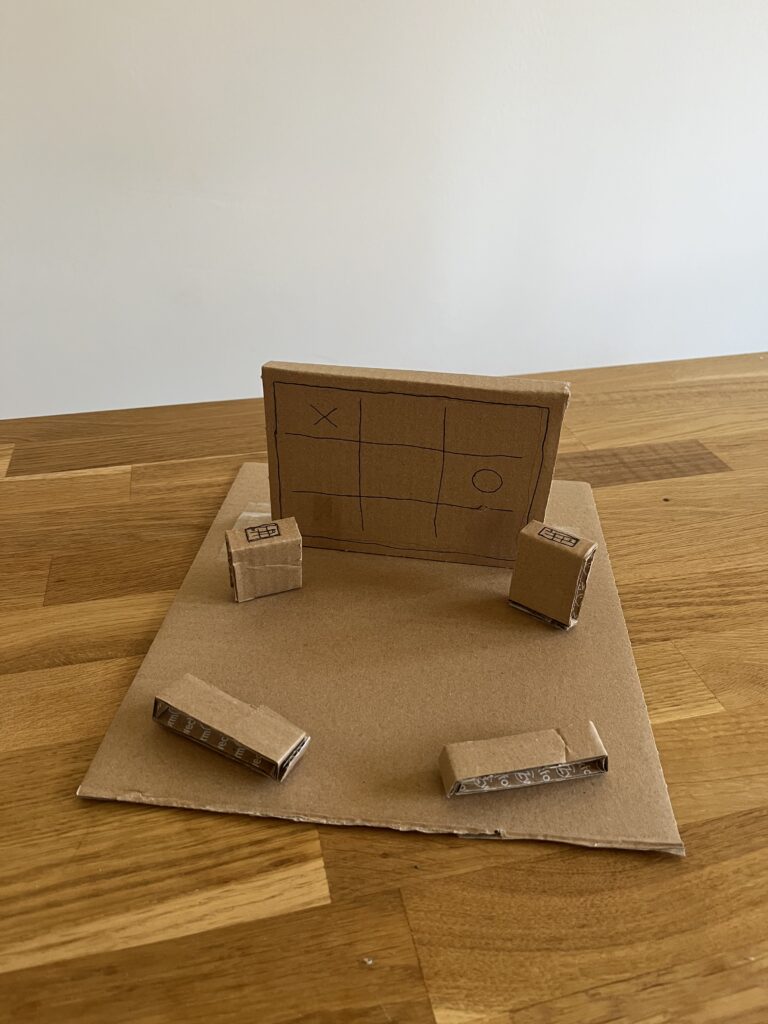
The last prototype is what I already thought about during the first semester – an interactive installation. A large screen installed in a public space, accompanied by two interactive tablets or screens that allow people to play mini games together, such as Tic-Tac-Toe for example. The setup is designed to encourage spontaneous social interactions among strangers or friends passing by. To make the space more inviting and inclusive, seating options are added nearby, providing a comfortable spot for people to watch the game, cheer on players, or even join in when a new round begins. This setup transforms the public space into a casual, engaging meeting point, fostering social connection through play and shared experiences.
Speed Dating
For the next class of Design & Research 2 we had to bring one of our prototypes. Since I already wrote about interactive installations, I brought my third prototype. We did a speed dating where we talked about our prototype with a different person every round to get more different insights, feedback and ideas. In the five rounds we got different task: guessing what the prototype was, suggesting additional features, describing it as if it is a dating profile, imagining a TED Talk about it, and reflecting about the most unexpected feedback.
Insights
Everyone I spoke with understood that my prototype is an interactive installation designed for two people to engage with each other.
One person suggested that instead of having a large screen with two control elements, I could use multiple small tables with built-in screens, allowing more people to interact rather than just two.
The description of the installation’s dating profile would be: Fun hanging out with.
Since I want to place the installation in a public space, I need to consider changing weather conditions and use waterproof materials. Additionally, the individual components should be securely built to prevent theft.
Interactive installations can transform public spaces into hubs of creativity and connection. Yet, designing interactive installations that do more than capture attention — that genuinely engage people — requires more than just technical expertise. It takes a deep understanding of human behavior, user experience, and the dynamics of engagement. Designing for engagement means creating experiences that are intuitive, immersive, and meaningful; it means creating work that users will interact with and connect to on a deep level.
Only when people are truly engaged, can we as designers create an environment that allows for lasting memories to be made, shared with others, and revisited. As I’ve described in my previous blog posts, fostering engagement in public spaces can reduce social isolation and strengthen the sense of belonging. The goal is not just to capture attention but to transform fleeting moments into moments of connection.
User Experience in Interactive Installations
User experience is fundamental to the success of any interactive installation. It includes emotional, physical, intellectual, and social aspects, making each experience distinct and significant. UX is informed by various fields, as noted by several experts like Nathan Shedroff and Don Norman, who emphasize the need to design for emotions, enjoyment, and meaningful interactions. UX cannot be simplified to separate components; rather, it arises from the interaction among people, technologies, activities, and the broader social and cultural environments. 1
Understanding Engagement
Building on the foundation of a solid user experience, engagement takes it a step further by ensuring that users aren’t just interacting but becoming fully immersed in the experience. Engagement is not just participation – it is about ensuring that the interaction flows. Shedroff identifies five key features of engagement: identity, adaptivity, narrative, immersion and flow.
Identity: “Identity is needed for authenticity in the experience and expression of the self. The authenticity of an experience is about ensuring experiences are real, or realistic, and consistent.”
Adaptivity: “Adaptivity is to do with change and personalization and with changing levels of difficulty, pace and movement.”
Narrative: “Narrative is to do with telling a good story, with convincing characters, plot and suspense. Narrative is not just about fiction, however. […]”
Immersion: “Immersion is the feeling of being wholly involved within something, with being taken over and transported somewhere else. You can get immersed in all manner of things (such as reading a book) so immersion is not about the medium; it is a quality of the design.”
Flow: “[…] flow is the sense of smooth movement, the gradual change from one state to another.” 1
How to Design for Engagement
Know your Audience Knowing and understanding the target audience is crucial to creating engaging and interactive installations. It makes a big difference whether the audience consists of children, tech-savvy individuals, or a broad general public, as each group requires a specific and tailored approach. The better the installation is adapted to the needs and abilities of the audience; the more likely people are to actively engage with it.
Prioritize Intuitive Interactions It is important that interactive installations are designed to be intuitive and straightforward. Research on intuitive interactions in public spaces shows that overly complex and confusing interfaces and interactions can hinder user engagement. 3 Affordances play a crucial role here, as they define the relationship between the design of an installation and the user’s capabilities. According to Norman in “The Design of Everyday Things”, perceived affordances are particularly important — these are the action possibilities that are made obvious through design. 4When an installation’s affordances are clear and aligned with users’ expectations and abilities, it enhances ease of use and promotes more meaningful interaction, ultimately improving user engagement.
Accessibility and Inclusivity To truly engage diverse audiences, designers must ensure installations are accessible to everyone. This includes providing physical access, sensory accommodations, and possibly language-neutral designs. 5
Storytelling Good storytelling engages the user by creating an emotional connection and leaving lasting impressions. Through experiences that evoke strong emotions — such as awe, joy, sadness, or curiosity — strong engagement can be fostered. A compelling story, whether abstract or real, gives people the feeling of purpose and discovery. Through emotional resonance, the experience becomes not only memorable but also increases the likelihood that people will share it, thereby amplifying its impact. 6 7
Incorporating Multisensory Experiences Incorporating multisensory experiences into interactive installations enhances user engagement by appealing to multiple senses, such as sight, sound, touch, and even smell or taste. This approach creates more immersive and memorable experiences. 8
Personalization Personalization in interactive installations significantly enhances engagement by allowing participants to shape the experience through their actions. It could be visual feedback, sound, or even changing environmental elements. Customizing the experience empowers users, making them feel more connected and involved, as their choices directly influence the outcome. 9
Enjoyment Designers are increasingly focusing on integrating pleasure into their designs alongside usability, enhancing both emotional and hedonistic appeal. The focus is on creating enjoyable experiences by addressing physical, social, and psychological aspects in design. Don Norman also emphasizes these factors in improving user experience. Additionally, gamification principles explore how different types of fun — such as challenging, relaxing, meaningful, and social—drive engagement, enjoyment, and learning, highlighting the emotional impact of well-designed interactive experiences.1
Aesthetics Aesthetics is rooted in the appreciation of beauty, how things are sensed, felt and judged. It plays a significant role in interactive installations. Experiences can be divided into pragmatic attributes (effectiveness and efficiency) and hedonic attributes (emotion and enjoyment). Emotions are the core of experiences, as they are closely intertwined with cognition, motivation and action. 1
Social Interactions Social interactions play a crucial role in increasing engagement in interactive installations, particularly through collaboration. These social dynamics shape how participants connect with the installation and each other, enhancing their overall experience. Installations become more engaging when they allow people to share the experience, leading to deeper emotional connections. 10
As designers, our task is beyond creating eye-catching installations — we are shaping the future of public spaces. So, as we move forward, let’s ask ourselves: how can we continue to break barriers and design experiences that invite people to engage not just with the technology, but with each other, building a more connected and inclusive world?
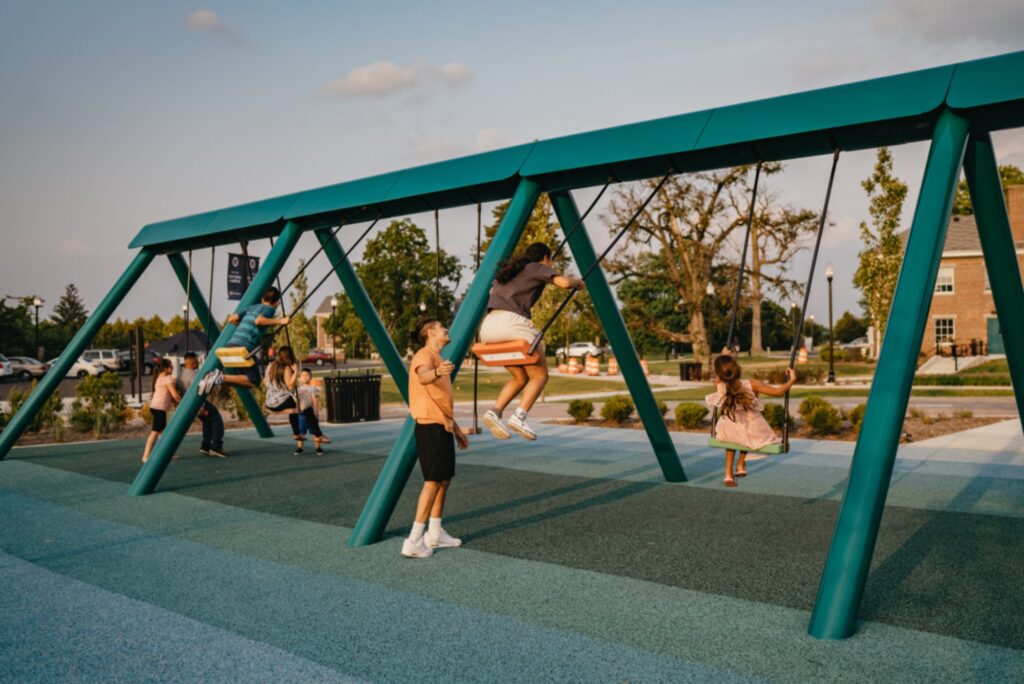
Inspired by the acclaimed 21 Balançoires (21 Swings) installation, The Swings: An Exercise in Musical Cooperation is a standalone, touring musical installation designed for international audiences. This interactive artwork features a series of musical swings that create harmonized melodies when used collectively. Certain musical patterns emerge only through cooperation, encouraging participants to synchronize their movements with others. It’s a playful experience that fosters connection and collaboration from the very first swing. With The Swings, participants engage their entire bodies to make music, fostering a sense of togetherness and shared ownership of public space. The result is a large-scale, collective instrument that unites people of all ages and backgrounds. Designed to transform urban environments, festivals, and special events, this installation offers a unique approach to communal music-making. Since its debut in 2011, the original 21 Swings installation has drawn millions of visitors to Montréal’s Quartier des Spectacles, where each swing moves an average of 8.500 times per day. 11
It draws the public in positive ways. It made our city feel like a genuine urban destination.
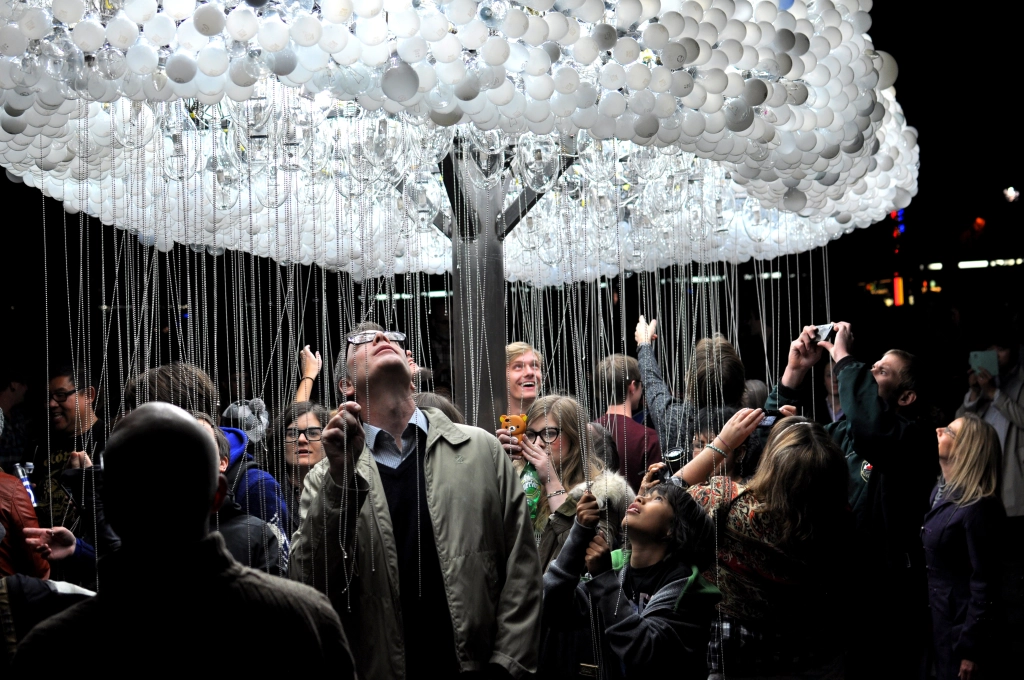
CLOUD is an interactive light sculpture, composed of 6.000 repurposed incandescent bulbs. Using pull-chain switches, participants work together to animate bursts of light, creating a shifting display reminiscent of lightning.
Blending playfulness with collaboration, CLOUD transforms viewers into performers, illustrating how individual actions contribute to a greater whole. The artwork offers both participation and contemplation, as those beneath the sculpture shape its movement while others observe the evolving patterns. Drawing on the universal imagery of rain clouds, CLOUD transcends cultural and language barriers, inviting shared wonder and connection. 12
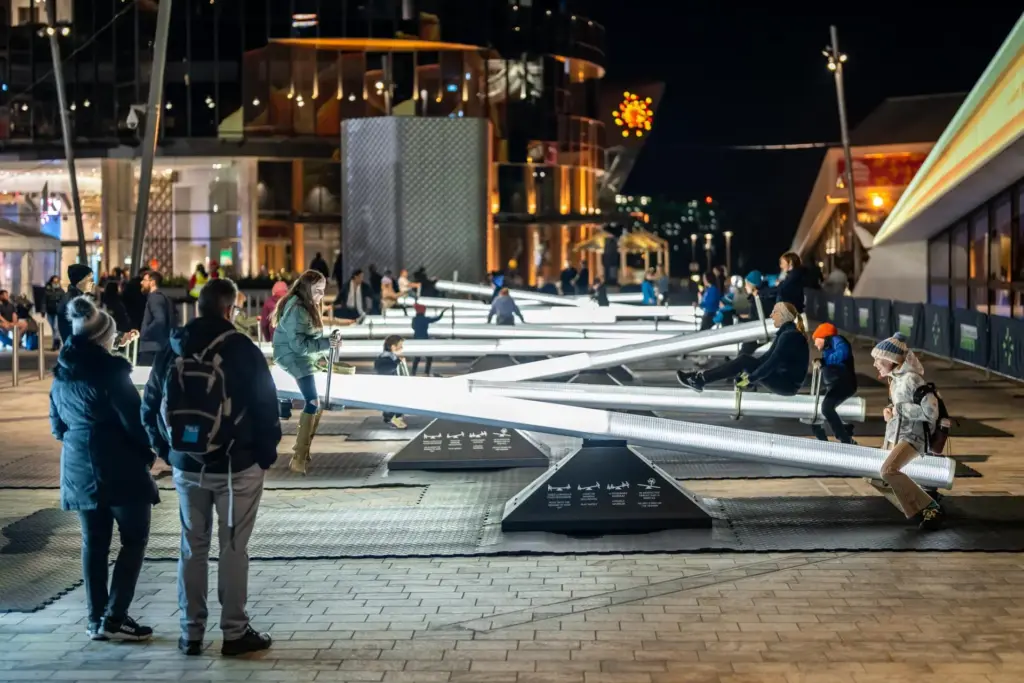
Impulse invites you into a playful, multisensory experience centered around a childhood classic: the seesaw. This interactive installation features a series of seesaws that respond to movement with shifting lights and sounds, transforming public space into an ever-evolving spectacle. More than just a playful ride, Impulse is designed with intentionality. Inspired by serialism — a structured musical composition technique — the installation creates dynamic zones of energy and tranquility, ensuring a harmonious blend of motion and sound.
Encouraging play, laughter, and connection, Impulse fosters a shared experience that brings people together, turning a simple act of movement into a joyful expression of community. 13
Sources
[1] D. Benyon, Spaces of Interaction, Places for Experience. 2014. doi: 10.2200/S00595ED1V01Y201409HCI022.
[2] N. Shedroff, Experience Design, a Manifesto for the Creation of Experiences. New Riders, 2009, pp. 9–10.
[3] L. Hespanhol and M. Tomitsch, “Strategies for intuitive interaction in public urban spaces,” Interacting with Computers, vol. 27, no. 3, pp. 311–326, May 2015, doi: 10.1093/iwc/iwu051.
[4] D. Norman, The Design of Everyday Things: Revised and Expanded Edition. Hachette UK, 2013.
[5] „What is inclusive design?“ https://www.inclusivedesigntoolkit.com/whatis/whatis.html
[6] „What is Storytelling?“, The Interaction Design Foundation, 30. November 2024. https://www.interaction-design.org/literature/topics/storytelling?srsltid=AfmBOooli8H26zn96VkuoNycaHkmn_oTQgdY-NcWh1BKTjmWxgABHoDz#how_storytelling_works_in_design-1
[7] M. L. H. M. Hanapiah und S. M. Nasir, „A Systematic Review towards Evolution of Interactive Storytelling and Audience Engagement in Films“, International Journal Of Creative Multimedia, Bd. 5, Nr. 1, S. 55–73, Apr. 2024, doi: 10.33093/ijcm.2024.5.1.4.
[8] L. Lin and L. Lu, “Research on the Design of Multisensory Interactive Experiences in Museums Based on Embodied Cognition,” in HCI International 2024 Posters, C. Stephanidis, M. Antona, S. Ntoa, and G. Salvendy, Eds., vol. 2119, Cham, Switzerland: Springer, 2024, pp. 1-10. [Online]. Available: https://doi.org/10.1007/978-3-031-61966-3_23.
[9] B. Moggridge, Designing Interactions. The MIT Press, 2006.
[10] J. Schell, The Art of Game Design. 2008. [Online]. Verfügbar unter: https://dx.doi.org/10.1201/9780080919171
In this post, I want to explore the process of designing and creating interactive installations.
Process of designing an interactive installation
Creating an interactive art installation involves several steps, from defining the concept and technology to the final implementation.
Defining the concept The first step is to brainstorm and define the core idea of the installation. Interactive Art flourishes from storytelling and creating memorable experiences. These questions can help defining the concept.
What is the main theme or message of the installation?
How will the audience engage with the artwork?
What emotions or experiences should be evoked?
The focus of the concept should always be on the emotions and the story that is to be conveyed. Immersive and interactive art aims to create connections and often uses human behavior as a narrative element. The theme can be a personal interest, an abstract idea or social problems. The more meaningful and moving the topic, the greater the likelihood that it will appeal to people.
Additionally, identifying and understanding the target audience is crucial for interactive installations. It helps to tailor the experience to their preferences, needs and behaviors. While designing, accessibility should always be a priority, to ensure that the installation is inclusive and engaging for everyone – regardless of background, ability or familiarity with digital art.
Choose the right setting The physical environment where the installation should be is crucial for the planning, since it influences technical as well as artistic decisions. Whether the installation is in a museum or in a public place, the size and location of the space, accessibility, light and sound and general infrastructure are important factors that need to be considered.
Public spaces are particularly suitable for interactive installations as they enable a high level of participation and reach many people in urban areas. Placing art in public spaces not only makes it more accessible but also allows it to be seamlessly integrated into people’s everyday lives. However, designing for public spaces requires careful consideration of any necessary permits and insurance.
Choose Technology and Medium As soon as the concept is done, the next step is to decide which sensory elements like light, sound and touch will transport the theme the best. If the goal is to create dynamic visuals that transform a space – projection mapping might be the right choice. If there should be different layers of interaction and the viewer should fully immerse with the installation AR or VR might be the right technology. The selection of the right sensor (e.g., motion, touch, proximity) and output devices (e.g., displays, projectors, speakers, actuators) is essential to bring the vision to life. It is also important to determine whether the installation will be physical, digital, or both. Each element and technology should smoothly integrate with each other to enhance the overall experience, creating a seamless and immersive environment for the audience. 1 2 3
Software and Tools that can be used
Processing: A simple programming environment to develop visually oriented applications. It is a design and prototyping tool which is used for creating large-scale installations. 4
TouchDesigner: A node-based visual programming environment and a great tool for interactive shows and installations. 5
Max/MSP: A visual programming language for creating interactive software. 6
Unity: A real-time development platform often used for creating 3D interactive experiences. 7
Arduino: An open-source electronics platform based on easy-to-use hardware and software. It’s intended for anyone making interactive projects. 8
MadMapper: A reference application for Projection Mapping, LED installations and laser shows. 9
Resolume Avenue & Arena: It is the industry-leading software used by VJ’s. 10
Prototyping and Redefining Prototyping is an essential step before building the full installation, allowing to test and refine the ideas. This phase provides an opportunity to experiment with various interactions and responses to identify the most effective setup.
Implementing and Testing Once a working prototype has been created that does justice to the concept, the next step is to build the physical environment of the installation. Whether it’s an entire room, a sculpture or digital screens, this forms the basis for the entire installation. Once the foundation is in place, the next step is to implement the technology – placing the sensors, projectors or programming a computer. After implementing the final installation, it is important to test everything again very carefully to check if all interactions such as movement, touch or other sensors work.
Observing Interactive installations thrive on the involvement of visitors – it is therefore advisable to be present and observe how people interact with the installation. This way, any adjustments can be made. 1 2 3
Challenges in interactive Installations/art
Although interactive installations or interactive art is very captivating and modern right now, they come with some challenges – whether be technical, creative or logistical. These factors can make creating interactive installations a complex task.
Technical Challenges in Implementation Interactive installations usually involve different technologies – sensors, software and hardware – which can be a challenge to bring all these individual elements smoothly together. Issues with the accuracy of sensors, the response time from input to output or the stability of the system can complicate the process. It is therefore even more important to test everything carefully before launch.
Balancing artistic vision and technological feasibility One of the biggest challenges is finding the right balance between artistic creativity and the limitations of technology. It can easily happen that the creative idea is too complex and ambitious and exceeds the possibilities of the technology. It is therefore important to discuss expectations and ideally explore the technical possibilities early on in the concept in order to create a working and realistic interplay between creativity and technology to make the interactive installation a reality.
Collaborative challenges in multidisciplinary teams In order to create an interaction that captivates people and creates a high level of engagement, it possibly requires the collaboration of different disciplines such as artists, designers, developer, engineers or even psychologists or sociologists. A large interdisciplinary team brings many advantages, and each person can contribute their own ideas and expertise. However, a large team can also quickly become a challenge. It is therefore important to have clear communication so that everyone is on the same page when it comes to the project. This is the only way to ensure good cooperation, which in turn leads to a successful interactive installation. 11
Sources
[1] S. Zafeiriou, „The Ultimate Guide to Immersive Art Installations: Creating Engaging and Interactive Art Experiences | Steve“, Steve Zafeiriou, 18. Januar 2025. https://stevezafeiriou.com/guide-to-immersive-art-installations/
[2] „Exploring Interactive Art Installations: History, Examples, and Creation“, Visual Alchemist, 29. Juni 2024. https://visualalchemist.in/2024/07/22/exploring-interactive-art-installations-history-examples-and-creation/
[3] D. Team, „Interactive Art Installation: Tips & Best Practices“, Daisie Blog, 18. Juli 2023. https://blog.daisie.com/interactive-art-installation-tips-best-practices/#concept-of-interactive-art
[5] Elburz, „What is TouchDesigner? A TouchDesigner FAQ“, The Interactive & Immersive HQ, 8. November 2024. https://interactiveimmersive.io/blog/touchdesigner-lessons/what-is-touchdesigner/
[6] „What is Max? | Cycling ’74“. https://cycling74.com/products/max
[7] „Echtzeit-Entwicklungsplattform von Unity | 3D, 2D, VR- und AR-Engine“, Unity. https://unity.com/de
[8] „Arduino – home“. https://www.arduino.cc/
[9] „MadMapper Home“. https://madmapper.com/
[10] „Avenue & Arena – Resolume“. https://www.resolume.com/software/avenue-arena[11] T. Emb, „The Intersection of Art and Technology in Interactive Installations“, EMB Blogs, 16. April 2024. https://blog.emb.global/art-and-technology-in-interactive-installations/#emotional-impact-of-interactive-art
There are various approaches that interaction designers can take to help combat loneliness. It is not only important to tackle loneliness itself, but also to focus on strengthen interpersonal connections and relationships. Since a large part of our lives already takes place online and we spend a lot of time in front of our phones, I would like to pursue an approach that focuses more on the real and analog world – but still does not forego a digital aspect.
I would like to investigate whether and how interactive installations can contribute to strengthening social interactions in public spaces. Interactive installations have established themselves as an increasingly important medium for combining technology, art and user experience. 1 Such installations not only fascinate but also create a unique experience through active participation and interaction. As noted by Edmonds “interactive art is distinguished by its dynamic behaviour in response to external stimuli, such as people moving and speaking.” Art becomes interactive when audience participation plays a central role in the work. The audience’s actions can influence and alter the artwork itself. When creating interactive art, the artist focuses not only on the visual or auditory aspects of the piece but also on how it engages and interacts with the audience, making this interaction a vital part of its nature. 2 For example, an installation could:
Alter the lights, sounds, or visual aspects in response to the people’s presence.
Support teamwork, where several users would have to physically and digitally interact with each other in order to activate particular features.
Change and improve according to the behavior of a whole audience, which may cause a dynamic and unpredictable outcome.
How interactive installations work
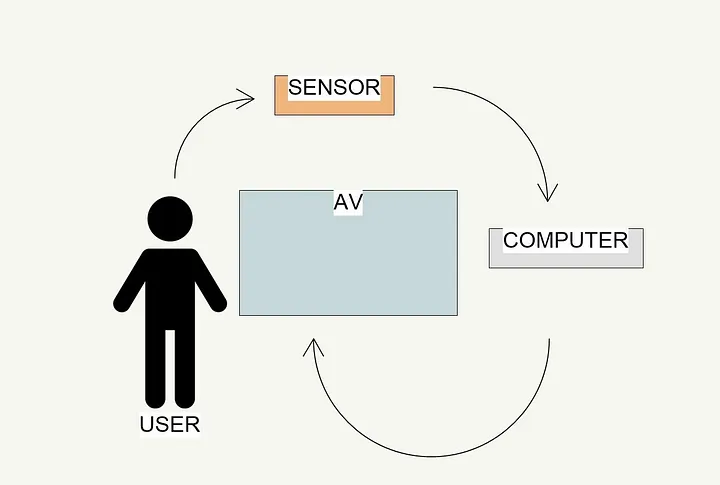
Interactive installations work through input from the audience or the environment. Interaction is achieved through a combination of sensors, software, physical elements or hardware that recognizes and processes the input. These inputs can include:
Movement: Motion sensors and cameras record audience movements, triggering the pre-set reactions.
Touch: Pressure-sensitive surface or touchscreens allow for interaction through touch.
Sound: Microphones record and / or respond to volume, pitch, or specific voice commands.
Proximity: Ultrasonic or infrared detectors observe the proximity of a viewer to the installation.
Input Data: Several installations incorporate data from external sources, such as weather, social network trends, or live web feeds. 4
The system takes these inputs and turns them into responses like changes in lights, visuals, sounds, or even mechanical movements. This creates a dynamic, interactive experience where the audience’s actions directly influence how they engage with the piece.
Types of Immersive and Interactive Art Installations
Digital Projections The projection of digital content is the cornerstone of immersive and interactive art. Advanced projection mapping can transform walls, floors and ceilings into interactive screens and environments and therefore bring the surrounding to life. By incorporating motion graphics and real-time visuals, these installations create multi-sensory environments that transport audiences into new and imaginative worlds.
Sensor-based Installations The nature of sensor-based installations is that they use motion, touch, or sound sensors to react to human interaction in real-time. Thus, visual elements may change with movement, or perhaps a touch may turn on a certain light. These installations can range from pressure pads to some long-distance proximity sensors or maybe even facial recognition, which can cultivate an intimate space that reacts individually to each individual encounter.
Sound and Lighting Installations Combining surround soundscapes with synchronized lighting systems, the sound and light installations attain a stunning effect. Through the interplay of contrasts, rhythms, and spatial audio, these installations evoke emotions and draw audiences into a compelling sensory world.
Virtual Reality Installations Virtual reality installations bring interactivity to a new level by immersing participants in fully digital 3D environments. With the VR headsets viewers can navigate through this digital environment, interact with virtual object or even become part of the artwork. These experiences connect storytelling with interactivity, aggregating in deeply personalized experiences for the visitors. Those installations can be used for entertainment or even educational purposes – virtual museums or immersive stories that let people experience scenarios firsthand.
Participatory Installations Participatory installations directly involves the audience in the creation or completion of the artwork, often through simple, intuitive interfaces that ensure broad accessibility. These installations may feature collaborative elements, where multiple participants work together to contribute to a piece. Examples include digital graffiti walls or crowd-sourced sculptures, which challenge traditional ideas of authorship and create a sense of community within the artwork. This type of interactive installation blurs the lines between artist and viewer, encouraging collective creativity. 4 5 Designing an installation that requires collaboration not only encourages interaction between people and the interface, but also the connection between people and their environment – and above all connection between the people themselves. 1
Interactive installations have the potential to ease feelings of loneliness and strengthen social ties by combining art, technology, and user participation. By combining the physical and digital worlds, these experiences offer new approaches to encouraging meaningful interactions and tackling isolation in shared public areas.
Sources
[1] S. U. Ahmed, „Interaction and Interactivity: In the Context of Digital Interactive Art Installation“, in Lecture notes in computer science, 2018, S. 241–257. doi: 10.1007/978-3-319-91244-8_20.
[2] E. Edmonds, “Interactive Art,” in Interacting: Art, Research and the Creative Practitioner, L. Candy and E. Edmonds, Eds. Faringdon: Libri Publishing Ltd., 2011, pp. 18–32.
[3] T. Emb, „The Intersection of Art and Technology in Interactive Installations“, EMB Blogs, 16. April 2024. https://blog.emb.global/art-and-technology-in-interactive-installations/#:~:text=Technology%20is%20crucial%20for%20interactive,%2C%20sound%2C%20or%20other%20inputs.
[4] S. Zafeiriou, „The Role of Technology in Interactive Installations: How Sensors, Computers, and More Shape Modern Art |“, Steve Zafeiriou, 11. November 2024. https://stevezafeiriou.com/technology-in-interactive-installations/
In our today’s fast paced and connected world, public places are gradually shifting from passive environments to places of interaction and engagement. As technology continues to change and improve, so too do the ways in which we experience and engage with the world around us. Public spaces are not only for physical gatherings but also serve as a platform for digital interaction, social engagement, and sensory experience. Interaction Design plays an important role in transforming these spaces.
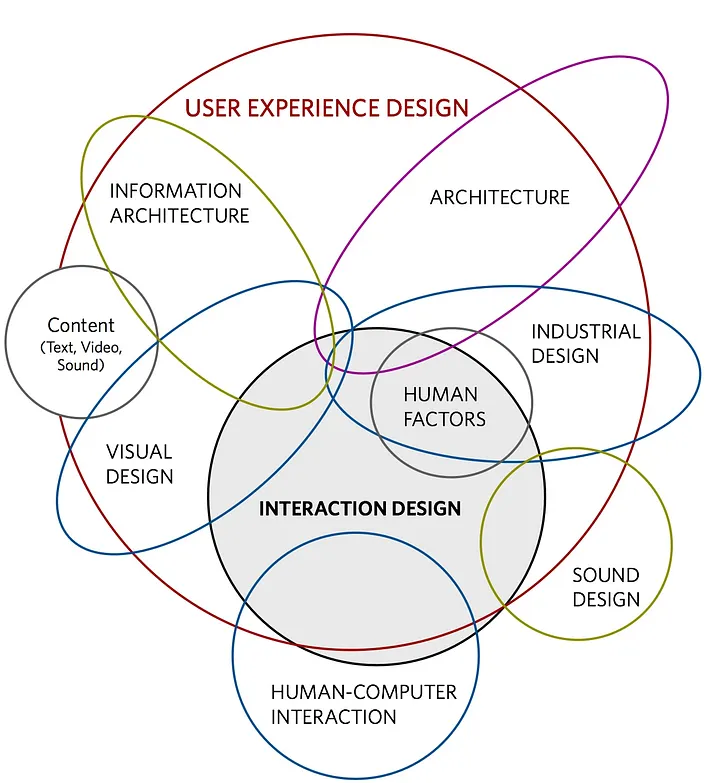
Interaction Design vs. Experience Design
Interaction Design:
This field focuses on how individuals interact with technology, their surroundings and the environment and, most importantly, one another. Its primary aim is to improve users’ understanding of what can be done, what is currently happening, and what has just occurred. Interaction design integrates principles from psychology, design, art, and emotion to create a positive and enjoyable experience for users. 2
This practice focuses on creating products, services, processes, events, and environments with an emphasis on the overall quality and enjoyment of the user’s experience. The goal is to ensure a seamless, engaging, and meaningful interaction throughout every stage of the experience. 2
How Interaction Design shapes public spaces
How people perceive the world around them is a key question in urban planning, and it’s central to Kevin Lynch’s groundbreaking book, The Image of the City (1960). In this work, Lynch explores how individuals create mental maps of their surroundings, which mirrors how user interface (UI) research looks at how people interact with digital designs.Integrating UX/UI principles into urban planning can enhance the environment by improving usability, accessibility and user experience. 3
Human-Centered Design
One of the most important reasons why Interaction Designers should be incorporated into urban planning is that architects and urban planners concentrate more on the spatial layout and functionality. Interaction Designer focus on the people who use the space. They prioritize the human needs, capabilities and behaviors first, before designing. 2
Digital integration
Public spaces are no longer just physical places. With the increasing presence of technology in our everyday lives, these spaces are also becoming more and more digital. Since it influences how people move through the city and interact with each other in public spaces we need a new approach that combines both the physical and digital dimensions – Urban Interaction Design. 4 5
Wayfinding and Navigation
Large public spaces such as parks, transfer areas and city centers can quickly become confusing and overwhelming. With an intuitive navigation system, these places are accessible and more user-friendly. Such systems could include interactive maps, apps or digital signs.
Facilitating Social Interaction
The goal in public spaces or in third spaces is to encourage people to connect — not just with the space itself, but with each other. Since Interaction Design focus on how people interact with physical and digital elements, they can help creating environments that feel alive and are adapting for the needs and wishes of the people.
Interaction design can therefore also make a small contribution to breaking loneliness and social isolation in public spaces.
Multidisciplinary Approach
However, a multidisciplinary approach between architects, urban planners and interaction designers is best. When all disciplines bring their expertise to the planning, a holistic approach can be created that combines functionality, aesthetics and the human experience. This leads to an accessible, inclusive and engaging space.
Interaction Design has the potential to reshape how public spaces come alive, become centered around people, and connect with the very people they serve. Embracing human-centered design principles, integrating digital systems, and collaborating in design enables shaping public spaces that create valuable social connections.
Sources
[1] S. Li, H. Duan, Y. Yao, W. Zhang und J. Cho, „Enhancing User Experience: A Study of Interaction Design in Coastal Public Spaces“, Asia-pacific Journal Of Convergent Research Interchange, Bd. 10, Nr. 1, S. 473–483, Jan. 2024, doi: 10.47116/apjcri.2024.01.37.
[2] D. Norman, The Design of Everyday Things: Revised and Expanded Edition. Hachette UK, 2013.
[3] J. Kiviluoto, „The lost connection between urban planning and interface design: Ideas towards a re-enactment | LAB Open“, LAB Open, 9. Oktober 2024. https://www.labopen.fi/en/lab-rdi-journal/the-lost-connection-between-urban-planning-and-interface-design-ideas-towards-a-re-enactment/
Public spaces can foster social connections, promote inclusivity, and nurture a sense of community. In today’s fast-paced world, where technology often replaces face-to-face interaction and individuals retreat into private spaces, designing public areas that encourage connections has become more crucial than ever. Achieving this goal, however, requires a more human-centered approach — one that focuses not just on the physical environment, but also on how individuals experience and interact with the space. Eric Klinenberg’s concept of social infrastructure provides a compelling framework to understand why these spaces are vital for addressing inequality, polarization, and community resilience. 1 2
Social Infrastructure
Klinenberg believes that a healthy community is not only about shared values, but also about shared spaces so he defines social infrastructure as “the physical places and organizations that shape the way people interact.” As mentioned in the previous posts such places include libraries, playgrounds, parks, but also sidewalks or community gardens. Klinenberg states that the social infrastructure is as essential for society as the infrastructure for power or transportation. 1 2
Designing for people not just for purposes
People have diverse needs, given a wide range of demographics, abilities, and social backgrounds, yet surprisingly often, design decisions for public spaces are done either in favor of functionality or aesthetics alone. Designing public spaces needs to address this diversity by prioritizing accessibility, visibility and inclusivity. In the book “Life Between Buildings” Gehl highlights, that a human-centered approach to public spaces creates meaningful social interactions. 3
First life, then spaces, then buildings. The other way around never works. – Jan Gehl
Principles of Human-Centered Public Space Design
Designing public spaces with a focus on people, rather than just on aesthetic or functional objectives, is guided by human-centered principles. These principles aim to meet users’ physical needs while also addressing their emotional, social, and cultural well-being. These are some qualities of human-centered public urban spaces:
Spatial qualities:
Accessible: Public spaces must be accessible to all individuals, regardless of socio-economic status, gender, ethnicity, or ability. Everyone should have equal opportunities to use and benefit from the space and its amenities.
Walkable: Neighborhoods designed with walkable pathways and well-connected bike lanes promote physical activity while decreasing dependence on cars. This is especially important in rural areas, where limited transportation options often make car travel the primary means of getting around.
Safe: Well-lit, open spaces without blind spots enhance safety and make public areas more inviting. Gehl highlights that poor visibility fosters fear and exclusion, while transparent, well-lit environments promote comfort, interaction, and community.
Delightful: Public spaces need to incorporate human-scale design, aesthetics and pleasant microclimate like greenery, clean streets and inviting storefront to turn these areas into destinations that foster social connections.
Comfortable: A comfortable space for spending time and engaging in various activities like walking, standing, sitting, people-watching, and having conversations.
Socio-spatial qualities:
Liveable: Public spaces should be designed with areas for a variety of activities, from quiet reflection to lively social gatherings. This multifunctionality allows individuals to engage with the space in ways that suit their preferences and needs.
Inclusive: Inclusive and welcoming to all, free and open. Urban spaces that foster a diverse range of users and activities.
Sociable: Spaces should be designed to foster social engagement by encouraging natural gatherings. Key elements include thoughtfully arranged seating, pedestrian-friendly walkways, and dedicated areas for social interaction. 1 3 4 5 6
Participation in Urban Planning
While human-centered design provides a strong foundation, its true value lies in practical application that prioritizes community voices. A truly human-centric approach relies on understanding “what people want” by using qualitative tools that assess the social and emotional well-being of residents, including their perceptions, motivations, emotions, ways of living, and values, rather than focusing only on quantitative metrics like the number of blocks or units installed. Tools such as focus groups, workshops, and community-led design sessions help planners shape spaces that align with community needs and wishes while strengthening shared civic identities. However, often the easiest way to gain insights is by talking to the people who are affected by infrastructural proposals. 7
Meaningful public participation becomes increasingly important and is also identified as a core human need. This participation is vital for upholding the principles of participatory democracy, enhancing the effectiveness and quality of the planning process, and improving as well as validating political decision-making. In such a perspective, residents are empowered to have their say in decisions influencing their daily life, ensuring better community involvement. The goal of participatory planning is to incorporate public perspectives into the design of public spaces, recognizing residents not only as stakeholders but as active users, alongside organizations, experts, and professionals. 8
Sources:
[1] E. Klinenberg, Palaces for the People: How Social Infrastructure Can Help Fight Inequality, Polarization, and the Decline of Civic Life, New York, NY: Crown Publishing Group, 2018.
[2] Palaces for the People,” 99% Invisible, Spotify. [Online]. Available: https://open.spotify.com/episode/7fE5rzAYtoCyVMzJnuwf0H?si=b64OVUphRBaOdbErUuyFtg&t=2399. [Accessed: Jan. 13, 2025].
[3] J. Gehl, Life Between Buildings, New York: Van Nostrand-Reinhold, 1987.
[4] M. Almahmood, N. M. Gulsrud, O. Schulze, T. A. Carstensen und G. Jørgensen, „Human-centred public urban space: exploring how the ‘re-humanisation’ of cities as a universal concept has been adopted and is experienced within the socio-cultural context of Riyadh“, Urban Research & Practice, Bd. 15, Nr. 1, S. 1–24, Okt. 2018, doi: 10.1080/17535069.2018.1539512.
[5] “Human-centered design for inclusive urban environments: Building cities that embrace diversity and accessibility,” Buildings. [Online]. Available: https://www.buildings.com/architecture/article/55139034/human-centered-design-for-inclusive-urban-environments-building-cities-that-embrace-diversity-and-accessibility. [Accessed: Jan. 13, 2025].
[6] R. Oldenburg, The Great Good Place: Cafes, Coffee Shops, Bookstores, Bars, Hair Salons and Other Hangouts at the Heart of a Community, New York: Marlowe & Company, 1999.
[7] “Making Cities Human-Centric,” One Works. [Online]. Available: https://www.one-works.com/journal/relate/making-cities-human-centric/. [Accessed: Jan. 13, 2025].[8] E. J. Cilliers und W. Timmermans, „The Importance of Creative Participatory Planning in the Public Place-Making Process“, Environment And Planning B Planning And Design, Bd. 41, Nr. 3, S. 413–429, Apr. 2014, doi: 10.1068/b39098.
A few months ago, I came across a TikTok where someone discussed the Theory of the Third Place and argued that Generation Z no longer has a true Third Place. Instead, he suggested, our phones have become the new “third place.” I briefly got stuck on this TikTok because I had never heard of it before but found the topic really interesting. Now that I’ve started researching the topic of loneliness and social isolation, I’m realizing how important these third places are for people, especially young people and their mental health.
What is a Third Place?
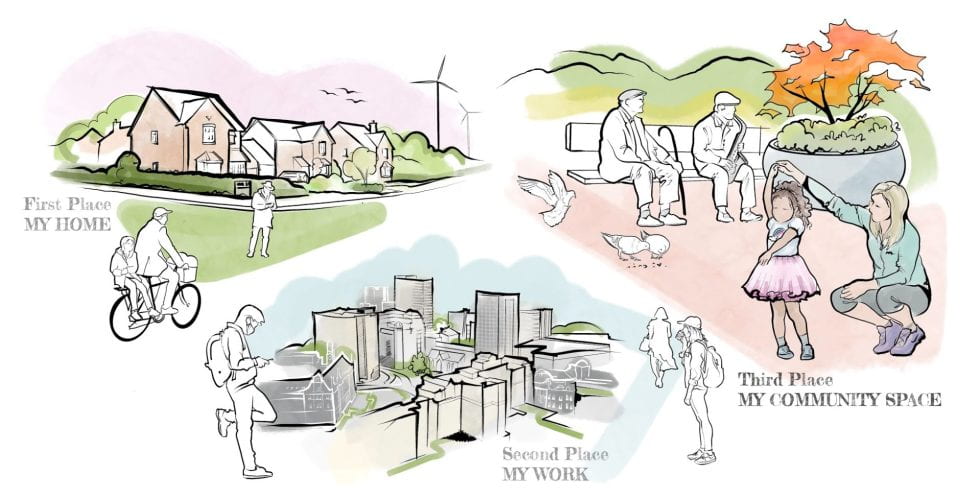
The term Third Places originates in the book “The Great Good Place” (1989) by the sociologist Ray Oldenburg. His Third Place Theory revolves around the concept that our lives are shaped by three key environments: the first place, the second place, and the third place. 1
The first place: HOME
The first place refers to where individuals live and develop their private lives. It is typically associated with privacy, a sense of solitude, and personal ownership. A home serves as a crucial foundation, offering stability, comfort, and a space for shaping one’s identity. 2
The second place: WORK
The second place refers to the workplace, where people spend a substantial part of their time. It is characterized by productivity, professional responsibilities, and a structured setting. Workplaces play a vital role in providing financial security and fostering career growth. 2
The third place: COMMUNITY
A third place is distinct from both home and work, serving as a space where people can regularly gather and connect with friends, neighbors, coworkers, or even strangers. 3 Oldenburg states it as a “a space for informal, free social interaction, essential to democracy” 1 It encompasses locations such as cafes, libraries, parks, community hubs, and other shared spaces. These environments foster social connections, open dialogue, and a sense of community. 2 Some even call the third places the living room of society. 4
Source: “2021 Cat A – My Third Place,” IFLA Europe Youth Competition, 2021, https://iflaeurope.eu/index.php/youth/entry/my-third-place-60edb5efb7ebc2.73333502
Oldenburg identifies the following nine characteristics for third places:
“Neutral ground: In a third place people can easily join in or disengage from the conversation.
Leveler: All people, regardless of class and status, are welcome and intermingle.
Engaging Conversation: Talk is the main activity and provides the greatest value. The rules are simple: Don’t dominate the conversation, be sensitive to others’ feelings, speak on topics of general interest, and avoid trying to instruct.
Accessibility and accommodation: People can wander in almost any time of day or night and find someone to talk to.
Regulars: The people who frequent the place give it character, set the tone, and welcome both old timers and newcomers.
Low profile: The decor is plain and unimpressive, discouraging pretension and self-consciousness.
Playful mood: Displays of wit are encouraged. The congenial environment makes it feel like a home away from home.” 1
Why are they so important?
Third places are more than just physical spaces — they are vital social hubs that contribute significantly to individual well-being and the strength of society as a whole. Here are the functions they serve:
Encouraging Social Interaction These spaces offer an inviting setting where individuals can come together, engage in conversation, and build meaningful relationships outside their typical social networks.
Inspiring Creativity Third places bring together individuals from different backgrounds, creating dynamic environments that encourage the sharing of ideas and inspire creativity and innovation.
Cultivating a Sense of Belonging Third places help individuals feel valued and accepted, creating a strong sense of belonging that enhances community bonds.
Supporting Personal Development Through shared experiences, exposure to new perspectives, and opportunities for learning, these spaces contribute to personal growth and self-improvement.
Building Stronger Communities By hosting gatherings and events, third places act as pillars for community cohesion, helping to create more resilient and united neighborhoods. 2
Third places play a crucial role in promoting health and well-being across all stages of life by providing essential social support. Despite often being overlooked, they are key to addressing pressing societal challenges like isolation, crime, education, addiction, physical inactivity, malnutrition, and sociopolitical polarization. Strengthening these spaces in both cities and suburbs could help rebuild social connections, foster a sense of community and offering opportunities for meaningful in-person interactions, dialogue, and shared experiences. 56 7
Examples of Third Places
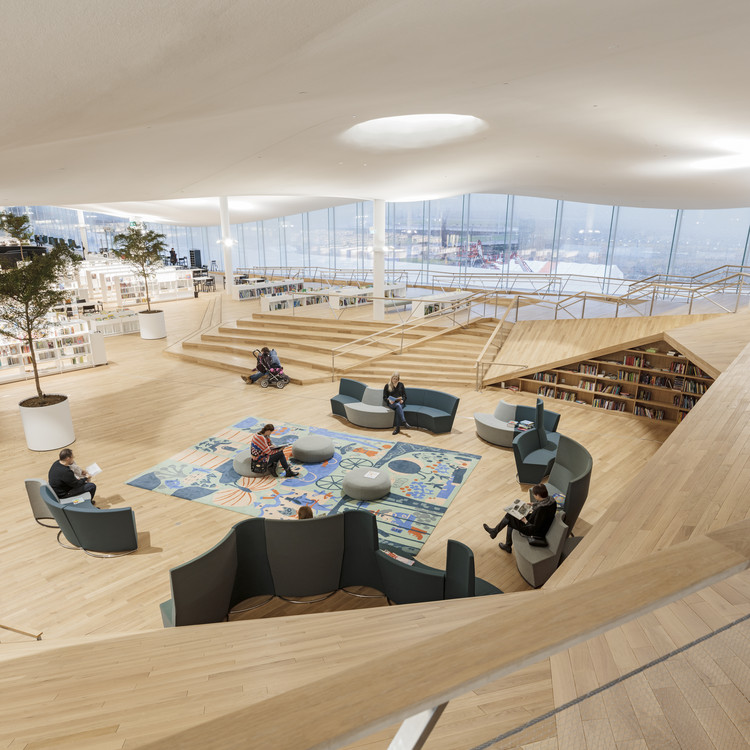
Oodi Library in Helsinki
“Helsinki Central Library Oodi is a living meeting place at Kansalaistori square, right at the heart of Helsinki. Oodi provides its users with knowledge, new skills and stories, and is an easy place to access for learning, story immersion, work and relaxation. It is a library of a new era, a living and functional meeting place open for all.” 8
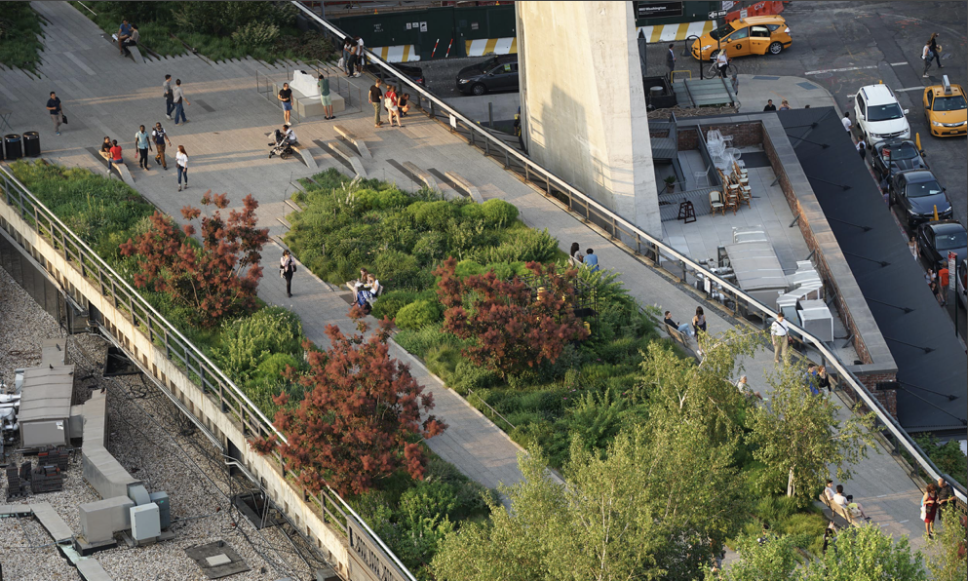
“The High Line is both a nonprofit organization and a public park on the West Side of Manhattan. Through our work with communities on and off the High Line, we’re devoted to reimagining the role public spaces have in creating connected, healthy neighborhoods and cities. Built on a historic, elevated rail line, the High Line was always intended to be more than a park. You can walk through gardens, view art, experience a performance, savor delicious food, or connect with friends and neighbors-all while enjoying a unique perspective of New York City.” 9
Unfortunately, limited public transportation, suburban zoning laws, and rising real estate costs often place these spaces far from residential areas, making car access a necessity and reducing their accessibility. The shift to digital interactions has further diminished these community-focused spaces, leaving many isolated.
But especially in today’s fast-paced digital age, third places are more essential than ever as a counterbalance to the isolating effects of technology, the relentless pace of modern life, and the growing emphasis on work and productivity. 5 6
Video
I also found this interesting YouTube Video from Elliot Sang explaining the issue with Third Places also in a historical context:
Sources:
[1] R. Oldenburg, The Great Good Place: Cafes, Coffee Shops, Bookstores, Bars, Hair Salons and Other Hangouts at the Heart of a Community, New York: Marlowe & Company, 1999.
[2] N. G. Er, „The Third Place Theory – Nazlı Gizem Er – medium“, Medium, 11. September 2023. [Online]. Verfügbar unter: https://medium.com/@gzm.err/the-third-place-theory-ae0dcee927b6#:~:text=The%20Third%20Place%20Theory%20reminds,to%20our%20overall%20well%2Dbeing.
[3] V. Mehta und J. K. Bosson, „Third Places and the Social Life of Streets“, SAGE Publications, 2010. doi: 10.1177/0013916509344677.
[4] A. Mondry, “In praise of loud, stinky bars,” Shelterforce, May 24, 2012. [Online]. Available: https://shelterforce.org/2012/05/24/in_praise_of_loud_stinky_bars/. [Accessed: Jan. 13, 2025].
[5] E. Klinenberg, Palaces for the People: How Social Infrastructure Can Help Fight Inequality, Polarization, and the Decline of Civic Life, New York, NY: Crown Publishing Group, 2018.
[6] Aquizoncolquitt, „Third Places: What Are They and Why Are They Important to American Culture? | English Language Institute“, 1. November 2023. https://esl.uchicago.edu/2023/11/01/third-places-what-are-they-and-why-are-they-important-to-american-culture/
[7] C. Diaz und S. M. Butler, „“Third places” as community builders“, Brookings, 14. September 2016. [Online]. Verfügbar unter: https://www.brookings.edu/articles/third-places-as-community-builders/
[8] „What is Oodi? – Oodi“, Oodi, 25. Januar 2024. https://oodihelsinki.fi/en/what-is-oodi/
[9] The High Line, „Overview | The High Line“, The High Line, 15. Januar 2025. https://www.thehighline.org/about/