AI in Emotional and Visual Exploration

By leveraging digital tools, museums can create personalized, immersive, and reflective experiences that deepen our emotional and intellectual connection with existing artworks. Two given projects exemplify how technology can transform art perception: Sensitive Pictures and SMKExplore. Both initiatives demonstrate how technologies such as Affective Computing, machine learning, and interactive design can redefine visitor engagement.

Emotional Journeys with Sensitive Pictures

Sensitive Pictures, a collaboration with the Munch Museum, uses Affective Computing to explore the emotional dimensions of art. Visitors begin their journey by selecting an emotion from options such as love, self-confidence, fear, sadness, obsession, and passion. A mobile app then guides them to paintings associated with their chosen emotion, enriching the viewing experience with layered narratives that combine emotional storytelling, factual insights, and reflective prompts.
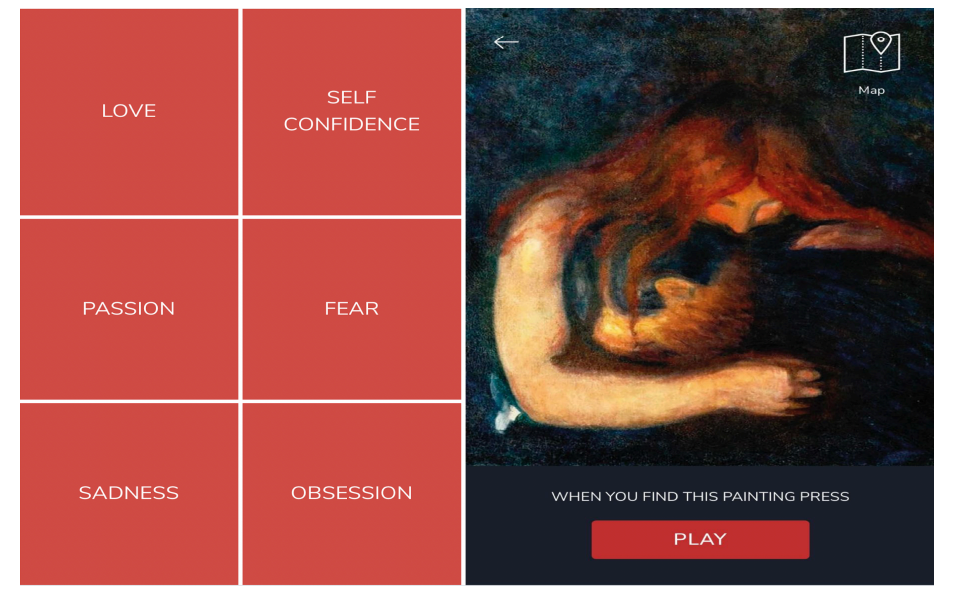
Afterward, visitors participate in a simulated conversation with a fictionalized Edvard Munch. The voice on the phone then talked to the visitor about their experience and emotions. Drawing on the data from the web app, “Munch” talked about the painting that the visitor had reported the strongest emotional reaction to as measured by their self-reported values of arousal.
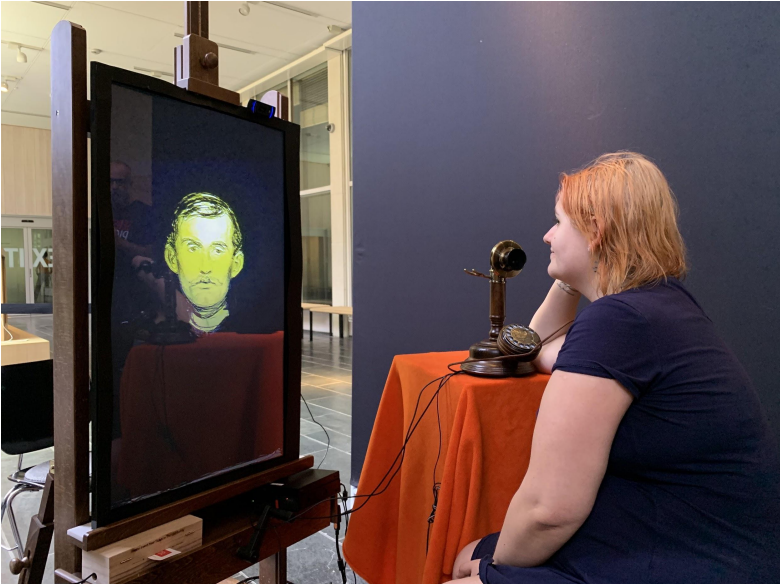
This approach integrates subjective and objective elements, combining self-reported emotions with facial expression analysis. Visitors are presented with a postcard summarizing their emotional data as a keepsake. The result is an experience that not only fosters deep personal reflection but also highlights the interplay between technology and human interpretation.

While most participants described the experience as emotionally impactful and meaningful, challenges emerged in capturing emotions. Both self-reporting and computer vision methods were limited by the complexities of human feelings and the contextual constraints of a museum environment. Nevertheless, Sensitive Pictures succeeded in encouraging visitors to connect emotionally with the art and reflect on their inner states.

Visual Exploration with SMKExplore

SMKExplore focuses on using machine learning for interactive art exploration. This web application employs object detection to allow visitors to browse a museum’s digital collection through specific objects depicted in paintings. By enabling users to navigate from details (e.g., a flower or chair) to the full artwork, SMKExplore offers a bottom-up, open-ended exploration experience.
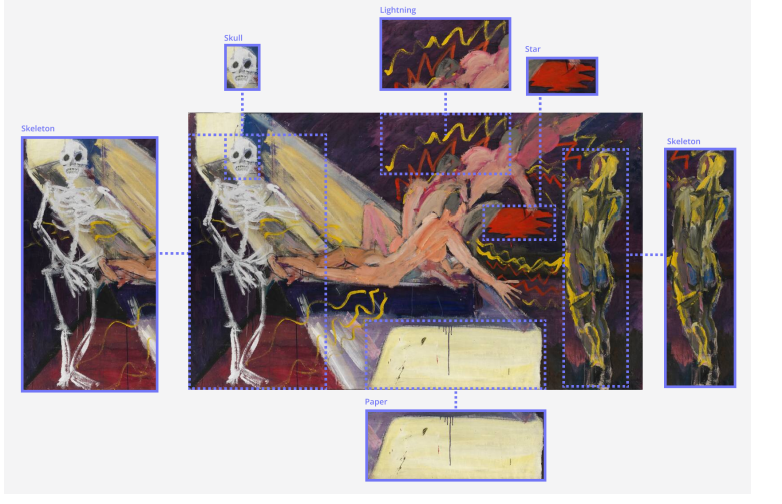
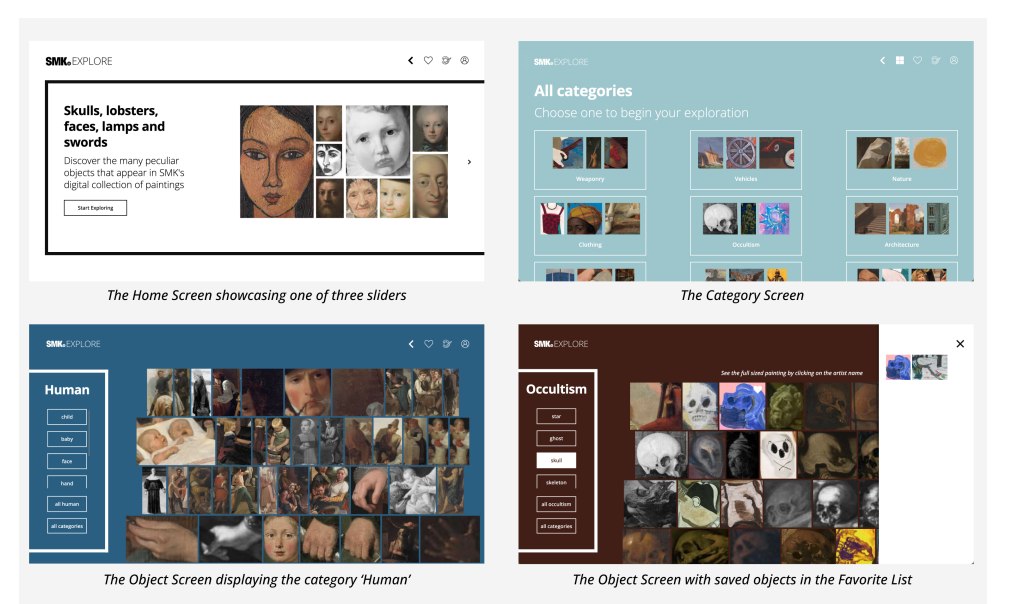
Participants found this approach intuitive and engaging, often discovering patterns and recurring motifs across different artworks and styles. By isolating objects from their original contexts, the application encouraged users to notice details they might otherwise overlook. Many reported that this method inspired them to think more deeply about the complexity and craftsmanship behind each painting.

Moreover, SMKExplore highlighted the potential of machine learning to enhance art appreciation by revealing connections across large collections. This approach not only provides a fresh perspective on familiar works but also invites visitors to reflect on their personal interests and preferences when engaging with art.

The Broader Implications

Both Sensitive Pictures and SMKExplore illustrate the transformative potential of technology in museums. By incorporating emotional narratives, interactive interfaces, and data-driven insights, these projects create multidimensional experiences that challenge traditional modes of art interpretation. Visitors are no longer passive observers but active participants, engaging with art on intellectual and emotional levels.

These innovations also raise important questions about the role of technology in shaping our relationship with art. How do algorithmic interpretations influence our emotional responses? Can technology truly capture the depth of human experience? While these questions remain open, one thing is clear: the integration of technology into museum practices is unlocking new possibilities for art perception, making it more accessible, personal, and reflective.

As museums continue to experiment with digital tools, they have the opportunity to reimagine how we experience and connect with art. Whether through emotional storytelling or interactive exploration, technology is helping to create museum visits that resonate long after we’ve left the gallery.

References:
https://arxiv.org/pdf/2403.19174

https://arxiv.org/pdf/2203.01041

How Spatial Audio Can Transform the Perception Art

Art is often viewed as a visual medium, but there’s a growing recognition that engaging multiple senses can deepen and expand the impact of artwork. With more artists exploring sound, touch, and smell as tools for evoking responses, the blending of art and audio is an exciting space for both creators and audio professionals alike. New technologies are allowing immersive audio experiences that go beyond mere background noise, with sound becoming a vital and integral part of the art itself.

Sound as an Immersive Tool for Art

One of the remarkable things sound can do in a museum setting is to stop time and bring visitors into a present, deeply engaged state. The immersive power of sound offers a break from the constant bombardment of information and distractions in daily life. It creates a unique, curated journey that invites visitors to truly focus on the artwork and its surrounding atmosphere. Whether it’s a subtle hum of a distant conversation or a carefully designed soundscape that matches the theme of an exhibit, sound can enhance emotional responses and provide deeper context for understanding art.

Integrating Spatial Audio in Museum Experiences

Spatial audio, which positions sound within a 3D space, is revolutionizing how visitors experience art. A perfect example of this is the Japan Supernatural exhibit at the Art Gallery of New South Wales in Sydney. Through an innovative platform by Art Processors, visitors experienced a spatial soundscape that shifted based on their location. As they moved through the exhibit, they could choose whether to listen to a narrative voice or simply absorb the rich auditory atmosphere surrounding the artwork. This approach allowed visitors to control their experience, making the audio an active, responsive element that enhanced their understanding and enjoyment of the art.

This method of blending sound with visual elements is different from the traditional approach of background audio that merely accompanies an exhibit. Here, the sound is designed to be integral—responding to the visitor’s movements and choices, becoming as essential to the experience as the visual art itself.

Designing for Emotional and Cognitive Impact

Sound can connect directly with our emotions in ways that visuals alone cannot. In designing immersive spaces, curators and sound designers focus on creating a balance between emotional and cognitive experiences. Sound is often used to underscore or trigger specific emotional responses, guiding the viewer’s journey through the space. For instance, more intellectual or factual elements of an exhibit might be complemented with music or sounds that guide the visitor into an emotional moment, creating a dynamic narrative flow.

Accessibility in Audio Design

In the design of immersive audio experiences, accessibility is a central concern. Many museums and cultural institutions are now integrating accessible options for visitors with different needs, from closed captioning to sign language videos and sonified wayfinding for blind or low-vision individuals. These advancements are part of a broader effort to ensure that everyone, regardless of ability, can fully engage with the museum’s offerings.

The Future of Audio in Museums

The use of spatial audio is still evolving, but studies have shown its potential to significantly enhance the museum experience. In a study conducted in a Cognitive Immersive Room, participants showed a clear preference for soundscapes that were congruent with the exhibition’s theme. This approach was not only more immersive but also helped reduce distractions and increase focus. More than half of the participants preferred soundscapes that complemented the visual art, indicating that a well-designed auditory experience can deepen engagement with the art and the space.

References:

https://acoustics.org/enhancing-museum-experiences-the-impact-of-sounds-on-visitor-perception

https://www.aam-us.org/2022/08/26/transforming-museums-with-immersive-sound/

https://www.artprocessors.net/projects/art-gallery-new-south-wales-japan-supernatural

https://www.inavateonthenet.net/features/article/audio-technology-opens-a-new-frontier-in-the-art-market?

Augmented Reality Art

Augmented Reality art is an emerging medium that blends the real and the digital, offering animations and audio overlays that can be experienced through mobile devices. Unlike Virtual Reality (VR), which immerses users in fully synthetic environments, AR bridges reality and illusion, enhancing existing art with new dimensions of form, motion, and meaning. Its accessibility and relatively low production cost are making it a growing force in contemporary art.

But AR art is much more than a technological novelty—it is a tool for collaboration between viewer and creator, taking traditional works out of static galleries and into interactive, dynamic experiences.

What is Augmented Reality Art?

AR art can involve new compositions or recontextualizations of existing works. These 3D digital objects appear in space wherever a viewer points their camera. The layers AR adds to artworks—be it motion, form, or sound—create new avenues for interpretation and engagement.

For example, Alex Mayhew’s ReBlink at the Art Gallery of Ontario reimagines classical paintings with modern contexts. Through AR, a fire-haired maiden wields a selfie stick, and a 17th-century couple’s bountiful feast transforms into canned goods and hot dogs. This satirical take critiques online absorption while making the classic works relevant to contemporary audiences.

Augmented Reality and Viewer Interaction

AR redefines how we engage with art. Traditional artworks are often seen as passive objects, experienced in isolation. AR, however, turns the interaction into a collaborative process.

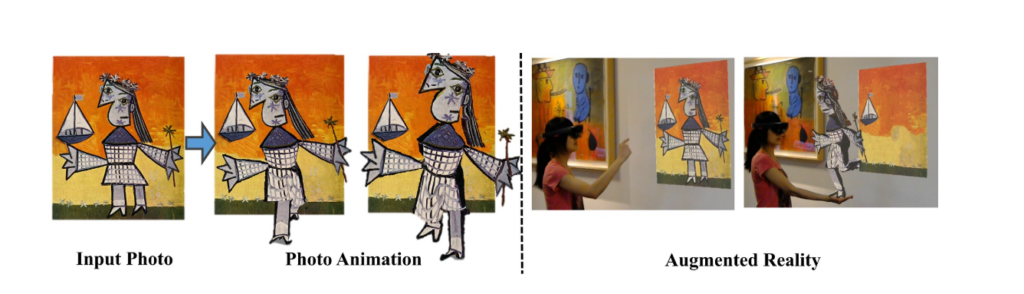
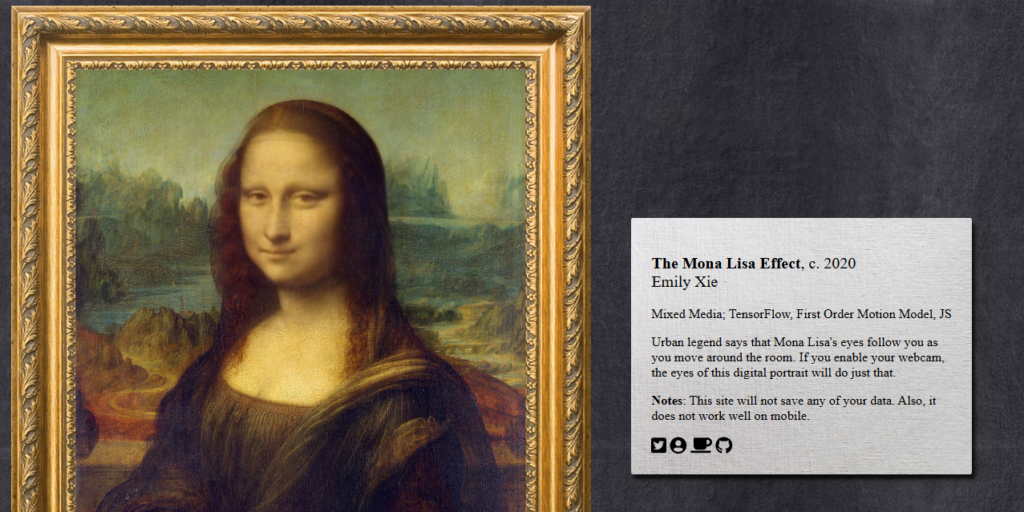
Take Xie’s Mona Lisa Effect project, which animates a single photo into a fully 3D experience. Users can see a central figure emerge from the frame, moving between dimensions. This reimagining brings paintings to life, offering an entirely new way of appreciating still imagery.

The Wake Up Photo project builds on this concept by bringing characters from still images to life in 3D. Unlike cinemagraphs, which introduce small motions to a 2D photo, Wake Up Photo creates fully three-dimensional animations from a single photograph. These animations can be experienced as videos or interactively in augmented and virtual reality, allowing characters to emerge from their frames and step into the real world. This innovative approach transforms static images into dynamic storytelling experiences, offering viewers a deeper and more immersive connection to the artwork.

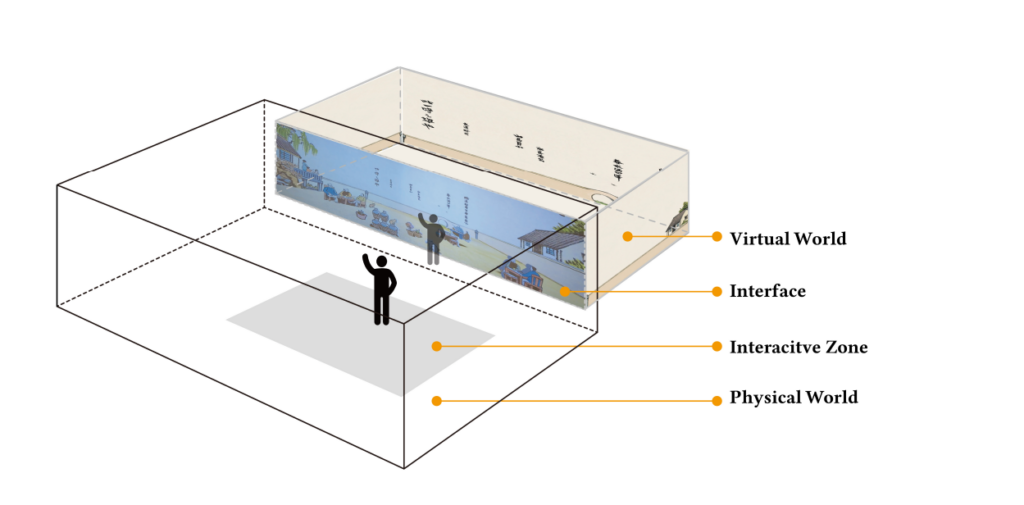
Similarly, Everyday Conjunctive, a project rooted in the aesthetics of Fong Tse Ka, promotes bodily engagement with paintings. Using interactive techniques, viewers physically interact with painterly worlds, deepening their appreciation of the artist’s philosophy and aesthetics.

Expanding Spaces Beyond Galleries

AR takes art beyond the confines of gallery walls, bringing it into the streets, homes, and public spaces. This creates opportunities for greater access and diverse interpretations of the works.

The Flow Room installation exemplifies this by using AR and computer vision to create shared visual and soundscapes between participants in two separate locations. This interactive environment emphasizes community and collaboration, representing the flow of users across virtual spaces.

A New Era of Engagement

AR is not just a method for enhancing visuals; it’s a way to foster deeper engagement with art. By blending technology with tradition, AR encourages viewers to think critically and creatively about the relationships between art, space, and their own role as participants.

From reimagining classics to creating shared spaces for exploration, AR art turns passive viewership into active collaboration, enriching how we connect with and interpret art. The medium offers a glimpse into a future where the line between physical and digital experiences blurs, redefining how we perceive and interact with art forever.

Conclusion
Augmented Reality is revolutionizing the art world, giving traditional works new life and relevance while fostering dynamic, participatory experiences. By transforming how we engage with art, AR not only expands its audience but also deepens its impact.

Whether it’s through a reimagined gallery experience, a 3D animation of a classic painting, or a shared virtual environment, AR is proving that art is not just something we view—it’s something we experience, shape, and carry with us into the future.

References:

https://arxiv.org/pdf/2312.01067

https://monalisaeffect.com

https://openaccess.thecvf.com/content_CVPR_2019/papers/Weng_Photo_Wake-Up_3D_Character_Animation_From_a_Single_Photo_CVPR_2019_paper.pdf

https://lisajamhoury.com/the-flow-room

https://www.museumnext.com/article/akron-art-museum-launches-augmented-reality-experience/

https://cosimo.art/blog/art-and-augmented-reality/

https://www.autodesk.com/design-make/articles/augmented-reality-art

Bringing Paintings to Life with 3D Printing

3D printing has expanded its applications in the art world, moving beyond sculptures and artifacts to include the replication of paintings. By capturing and recreating not just the colors but also the textures, relief, and even the gloss of original works, this technology opens up transformative possibilities for museum interactions. This post delves into how 3D printing of paintings enhances visitor engagement and interaction.

Tactile Exploration of Paintings

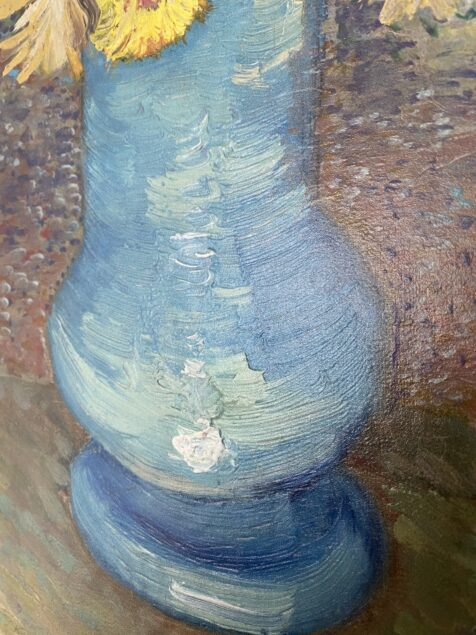
Traditionally, paintings have been viewed from a distance to preserve their integrity. However, 3D printing allows for the creation of touchable replicas that maintain the visual and physical characteristics of the original works. For example, museums can reproduce the brushstrokes, texture, and relief of a Van Gogh painting, enabling visitors to physically feel the intricacies of the artist’s technique.

Close-up of a 3D print of Vincent van Gogh, Flowers in a Blue Vase, 1885, oil on canvas, 61.5 x 28.5 cm. Kröller-Müller Museum, Otterlo. Photo by author.

This tactile approach is particularly beneficial for visually impaired visitors. Being able to touch the contours and textures of a painting offers a unique sensory experience, allowing them to perceive the artwork in ways that were previously inaccessible.

Interactive Exhibits with 3D-Printed Paintings

3D-printed paintings can play a key role in interactive exhibits, making art more engaging and educational. Museums can encourage visitors to compare printed replicas with digital displays or augmented reality overlays to understand artistic techniques and historical context. Workshops could even invite visitors to paint or modify 3D-printed replicas, fostering creativity and deeper connections with the artwork.

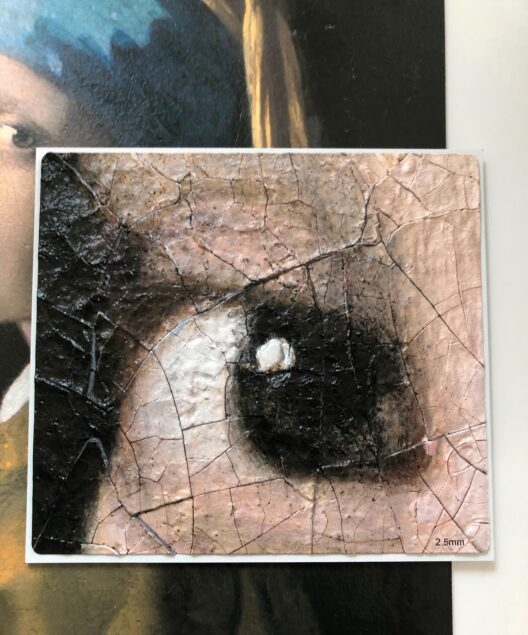
Additionally, in a 3D print aspects of a work can be magnified and physicalized. For example, enlarging the eye of Vermeer’s Girl with a Pearl Earring makes it possible to understand the artist’s technique and the material changes the work has been through (e.g. the cracks on the surface become clearly visible).

10 times enlarged 3D printed eye of Johannes Vermeer’s Girl with a Pearl Earring, 1665, oil on canvas, 44 x 39 cm. Mauritshuis, The Hague. Photo by author.

This technology also allows for recreations of lost or damaged paintings, providing a window into art history that might otherwise remain closed. Visitors can see and touch pieces of art that no longer exist in their original form, enriching their understanding of the artistic and cultural legacy.

Bridging the Gap Between Art and Audience

While curators may worry about the loss of aura associated with original paintings, 3D printing helps bridge the gap between art and audience by making these works more approachable. Replicas can be displayed in high-traffic areas, touched during guided tours, or used in educational settings without the risk of damaging the originals.

By creating interactive and tactile experiences, museums can attract younger audiences, families, and those who might feel intimidated by traditional gallery settings. This approach transforms the museum visit from a passive viewing experience into an active engagement with art.

Ethical Considerations and Challenges

Despite its advantages, 3D printing of paintings raises important ethical questions. How should replicas be labeled to distinguish them from originals? Could the availability of high-fidelity reproductions diminish the value of authentic artworks? Museums must navigate these issues carefully, ensuring transparency and maintaining the integrity of their collections.

Additionally, there is a need for precision and quality in reproductions. Capturing the intricate details of a painting’s texture and gloss requires advanced scanning and printing techniques, which may not always be accessible or cost-effective for smaller institutions.

A New Frontier for Museum Interaction

3D printing is reshaping how museums approach paintings, transforming them into interactive, accessible, and educational experiences. By providing tactile opportunities, fostering creativity, and connecting visitors more deeply with art, this technology brings a new dimension to the museum world. While challenges remain, the potential for innovation and engagement makes 3D printing an invaluable tool for the future of art and cultural heritage.

As museums continue to embrace this technology, they have the chance to redefine the way audiences experience paintings—not just as objects to admire but as pieces to explore and connect with on a profoundly personal level.

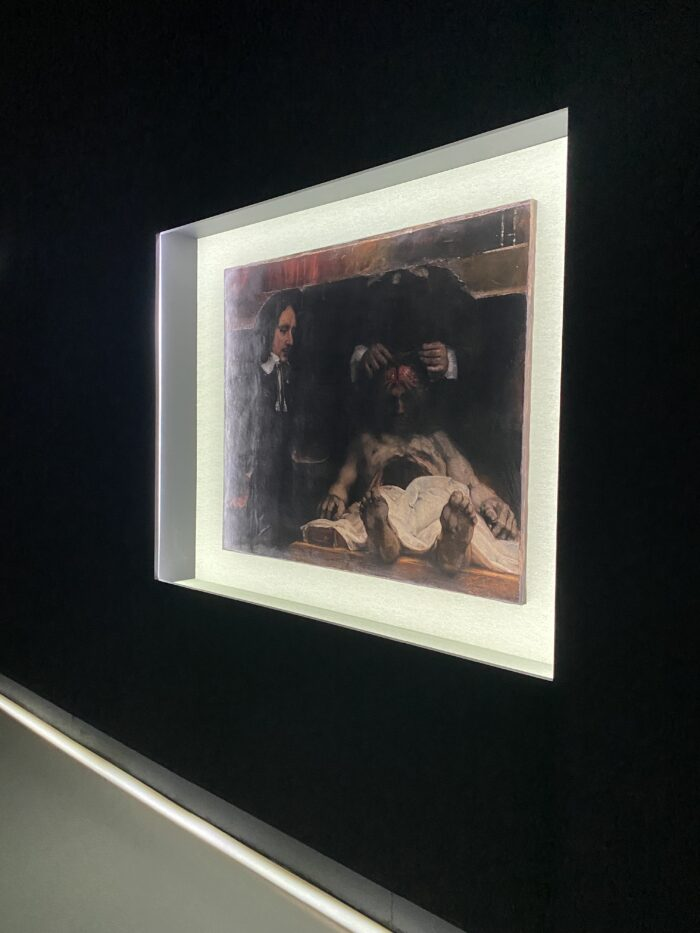
 3D print of Rembrandt van Rijn, The Anatomy Lesson of Dr. Deijman, 1656, oil on canvas, 100 x 134 cm, Amsterdam Museum, Amsterdam
Photo by author, 3D print by Factum Foundation

References:

https://www.codart.nl/feature/museum-affairs/3d-printing-works-of-art-an-opportunity-or-nightmare-for-curators/

https://www.cambridge.org/core/journals/advances-in-archaeological-practice/article/you-can-handle-it-3d-printing-for-museums/5FDE2B8896E09D879B75D77C4530ED1A

https://www.museumnext.com/article/how-museums-are-using-3d-printing/

https://theconversation.com/3d-printing-is-helping-museums-in-repatriation-and-decolonisation-efforts-126449

Reproduction of Gloss, Color and Relief of Paintings using 3DScanning and 3D Printing

The Future of Art Reproduction: Capturing Every Detail with 3D Scanning and Printing

In the realm of art preservation and reproduction, achieving the perfect balance between technology and authenticity is a challenging endeavor. A research from 2017 (W.S. Elkhuizen, T.T.W. Essers, B. Lenseigne, C. Weijkamp, Y. Song, S.C. Pont, J.M.P. Geraedts, and J. Dik) presented in their groundbreaking paper, “Reproduction of Gloss, Color and Relief of Paintings using 3D Scanning and 3D Printing,” offers a revolutionary approach to this challenge. Their work integrates advanced methods to capture and replicate the color, relief, and gloss of paintings.

The Challenge of Authentic Reproductions

High-fidelity reproductions of artworks have long been a goal for museums and cultural institutions. While earlier technologies could reproduce color and surface relief with relative success, replicating gloss—a critical visual component of a painting’s appearance—remained elusive. Gloss plays a pivotal role in how viewers perceive the depth, texture, and overall aesthetic of an artwork. Traditional methods often fell short in accurately capturing the spatially varying gloss, which significantly contributes to a painting’s visual identity.

The Breakthrough: Integrated 3D Scanning and Printing

The research team introduced an innovative system that addresses these limitations. Their approach integrates:

  1. Advanced Gloss Measurement: Using the principles of reflectance polarization, the system measures spatially varying gloss by sampling specular reflection at the Brewster angle. This method provides precise gloss data for every point on a painting’s surface.
  2. Relief and Color Capture: In addition to gloss, the system employs high-resolution 3D scanning to capture the surface relief and advanced imaging techniques to record color details. Together, these components ensure a comprehensive digital representation of the artwork.
  3. Data Processing and Optimization: One of the challenges addressed in this study is the presence of shadows in gloss measurements caused by surface relief. The team devised a technique to mask and interpolate surrounding gloss information, ensuring a seamless and accurate reproduction.

Validating the System

To demonstrate the efficacy of their system, the researchers reproduced a painting titled “Two Wrestling Figures in the Style of Van Gogh.” This reproduction served as a testbed for assessing the accuracy of the gloss, color, and relief measurements. The results showed remarkable fidelity, proving that the system could replicate the nuanced visual properties of the original artwork.

Implications for Museums and Cultural Institutions

This advancement holds transformative potential for art preservation and accessibility:

  1. Preservation: High-quality reproductions reduce the need for handling original artworks, minimizing wear and tear. This is particularly vital for fragile or historically significant pieces.
  2. Accessibility: Reproductions can be shared globally, allowing audiences to experience iconic artworks that might otherwise be inaccessible due to location or conservation concerns.
  3. Educational Opportunities: Museums can use these replicas for educational programs, enabling hands-on interaction without risking damage to the originals.
  4. Exhibitions: Institutions can display reproductions in interactive or immersive environments, enhancing visitor engagement while preserving the original artworks.

Conclusion

This technology stands to redefine how people interact with art in museums. By enabling the creation of high-fidelity reproductions, museums can provide more immersive and interactive experiences. Visitors could touch and closely examine replicas without fear of damaging the originals, fostering a deeper understanding of the artwork’s texture, relief, and gloss. Additionally, this technology can be used to create multisensory exhibits, where audiences engage with art through sight, touch, and even augmented reality overlays. Such innovations make art more accessible to diverse audiences, including those with visual impairments, and enrich the educational value of museum visits.

References:

https://diglib.eg.org/server/api/core/bitstreams/03f416a4-92bd-4a74-9d51-f1724f46994c/content

The technology of 3D Scanning and Printing

Exploring Tim Zaman’s Revolutionary 3D Scanning of Paintings

In 2013, Tim Zaman embarked on a groundbreaking project that bridged the worlds of technology and art, developing a super-high-resolution, large-format 3D scanner tailored to capturing the intricate topography of paintings. This remarkable innovation brought new insights into the materiality of art and how we perceive it, focusing on iconic works by masters such as Rembrandt and Van Gogh.

The Vision Behind the Technology

Paintings, often treated as two-dimensional artworks, are deeply influenced by the physical properties of paint. Late Rembrandt self-portraits, for instance, achieve their dramatic effects through the interplay of light and shadow on textured surfaces. Similarly, Van Gogh’s bold, impasto strokes create a tangible depth. Tim Zaman’s work highlights how paint’s texture, glossiness, and transparency significantly shape a painting’s aesthetic—aspects often overlooked or underappreciated.

The 3D Scanning Process

To capture these details, Zaman’s 3D scanner used a hybrid system combining stereo vision (dual cameras) and fringe projection (a projector). This setup allowed for ultra-high-resolution imaging, capturing 40 million XYZ (3D space) and RGB (color) data points per scan. For large works like The Jewish Bride by Rembrandt, spanning 160×120 cm, the system gathered over a billion data points by merging multiple scans. This unparalleled level of detail was essential for faithfully documenting the subtle undulations and surface features of the paintings.

Scanning Equipment

“The scanning equipment is actually very straightforward, and only consists out of these parts. The rest of the parts is just cables and stuff to make the camera move in X and Y”.

Capture device(2x) Nikon D800E
LensesNikon 80mm PC-E scheimpflug & polarisation filters
ProjectorOptoma PK301 Pico-Projector fitted with a crossed polarisation filter

Zaman’s project also delved into the realm of reproduction. Collaborating with Océ (a Canon Group company), the scanned data was used to create high-fidelity 3D prints of paintings. These reproductions—complete with textured surfaces—represented a significant leap beyond traditional flat posters. While impressive, they underscored the complexity of accurately replicating the originals, particularly when it came to glossiness and transparency—elements that remain elusive even with advanced technology.

Future Directions

Zaman’s work set the stage for ongoing research into the physicality of paintings. While the 3D prints captured the texture and color of the originals, they lacked the dynamic qualities imparted by brushstrokes and the interaction of light with varying paint properties. This gap highlighted the multifaceted nature of paintings, where factors like material reflectivity and translucency play critical roles in their visual impact. Current efforts aim to model glossiness, transparency, and other overlooked elements. By combining cutting-edge technology with a deep respect for artistic heritage, Zaman’s project serves as a powerful reminder of the endless possibilities at the intersection of science and art.

Tim Zaman’s innovative approach continues to inspire researchers and art enthusiasts alike, showcasing how technology can uncover new dimensions of creativity and history.

In the upcoming blog, I will explore the advancements in newer technologies aimed at addressing the missing elements like glossiness and transparency, building upon the foundation of Zaman’s work.

References:

http://www.timzaman.nl/3d-scanning-paintings

https://www.youtube.com/watch?v=NxfNaZ2vUSE&ab_channel=TEDxDelft

https://delta.tudelft.nl/en/article/scanning-paintings-depth

How We Spend Time and Space in Art Exhibitions

As promised, I would like to first dive a little bit into behavior of visitors in museums. To do so, I will review the article called “Art Perception in the Museum: How We Spend Time and Space in Art Exhibitions”, the present study aimed to replicate and expand on the study of Smith and Smith (2001).The main aim was to analyse museum visitors’ behaviour in terms of viewing duration and distance, how often people returned to a painting and how behaviour changed throughout such reassessments.

Keypoints of the “Smith and Smith” study

In their 2001 study, Smith and Smith provided foundational research into the impact of factors like age, gender, and group size on viewing times in museums. They discovered that museumgoers typically spend significantly more time observing artworks—27.2 seconds longer on average—than in controlled lab experiments, where viewing times are often under three seconds.

The study also brought attention to the role of viewing distance, noting that visitors intuitively adjust their proximity to artworks based on personal preferences, unlike the fixed distances common in lab studies. These insights underline the importance of replicating natural museum behavior in experimental settings to better understand art perception.

Lastly, Smith and Smith emphasized the social dynamics of museum visits, observing that a substantial portion of visitors attended in groups. Roughly 19.3% came with one other person, and 3.3% were in groups of three, transforming art observation into a collective social event. This group interaction was noted to influence the overall art experience, highlighting how social contexts can shift perception from individual to shared engagement.

Methods of the “Art Perception in the Museum” study

They tested a total of 225 visitors (126 female, M(age) = 43.3 years) attending the special exhibition on Gerhard Richter by unobtrusively observing them from a balcony above, which was barely detectable by typical visitors; 104 people visited the paintings on their own (category single), 100 visited them with one other person (category pair), 11 in a group (category group) of two or more, and 10 with their children (category family—here the children were not observed further, but a focus was set to the person who first attended the respective artwork). A total of four persons attended the exhibition with a wheelchair, two with a folding chair, and one with a walking stick; no other accessories in this respect were recorded. None of the participants detected the observers and so were naïve to the purpose of the study.

The six paintings which were utilized for the study were all positioned side by side on one wall of the only hall in the entire exhibition; the two observers assessing visitor behaviour were situated on a balcony above the hall overseeing the entire scene of interest. On the floor, the tile sizes were exactly 50 × 50 cm, allowing the easy assessment of viewing distance between visitor and painting with a resolution of 50 cm accordingly.

To record visitor behavior, the researchers used a custom Android app on Sony tablet PCs. This app enabled quick and precise data collection, such as viewing distance in 0.5-meter increments (aligned with the floor tiles), timing of observations, and demographic details like gender, age, and whether visitors were accompanied or used mobility aids. Observers could track individuals revisiting paintings, building a comprehensive history of their interactions. This method ensured accurate, intuitive data logging while maintaining naturalistic observations.

Two observers were located on the balcony, with Observer 2 assisting the experimenter Observer 1, who entered the data. This was done first of all to ensure objective data entry and was also used for tracing visitors who might potentially come back.  The observers tried to focus on single visitors to capture their entire viewing behaviour with regard to the paintings under observation. This made it necessary to test single, randomly chosen persons in depth, so the duration of the total testing was considerably long as many visitors take quite a while to wander through the whole exhibition.

Results

Viewing Time of Artworks

People were found to spend very different amounts of time in front of different artworks, here between 25.7 s and 41.0 s on average—note: although the exact durations differed from the Smith and Smith study, they also documented such a various viewing behaviour with a range of viewing duration from 13.2 s to 44.6 s.

Visitors viewed the artworks quite selectively, omitting 2.5 out of the given range of six pictures—a clear sign of selective viewing behaviour even in a special art exhibition showing a very limited number of paintings.

In contrast to Smith and Smith, they did not find any substantial differences among group sizes. Category single visitors showed a mean viewing duration at first attendance of 35.6 s, category pair showed 31.4 s, group showed 36.5 s, and family showed 36.4 s. In accordance with the Smith and Smith study, we could not find any significant difference between female (M = 34.6 s) and male visitors (M = 32.7 s).

 Given this total viewing time perspective, visitors spent 50.5 s on one artwork. In fact, visitors who viewed an artwork at least once showed a 51% probability of returning to it at least once more. 

Viewing Distance From Artworks

Regarding the different viewing distances at which visitors choose to inspect the paintings, we again observed that conditions were very different to the typical ones employed in lab research. On average, the visitors in the present study distanced themselves from a painting M = 1.72 m across all viewings, which was not substantially different from the distance they used when only initial viewings were analysed (M = 1.75 m). First of all, the essential difference between a museum and a lab context is mainly that a museum offers enough space for visitors to choose their personal distance from an artwork.  On what basis visitors choose their distance remains unclear, but it is seemingly done by intuition without any deeper rationale behind it. This intuition seems to have a basis in the extension of the artwork, here the canvas size: The larger the artwork the more viewing space is chosen.

Sociality factor

One great difference between a museum context and a lab setting is the typical presence of many people in the same hall, the sociality factor. We indeed detected an effect of group which was very compatible with the obtained effect of the Smith and Smith study: Pairs of visitors took longer viewing times, often because they debated on the painting, but more than two persons attending a painting together even outperformed pairs. The additional categorization of family showed the shortest viewing times—probably due to ongoing caretaking issues, especially for parents with small children.

Conclusion

Once again, the present study made clear that viewing artworks in a museum context is very different to a typical lab setting: First of all, visitors of art museums invest money, time, and intellectual effort beforehand to get to the exhibition hall, they show more skills and motivation to deeply process artworks, and, screening the demographics of typical visitors, they are mostly older and possess more knowledge of art and so also show different heuristics in assessing the quality of art. Second, the whole social setting is very different with people walking around in a relatively silent and focused—but still communicative and interactive—way. Third, the viewing distances from paintings is very different, typically larger. Fourth, the viewing duration is also self-chosen and fundamentally (much) longer than in typical lab settings.

References:

Breaking the Glass: How Technology Can Deepen Our Understanding of Art

In this blog, I will research the ways of extending the perception of art in museums that can help emerge into art, understand the context and meaning of the work, and connect with the artwork, its time, and its artist on a deeper level. My initial idea of expanding interaction with art was only 3D scanning and printing in a way of presenting a reproduction of the original relief, color, and small details next to the original work. So that the audience could quite literally touch the art they consume and perceive it not only with sight but touch as well, that could be a way to open more interpretations, and emotions gained from art. However, I believe it could be not only touch but other senses involved. What if you could start hearing, feeling the temperature, tasting, and touching the already existing piece of art, that was previously only seen from far?


My motivation initially stemmed from my interest in visual art. As someone interested in painting, I find many small details of art fascinating, particularly the texture and relief of the paint. Usually, in galleries and museums, it is not allowed to approach a painting closely, let alone touch it. However, I believe it would be a truly wonderful experience to touch the artwork and feel the thick, rigid brushstrokes, droplets, and highlights with my own hands. This gave me the idea of recreating the relief of the original painting so that visitors could touch the art and feel a stronger connection with the artist who lived centuries ago. However, later I realised a bigger problem and respectively a bigger idea. It is not only about the interest in touching a piece of art but deeply immersed in the history and the context of art.


Studies have determined that the average time a person spends gandering at a piece in a museum is between 15 seconds and 30 seconds. That’s plenty of time to figure out what the image is attempting to represent (or not, if you’re looking at abstraction). But that’s not nearly enough time to fully experience the work. Given this fact, we should also consider the average attention span of the adult at this day and age, which is just 8. 25 seconds. Hence, it is not a rarity to see a person not willing to read a description of the art and to just look at it for a few seconds. Sometimes we can even see people not stopping once in a museum, sometimes we see bored public yawning while listening to a guide, sometimes there are no guides or descriptions at all, only art behind a barrier and glass.


In fact, a large number of people are interested in art and want to visit different cultural sites. Of course, the percentage depends on cultural, educational, and personal factors, but the study’s 2017 edition, based on answers from 27,969 respondents, found visual and performing arts attendance overall up by 3.6% since 2012, with 132.3 million U.S. adults (53.8% of all U.S. adults) attending a visual or performing arts activity at least once in the previous year. However, a deeper understanding of art is available for visitors who have formal art education or deep familiarity with art history, the majority engage at a surface level. One of the main problems of an existing barrier to understanding is a lack of accessible or engaging information. Thinking about a younger audience we can more prominently point out the fact that they need more interactivity and technology in museums.


So what are the existing tools in museums that help get into the history and the context of the specific artwork? Let’s start with the most trial and common ones: information panels, audio guides, guided tours, talks, brochures, and booklets. Relatively new ways to explore art in museums – online databases, interactive maps online on museum apps and websites, social media posts, quizzes, and treasure hunts. Also thematic installations and interactive technologies such as AR, VR, and Interactive displays. I would like to focus on the last two categories and start a deeper research on them.


In the upcoming posts, I would like to first understand a little bit about how people behave in museums and how they perceive art in museums. Later I need to learn about the existing experiences of museums incorporating interactive technologies and analyse their success or errors. I would like to understand the technology of 3D scanning and printing, in which museums is this embodied and how and what lessons can be learned from their experience. Apart from 3d, there are plenty of other ways to interact with the public that must be studied in this blog. The question is why these tools are not widespread in the museums, how can they be enhanced to bridge the gap between seeing and understanding art?

Sources:

https://www.artsy.net/article/artsy-editorial-long-work-art-it

https://magazine.libarts.colostate.edu/article/changing-peoples-perceptions-of-museums/

https://www.artsy.net/article/artsy-editorial-art-museum-gallery-attendance-rise-new-nea-survey

https://www.arts.gov/sites/default/files/2022-SPPA-final.pdf

https://culturesource.org/stories/deep-dive-using-the-neas-new-arts-participation-data/