DESIGNING INTERACTION
In the previous post I have discussed what is important when designing the public space itself. Now it is also important to look at what aspects to consider and incorporate when designing interaction and human connection. To build successful products like installations or experiences that are meant to bring people together and create or nurture connection we must understand key elements that create connections between people.
Human connection comes from a mix of emotional, physical, and psychological factors, all of which can guide how we design interactions that bring people closer together. Physical touch is an important aspect – it releases hormones like oxytocin, reduces stress, and builds trust. Designs can for example use haptic feedback, like vibrations or warmth, to mimic touch or encourage real-life gestures and touch like handshakes or hugs [1]. Physical proximity also plays a big role – being near others naturally makes connection easier. Spaces that bring people closer, like small gathering spots can create more chances for spontaneous interaction. Similarly, eye contact creates intimacy and trust.
Shared experiences are also something that bring people together by creating a sense of belonging and togetherness. Things like group activities, team challenges, or even shared virtual spaces can help foster these bonds [2]. Another aspect that gives people a sense of identity and connection are rituals and traditions. This could mean designing recurring events or encourage and help the development of little rituals specific to an experience [3].
Active listening makes people feel heard and valued, and Emotional sharing deepens relationships when people feel safe enough to open up. Design ideas could include anonymous spaces for sharing or lighthearted prompts that encourage people to talk about their feelings [4].
WHAT DO WELL DESIGNED PLACES AND INTERACTIONS LOOK LIKE?
The Loneliness Lab is a „global collective of people and organizations on a mission to design connection in to the places where we live, work and play.“ They for example made a toolkit for tackling loneliness in areas for people involved in urban planning and helped create several projects and concepts addressing the issue.
Designing public spaces that are inclusive, welcoming, and engaging can significantly impact social interactions and well-being. Accessible wayfinding, paths, and facilities ensure these spaces are available to everyone, especially those with disabilities or those who may feel excluded. Community-generated art empowers locals to reclaim and transform neglected spaces into safer, more inviting areas. Features like lighting, street furniture, and creative installations bring life to underused spaces, as seen in Derry’s pop-up meeting pods paired with mental health training, fostering connection and well-being. Temporary or “meanwhile use” spaces, such as Story Garden in London, allow communities to actively shape their environment while policymakers learn about long-term needs. Programs like this build creative skills and tackle local issues through collaborative projects. Lighting also plays a crucial role, it can help create a feeling of safety and encourage positive behaviors, as seen in Phillips’ LED installations, which extended children’s outdoor playtime and reduced device usage. A sense of place and identity strengthens connections between residents, businesses, and organizations. For example, “Elephant Says Hi!” unites over 30 groups in Elephant and Castle to create a welcoming environment for all. Thoughtful design, such as flexible seating, human-scale areas and elements, and moveable furniture, enhances the comfort of large spaces for both individuals and groups. Long-term administration is vital for sustainability, as demonstrated by the Gillett Square Partnership, which fosters ongoing collaboration to transform a once-deprived area into a vibrant community hub [5].
Further approaches from these ideas could also go more in the direction of installations and artistic displays, that follow a specific goal or have a specific message, for example creating awareness about the topic or making a statement.
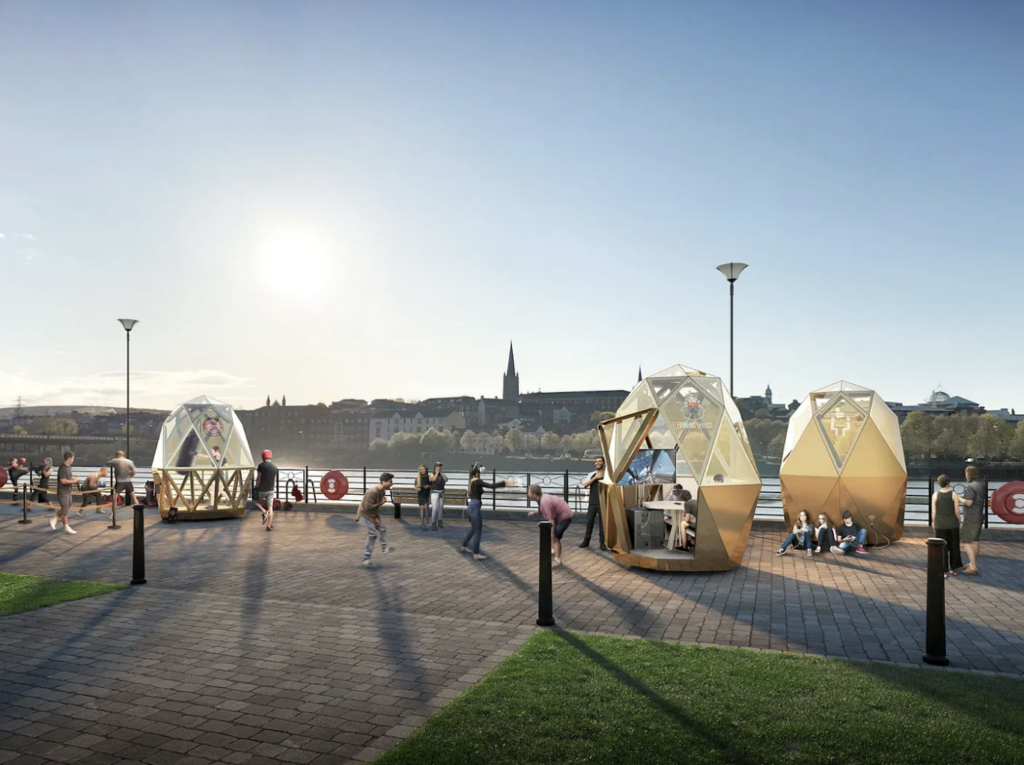

Source
- A. H. Tejada, R. I. M. Dunbar, and M. Montero, “Physical contact and loneliness: Being touched reduces perceptions of loneliness,” Adaptive Human Behavior and Physiology, vol. 6, no. 3, pp. 292–306, May 2020, doi: 10.1007/s40750-020-00138-0.
- V. Chung, R. Mennella, E. Pacherie, and J. Grezes, “Social bonding through shared experiences: the role of emotional intensity,” Royal Society Open Science, vol. 11, no. 10, Oct. 2024, doi: 10.1098/rsos.240048.
- D. Robson, “The secret to long-lasting connection? Shared rituals,” Dec. 30, 2024. https://www.bbc.com/future/article/20241218-michael-nortons-rituals-key-to-connection-family
- S. Myers, “Empathic Listening: Reports on the Experience of being Heard,” Journal of Humanistic Psychology, vol. 40, no. 2, pp. 148–173, Apr. 2000, doi: 10.1177/0022167800402004.
- “Knowledge on Loneliness — The Loneliness Lab | Loneliness in urban spaces,” The Loneliness Lab, Dec. 29, 2020. https://www.lonelinesslab.org/knowledge-hub
