The mental health app market has witnessed significant growth, driven by technological advancements and a global focus on mental well-being. Valued at $6.12 billion in 2023, it is projected to expand further in the coming years. Here’s a snapshot of the current trends, market segmentation and future possibilities.

Market Segmentation
By App Type:
- Depression and Anxiety Management: apps designed to help users cope with depression and anxiety through tools like CBT, mood tracking and guided exercises.
- Meditation Management: apps like Calm and Headspace offering guided meditations, breathing exercises, and sleep aids.
- Stress Management: platforms focused on stress-relief strategies, such as Happify, incorporating gamified exercises to engage users.
- Wellness Management: apps aimed at holistic well-being, integrating fitness, nutrition, and mental health support.
- Others: includes niche apps addressing specific challenges like postpartum depression, grief or addiction recovery.
By Target Audience:
- Individuals Seeking Self-Help: students, working professionals and retirees seeking accessible, affordable mental health tools.
- Healthcare Providers: clinicians using apps to complement traditional treatment plans.
- Corporates: employers implementing wellness apps like Spring Health to enhance workplace well-being and productivity.
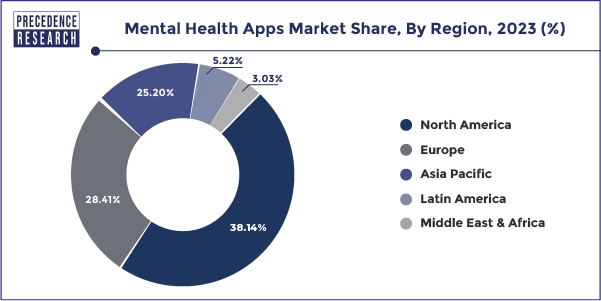
By Region:
North America leads the market with robust app adoption and mental health awareness, Asia-Pacific is growing rapidly, driven by increasing smartphone use and stress-related health concerns.
Key Trends
- AI-Driven Personalization: apps are using AI to provide tailored mental health experiences. For example, Wysa and Woebot offer conversational AI support, while Kintsugi employs vocal biomarker analysis to detect emotional states.
- Gamification for Engagement: apps like Happify use gamification to make mental health practices more engaging, particularly for younger audiences.
- Integration with Wearables: real-time tracking of mental health indicators, like stress and emotional states, through wearable devices is becoming increasingly common.
Opportunities
- Expanding Accessibility: affordable or free mental health apps can address gaps in underserved regions.
- Corporate Wellness: more employers are expected to incorporate mental health apps into their benefits packages.
- Enhanced Privacy and Trust: apps prioritizing user data security and ethical practices will gain consumer confidence.
What’s Next?
- Niche Specialization: apps targeting specific demographics or conditions, such as adolescent mental health or postpartum support.
- Integrated Care Models: enhanced collaboration between apps and healthcare providers for comprehensive mental health solutions.
- Ethical AI Development: transparent and inclusive AI tools designed to meet high clinical standards.
As the market evolves, innovation and user-centric approaches will be crucial in addressing the diverse needs of a global audience.
Sources
- “Mental Health Apps Market Analysis by Size, Share, Trends, Growth and Forecast (2024–2032) | UnivDatos.” LinkedIn. Accessed: Dec. 28, 2024. [Online.] Available: https://www.linkedin.com/pulse/mental-health-apps-market-analysis-size-share-trends-growth-ali-bvfsc/
- “Mental Health Apps Market Size, Share, and Trends 2024 to 2033.” Precedence Research. Accessed: Dec. 28, 2024. [Online.] Available: https://www.precedenceresearch.com/mental-health-apps-market
- “Mental Health Apps Market Size was valued at USD 6.012 Bn in 2023 and is expected to reach USD 16.47 Bn by 2030, at a CAGR of 17.01%.” LinkedIn. Accessed: Dec. 28, 2024. [Online.] Available: https://www.linkedin.com/pulse/mental-health-apps-market-size-valued-usd-6012-bn-2023-komal-kadam-uktbe/
