After the first drum recording session laid the foundation for Standby, a second session was planned with a stronger focus on experimentation and refinement.
In total, two major drum recording sessions were conducted during the project. The first session, which formed the basis for Standby, has already been described in previous blog entries. The second session took place in September 2025 and involved significantly more preparation time, setup complexity, and experimental testing.
This second session was characterized by an increased focus on exploration and critical listening. Considerable time was spent finding suitable microphone positions and evaluating their sound, resulting in a much more intensive and hands-on recording process.
Experimental Room Microphone Approaches
During the second recording session, a wide range of unconventional room microphone techniques were tested. For this purpose, several older Behringer B2 large-diaphragm condenser microphones were used, which I was able to borrow from a friend for the session.
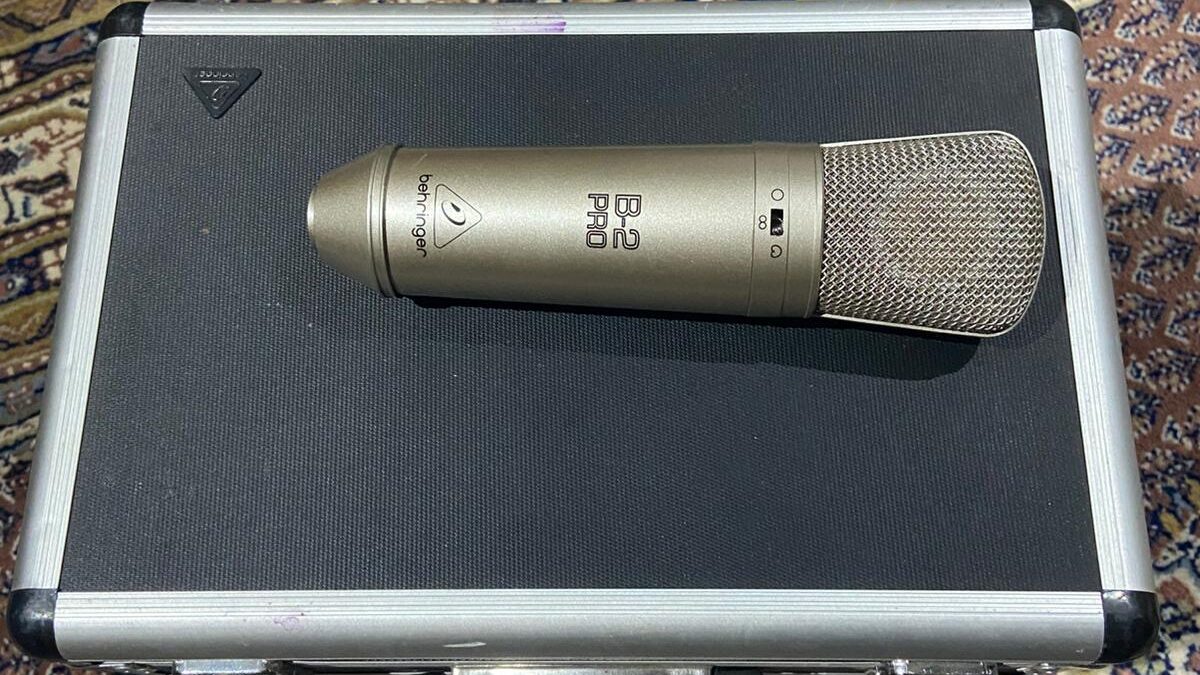
Various microphone constellations were explored, often with the intention of minimizing direct sound capture and emphasizing early reflections and reverberant components instead.
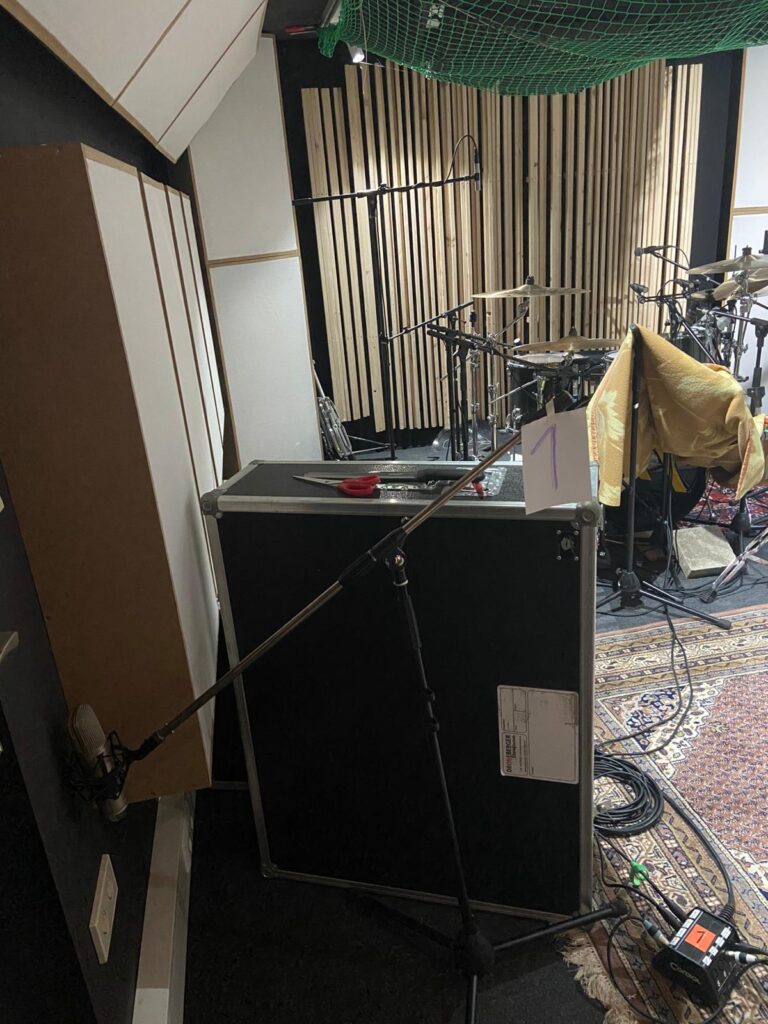
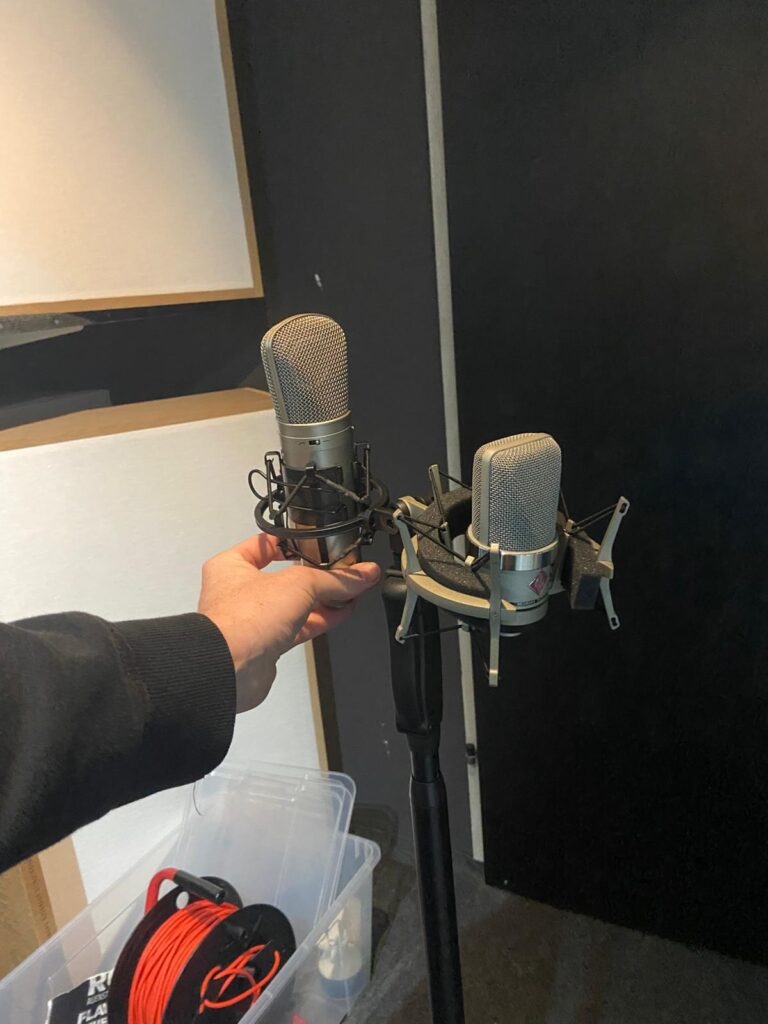
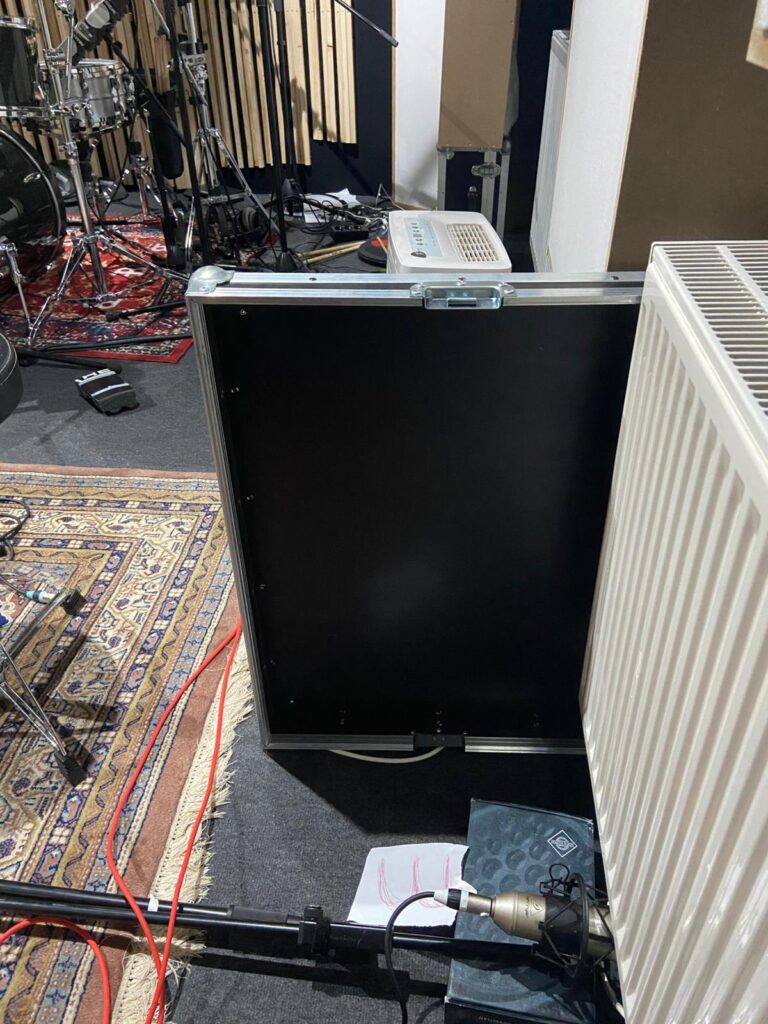
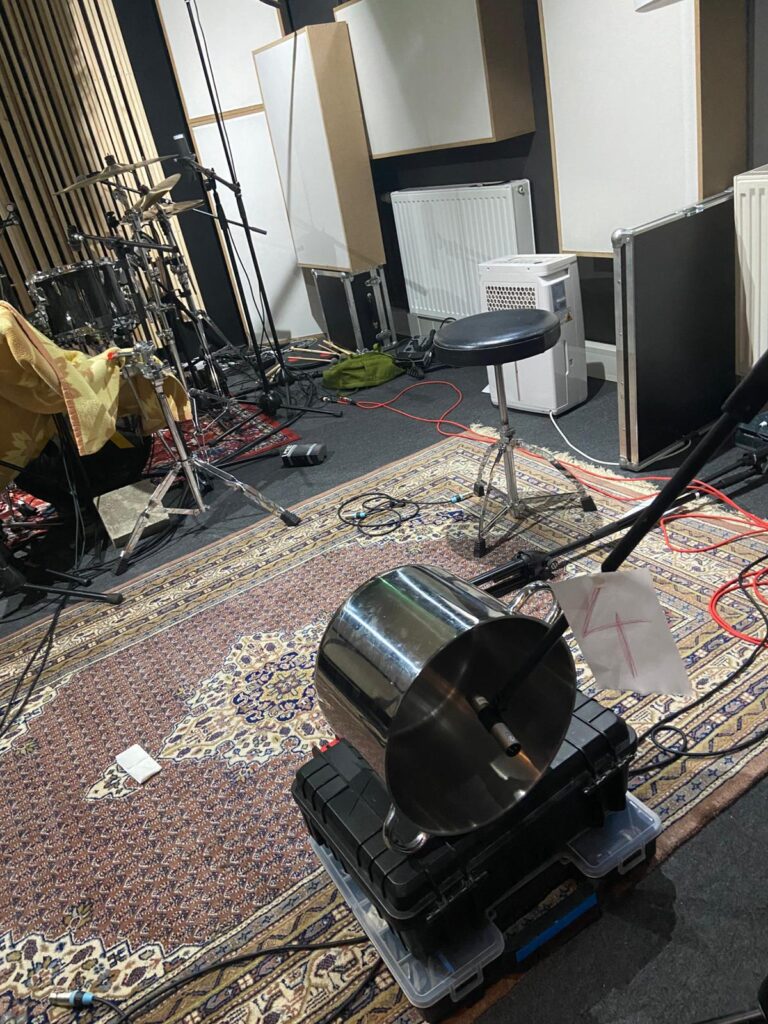
Due to the limited room size, achieving a clean separation between direct sound and room response proved challenging. Nevertheless, multiple strategies were tested, including shielding direct sound and placing microphones in acoustically reactive positions. Additional experiments were conducted by capturing resonant objects within the room, such as a large metal pot or a radiator, in order to introduce controlled resonances—through postproduction, the so-called “dirt”—into the drum sound.
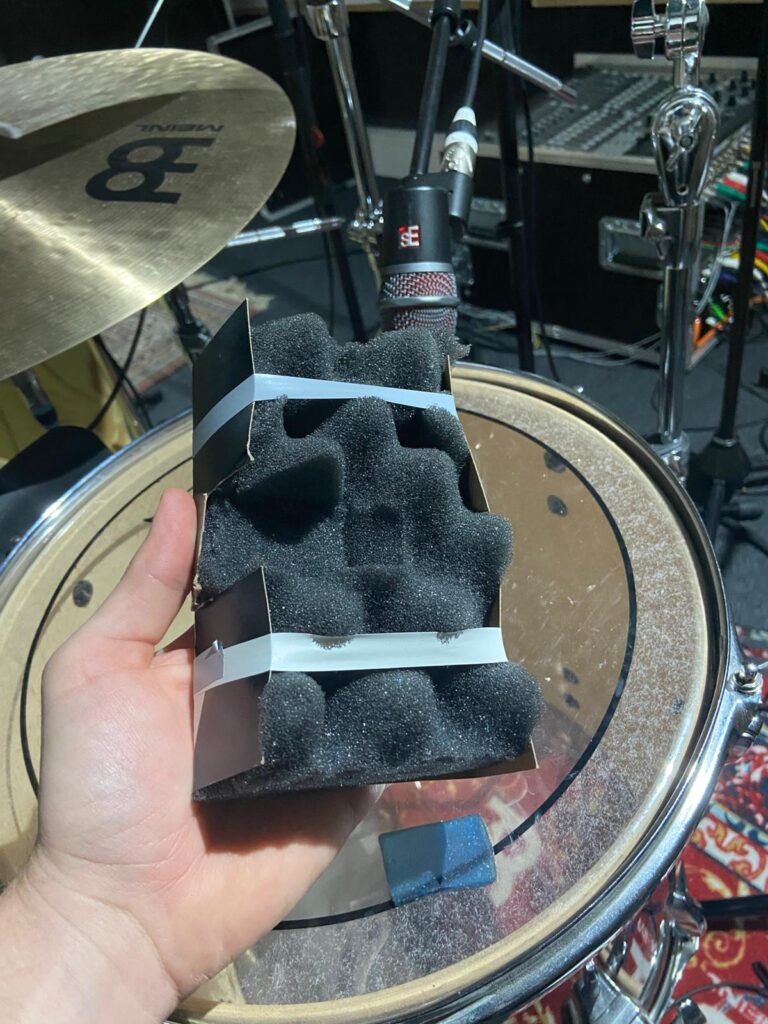
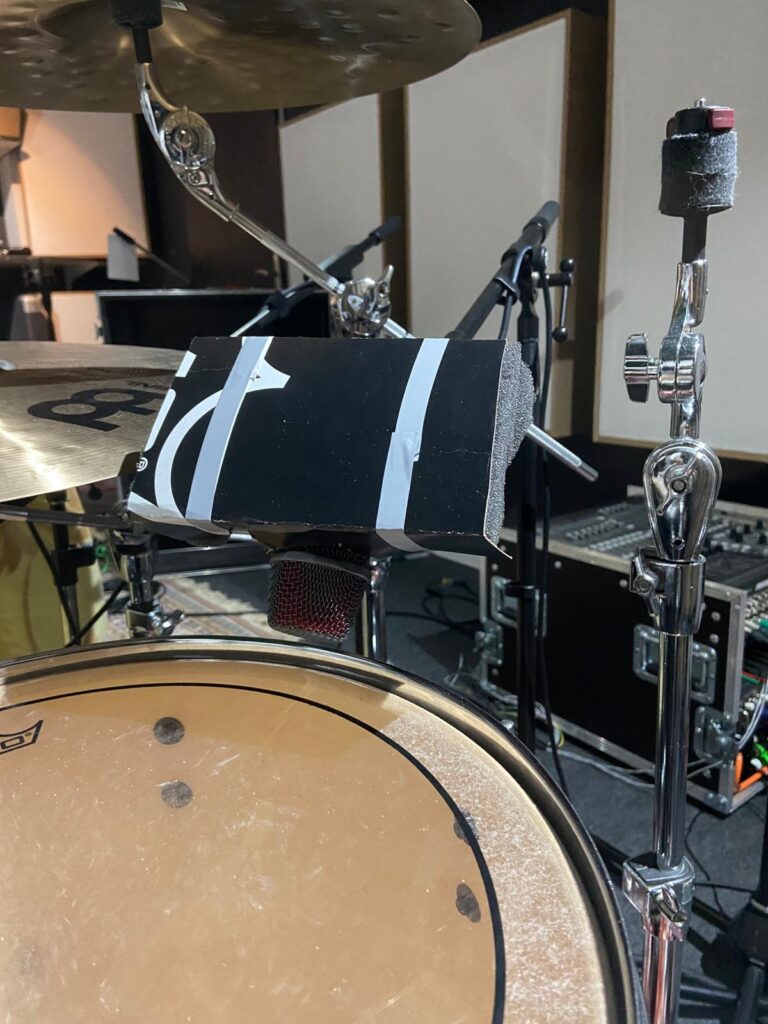
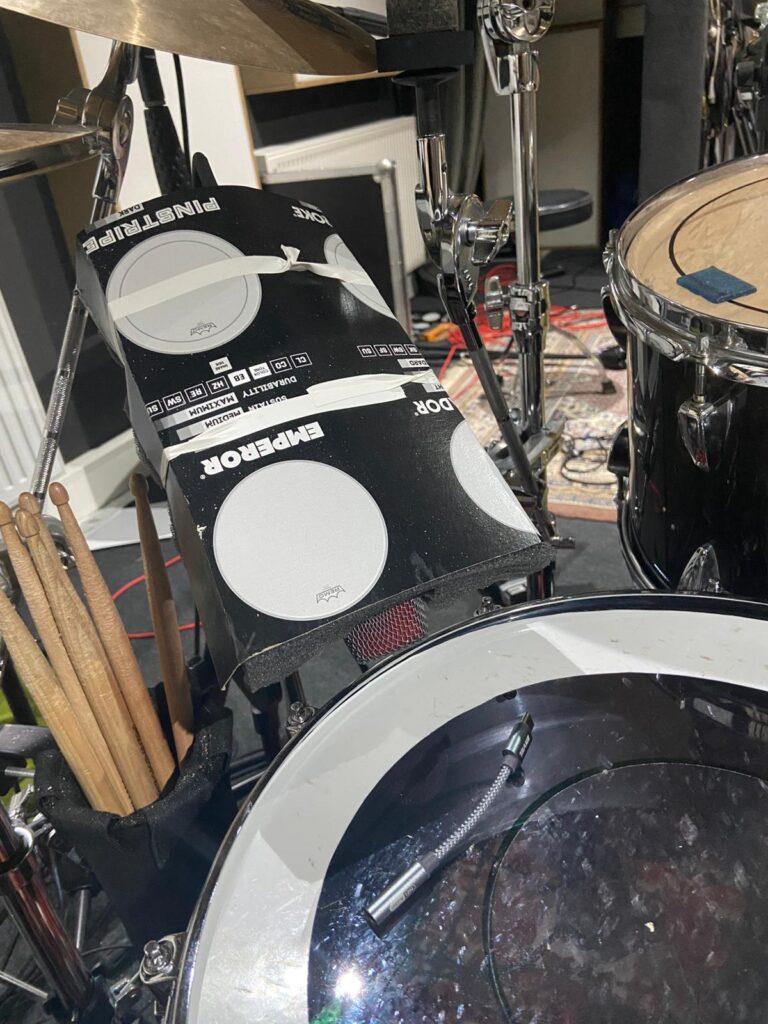
We also built temporary drum shields to reduce cymbal bleed, particularly for the snare and tom microphones.
Evaluation and Consequences
In practice, many of these experimental approaches resulted in signals that were perceived as overly diffuse or lacking clarity. Even after phase alignment and corrective processing, the room microphones often introduced a smeared or unstable drum image. Within an immersive context, this effect was further amplified, as spatial placement of these signals tended to pull the perceived drum position away from a stable frontal image.
As a result, the use of room microphones was significantly reduced. The most effective and reliable solution proved to be the “Droom” microphone setup (A/B stereo placement) positioned directly in front of the drum kit. This configuration provided a coherent spatial impression of the room while maintaining a clear and stable drum image. The “Droom” signal was spatially distributed behind the listener to increase envelopment and, in some cases, dynamically automated—for example, becoming more prominent during choruses. This technique proved highly successful and is considered a valuable approach for future productions.
The refined recording strategies directly influenced the production of the following tracks Alter Me and Caught In Dreams.
