In the end of last month, I attended the FAT Ice Race in Zell am See. The event combines motorsports, lifestyle, fashion, music, and brand on a snowy airfield. My focus was not only on the racing, but on the overall creative experience of the event. In addition, I produced content for my portfolio on site to document visual narratives in the event context.
When I visited the FAT Ice Race in Zell am See, I didn’t go there only as a spectator of motorsport, but consciously as a designer observing how events construct identity. The FAT Ice Race is not a typical race. It is a hybrid of motorsport, fashion, branding, music, and lifestyle culture staged on a snowy airport runway. That combination alone already makes it interesting to me from a design perspective, because it moves beyond sport and becomes a curated cultural experience.
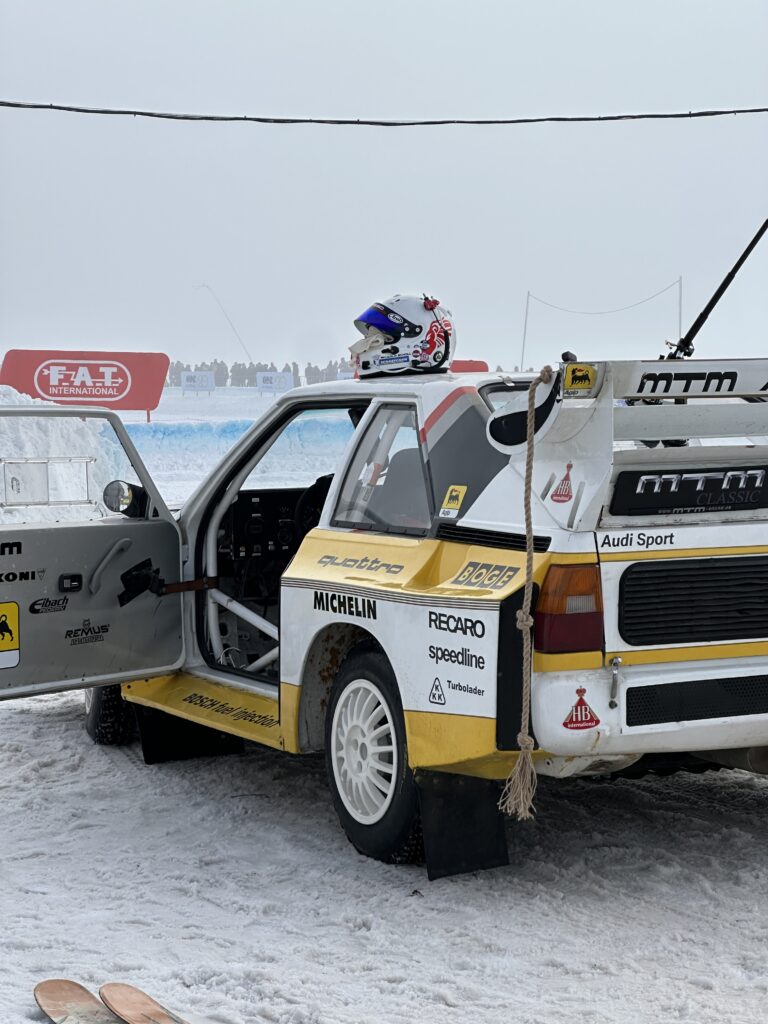
What struck me immediately was how strong the overall aesthetic direction was. The event felt cohesive (and also somewhat exclusive) in terms of visual identity, atmosphere, and narrative. Even though it takes place outdoors in an open, icy landscape, the branding structures the space clearly. Flags, typography, merchandise, cars, outfits, and social media presence all follow a consistent visual language. To me, there is something fascinating about how the event communicates a sense of subculture while being highly professional and strategically branded at the same time. The aesthetic references vintage racing culture and underground motorsport scenes, yet the execution is extremely polished. This tension between authenticity and curation made me think about how design can construct “effortless coolness” while being carefully planned. While being there, I consciously produced visual content for my portfolio.
It also made me reflect on how to visually translate speed, coldness, movement, and atmosphere. How do you frame motion? How do you capture the dynamic between machine and landscape? The icy surface, the engine sounds, the winter light, and the crowd’s outfits all contributed to a multisensory experience that goes far beyond graphic design. For me, it kinda became an impulse to think more deeply about event design as spatial branding. Motorsport in this context becomes a stage for cultural storytelling. It is not only about performance or competition, but about identity formation. The event design creates belonging and exclusivity at the same time. Through visual consistency and atmosphere, it shapes how people experience and remember it.
This connects strongly to my broader interest in experience design. How can temporary events create such strong identities? How does spatial design influence behaviour, self-presentation, and social media representation? I also started to think about how events function as amplified communication spaces. They are designed to be photographed, shared, and circulated digitally. Here, the physical and digital layers are inseparable.
Disclaimer: This text was refined with the support of AI. The reflections and observations are based on my personal experience of attending the event.
