Introduction
Creating the project Wabi Sabi for our Masters exhibition Overlays confronted me with an aesthetic that feels very different from the polished, high-resolution visual culture we are surrounded by daily. Wabi-sabi, a Japanese philosophy centred around impermanence, imperfection, and incompleteness, challenges dominant Western ideas of perfection and optimisation. So, to connect it all together, we used old old TVs as our screens. While it certainly was challenging to even get it to work (thanks to our 1000 adapters), it had charm right away. There is just something nostalgic and cool about the sound and feel of old technology. So wabi sabi is not just an aesthetic choice, it’s more an attitude towards acceptance. In a design context that could mean embracing process over perfection, traces of use over sterile surfaces, or sustainability over constant replacement.


In communication design, we often aim for clarity, control, and technical precision. Grids are aligned, colours calibrated, imperfections removed. Encountering wabi-sabi made me question that a little more. What happens if imperfection becomes intentional? Can irregularity communicate authenticity rather than carelessness? That’s also exactly what I tried to show with my animation.
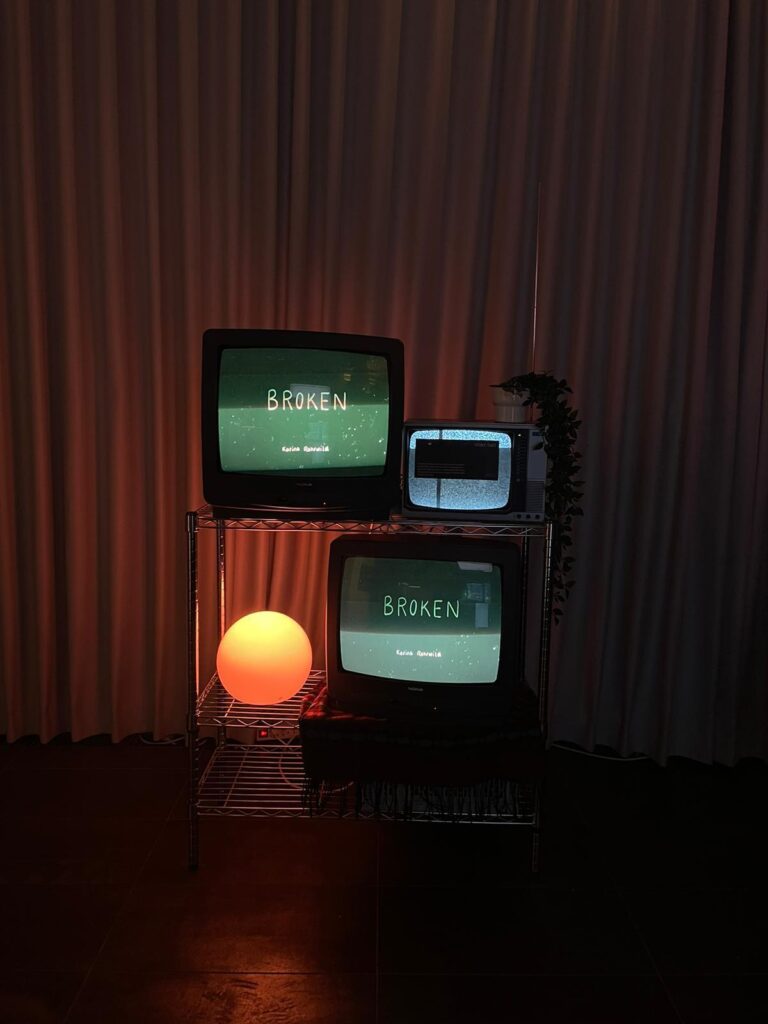
As an impulse for (or at least in the direction of) my master’s research, this project and also exhibition overall encouraged me to reconsider my own aesthetic preferences. How can imperfection become a conceptual tool rather than a flaw? In the end I can say, this project challenged my understanding of quality in design. It suggested that vulnerability, incompleteness, and temporality can be meaningful design values. That thought feels highly relevant for my evolving research identity.
Disclaimer: This text was refined with the support of AI. The reflections and observations are based on my personal experience of attending the event.
