As part of the “Klanglicht” project, I developed (together with my partner in crime (@Karre)) the visual design for the FH Vertigo project. This project was particularly influential for my design and research focus, as it works strongly at the interface of space, atmosphere, and identity.
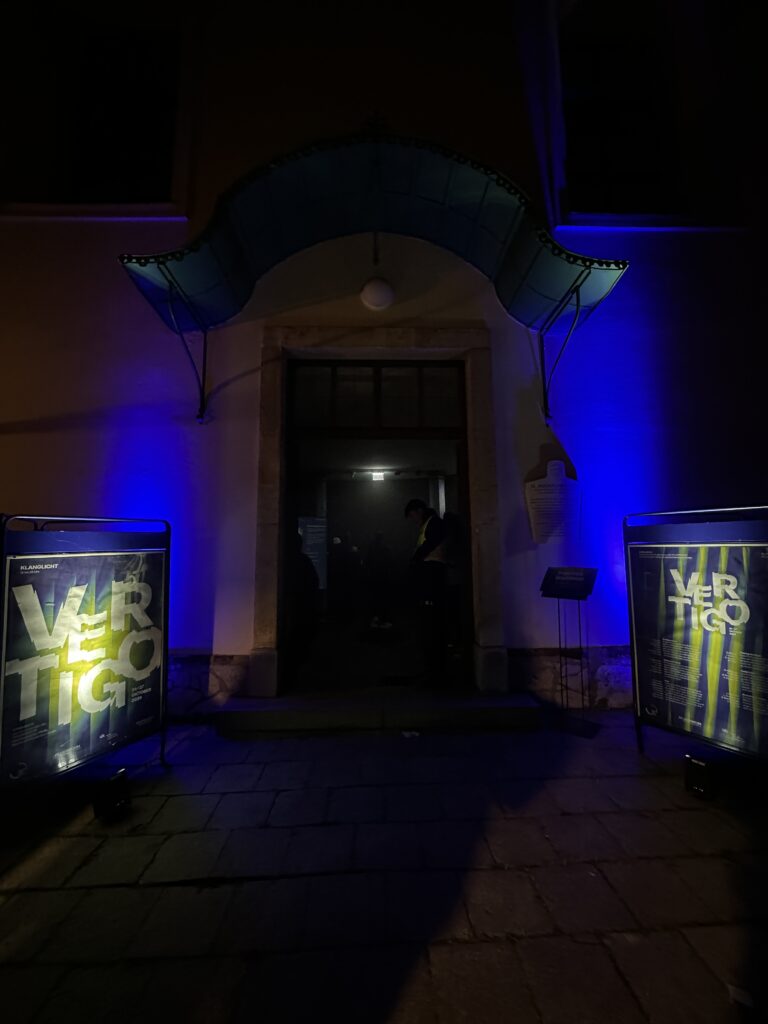
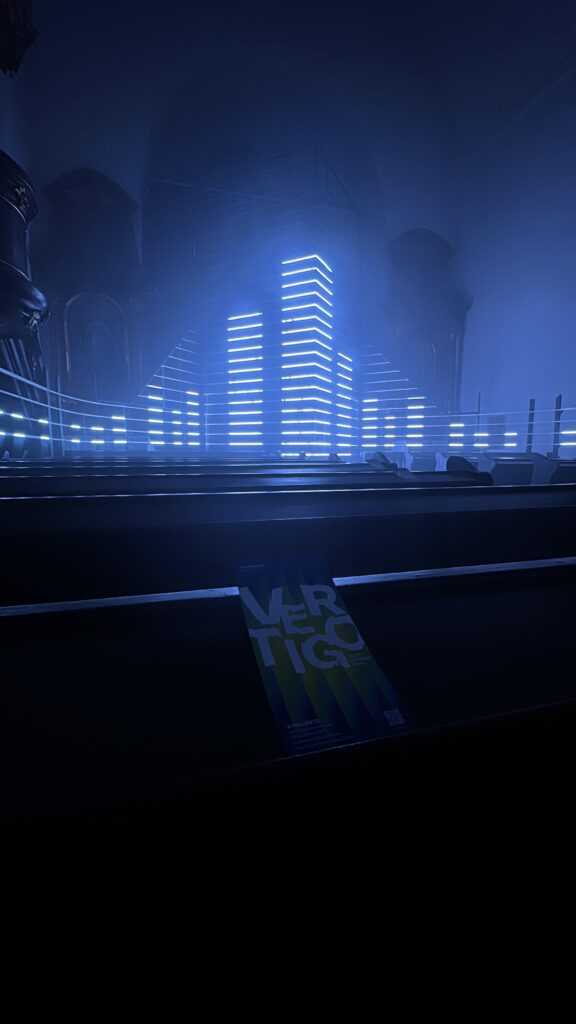
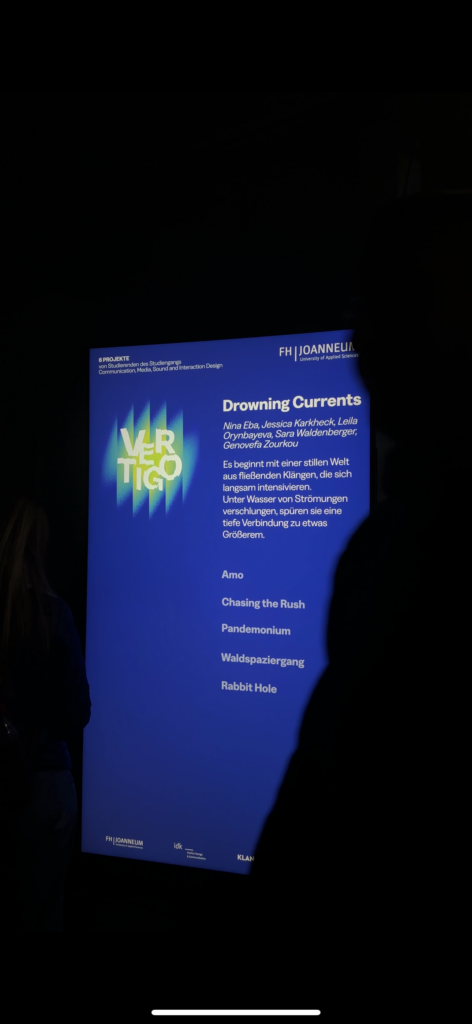
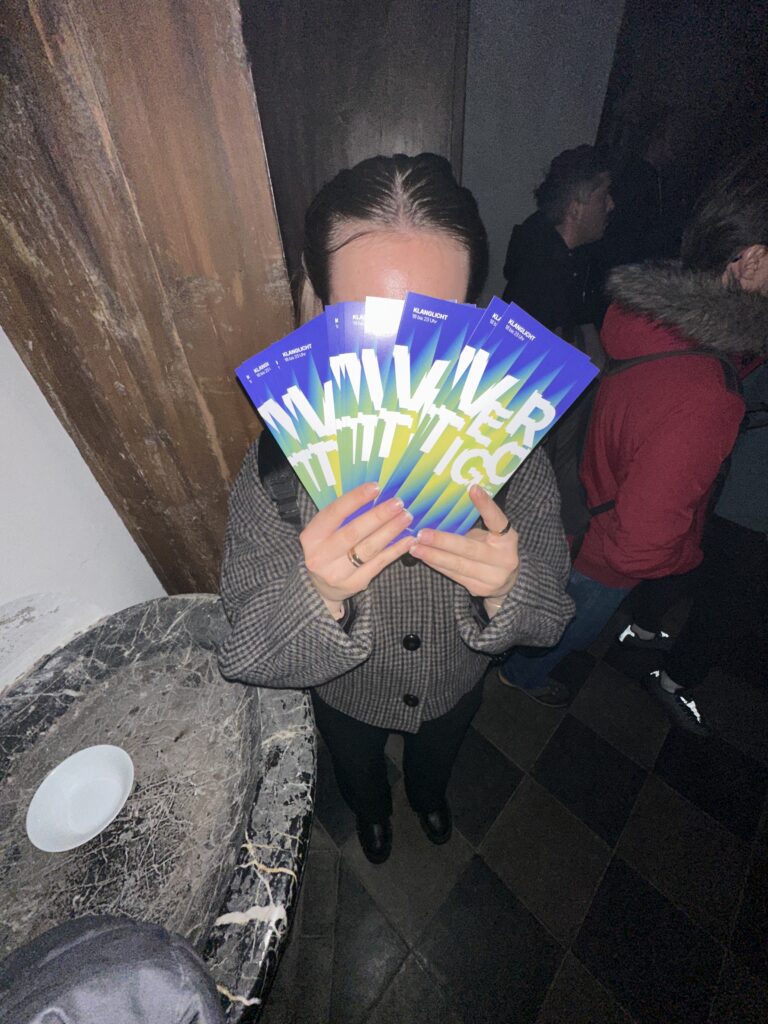
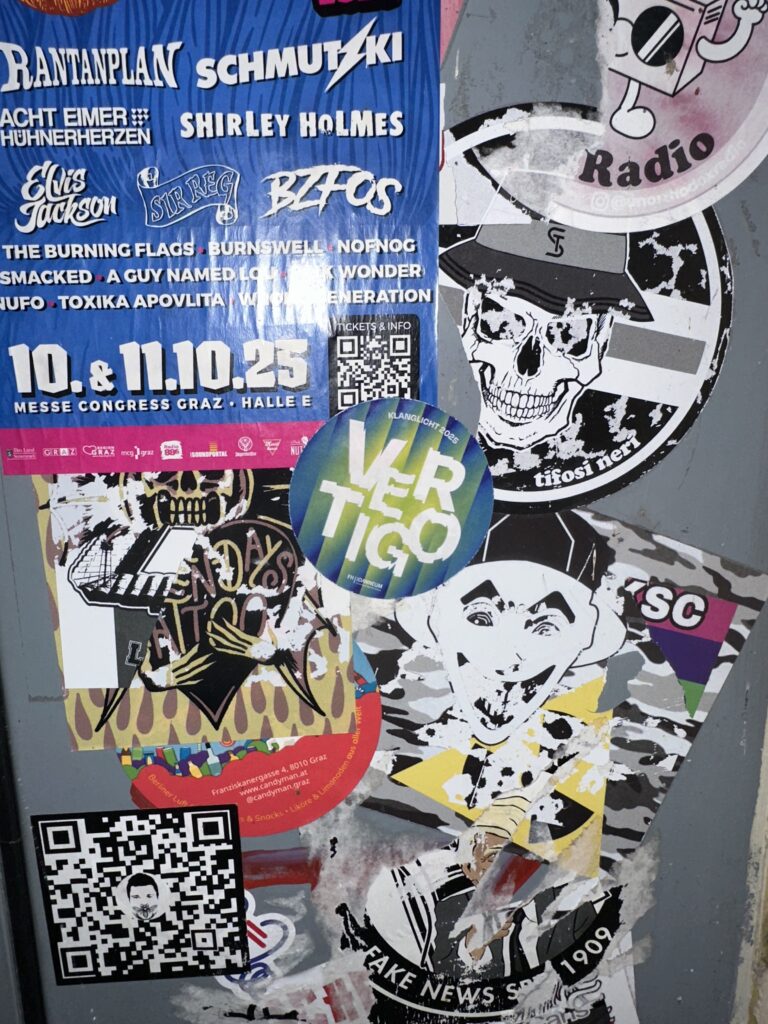
Die Herausforderung bestand darin, eine visuelle Sprache zu entwickeln, die sowohl digital als auch physisch funktioniert (Ohne vorher die fertige Installation zu sehen).
https://www.instagram.com/p/DQBXx7vCOSX
When I visited Vertigo (our FH Project as part of Klanglicht 2025), I found myself stepping away from the “spectacle” of it all. Most people were there for the visual rush, but I was more interested in how people experience it. What are their reactions? How do they engage? Do they look at the Flyers? Do they take stickers? Knowing now how much conceptual and technical planning goes into these kinds of installations, I wanted to see how it then was actually perceived.
Knowing Karina and I had made the visual Identity for the project and seeing it all come together and also seeing the way we’ve approached it actually mirrors a lot of what I felt inside that installation, we were very happy. When we started, we had no idea what the final look was going to be. We didn’t start with sketches of logos, instead we started with the process. The installation operates through immersion, rhythm, and a very intentional kind of disorientation. The title itself gives it away. It’s about that sensory shift where your body has to decide between staying stable and moving through a space that feels like it’s shifting.
The installation translated that feeling into spatial design perfectly (shoutout to all of the media, sound and interaction designers here!). I’ve seen similar installations at the Festival of Lights in Berlin or at Ars Electronica, and it’s crazy to think what a deep collaboration between artists, programmers, and sound designers these installations actually are. The boundaries between design, art, and technology just somewhat blur.
Ultimately, Vertigo gave me a few big impulses that I want to take with me. Just like our identity project, the most powerful results come when you let the visuals flow. So in this case, when carefully designed, losing your orientation can actually make you more aware of the space around you.
Disclaimer: Dieser Text wurde mit KI-Unterstützung strukturiert und übersetzt. Projektarbeit und Reflexion stammen von mir.
