I traveled to Barcelona to see the Llum Festival (among other things). I was curious about it and the art. Even though the festival is mainly focused on media art and light installations, I still found a lot of inspiration there. It showed me new ways of thinking about space, atmosphere, and how art can change the feeling of a city at night.
The Llum Festival is an annual light and media art festival that takes place in Barcelona, mainly in the Poblenou area. For a few nights, streets, buildings, and public spaces are transformed by light installations, projections, and digital artworks created by artists, designers, and architecture schools. Many of the works play with technology, movement, sound, and interaction. It’s very similar to Klanglicht in Graz.
In this article, I want to capture the moments and installations that stayed with me the most. These were the pieces that caught my attention, sparked ideas, or simply made me stop and look for a little longer.
The Rhythmen of the Ocean
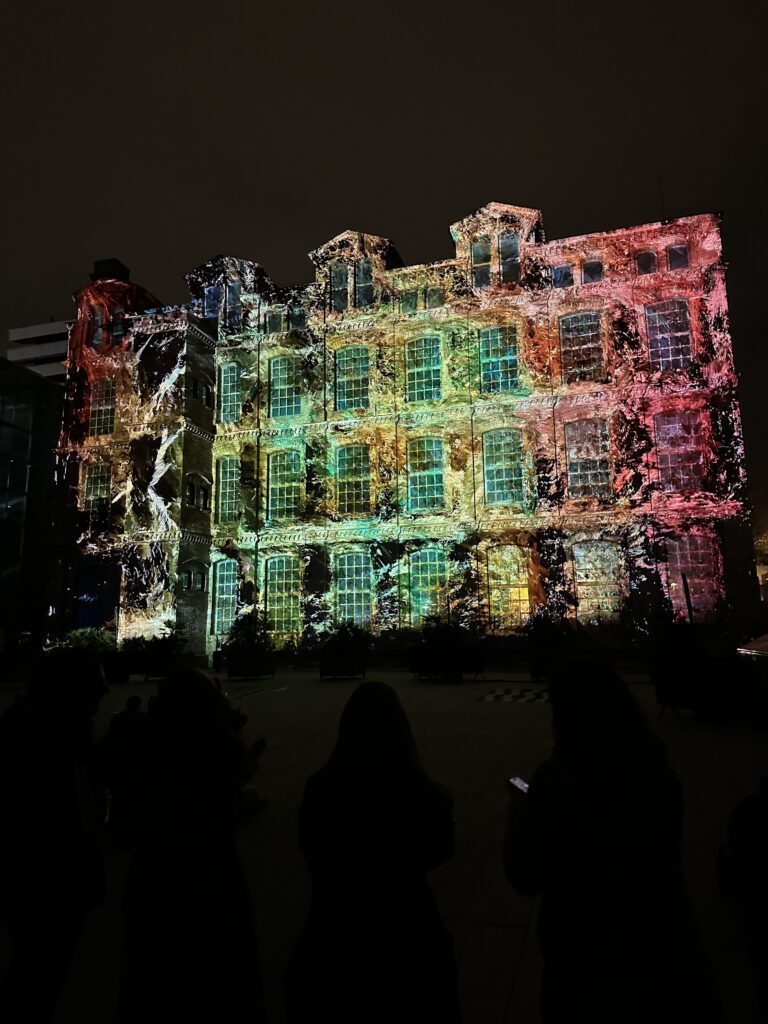
One of my absolute favorite installations at the Llum Festival was “The Rhythm of the Ocean” by the visual studio Desilence, paired with music by composer Suzanne Ciani. This piece stood out immediately because it used a big open space in a powerful way, making the message feel immersive and meaningful. I really liked the flowing visuals and sound that moved like waves around you, it was very magical. It felt like you were inside the ocean and reminded me of Atlantis.
What I liked most was that the installation wasn’t only visually impressive, but also meaningful. Toward the end, text was projected that explained how much waste ends up in the ocean every day and how this pollution affects our environment. By using such a big surface and clear text at the end, the artists made sure the message couldn’t be ignored. For me, this combination of scale, movement, and environmental awareness is what made this installation one of my favorites at the festival.
Mantra Intervention
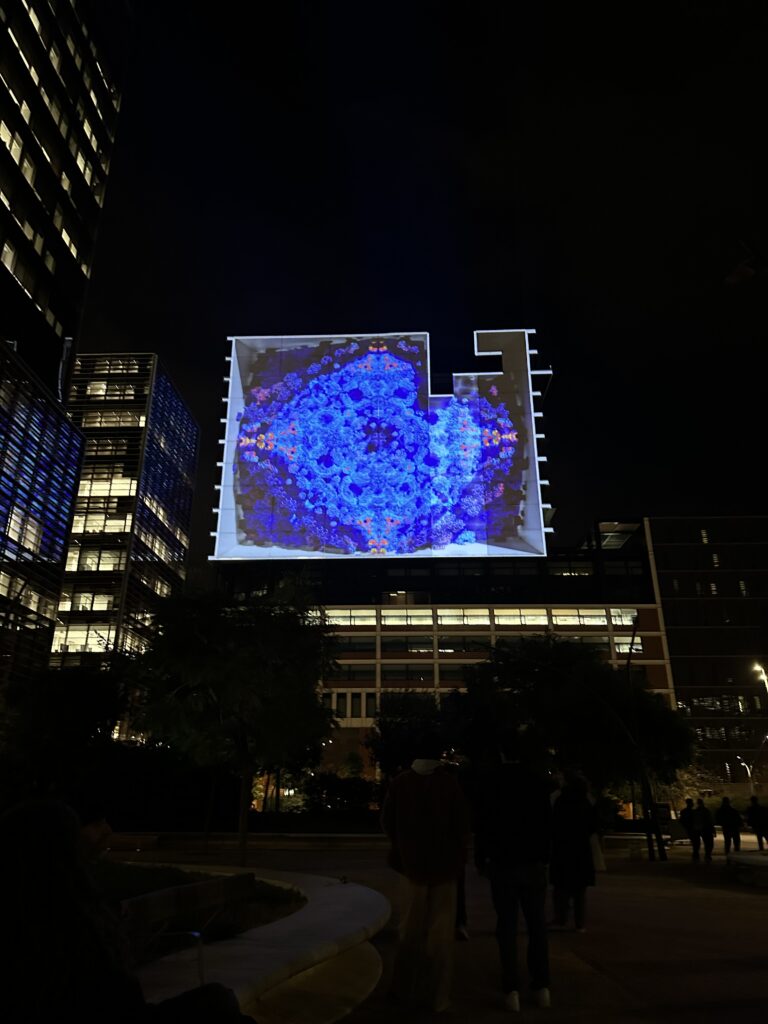
Another installation I really enjoyed was “Mantra Intervention” by the creative duo STUDIO MO:YA (designers Roland Mariacher and Werner Huber) presented as part of the Llum Festival’s main programme. And you might remember their names, because Moya is based in Graz and also participated at Klanglicht. And to be honest, they were definitely one of the best installations at the festival.
It was an interactive and generative piece that immediately drew me in because it let visitors participate with the art. At one screen, people could change the colours themselves, and brightly rectangles would pulse and lighten up to the rhythm of the music. What made it especially fascinating was watching how the piece constantly recalculated and evolved in real time, so no two moments looked the same, it was always shifting. This mix of interaction, generative visuals, and live rhythm made Mantra Intervention one of the most memorable parts of my visit.
Bulla
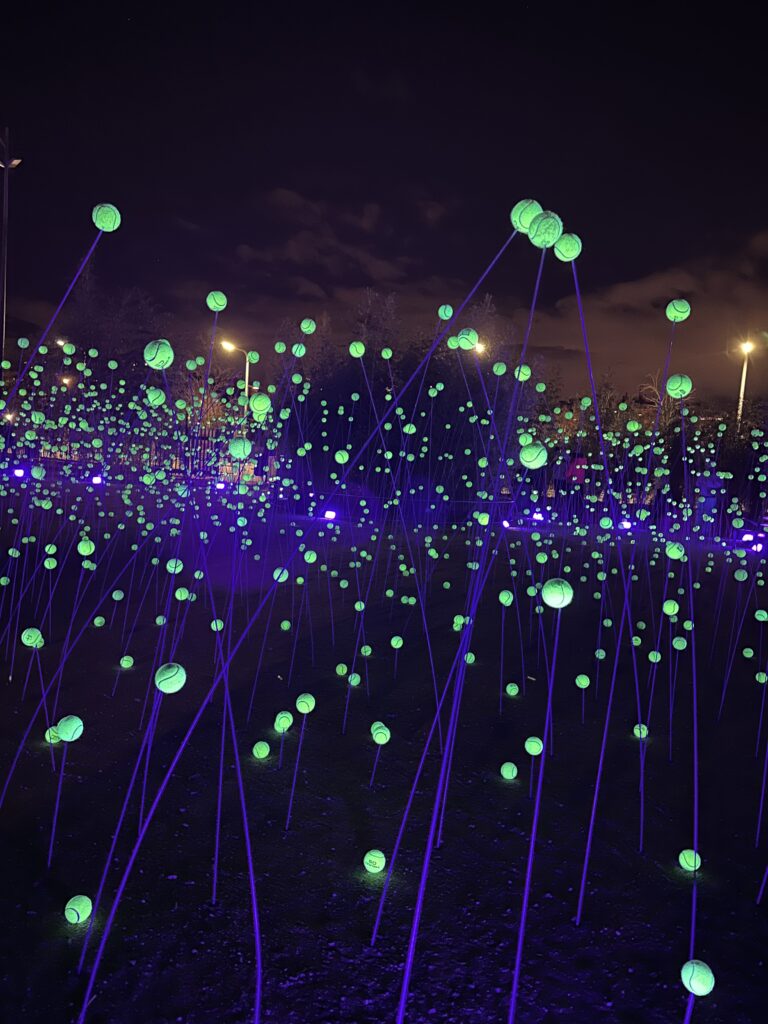
Another installation that I really liked was “Bulla” by Lola Solanilla. This piece was set up in the Àgora Berta Cáceres in Parc de les Glòries (next to Off- Area if you remember). Walking into it felt almost like stepping into a mystical, magical world. The work was made up of almost 4,000 luminous spheres (Golfballs on rods) suspended over a large area, creating a soft, dreamlike landscape of light that you could walk around.
What I liked most about “Bulla” was the vibe it had this unreal, almost enchanted atmosphere that made the space feel a bit mysterious. The play of light and shadows, and how the spheres floated above the ground, made it feel like you were in some kind of glowing cosmic field.
The whispering Mountains
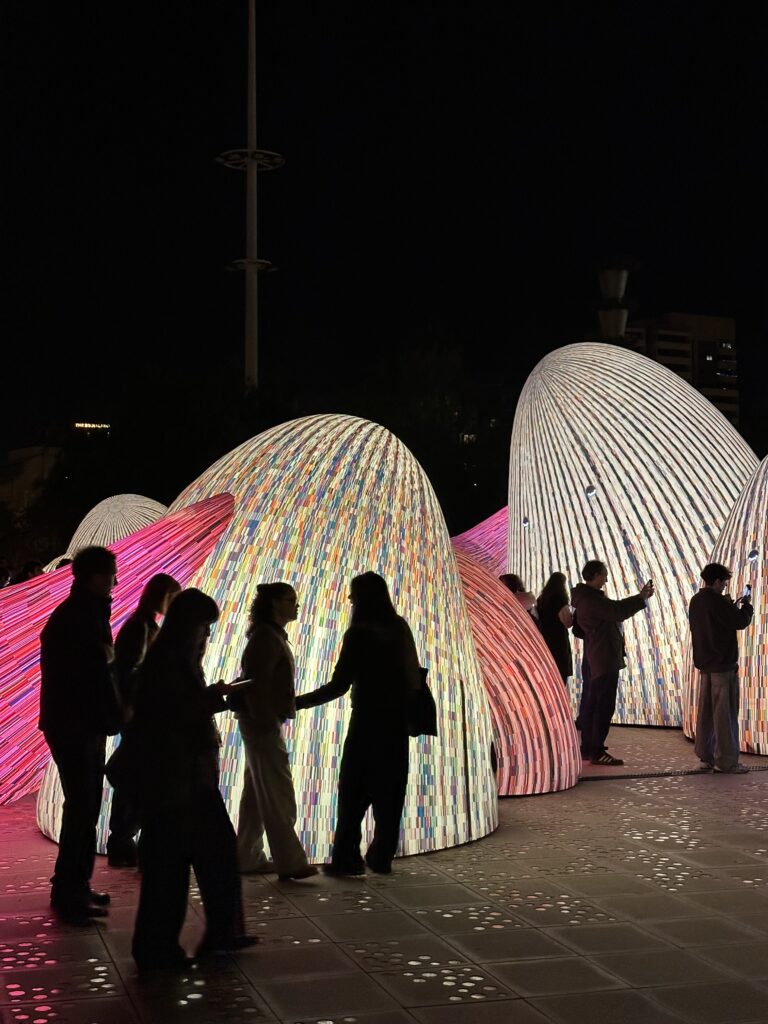
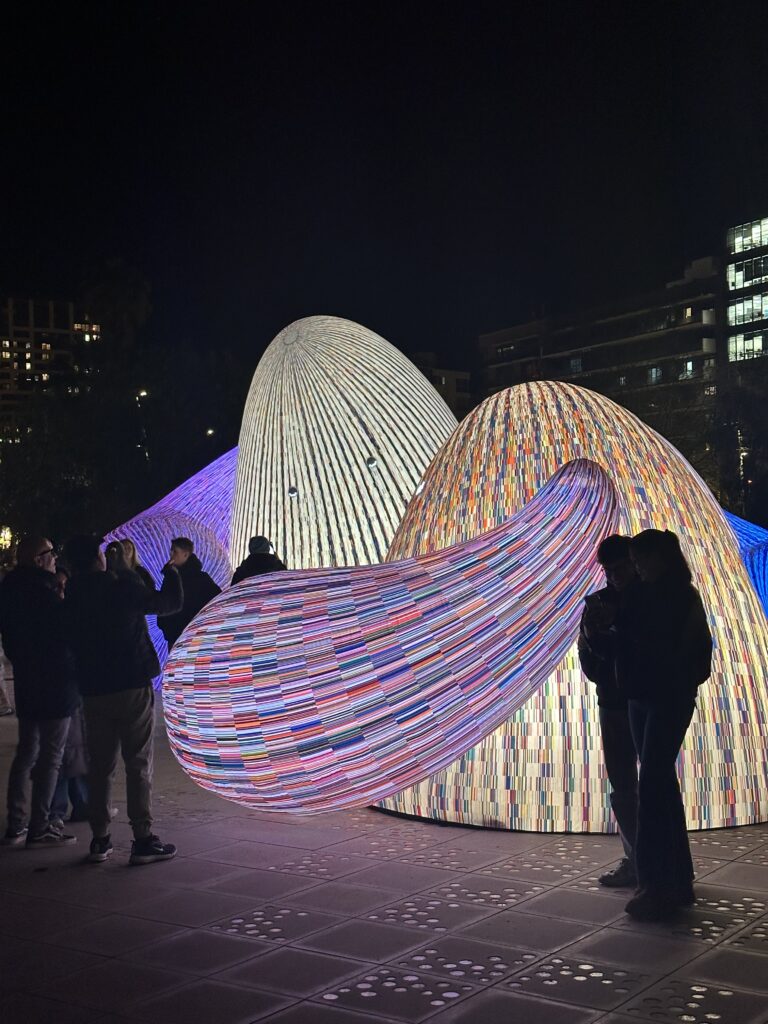
Another piece I really liked at the Llum Festival was “The Whispering Mountains” by ENESS. This installation used inflatable sculptures spread out in the Parc del Centre del Poblenou, and the whole vibe felt really cool and magical. Walking among and through these soft, glowing shapes gave the space a kind of playful, other‑worldly feeling.
I especially enjoyed this installation because it felt alive, the shapes and light looked almost like friendly creatures with eyes blinking and subtle movements that gave them emotion. This cute, expressive quality made the artwork feel personal and engaging, not just a static display of light. For me, that artistic approach was one of the reasons “The Whispering Mountains” stood out as one of the best installations at the festival.
Final Thoughts
Overall, I found the Llum Festival very beautiful and interesting. Even as a Communication Designer, it was a great source of input and inspiration. The professional installations were impressive and really cool. But to be honest, compared with Klanglicht, I had expected a bit more from Barcelona. (After all, it’s a huge city with a strong design background). While there were some truly amazing pieces, there were also many installations by students that sometimes felt rushed or not fully thought out (not just student installation felt like this). I also noticed that some works might have been even more striking if it had been darker overall, but the city itself is already quite brightly lit at night, which limited the effect in some areas.
Still, despite these small points, I’m really glad I went. All in all, it was a very beautiful and inspiring experience, and it gave me plenty to think about and reflect on creatively.
