For this impulse I decided to just sit, watch and listen. No laptop, no papers. Only me, two public charging stations and forty minutes each.
Location 1: Mürzzuschlag MER Charger
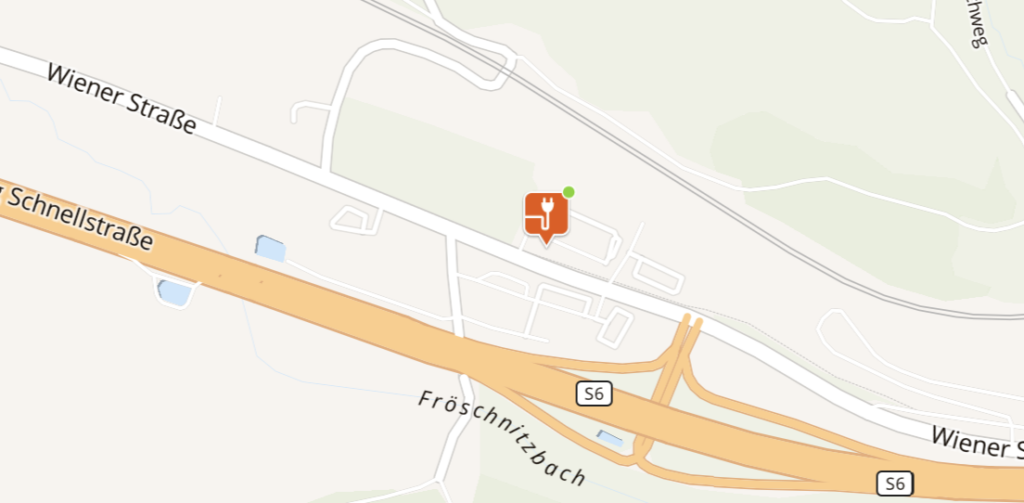
The first location was a busy highway charger near Mürzzuschlag, next to a McDonald’s. The provider was MER AT and there were three stations with six plugs in total. When I arrived, it was already quite full. I plugged in my car and then tried to look casual while secretly observing everyone else.
Very quickly I saw one big pattern: people arrived, slowed down, looked around… and then left again, because everything was taken. I saw this several times. At least three cars did a small sad circle and drove away. In that moment I thought: “So many apps show the charger on the map, but not clearly if it is actually free when you arrive.” For a first‑time user this must feel terrible.
While I was staring at all this, I started thinking about reservations. Would it help if you could reserve a charger for, say, 3 p.m.? But then I imagined another car arriving at 2:30 p.m., starting to charge, and then getting cut off at 3 p.m. by a cold software rule. That also sounds like a recipe for anger. So in my notebook I wrote: “Reservation might solve one problem, but create new ones.”
Another thing I noticed: people carry many different charging cards. Some drivers opened their wallets like playing cards and tried one after another on the reader. It looked like a strange card game: “Does this one work? No.Next card. Maybe this one.” It is almost funny, until you remember they are standing in the cold with a low battery.
The classic behaviour at this highway spot was also very clear. Most people plugged in, checked the screen nervously for a few seconds, then walked straight into McDonald’s. I assume many of them used the time to eat. One or two people just went to the toilet and then waited in their car until the charge was finished.
Two scenes really caught my attention. Twice I saw someone drive to a free station, get out, try to plug in, and then something clearly went wrong. One man tapped around on the screen, looked confused, and then even hit the interface lightly with his hand. After that he simply unplugged and drove away. I would have loved to ask him, “What exactly happened?” but he was gone faster than I could move.
Location 2: Vienna Charger at HOFER
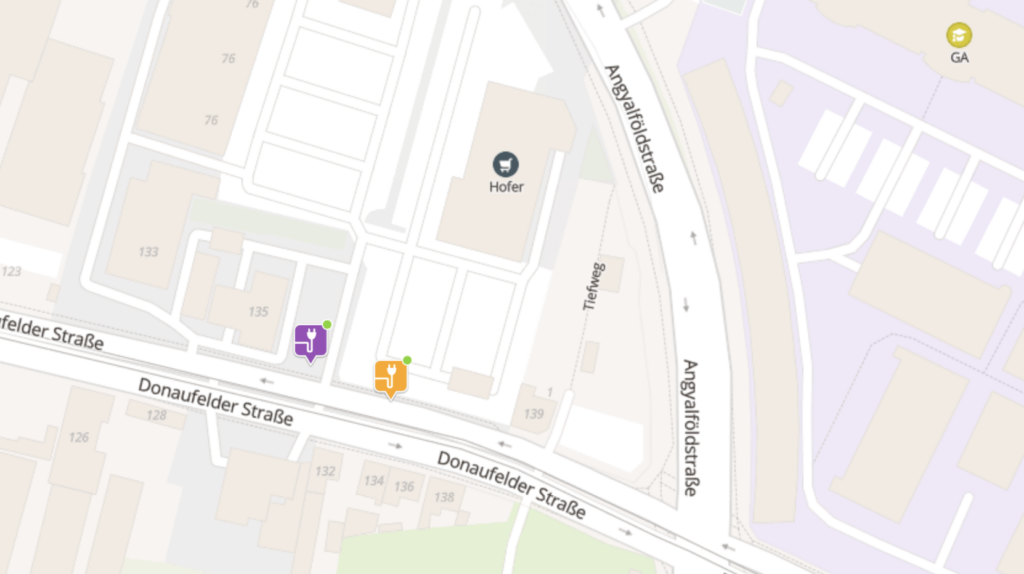
The second observation place was very different. It was a charger on a Hofer parking lot in Vienna. Much less traffic, much less drama. People drove in, connected the cable, checked quickly if it started, and then walked into the Hofer. When they came back with their groceries, they unplugged and left. Everything looked calm and routine.
My feeling is that many of these users already know this charger well. Maybe they shop there every week and charge at the same time. So the station is part of their normal habit, not a big unknown adventure. That might be one reason why there were fewer visible problems.
Comparing both locations was very interesting. The highway charger showed all the typical pain points: queues, no real‑time visibility, card chaos, technical errors and stressed people. The supermarket charger felt more like a quiet background service that just works for the locals. For my master thesis this contrast is important. The same technology can create very different experiences depending on context, frequency of use and user familiarity.
The next logical step for me would be to talk to these people, not only watch them. Interviews could help me understand what they really feel in these moments: stress, boredom, routine, anger, or maybe even satisfaction. But already now, just standing there for forty minutes at each place gave me a rich view into the real life of public EV charging – far away from clean diagrams and perfect user journeys.
Disclaimer: This post was written with help from AI for structure and grammar, but all content, stories and reflections are from my own experience.
