I recently visited the Albertina and saw the work of Marina Abramović — an artist I’ve admired for a long time. Her way of presenting art has always felt different to me. It’s never just about what you see, but about how you react, how you feel, and how aware you become of yourself in that moment.
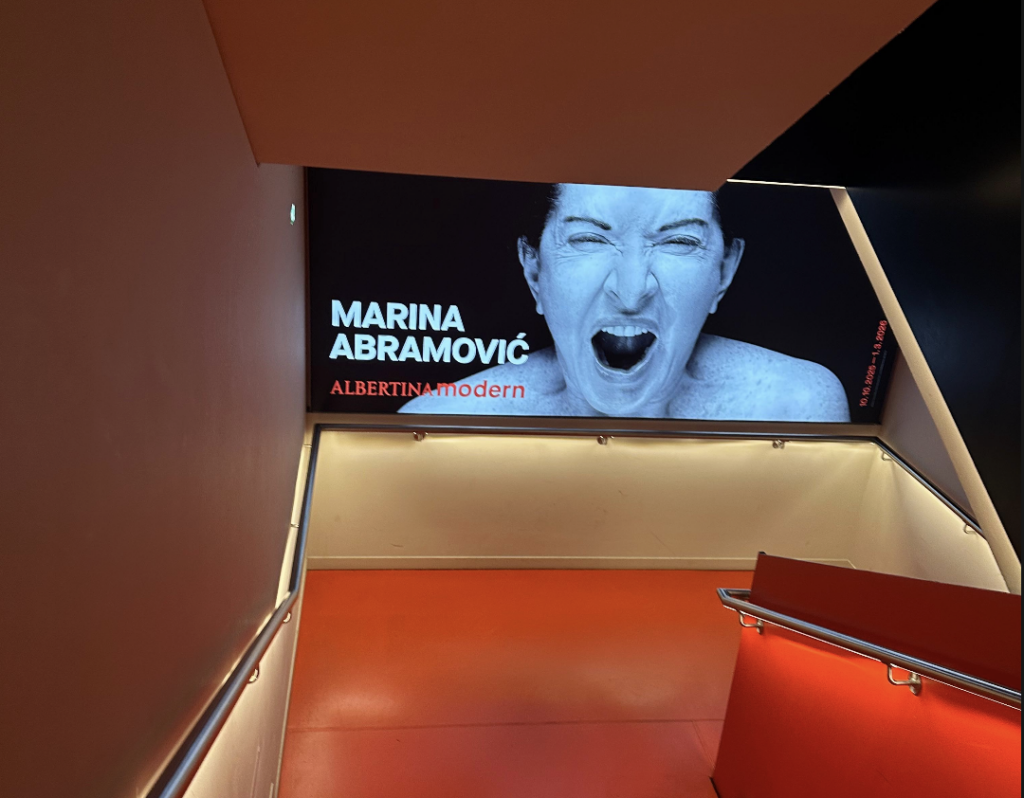
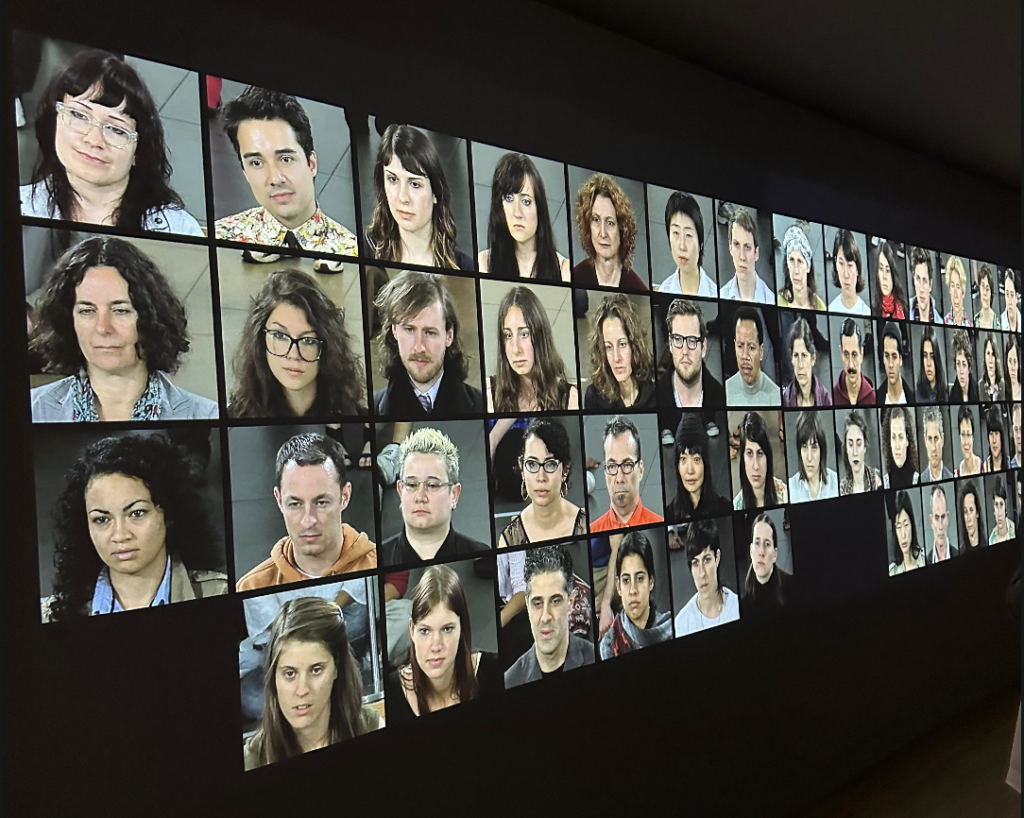
What I’ve always loved about Abramović’s work is how much she trusts the audience, even though sometimes it can be really dangerous for her.She gives them space, but also responsibility. In many of her performances, the audience is not just watching, they are part of the artwork. Sometimes she challenges them, sometimes she makes them uncomfortable, and sometimes she makes them slow down and really feel what’s happening. Her focus is almost always on the human reaction. In Albertina was presented one of her work names “counting the rice” and the idea behind it is mental presence, endurance and inner discipline.
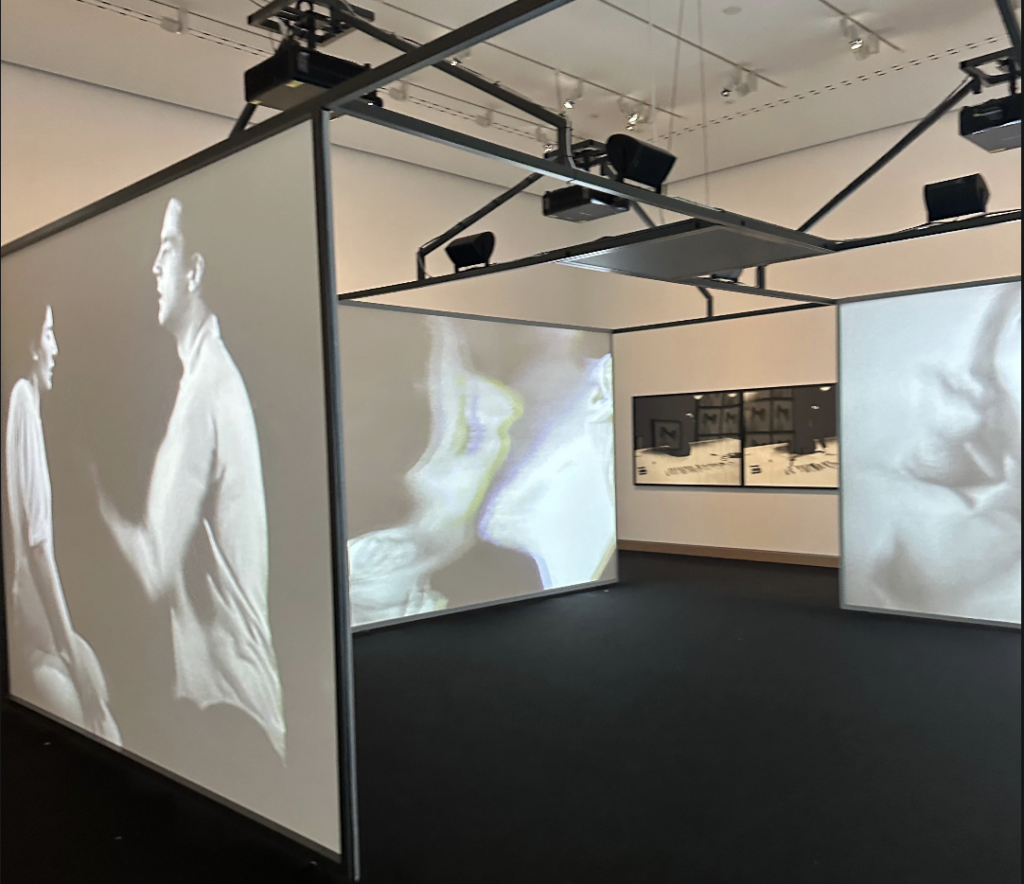
She has also never limited herself to one medium. Alongside live performance, Abramović has continuously experimented with video and audio as part of her artistic language. These elements are not just documentation in her work — they often become part of the experience itself, shaping how presence, time, and emotion are perceived. This openness to media has always allowed her performances to exist beyond the physical moment.
Seeing her work in the museum was inspiring, especially because I’ve been following her practice for quite some time. While reading about her life and artistic journey during the exhibition, I noticed how open she has always been to experimenting with new ways of communicating her ideas. She doesn’t seem afraid of change instead, she uses it to explore new forms of connection.
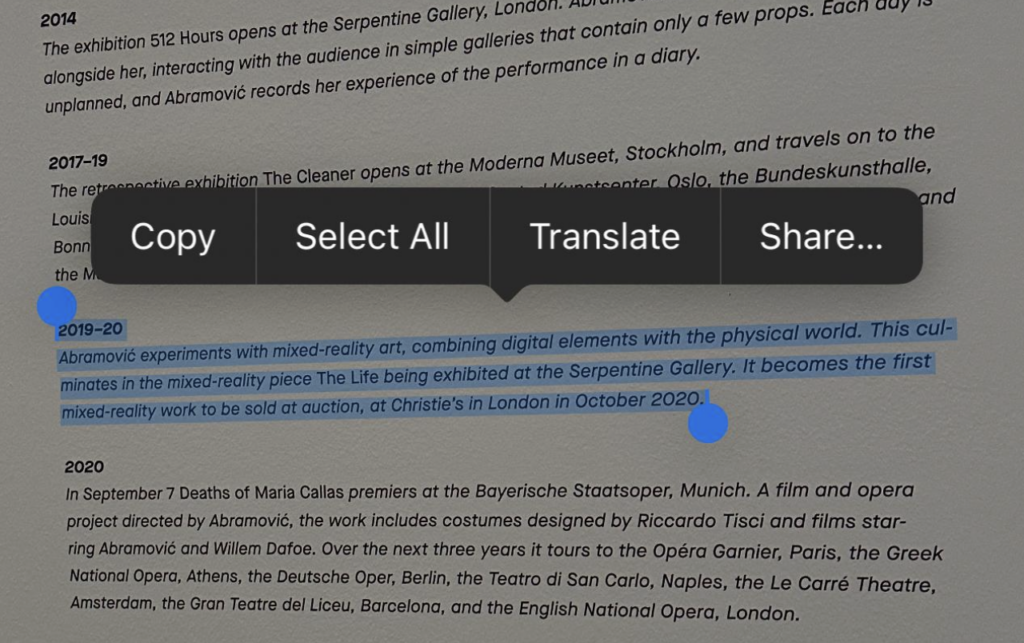
One thing that really caught my attention was learning that she has also worked with Augmented Reality and Virtual Reality. That immediately made me curious. I started looking into it more and came across her collaboration with Acute Art, including the VR work Rising. In this piece, the audience becomes a kind of player. You are placed in a virtual situation connected to global warming, and your actions matter. You’re no longer just watching a message — you’re participating in it.
What stayed with me is how naturally this fits into her way of working. Even though AR and VR are digital and mediated, the core idea is still the same: presence, responsibility, and awareness. Technology doesn’t replace the experience it reshapes it. It gives the audience a more active role and invites them to engage instead of staying passive.
this shows how AR can also be about guiding attention, creating focus, and giving people a sense of control. Just like Abramović’s performances, it can be quiet, intentional, and meaningful.
The exhibition left me with the feeling that art and technology don’t have to stand on opposite sides. When used thoughtfully, AR can open up new ways of experiencing, understanding, and connecting.
- Marina Abramović – Official Website: https://www.marinaabramovic.com
- Marina Abramović – AR / VR works with Acute Art: https://www.acuteart.com/discover/marina-abramovic
- Albertina Modern, Vienna – Exhibition Information: https://www.albertina.at
In the development of this impulse post , AI (ChatGPT) was used as a supportive writing and structuring tool. I provided the conceptual content, research direction, theoretical preferences, and methodological decisions, while the AI assisted in translating it to English, refining the wording, organising the material and generating coherent academic formulations based on my input. The AI did not produce research or arguments but helped transform my ideas into a clear and well-structured text draft.
