We had a speed dating event in class, where everyone had to quickly present their prototypes to others. The idea was to share concepts in short conversations, get immediate reactions, and see how our ideas land when explained to someone new. On paper, this format sounded exciting — a chance to practice communication, to sharpen my ideas, and to get outside perspectives. In reality, it turned out to be a bit of a wake-up call for me.
In my brainstorming-phase I came up with three different prototype ideas connected to the RiskLIM project:
- An Interactive Risk Map, developed as a very simple low-fidelity digital prototype, where users could theoretically click on different regions to see hazard levels.
- A Gamified Avalanche Simulation, which I imagined as a paper prototype or even a very basic web app. The idea here was to make avalanche scenarios more tangible and playful, so that people could experiment and learn.
- A Minimalist Data Visualization of an avalanche warning system, which I actually managed to realize. The concept was to strip the warning message down to its essentials and communicate information in the clearest, simplest possible form.
I decided to try make prototypes of the interactive map and the data visualization.

On the surface, these sound like solid starting points. But the truth is, I never really felt comfortable with them. Already while brainstorming, I was struggling. The ideas felt forced, as if I was trying to push myself into a framework that doesn’t quite fit me. When I finally built them, the process was just as frustrating. None of the prototypes felt natural, and I couldn’t shake the sense that I was circling around a topic that doesn’t fully resonate with me.
The speed dating format only amplified that feeling. Explaining my prototypes to someone else, I noticed how hesitant I was in my own words. My conversation partner — and this was the most telling part — also didn’t really understand the RiskLIM project. And at that moment, I realized: maybe I don’t understand it deeply enough either. If I can’t explain it in a clear, simple way through my prototypes, then maybe I’m missing the essence of what the project is really about.
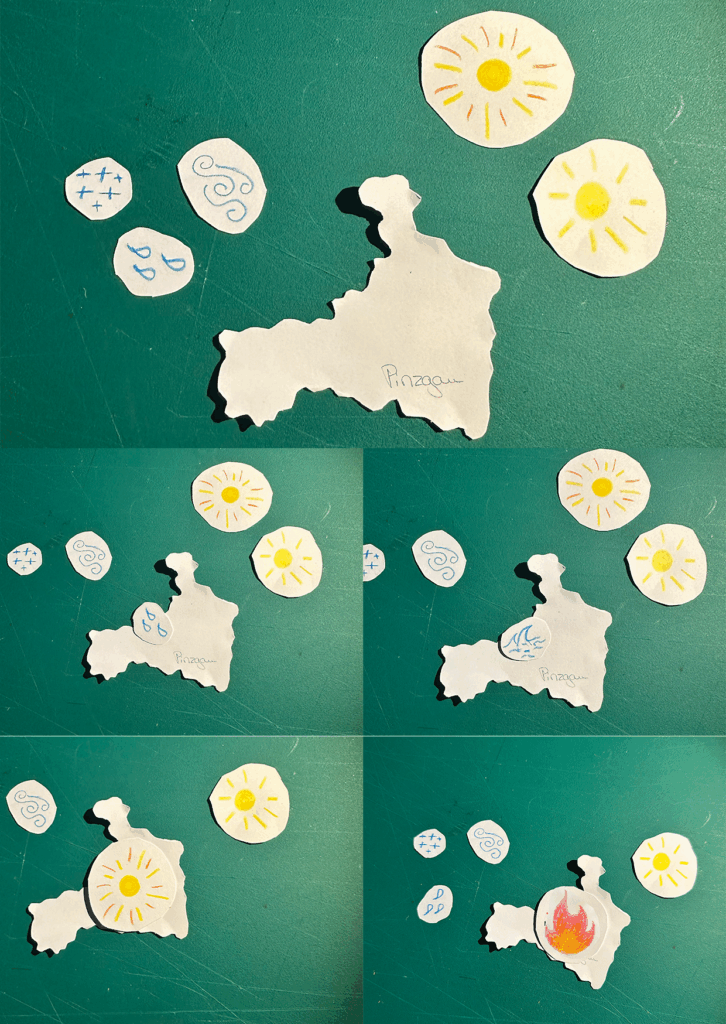
That was a difficult realization. There’s a kind of despair that comes with working hard on something and still feeling like you’re not moving forward. After the event, I had to admit to myself that I’m back at the beginning again, standing at zero. That’s not an easy place to be, especially when you want to make progress and see results.
But after sitting with that frustration for a while, I started to think differently. Maybe being “back at zero” isn’t necessarily a failure. Maybe it’s an invitation to rethink. The fact that my prototypes didn’t quite land might just mean I need to dig deeper into the project, or maybe even allow myself to shift direction to something that connects more strongly with my own interests.
For now, what I take away from this exercise is that communication is just as important as the design itself. If I can’t explain what my prototype does, then maybe the design isn’t working — or maybe the foundation of my concept isn’t strong enough yet. Either way, the speed dating event forced me to confront that gap. And as uncomfortable as that was, it might be the most valuable lesson of all.
So yes, I feel like I’m starting from scratch again. But maybe that’s okay. Sometimes you need to break things down before you can build them up stronger.
