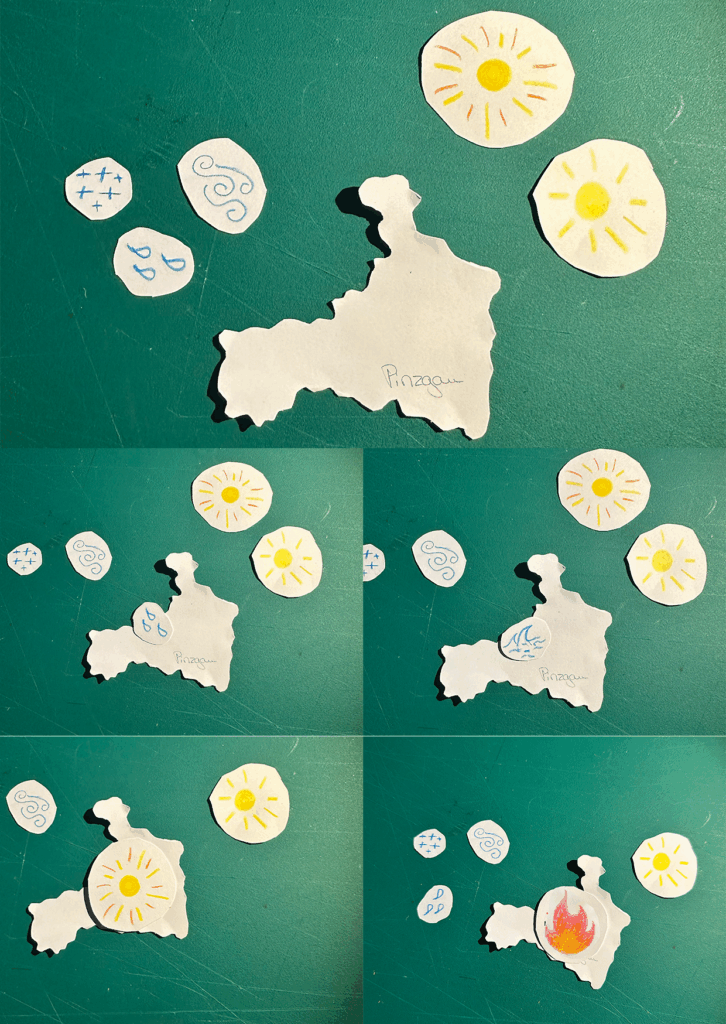
During the semester, I have been in many conversations with my colleagues about our projects and thesis ideas. These exchanges are always inspiring because they reveal how different our approaches are, and at the same time, they remind me that we all struggle with similar questions: Which topic really fascinates us? What feels relevant enough to dedicate months of research and experimentation to? And how do we make sure we do not just follow a trend but instead choose something that we personally connect with?
During one specific talk in the bitki cafe, we talked about churches. Not the institution but the building itself and how the atmosphere they create fascinates people no matter if they are religious or not. Whenever I enter a church building, I am struck by its dual nature. On the one hand, churches are impressive architectural masterpieces: the high ceilings, the stained-glass windows, the play of light and shadow. On the other hand, there is also something heavy and almost intimidating about them — a reminder of history, power, and traditions that do not always align with the values of today’s society.
This tension between admiration and critique made me rethink my thesis topic. I had initially focused on risk communication, a subject that is relevant and important, especially in the face of climate change and natural disasters. But at some point, I realized that while I find risk communication meaningful, it doesn’t excite me on a personal, creative level in the same way. Choosing a thesis topic is a long journey, and as one colleague reminded me: it has to be something you truly enjoy working on, because you will spend a lot of time with it. That advice helped me to accept that it was okay to let go of my old idea and embrace a new one that feels closer to my interests and creative practice.
So here I am now, beginning a new path: exploring the church and its role in contemporary society from a critical perspective. I want to ask questions like: Is the Catholic Church still a relevant institution? Why are so many people leaving it, especially in Europe? What does the symbolism of church spaces communicate, both intentionally and unintentionally? And how can design, especially projection mapping, help to visualize these tensions, contradictions, and maybe even open new ways of reflecting on the subject?
To approach this big and somewhat abstract topic, I decided to start small. My first prototype will be a very simple experiment with light and symbolism: placing an object in front of a candle and projecting onto it. I want to see how the interplay between shadow, light, and projection can change meaning. For example, I will experiment with different setups — using a small candle, a large candle, and two candles side by side. These small variations can already create very different moods. A single, small candle may evoke fragility or intimacy, while a large candle can symbolize power and authority. Two candles could suggest dialogue, duality, or conflict.
The candle is, of course, a strong religious symbol on its own. It carries connotations of prayer, remembrance, mourning, but also of hope and celebration. By using it as the basis of my prototype, I am starting with something that is minimal but at the same time culturally loaded with meaning. My goal is to explore how visual projection can either reinforce these traditional associations or disrupt them — for example, by projecting unexpected images or patterns onto the flame or the surrounding space.
The chosen random Object:

One small candle:

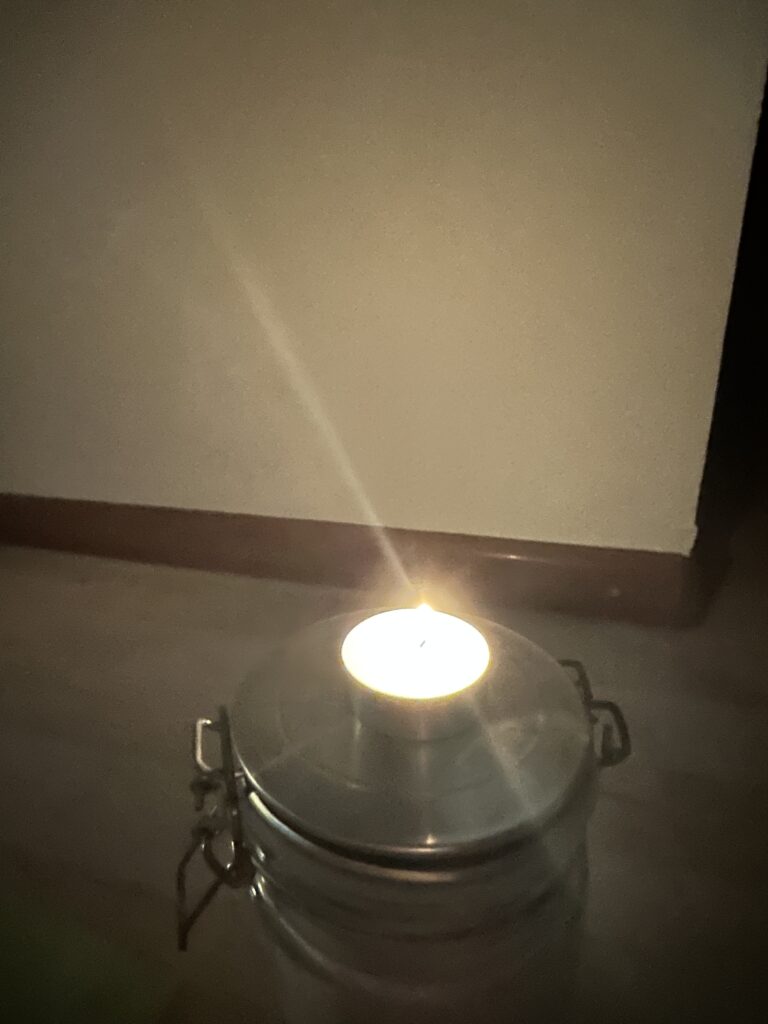
One bigger candle:


Two light sources:
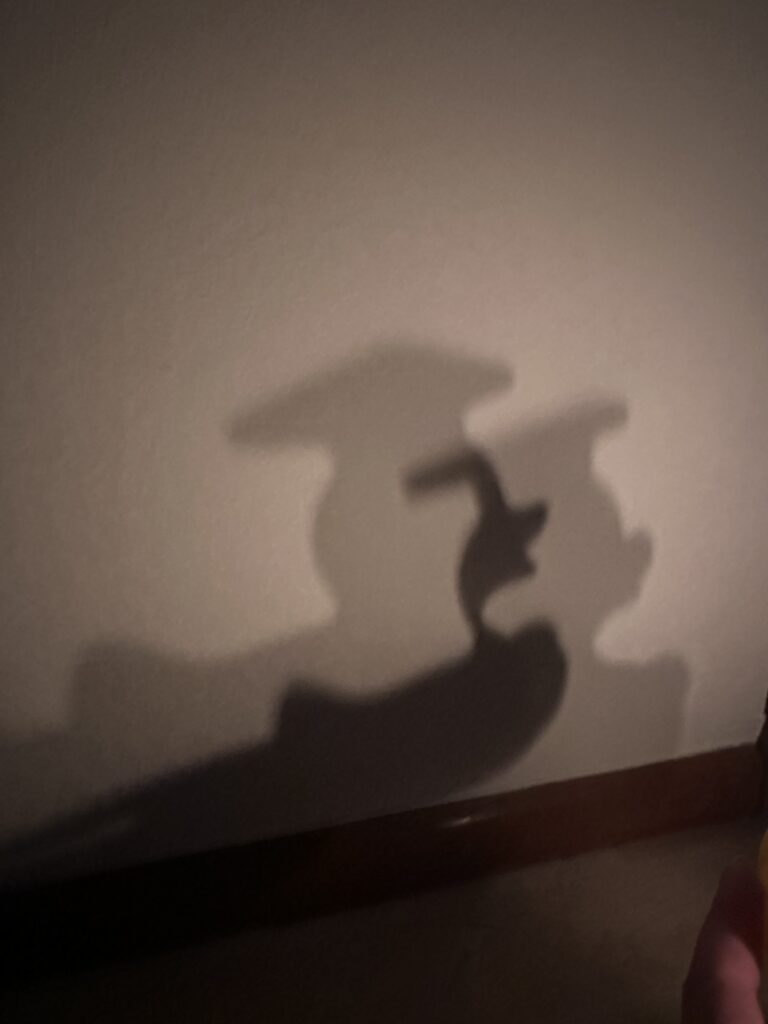

Projection mapping can quickly become technically complex, involving software, 3D modeling, and large-scale surfaces. But I want to remind myself that the foundation is always the relationship between light, object, and viewer. With a candle and a wall, I already have a stage to experiment on, and from there I can gradually build toward more advanced prototypes.
I also see this as a metaphor for my thesis journey: starting small, with something personal and symbolic, and then slowly expanding it into a larger critical exploration. The candle experiment may not answer my big research questions yet, but it sets the tone for how I want to work — engaging with symbols, questioning traditions, and using projection mapping as a tool not just to decorate but to provoke thought.
Following this, I plan to continue developing this idea, possibly by testing projections on different surfaces or even architectural miniatures that resemble parts of a church.
For now I am happy to have found a new direction that excites me. Talking with my colleagues helped me realize that a thesis topic doesn’t just need to be “important” in an abstract sense — it needs to feel important to me. And for me, exploring the role of the church through the lens of projection mapping feels like the right path.