After testing the Touch Board’s basic functionality, I began developing a full working prototype that links place, sound, and interaction into a tactile map of hidden Graz stories. The idea? Visitors touch different points on a map to reveal short audio snippets, each one tied to a local legend or curious landmark. Below, I’ll walk you through the full process of bringing this lo-fi phygital experience to life.
Creation of the Map
From Idea to Interaction
I knew I wanted each touchpoint to reveal a different layer of the city. Something you wouldn’t notice in a regular guided tour. The early concept centered around a physical map enhanced with conductive elements that trigger audio clips. The experience needed to be screen-free, intuitive, and portable.
Core goals:
- Highlight unusual or forgotten spots in Graz
- Keep the setup simple and playful
- Combine touch, sound, and visual storytelling
Deciding on the Content
I wanted the experience to feel like a walk through Graz’s secret personality, curious, playful, sometimes surreal. I avoided the most obvious tourist sites and instead chose places that are either tucked away, easily missed, or rich with local legend. Each spot adds a different tone or texture to the map:
- Der Kleine Elefant
- Glockenspiel
- Double Spiral Staircase
- Kunsthaus Graz
- Der Türke
Together, these five spots form a kind of “hidden Graz sampler”, part folklore, part urban oddity, part emotional landscape.
Designing the Map
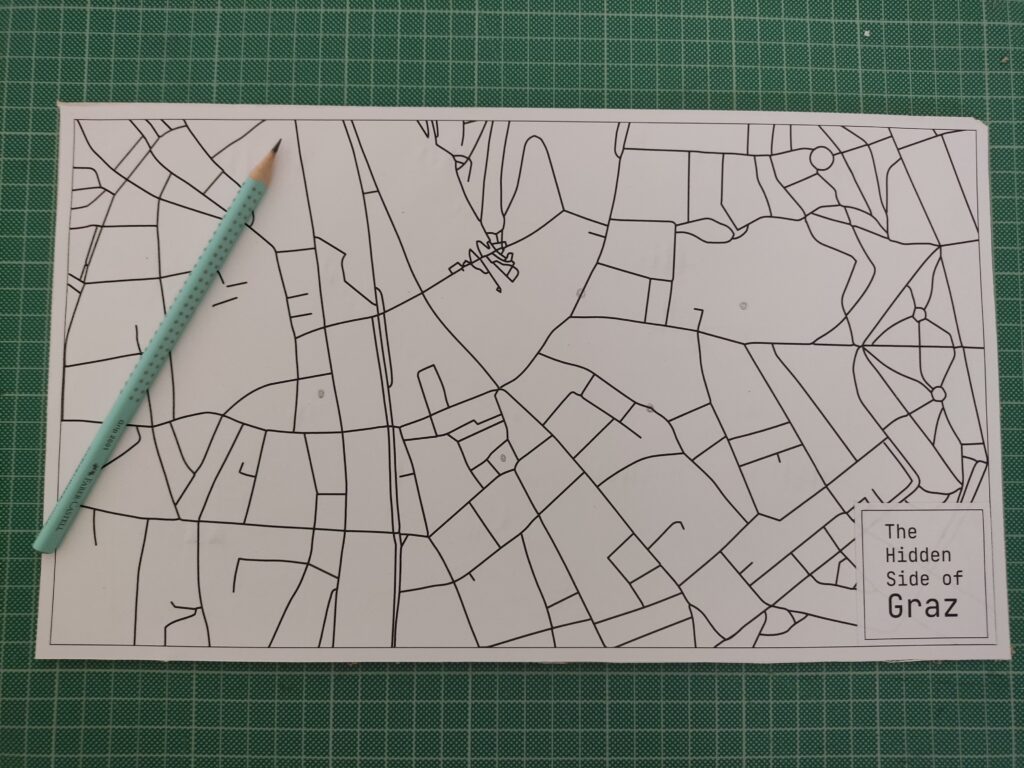
To keep the locations roughly geographically accurate, I used Snazzy Maps to pin my selected places. There are many styles to choose from, so I picked a minimal line-drawing style. I took a screenshot, imported it into Illustrator, and used Image Trace to vectorize the lines for a cleaner look.
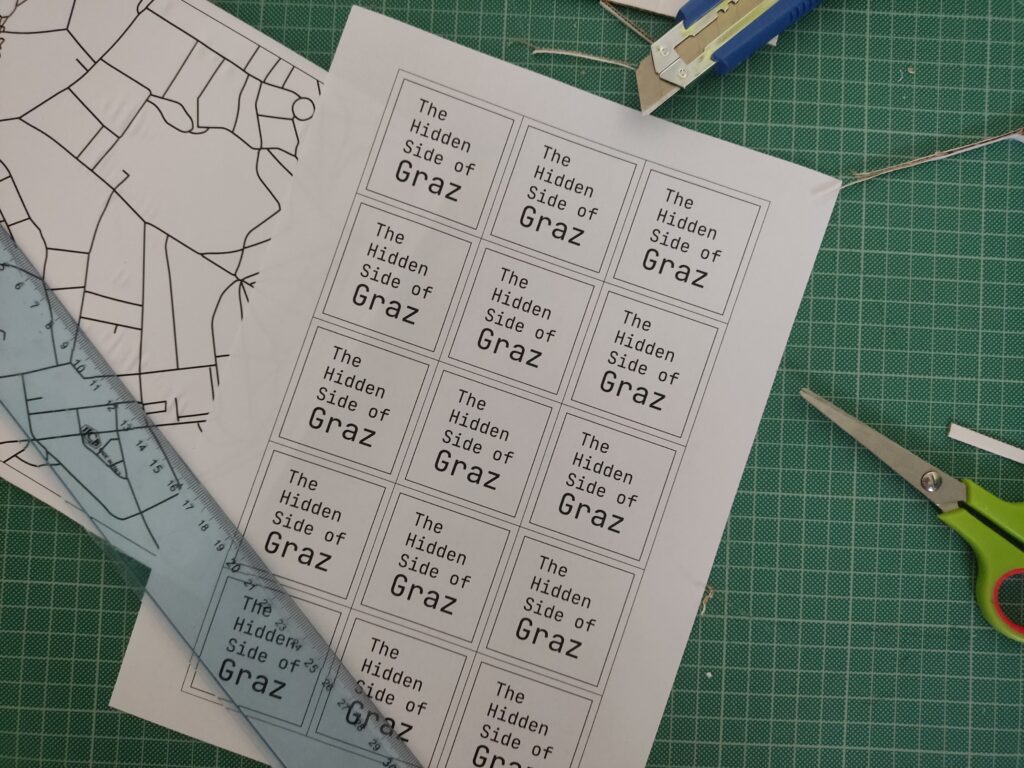
I also added custom name tags for each spot, arranged everything into an A3 layout, and sent it to print.
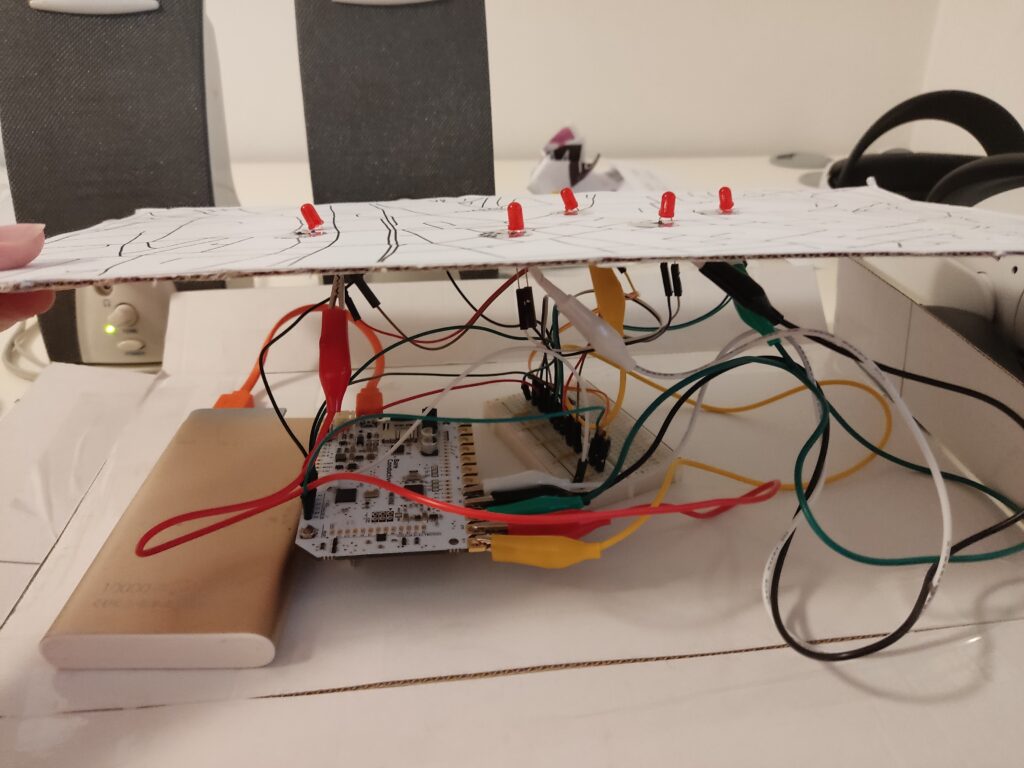
Each location was represented by a small circle symbol on the printed map. I used copper tape and stick them directly on paper, then connected them to the Touch Board’s electrodes using crocodile clips and jumper wires.
Crafting the Audio
I wanted the audio to feel charming and a bit mysterious, so I wrote short descriptions for each location and turned them into narrated clips using an online text-to-speech AI tool. Each clip is around 20 seconds long. To make them more immersive, I layered in soft background sounds using Premiere Pro.
Tools used:
- Natural Readers (text-to-speech)
- Pixabay (for sound effects)
- Premiere Pro (for audio editing)
Here are the short audio texts:
Der Kleine Elefant
Tucked high above a quiet Graz street, a tiny stone elephant watches the world go by. It’s a gentle echo of 1629, when a real circus elephant marched through the city, astonishing everyone. This little statue keeps that memory alive.
Glockenspiel
In the heart of Graz, when the clock strikes 11, 3, or 6, wooden shutters creak open high above Glockenspielplatz. A boy and a girl twirl to the chime of 24 bells, and at the end, a golden rooster flaps its wings and crows. It’s like a music box tucked into the rooftops.
Double Spiral Staircase
Inside an old building, two stone staircases spiral like vines, crossing paths again and again. They separate, meet, part, and rejoin, like two people forever drawn to each other. Built in 1499, they’re called the “stairs of reconciliation”, a quiet dance carved in stone.
Kunsthaus
Across the Mur, among red-tile rooftops, lives a blue, blob-shaped creature. It looks like it came from space. Locals call it the “Friendly Alien”, a living sculpture, glowing with energy. Inside, the art is always changing.
Der Türke
Look up at Sporgasse 2. There’s a wooden man in a turban watching the street. Legend says that during the 1532 siege, a cannonball crashed through a window and struck a Pascha’s roast. Shocked by the blast, the Turks fled Graz. The figure still stands there, watching… and remembering.
Wiring & Materials
- 1x Touch Board
- 1x microSD card
- 1x microSD card reader
- 1x Speaker
- 1x USB power bank (for portability)
- 1x USB cable (for power and code upload)
- 5x LED (for basic feedback)
- 5x 220 Ohm resistor
- 1x Breadboard
- 21x Jumping Wires
- 5x Crocodile Clips
- Bare Conductive’s “Touch MP3 with LEDs” example code
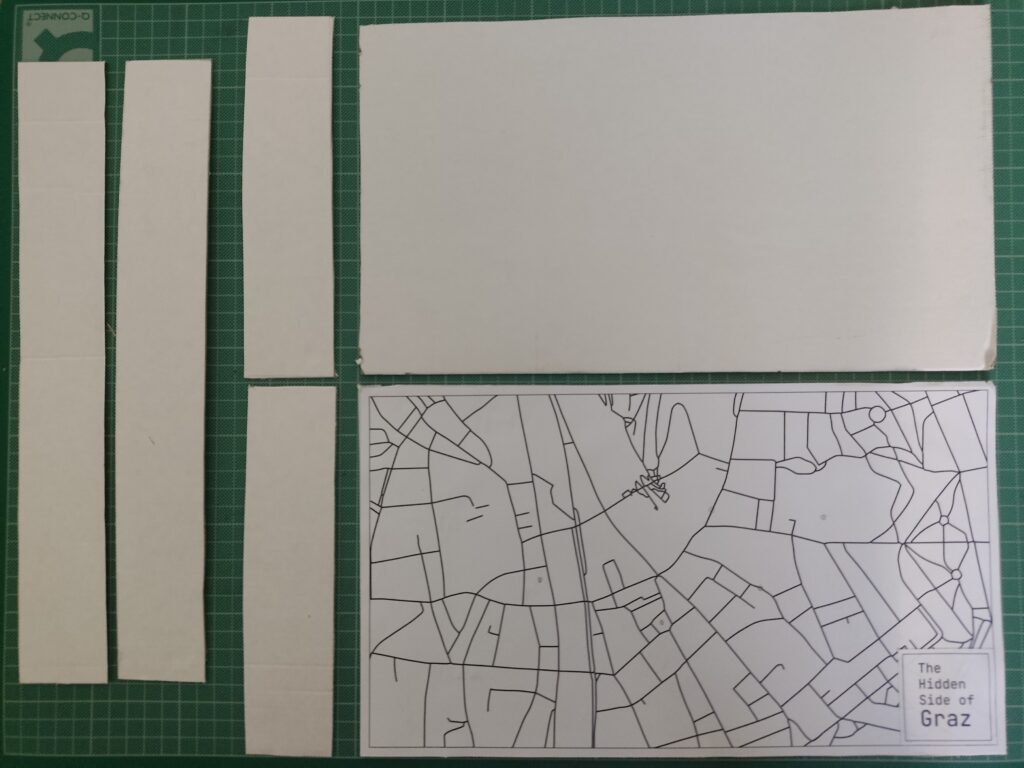
To enhance the presentation, I created a cardboard box to hide the microcontroller, battery, and all the wires. The result features a map on top, with circle-shaped copper tape marking the interactive areas. By hiding the components inside the cardboard box, this setup made the experience feel more like an artifact than a technology demonstration.
User Test
I brought the prototype to a few friends and watched how they used it. Here’s what I noticed:
What worked:
- Most people figured it out without explanation
- They were surprised by the sounds and intrigued by the stories
- The LED made the experience feel “alive”
What could improve:
- Some conductive areas needed more pressure to respond
- People held their finger down the whole time instead of tapping once
- Audio volume was a bit low in noisy environments
Reflections
Building this prototype showed me how simple tech, when well-combined, can lead to memorable interactions. The most exciting part wasn’t the circuitry; it was watching someone touch a spot on a map and hear something they didn’t expect. That brief surprise, that moment of discovery, is what I want to design more of.
