As my project continues to take shape, this phase focused on defining the Information Architecture (IA)a crucial step in turning research insights into a functional prototype. Building on earlier blog posts about how people relate to digital photo memories, the IA sets the foundation for a smooth and emotionally engaging user experience.
Structuring the Experience
The goal was to design a flow that feels intuitive, while supporting two key user goals:
- Organizing and uploading photos
- Viewing memories through slideshows
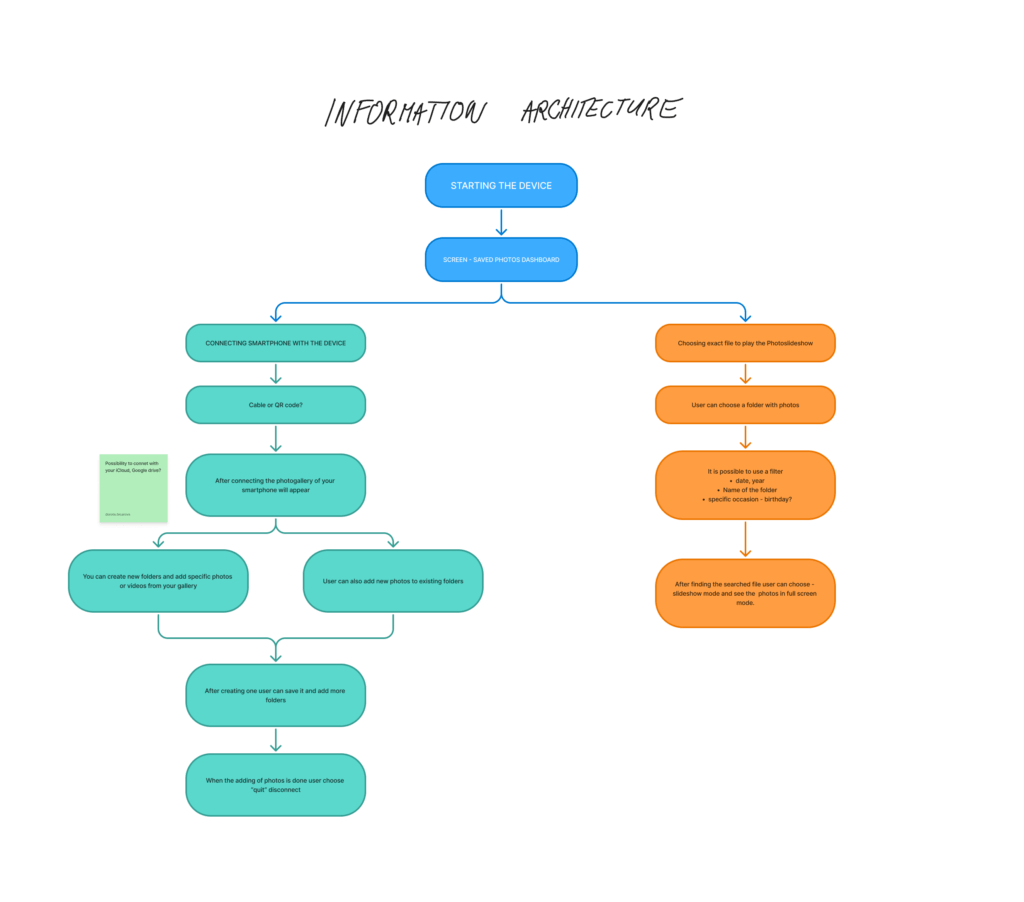
The process starts with turning on the device, which takes users to the Saved Photos Dashboard. From there, they can either connect their smartphone to manage photos or choose a folder to start a slideshow.
Connecting and Managing Photos
Users can connect their smartphone using a cable or QR code, with potential for cloud storage integration in the future. Once connected, the phone’s photo gallery appears, and users can:
- Create new folders
- Add selected photos or videos
- Add content to existing folders
After organizing, users can disconnect and return to the dashboard. This structure was designed to support personal storytelling, allowing users to curate moments by events, people, or emotions.
Viewing the Slideshow
For those wanting to revisit memories, the right path of the IA focuses on playing photo slideshows. Users select a folder and can apply filters by:
- Date
- Year
- Folder name
- Occasion (e.g. birthday)
Once the content is selected, the slideshow mode displays the images full screen—creating space for reflection and emotional connection.
From Research to Design
This IA was informed by insights from earlier stages, particularly the need for emotional accessibility and ease of use. People want to interact with their photos without feeling overwhelmed or lost in complicated interfaces. The flow reflects that: it’s linear, visual, and customizable.
Next, I began translating these flows into wireframes, designing each screen with clarity and emotion in mind. In my next post, I’ll dive into those wireframes and early feedback from users.
