In my last post, I introduced the concept of transforming the retail journey using Augmented Reality and the Internet of Things. To move from a concept to a reality, however, we need more than just a good idea. We need a blueprint.
Remember Alex, our first-time homeowner navigating the vast IKEA maze? His journey from feeling overwhelmed to confidently furnishing his space is powered by a seamless blend of technologies. But for that “magic” to work, a robust and well-thought-out system must operate behind the scenes. Before we design a single button or write a line of code, we first have to design the architecture.
Think of it like building a house. You wouldn’t start laying bricks without a detailed blueprint. Our system architecture is exactly that: a master plan that defines all the moving parts and how they communicate with each other.
For our smart retail experience, the system is built on three core pillars:
1. The AR Application (The Guide)
This is the component Alex interacts with directly on his smartphone/Smart Glasses. It’s his window into this enhanced version of the store. It’s not just an app; it’s his personal guide, interior designer, and shopping assistant all in one.
Key Responsibilities:
- Reading the QR code to understand the location and connect to correct server
- Rendering the AR navigation path that guides Alex through the store.
- Displaying interactive information cards for products.
- Capturing the 3D scan of Alex’s room and allowing him to virtually place furniture.
2. The Cloud Platform (The Central Brain)
If the app is the guide, the cloud is the all-knowing brain that directs it. This powerful backend system is where all the critical information is stored, processed, and managed in real-time. It’s the single source of truth that ensures the information Alex sees is always accurate and up-to-date.
Key Responsibilities:
- Storing the entire IKEA product catalog, including 3D models, dimensions, and prices.
- Managing the digital map of the store.
- Processing real-time inventory data and user account information (like Alex’s saved room scan).
3. The In-Store IoT Network (The Nervous System)
This is the network of smart devices embedded within the physical store. These devices act as the store’s nervous system, sensing the environment and sending crucial updates to the central brain. This is what connects the digital world of the app to the physical reality of the store.
Key Responsibilities:
- Using smart shelves or sensors to monitor stock levels for products like the BILLY bookshelf.
- Using beacons to help the app pinpoint Alex’s precise location for accurate navigation.
- Triggering location-based offers or suggestions.
How It All Connects
So, how do these three pillars work together? They are in constant communication, passing information back and forth to create the seamless experience Alex enjoys. This diagram shows a high-level view of our architecture:
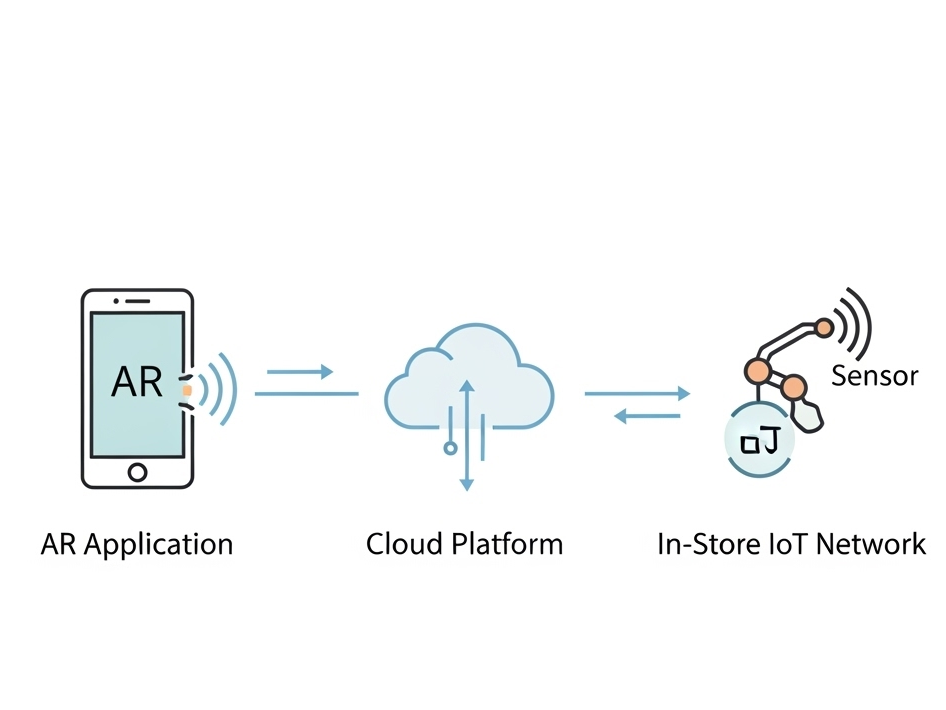
As you can see, the AR Application on Alex’s device is constantly talking to the Cloud Platform, requesting data like product locations and sending data like user requests. Simultaneously, the In-Store IoT Network is feeding live data to the Cloud, ensuring the entire system is synchronized with the real world.
With this blueprint in place, It creates a clear path forward for development.
