Immersive experiences that combine interaction design, video mapping, and visual design have the power to shape collective experiences that are not only visually stunning but also socially and culturally resonant. When these fields intersect, they can evoke emotions and foster connections in a way that mirrors the roles music has played in human history, such as group bonding, cultural expression, and social healing. Here’s how these visual technologies serve similar functions in social and cultural contexts:
GROUP BONDING AND SURVIVAL
In immersive environments, visuals have the potential to act as a tool for fostering group cohesion, much like how music once played a role in aligning individuals within a group for survival. Through interactive visual experiences, people can engage together, share moments of awe, and feel united in a collective experience. For instance, large-scale projection mapping installations, such as those used during public festivals or social events, often transform shared spaces—like the sides of buildings or urban streets—into visually captivating environments. When these projections are designed to respond to the movement and actions of the group, they encourage communal participation, creating a sense of belonging and collective identity. This shared interaction can foster cooperation and unity, with participants feeling that they are part of something larger than themselves.
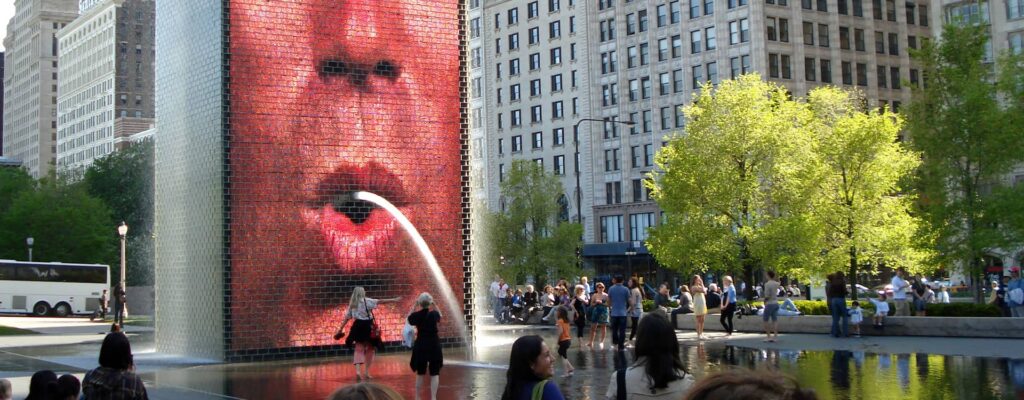
Crown Fountain in Millennium Park, Chicago. It incorporates multimedia technology into the fountain,but also “invites” passers-by to join the shallow pool, and water interaction.
CULTURAL IDENTITY AND COMMUNICATION
Immersive visuals also play a key role in reflecting and communicating cultural identities. Video mapping and interactive installations allow for the exploration of cultural symbols, historical narratives, and visual traditions, helping communities preserve and express their heritage in an engaging, modern context. This can take the form of interactive exhibitions that use projections to showcase traditional art or storytelling techniques, blending old and new forms of expression. These installations can serve as a platform for communities to communicate their stories, histories, and values in a way that resonates with both the present and the future. Visual design, through its ability to engage and captivate, creates a powerful space where cultural identity can be shared, celebrated, and explored by both local and global audiences.
MUSIC AND SOCIAL HEALING
Although this point primarily concerns sound, immersive visual environments also play an essential role in social healing and emotional restoration. Visuals have been used in therapeutic settings to calm the mind, reduce anxiety, and provide an outlet for emotional expression. For instance, in interactive art therapy or healing installations, participants might engage with immersive projections that change according to their movements or emotions, creating a dynamic, responsive environment that encourages introspection and emotional release. By interacting with visuals in these spaces, individuals can process their feelings, find calm, and experience a sense of healing. This type of visual interaction can also be used in public installations where the aim is to heal divisions within a community, creating spaces of reconciliation and connection.
Through projections, light, and motion design, immersive experiences can act as tools for emotional regulation and group healing, providing a shared space for personal and collective recovery. For example, projections of nature scenes, calming landscapes, or abstract visuals have been used in hospital rooms, therapy centers, or community spaces to help people relax, feel connected, and improve their mental well-being.
