What is Cognitive Load?
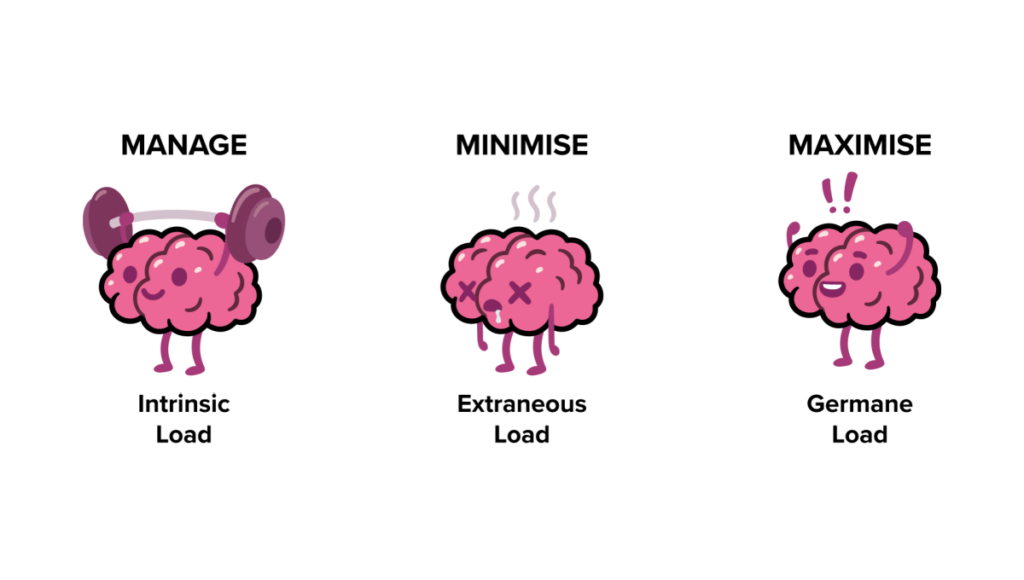
Cognitive load refers to the amount of mental effort required to process and interact with information. It’s rooted in cognitive psychology and is often categorized into three types:
- Intrinsic Load: The inherent complexity of the task itself. For example, learning advanced physics naturally requires more effort than reading a children’s book.
- Extraneous Load: Unnecessary complexity introduced by poor design, such as cluttered layouts or unclear instructions. This is where designers have the most control.
- Germane Load: The effort devoted to learning or understanding something meaningful, which is essential for building knowledge and skills.
In UI/UX design, minimizing extraneous load while optimizing germane load is key to creating intuitive and enjoyable experiences.
The Psychological Foundation of Cognitive Load
The concept is deeply tied to working memory, a limited resource that processes and holds information temporarily. According to Miller’s Law, humans can hold about 7 (plus or minus 2) items in their working memory at a time. When users are presented with overly complex interfaces, their working memory becomes overwhelmed, leading to frustration and disengagement.
Strategies to Reduce Cognitive Load in Design
Designers can make tasks easier by focusing on these principles:
- Simplify Navigation
- Using clear pathways and avoid hidden menus
- Example: Amazon’s one-click purchasing reduces decision fatigue
- Employ Progressive Disclosure
- Show information only when users need it. For instance, a sign-up form that breaks into multiple steps feels less overwhelming than one with all fields displayed at once
- Leverage Visual Hierarchy
- Use size, color, and spacing to guide focus. Bold headings, contrasting buttons, and whitespace can help users prioritize key actions
- Chunking Information
- Break content into digestible pieces, similar to paragraphs in a book
- Example: Spotify organizes songs into playlists, making it easier for users to find their favorites
The Hook Model: Turning Attention into Habits
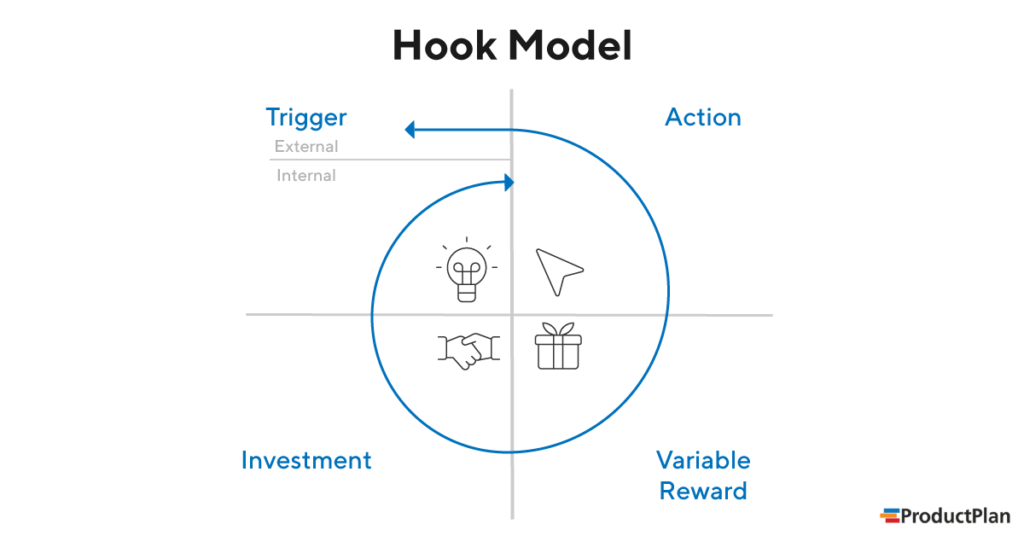
Once cognitive load is minimized, designers can focus on engaging users more deeply through Nir Eyal’s Hook Model. This four-step process transforms interactions into habits:
- Trigger
- External: Notifications, reminders, or prompts (e.g., a Duolingo streak notification).
- Internal: Emotional cues like boredom or loneliness, which lead users to open an app instinctively.
- Action
- Simplify actions to reduce friction. A swipe on Tinder or a tap on Instagram’s heart icon feels effortless.
- Variable Reward
- Unpredictability enhances engagement. For example, social media likes or gaming loot boxes keep users coming back.
- Investment
- Encourage users to invest time or effort, making them more likely to return. Examples include creating Pinterest boards or uploading photos to Google Photos.
- Encourage users to invest time or effort, making them more likely to return. Examples include creating Pinterest boards or uploading photos to Google Photos.
Literature:
Cogitive Load:
https://www.barefootteflteacher.com/p/what-is-cognitive-load-theory
Hooked: How to Build Habit-Forming Products by Nir Eyal
Hook:
https://inappstory.com/blog/mobile-native-hooks-and-triggers
