Warum selbst in Historienfilme historische Ungenauigkeiten sinnvoll sein können

Historienfilme und -Serien ziehen Zuschauer in vergangene Epochen und entführen sie in die Welt des Mittelalters und der frühen Neuzeit. Doch wie viel historische Authentizität braucht ein solcher Film, wenn es sich dabei nicht um einen Dokumentarfilm handelt? Ist es immer notwendig, jedes Detail akkurat darzustellen, oder bis zu welchen Grad kann es sinnvoll sein, von der Geschichte abzuweichen, um eine spannendere Geschichte zu erzählen? Dieser Artikel beleuchtet den Konflikt zwischen Realismus und künstlerischer Freiheit, untersucht die Gründe für historische Ungenauigkeiten und zeigt anhand von Beispielen, wie eine Balance zwischen beiden Ansätzen gelingen kann.

Authentizität vs. künstlerische Freiheit

Filme und Serien sind in erster Linie Geschichten und während Dokumentationen versuchen, die Realität und die darin thematisierten Charaktere und Ereignisse so objektiv wie möglich darzustellen, haben Historienfilme oft ein anderes Ziel: Sie wollen unterhalten und emotional bewegen. Dabei entsteht ein natürlicher Konflikt zwischen Realismus und künstlerischer Freiheit.

Historische Genauigkeit sorgt für Glaubwürdigkeit und Immersion. Zuschauer, die sich für eine bestimmte Epoche oder ein historisches Ereignis interessieren, erwarten häufig ein hohes Maß an Detailtreue. Authentizität hilft dabei, die Komplexität und Nuancen einer historischen Zeit zu verstehen – von politischen Strukturen bis hin zu sozialen Dynamiken.
Ein Beispiel hierfür ist Master and Commander (2003). Der Film zeichnet sich durch seine präzise Darstellung des Lebens an Bord eines Kriegsschiffs im frühen 19. Jahrhundert aus. Von den Uniformen der Offiziere über die Navigationsinstrumente bis hin zur Sprache der Besatzung – alles wurde sorgfältig recherchiert und authentisch inszeniert. Diese Detailtreue schafft eine immersive Atmosphäre, die es dem Publikum ermöglicht, tief in die maritime Welt der Napoleonischen Kriege einzutauchen.

Trotz aller Bedeutung der Authentizität bleibt ein Film ein erzählerisches Medium, das darauf abzielt, Emotionen zu wecken und Geschichten zu erzählen. Historische Fakten allein reichen oft nicht aus, um eine packende Handlung zu erzeugen. Hier kommt die künstlerische Freiheit ins Spiel, die es Filmemachern erlaubt, die Realität zu dramatisieren, zu verkürzen oder sogar zu verändern, um eine mitreißende Erzählung zu schaffen.

Ein Paradebeispiel für den Einsatz künstlerischer Freiheit ist Ridley Scotts Gladiator (2000). Der Film nimmt sich viele Freiheiten bei der Darstellung des antiken Roms, von der Figur des Kaisers Commodus bis hin zur Arena-Kultur. Doch diese Änderungen dienen dem Zweck, eine eine klare Heldenreise zu erzählen, die Zuschauer emotional anspricht. Die Konflikte und Kämpfe von Maximus sind archetypisch und universell, was den Film für ein breites Publikum zugänglich macht, auch wenn die historische Genauigkeit darunter leidet.

Dieser Konflikt prägt die Produktion vieler Historienfilme und zieht sich bis hin zu der Darstellung von Kämpfen und Duellen.

Gründe für Ungenauigkeiten

1. Dramatische Wirkung: Der Kampf als emotionaler Höhepunkt

Kampfszenen sind oft der Höhepunkt eines Films oder einer Serie. Sie dienen nicht nur dazu, den Konflikt aufzulösen, sondern auch, die Zuschauer emotional zu packen.

Ein authentischer bewaffneter Kampf war oft schnell und chaotisch. Ein einziger Treffer konnte, je nach Rüstungsgrad der Kontrahenten, tödlich sein, und Duelle dauerten selten länger als wenige Minuten. Diese Realität ist jedoch für Zuschauer häufig wenig befriedigend, daher verlängern Filme Kämpfe, übertreiben Bewegungen oder inszenieren spektakuläre Wendungen, um mehr Spannung aufzubauen.

Beispiel: The Last Duel (2021) zeigt ein realistisch wirkendes Duell, das jedoch dramaturgisch aufgearbeitet wurde und dementsprechend atypische Handhabung der darin vorkommenden Breitschwerter inne hat, um die Spannung und Intensität des Kampfes zu steigern. Die Choreografie bleibt, im Vergleich zu anderen Filmen, auf der eher authentischen Seite, aber die emotionale Bedeutung des Kampfes wird durch Stilisierung verstärkt.

2. Charakterentwicklung: Waffen und Kampfstile als Ausdruck von Persönlichkeit

Die Wahl von Waffen und Kampfstilen kann viel über die Charaktere eines Films aussagen. Hierbei spielt die Authentizität oft eine untergeordnete Rolle, da die Inszenierung wichtiger ist als historische Details. Sie spielen in Filmen oft eine zentrale Rolle bei der Charakterentwicklung und sind mehr als bloße Werkzeuge oder Kampftechniken – sie dienen als visuelles und erzählerisches Mittel, um die Persönlichkeit, Werte und Entwicklung einer Figur zu unterstreichen, worunter die Authentizität dementsprechend leiden kann.

So wird in The Princess Bride (1987) der Fechtstil jedes Charakters genutzt, um dessen Persönlichkeit zu unterstreichen. Die Kämpfe sind choreografisch anspruchsvoll, aber absichtlich überzogen und humorvoll gestaltet, um die märchenhafte Stimmung des Films zu unterstützen. Mehr dazu im nächsten Blog.

Ein anderes, etwas fantasievolleres Beispiel sind Geralt von Rivas zwei Langschwerter aus “The Witcher” 2019 – eines aus Stahl für Menschen und eines aus Silber für Monster – spiegeln nicht nur seine Berufung als Hexer wider, sondern verdeutlichen auch seine Dualität zwischen zwei Welten: der menschlichen und der magischen.

Dieses Beispiel von Connor Chamberlain1 demonstriert die dramaturgische Stilisierung von Geralts Kampfszene in Form von zeitlischer Mainpulation sowie der teils theatralischen und wenig realistischen Handhabung des Langen Schwerts (Minute 9:03).

3. Praktische Gründe: Machbarkeit für Schauspieler

Historische Techniken können je nach Komplexität und Waffe schwer zu erlernen sein. Schauspieler haben oft nur wenige Wochen Zeit, um komplexe Choreografien einzuüben und die Wenigsten sind enthusiastische Fechter:Innen, wodurch die Sicherheit und Routine mit der Waffe fehlt. Um Verletzungen zu vermeiden, werden ebenjene Kampfszenen an die Fähigkeiten der Darsteller angepasst. Das Ergebnis sind oft Bewegungen, die stilisiert und vereinfacht werden, um sicher und gleichzeitig eindrucksvoll zu wirken. So sind beispielsweise in Braveheart (1995) die Schlachten visuell beeindruckend, aber die Kämpfer führen oft für deren Ausbildung (beispielsweise die trainierten und ausgebildeten Soldaten eines Kommandanten) im Kampf sehr ausladende, ungeschützte und daher oft unrealistische Bewegungen aus, die hauptsächlich für das Storytelling entworfen wurden.

Historische Ungenauigkeiten sind nicht automatisch ein Makel. Sie können vielmehr dazu beitragen, eine Geschichte zugänglicher, spannender und emotionaler zu gestalten. Die besten Historienfilme sind jene, die Authentizität als Werkzeug nutzen, aber gleichzeitig den Mut haben, die Realität dort anzupassen, wo es für die Dramaturgie notwendig ist, ohne sich dabei zu stark von der Glaubwürdigkeit weg zu bewegen.

Letztendlich ist es die Fähigkeit, historische Elemente respektvoll zu adaptieren, die diese Filme und Serien auszeichnet. Sie können uns die Vergangenheit näherbringen und gleichzeitig unterhalten – ein Spagat, der nicht leicht zu meistern ist, aber enorme kreative Möglichkeiten bietet.

Ob authentische Schwertkämpfe, überzeichnete Duelle oder epische Schlachten – das Ziel bleibt immer, die Zuschauer zu begeistern und sie in eine andere Zeit zu entführen. Wenn dies gelingt, spielt es oft keine so große Rolle, ob jedes Detail der Realität entspricht, denn die Geschichte lebt durch die Emotionen, die sie vermittelt.

  1. Denver Historical Fencing Academy
    https://denverhistoricalfencing.com/ ↩︎

LiDAR / Projection In Nature / Digital Wood Design

///Topics:

  • Design Experimente: iPhone 13 Lidar, GaussianSplatting
  • Inspiration: Philipp Frank
  • Literatur: Digital Wood Design

Design Experimente – iPhone 13 Max LiDAR Tests

Mit einem iPhone 13 Pro Max aus dem MediaCenter habe ich einen Spaziergang durch den Stadtpark in Graz gemacht, um mit der App Polycam (https://poly.cam) erste eigene LiDAR-Scans zu erstellen. Dabei habe ich mich auf Skulpturen konzentriert, die leicht zugänglich waren, drei Scans aufgenommen und die Ergebnisse später zu Hause ausgewertet.

Dabei ist mir aufgefallen, dass die Mesh-Dichte bei meinen Scans deutlich niedriger ausfällt als bei anderen Beispielen auf der Polycam-Webseite. Auf den ersten Blick wirken die Objekte zwar detailreich, was jedoch vor allem an der hochaufgelösten Textur liegt. Entfernt man diese, bleibt eine recht einfache Low-Poly-Auflösung übrig.

Ich frage mich, ob dies an dem etwas älteren LiDAR-Scanner des iPhone 13 Pro Max liegt oder an den Algorithmen von Polycam. Das werde ich in weiteren Tests noch genauer untersuchen müssen.


Inspiration/Fanboy – Philipp Frank

Ein Künstler, der mich in letzter Zeit beeindruckt hat, ist der Medienkünstler Philipp Frank. Seine Video-Mappings könnten für meine Arbeit hilfreich sein, vor allem, weil der Ort, an dem er sie zeigt, eine besondere Rolle spielt.

Frank projiziert seine Lichtinstallationen oft in der Natur – auf Bäume, Felsen oder sogar Pilze. Dabei entstehen nicht nur atemberaubende visuelle Effekte, sondern auch eine Verbindung zwischen Technologie und Natur. Auf seiner Website zeigt er eine ganze Reihe seiner Projekte, und jedes davon macht deutlich, wie viel Gespür er für Technik und Umgebung hat. Zum Beispiel Projektionen auf Felsen an der Küste, auf Bäume im Abendlicht oder mitten im Wald auf Pilze. Seine Kunst hebt die Schönheit der Natur hervor und gibt ihr durch Licht und Technologie einen neuen Twist.

Was ich an seinen Arbeiten besonders spannend finde, ist, wie er es schafft, die Grenze zwischen der reinen Natur und technischer Innovation verschwimmen zu lassen. Er bringt uns dazu, unsere Umgebung mit ganz anderen Augen zu sehen.

https://www.instagram.com/philipp.frank_


Literaturrecherche

Digital Wood Design

Innovative Techniques of Representation in Architectural Design

Bei meiner Literaturrecherche in der FH Online-Bibliothek bin ich zufällig auf ein spannendes Buch gestoßen: Digital Wood Design von Fabio Bianconi und Marco Filippucci. Nach einem ersten Querlesen habe ich einige Themen identifiziert, die sich gut in meine Arbeit integrieren lassen könnten.

1. Digitales Mapping und Oberflächeninteraktion

Das Buch behandelt innovative digitale Techniken zur Darstellung und Gestaltung von Holzstrukturen im architektonischen Design. Auch wenn der Fokus auf Holz liegt, beleuchtet es die digitale Erfassung und Projektion von komplexen Oberflächenstrukturen, was für Video Mapping extrem relevant ist:

  • Material- und Oberflächenwirkung: Holz hat durch seine Maserung und Textur eine besondere visuelle Eigenschaft. Das Verständnis, wie digitale Techniken mit solchen Oberflächen interagieren, könnte auf die Projektion in Kirchen oder natürlichen Räumen übertragen werden.
  • Geometrie und Form: Viele Video-Mapping-Projekte basieren auf der Anpassung visueller Inhalte an die Geometrie eines Raumes. Die technischen Verfahren zur Erfassung und Visualisierung in „Digital Wood Design“ könnten helfen, präzise Mappings für komplexe architektonische Strukturen zu entwickeln.

2. Wahrnehmungspsychologische Aspekte von Materialien und Räumen

  • Emotionale Wirkung von Materialität: Das Buch erforscht, wie digitale Techniken Materialien wie Holz visuell aufwerten. Diese Überlegungen lassen sich auf die Frage übertragen: Wie beeinflussen visuelle Reize, die sich an die Struktur eines Raumes anpassen, die emotionale Wahrnehmung?
  • Dynamische Licht- und Schatteneffekte: Projektionen auf strukturierten Oberflächen (wie Holz, Steine oder Kirchenwände) erzeugen dynamische visuelle Effekte. Diese beeinflussen, wie Betrachter den Raum und die Tiefe wahrnehmen.

3. Raumwahrnehmung und Embodied Cognition

Das Buch könnte Erkenntnisse darüber liefern, wie digitale Darstellungen und Gestaltungen die physische Interaktion mit Räumen verändern:

  • Veränderte Raumwahrnehmung: Durch digitale Techniken wird die Wahrnehmung von Raumstrukturen beeinflusst. Mapping-Projektionen erzeugen eine Erweiterung oder Neuinterpretation der Architektur. Dies ist insbesondere bei großen, offenen Räumen wie Kirchen relevant.
  • Körperliche Bewegung im Raum: Architektur beeinflusst, wie Menschen sich bewegen. Projektionen, die auf diese Bewegungen abgestimmt sind, können eine immersive Wirkung erzielen, was auch im Kontext von „Embodied Cognition“ eine wichtige Rolle spielt.

4. Technische und ästhetische Ansätze für Video Mapping

Das Buch zeigt innovative technische Verfahren zur digitalen Gestaltung und Visualisierung, die:

  • Inspiration für Video Mapping liefern könnten, um architektonische Oberflächen visuell zu transformieren.
  • Eine Schnittstelle zwischen Technologie und Wahrnehmung schaffen, die im Bereich des Lichtdesigns und der Projektionen relevant ist.

Fazit:

Obwohl das Buch einen spezifischen Fokus auf Holzstrukturen legt, bietet es spannende Erkenntnisse zu:

  • der digitalen Erfassung und Projektion von Oberflächen,
  • der Wirkung von Materialien und Strukturen auf die Wahrnehmung,
  • und der Integration von Architektur und digitalen Visualisierungen.

Diese Erkenntnisse lassen sich direkt auf die Fragen zu Raumwahrnehmung, Embodied Cognition und emotionalen Aspekten im Kontext von Video Mapping übertragen.

Styling as a branding tool in K-Pop

At the core of K-Pop’s global success is its ability to create visually appealing, easily recognizable, and memorable identities for its idols and groups. K-Pop styling is carefully planned and coordinated, being an important tool for communicating with the audience. Each comeback, performance, and music video is an opportunity to reinforce the group’s image, update its concept, and reach new audiences through new aesthetics.

Styling is, therefore, the cornerstone of K-Pop branding, as it allows groups to position themselves within the landscape, serve specific target markets, and set their identity in an increasingly globalized entertainment industry.

Fashion as Personal Branding and Group Cohesion

While K-Pop groups often have a cohesive group identity, each member is also encouraged to develop their own individual fashion persona. This balance between individuality and group cohesion is key to the overall success of K-Pop, as fans become emotionally invested not only in the group as a whole but also in the unique characteristics of individual members.

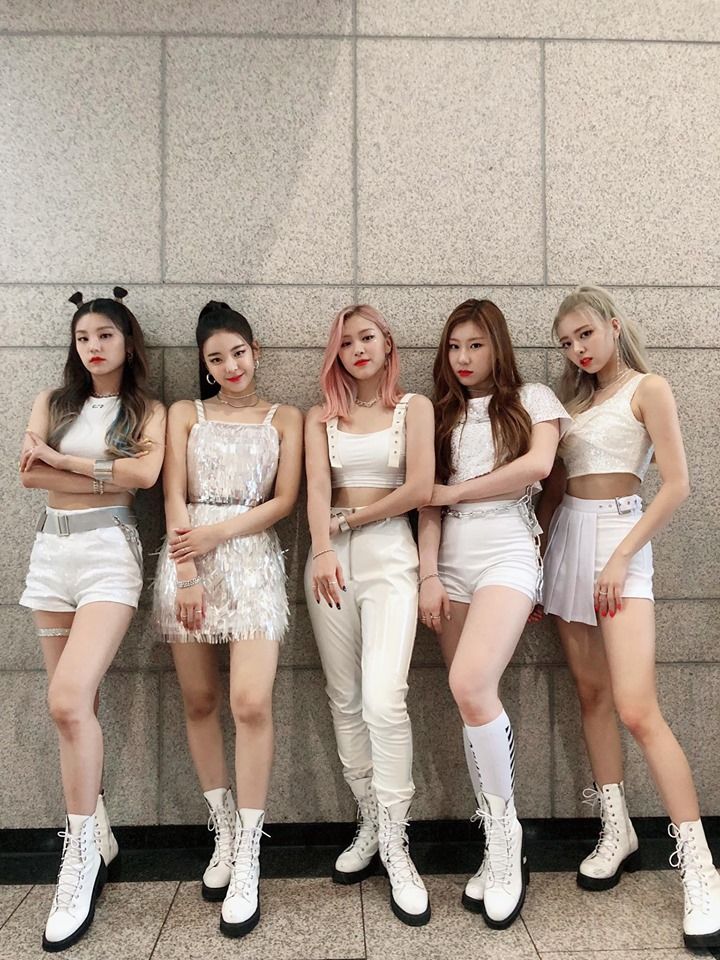
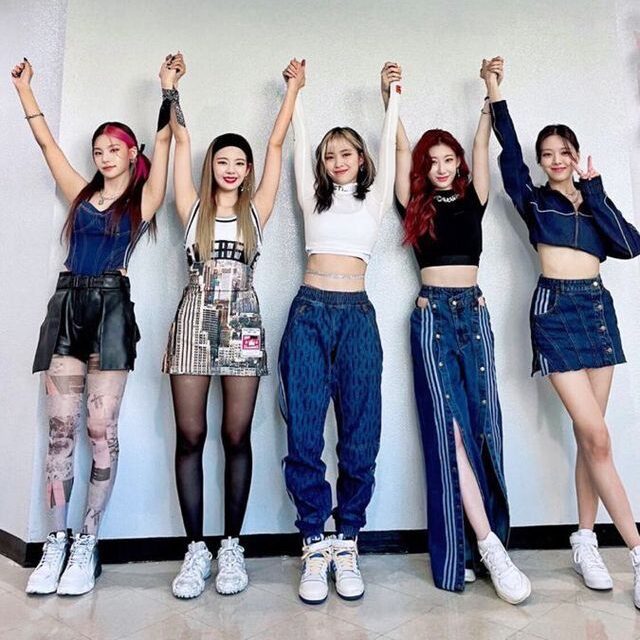
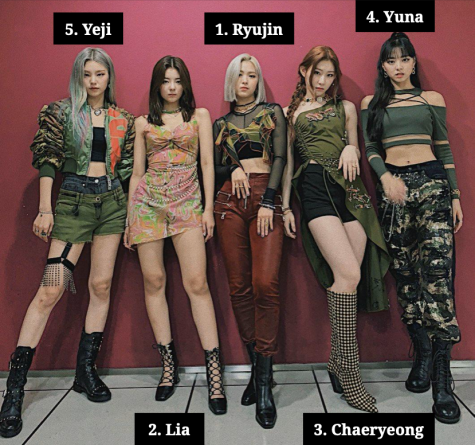
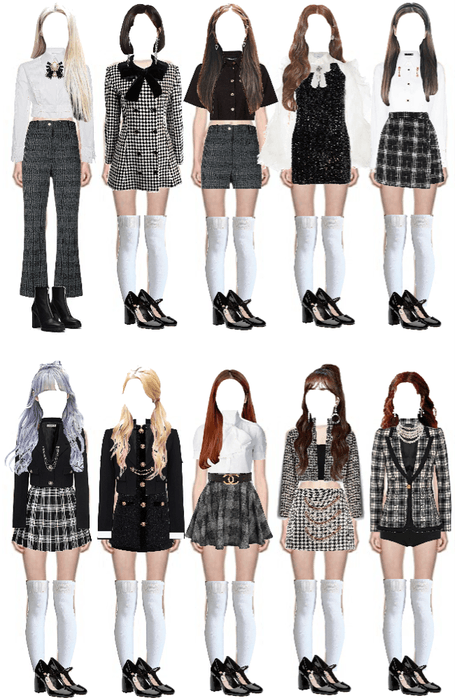
For example, in the case of ITZY, each member has a unique fashion style that mirrors her individual personality and role within the group. Yeji often opts for bold, edgy outfits that reflect her fierce, confident persona, while Lia’s wardrobe leans more towards soft, elegant styles that highlight her graceful and calm nature. This contrast in their styles allows fans to connect with each member on a deeper level, while the group’s overall aesthetic remains unified and dynamic.

ITZY:

left to right: Yeji, Lia, Ryunjin, Chaeryeong, Yuna

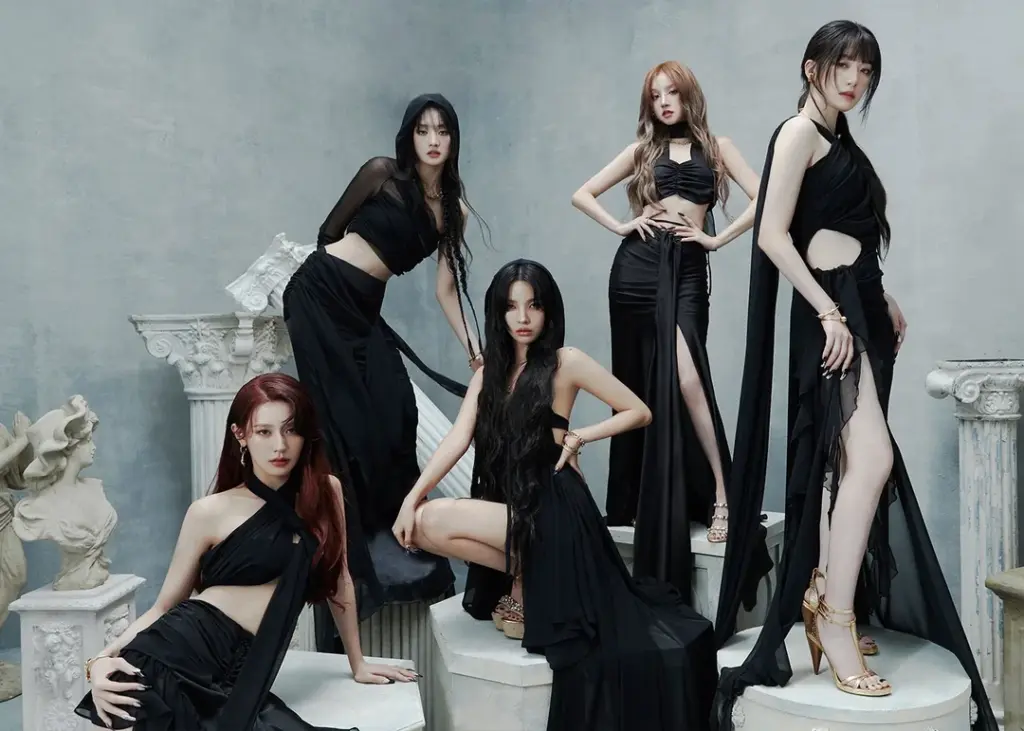
In addition to personal branding, fashion in K-Pop also serves to reinforce the group’s concept. The iconic “power” concept of groups like (G)I-DLE and Twice is reinforced through strong, bold fashion choices—such as leather jackets, studs, and sharp silhouettes—that visually communicate the group’s strength and independence.

(G)I-DLE:

Twice:

Fashion, therefore, becomes a tool for both individual expression and collective identity, creating a balanced narrative that supports both the music and the group’s image.

The Role of Fashion in Fan Culture and Merchandise

K-Pop fans, known for their passionate support, often emulate the fashion choices of their favorite idols, buying merchandise and clothing items associated with the group. This consumer behavior plays a significant role in the dissemination of K-Pop’s visual identity.

For instance, the popularization of certain trends can often be traced back to K-Pop styling. Items such as oversized hoodies, chunky sneakers, and brightly colored hair became popular worldwide after being featured in K-Pop music videos and performances. The rise of “K-Pop fashion” can be attributed to the influence of idols who are often seen wearing streetwear, designer pieces, or collaboration items with well-known fashion houses. Groups like *TWICE* and *Stray Kids* have contributed to making specific trends mainstream, while their fans, known as “K-Pop stans,” frequently purchase merchandise or emulate the style of their favorite idols.

Stray Kids Fashion Inspo:

Twice Fashion Inspo:

Furthermore, K-Pop’s styling is often inclusive, with a wide range of looks—spanning from hyper-feminine to androgynous, from hip-hop to avant-garde fashion—allowing fans of all gender identities and cultural backgrounds to find a connection to their favorite groups. K-Pop idols, with their diverse styling, encourage self-expression and empower fans to embrace their own individuality. 

In this way, K-Pop styling also functions as a tool of identity creation, both for the artists and for their followers. Fans view their favorite idols as representatives of certain ideals, and styling becomes a visual shorthand for these ideals—be it youthfulness, power, luxury, or rebellion.

Conclusion

K-Pop styling is far more than a tool for aesthetics—it is a multifaceted branding mechanism that helps define the identity of both the artists and the industry. Through careful and strategic styling, K-Pop groups are able to create distinct personas, connect with diverse audiences, and influence global fashion trends. Fashion, makeup, and hair in K-Pop are integral to creating memorable, iconic images that resonate with fans and allow groups to maintain relevance in the fast-paced entertainment industry. 

In a globalized entertainment landscape where image is everything, K-Pop has mastered the art of styling as a branding tool, proving that visual identity is just as essential as music in building a lasting, influential global presence.

Sources:

Han, S. (2019). Branding K-Pop: The Art of Creating Global Identities. Journal of Global Pop Culture, 7(2), 134-146.

Kim, Y. (2020). Fashion in K-Pop: Identity, Influence, and Global Appeal. Seoul University Press.

Lee, M. (2021). Styling K-Pop: A Study on Fashion’s Role in K-Pop Branding 

Kim, Y. (2020). Fashion and K-Pop: The Role of Style in the Globalization of Korean Pop Culture. Seoul University Press.

Jung, E. (2018). The Visual Aesthetics of K-Pop: Fashion, Identity, and Global Influence. Asian Media Studies Journal, 12(3), 45-59.

Lee, M. (2019). K-Pop and Fashion: The Intersection of Music, Art, and Style. K-Pop Industry Review, 8(4), 78-91.

Nam, J. (2021). Fan Culture and Fashion: How K-Pop Influences the Global Fashion Landscape. Global Pop Culture Studies, 16(2), 112-130.

https://www.voguecollege.com/articles/the-power-of-fashion-how-k-pop-incorporates-fashion-to-create-visual-identity

https://medium.com/free-code-camp/what-k-pop-can-teach-us-about-design-6253a85f469c

How We Perceive Neutrality: The Psychology of Genderless Design

In a world where design choices shape our perceptions, the concept of neutrality is more complex than it seems. That’s why I asked myself what it means for a design to be “genderless”? Is true neutrality even possible, or does every design decision carry an implicit bias?

Neutrality Is Not Universal

When we think of “neutral” design, what comes to mind? Minimalist aesthetics? Muted colors? Sans-serif fonts? While these elements are often marketed as universal, they carry their own cultural and historical baggage. For example, black, white, and gray are frequently used in gender-neutral branding. Yet, these choices are shaped by Western modernist design principles, which emerged from a specific cultural context. In other cultures, vibrant colors might symbolize balance and neutrality instead.

Similarly, clean, geometric typography is often seen as neutral, but this perception is influenced by the association of serif fonts with tradition and femininity, and sans-serifs with modernity and masculinity. Even something as simple as a rounded button versus a sharp-edged one can subtly communicate warmth (feminine-coded) versus efficiency (masculine-coded). Neutrality is not an absence of meaning; it is shaped by cultural norms and visual history.

How the Brain Interprets Gender in Design

Our brains are wired to categorize information quickly. Research in cognitive psychology shows that humans rely on schemas—mental shortcuts based on past experiences—to make sense of the world. Gender is one of the most deeply ingrained schemas we use. When we encounter a design, our brains subconsciously assess elements like color, shape, typography, and imagery to determine whether it aligns with our learned gender associations. Here are some examples I already explored:

  • Soft curves and pastel colors tend to be processed as “feminine.”
  • Sharp angles and bold, dark tones are often perceived as “masculine.”
  • Even language choices—like whether a product description uses “strong & powerful” versus “smooth & gentle”—reinforce gendered perceptions.

Because we instinctively categorize designs, truly gender-neutral design must actively challenge these subconscious cues.

Beyond the Binary: What it may look like

If neutrality is subjective, how can designers create products, brands, and experiences that don’t alienate or reinforce stereotypes? Here are key strategies:

  1. Diversify Color Palettes
    Instead of defaulting to grayscale, consider diverse, unexpected colors that transcend traditional gender associations. Bright yellow, rich teal, or deep coral can be gender-inclusive choices.
  2. Rethink Typography & Form
    Avoid extremes—neither ultra-decorative scripts nor hyper-industrial fonts signal neutrality. Instead, seek balanced, adaptable typefaces. Similarly, combining organic and geometric shapes can create a more inclusive visual language.
  3. Use Inclusive Language
    Words shape perception. “For everyone” is more inclusive than “for men and women.” The same applies to product descriptions, job listings, and marketing materials.
  4. Offer Customization & Flexibility
    Instead of dictating a singular “neutral” aesthetic, allow users to personalize their experience—whether through adjustable interfaces, modular packaging, or color selection.
  5. Challenge Default Settings
    Many digital interfaces assume a binary user experience (e.g., gendered avatars or form fields). Providing non-binary options or omitting unnecessary gender markers altogether fosters inclusivity.

The Future of Neutrality in Design

Neutrality is a moving target—what feels inclusive today may evolve as cultural norms shift. Instead of aiming for a single, fixed idea of neutrality, designers should embrace adaptability and question their own biases. True genderless design is about offering choice, breaking defaults, and allowing people to engage with products and spaces in ways that feel authentic to them. Because in the end, the most inclusive design is not the one that erases differences, but the one that makes room for everyone.

Sources:

https://uxdesign.cc/designing-for-gender-neutrality-373f73f0832a

https://link.springer.com/article/10.1007/s12008-021-00751-7?

https://www.womentech.net/en-us/how-to/gender-neutral-design-principles?

Shifting Paradigms: Gender-Inclusive Advertising

In recent years, some brands have begun to challenge the traditional gender norms in advertising. One notable example is the online shop Zalando, launched a campaign titled “Zerotypes“, which prominently features individuals across a spectrum of ages, genders, and lifestyles, emphasizing inclusivity in regards to fashion, rather than segmentation.

As mentioned in a blog post before, traditional advertisements often rely on color codes, fonts, and images that are stereotypically associated with masculinity or femininity. For instance, bold fonts and dark tones are frequently used for “male” products, while soft pastels and cursive scripts are common for “female” items. Recent campaigns have embraced minimalist design with neutral color palettes and straightforward typography. This approach not only appeals to a wider audience but also allows the product itself to take center stage, rather than the gender of the user.

There exists a common misconception that gender stereotypes in advertising help boost sales, but this is largely the opposite of the truth. Gender stereotypes in advertisements generally have a negative impact on the product and company, but the evaluation of these stereotypes and advertisements by an individual is much more nuanced than any generalization can be. But most companies are aware of the sensitivity of the issue of gendering.

Another example is Bosch. Bosch has recognised that female users have different needs to men, with the former placing more value on aesthetics. Instead of designing special women’s products, which are rejected by many women for this reason alone, Bosch launched a cordless screwdriver 15 years ago, which is aimed at occasional DIY enthusiasts.

How Genderless Design Promotes Inclusivity

Genderless design is not just about neutrality; it’s about inclusion. By removing gendered assumptions, this approach allows people to engage with products and spaces without feeling excluded or stereotyped. This is particularly significant in branding, where inclusivity can directly impact a company’s reach and reputation.

A notable example is Lush Cosmetics, which has embraced gender-neutral branding. Their minimalist packaging and inclusive marketing campaigns appeal to a wide audience, regardless of gender identity. Similarly, the fashion brand Telfar has gained acclaim for its “Not for You—For Everyone” slogan, challenging the exclusivity of luxury fashion. Another great example is Ikea:  “Alle dürfen sich wohlfühlen“. Furniture for the men, decoration for the women? Not at Ikea. The Swedish furniture store is constantly attracting attention with its inclusive campaigns – and has thus created a broad audience. It communicates a family feeling that is informal and outside the classic norms. Whether friends, a patchwork family or a queer couple: everyone wants a cosy home. With this feeling, the brand has succeeded in positioning itself for many target groups at the same time.

Data supports this shift. A study by Accenture found that 41% of consumers have shifted to brands that prioritize inclusivity in the past year. Genderless design fosters a sense of belonging, making it a powerful tool for brands aiming to connect with diverse audiences.

Challenges and Critiques

Despite these progressive shifts, not all efforts have been successful. Critics argue that some brands adopt gender inclusivity superficially, using it as a marketing gimmick rather than making meaningful changes. For instance, token representation in advertisements can feel performative if not backed by inclusive policies within the company itself.

Moreover, gender-inclusive advertising can face backlash from more conservative audiences. This was evident when a German department store faced criticism for introducing gender-neutral sections in their stores, sparking debates about whether these changes were necessary or overly “woke.”

Additional Sources:

https://www.deutschlandfunkkultur.de/pinker-pudel-preis-fuer-reklame-ohne-stereotype-die-werbung-100.html

https://www.brjght.com/markenjournal/warum-werbung-keine-geschlechterklischees-mehr-braucht

https://blog.hubspot.de/marketing/gender-marketing

https://trio.ch/de/stereotypen-andern-sich-sind-aber-in-der-werbung-immer-noch-prasent

#07 Effectiveness of interventions using Phone or PC apps to improve our behavior.

It can be shown that if a person sees tracked information about his behaviour in numbers, it can influence his following behaviour to a certain point. You can’t Manage what you can’t Measure.

This is also applicable, for example, if you track the use of different apps on your phone or computer. A person can’t accurately estimate how long he watched Tiktok videos for example, but when he looks at the statistics on his phone and sees he spent 8 hours on that app, he’ll try to reduce his use of that app by at least a little in the next few weeks.

This system of App interventions can also be linked to the issue of the size of the energy footprint from the use of digital and online space.

Types of existing screentime interventions Apps

It’s important for all of us to reflect on our relationship with technology, particularly when it starts leaning toward an unhealthy dependence. Using an app usage tracker to monitor the time you spend on various digital activities is a crucial step toward developing greater digital self-awareness. By gaining a clearer understanding of how you engage with your devices, you can make more deliberate choices about how you want—or don’t want—to use them.

Screen Time – iOS

It tracks exactly how you use your device, providing a high-level evaluation of the time you spend on it in a single day, as well as a more detailed look at time spent in certain categories or apps.[1]

https://www.timely.com/blog/app-usage-trackers

StayFree Phone Usage Tracker

  • Provides detailed insights into app usage, screen time, and daily unlocks.
  • Seamlessly integrate all of your devices to optimize your screen time.
  • Helps you stay productive by blocking distracting apps and websites, tracking your device usage, and providing you with insights into your habits.
  • Track your phone usage in real-time, allowing for immediate adjustments.[1]

https://www.airdroid.com/parent-control/phone-usage-tracker

ScreenZen- Screen Time Control

PAUSE before opening a distracting website or app. Multiple strategies to reduce your screentime.

  • Pause before opening your website or app: A bit of time before choosing if you need to open your distracting app.
  • Interrupt your scrolling: Check your distracting websites and apps for short periods of time so you don’t get sucked in.
  • Set an app unlock goal
  • Configurable for different days of the week and time by app.
  • Messages like “Is this important” before opening your app.
  • Locks on Settings to prevent you from changing your settings when you want to open an app.
  • Streaks to encourage you not to exceed your limits or override your settings.[2]

https://apps.apple.com/us/app/screenzen-screen-time-control/id1541027222?platform=iphone

AntiSocial: phone addiction, Android

AntiSocial is designed to not only help you understand what ‘normal usage’ looks like, but to give you the tools to manage, block and control your cell phone usage so that you can unplug, minimize distractions and focus on the things that matter.
While there are other apps available that are designed to restrict phone usage, AntiSocial feels strongly about empowering the user by giving them the information they need to take necessary action. This is done through the clearest and most simple interface available and is the only app to deliver detailed reports full of all the information you need to make an informed decision.[3]

https://play.google.com/store/apps/details?id=com.goozix.antisocial_personal

Forest: Focus for Productivity 

A interesting way to help you beat phone addiction and overcome distraction

  • Turn your focused moments into a lush forest.
  • Create personalized Allow Lists for different situations. Non-allowed apps will be blocked.

GET MOTIVATED

  • Earn rewards and unlock more than 90 new tree species and white noises.
  • Share your forest and compete with friends and users around the world.
  • Plant trees along with friends & family.
  • Unlock achievements and earn extra rewards.
  • Plant real trees on Earth and protect the environment with tree-planting organization Trees for the Future.

STATISTICS

  • Manage your own tags and view detailed statistics of your time distribution.
  • Browse your weekly, monthly and even your yearly big forest.
  • Track your focused time in the Apple Health App.
  • Track your daily phone usage and screen time.
  • Recall memories of your planting journey with our brand new Forest Timeline![4]

https://apps.apple.com/us/app/forest-focus-for-productivity/id866450515

Research about effectiveness

A recent study from Delft University of Technology, Netherlands looked at apps designed to help people spend less time on their phones and avoid unhealthy habits like overuse. The research reviewed various apps and how effective they are at helping users change their behavior.

Here’s what they found:

  • Helpful Features: Apps that include tools like grayscale mode (making your screen less colorful), app limits, and mixed approaches worked well for reducing phone use.
  • Top Apps: Screen Time (iOS) and AntiSocial were the most effective apps, while Forest and Screen Time (Android) had weaker results. However, Forest stood out for its fun gamification feature and had the highest user satisfaction score (86/100).
  • What Users Like: The most popular features were tracking usage and setting goals. Gamification (like turning tasks into games) and tools for self-assessment were less commonly used but still appreciated.
  • Positive Feedback: Most users liked these apps, with overall sentiment scores ranging from 61 to 86 out of 100.[5]

The study underscores the increasing public interest in apps that promote healthier phone habits and highlights the need for collaboration among researchers, developers, phone manufacturers, and policymakers to design and evaluate more effective interventions.

By shedding light on which app features work best, this research provides valuable insights for those seeking to make meaningful changes in their digital habits.

Resources

[1] https://www.timely.com/blog/app-usage-trackers

[2] https://apps.apple.com/us/app/screenzen-screen-time-control/id1541027222?platform=iphone

[3] https://play.google.com/store/apps/details?id=com.goozix.antisocial_personal

[4] https://apps.apple.com/us/app/forest-focus-for-productivity/id866450515

[5] https://pmc.ncbi.nlm.nih.gov/articles/PMC10498313/

Augmented Reality in Car Windshields: Designing the Future of HUDs

The rise of AR HUDs

Augmented reality (AR) in car windscreens is transforming the driving experience through advanced heads-up displays (HUDs). Rather than simply projecting basic information such as speed and fuel level, AR HUDs overlay real-time information in the driver’s field of vision, improving both safety and user experience. For example, navigation information such as lane guidance arrows, hazard warnings or even pedestrian and obstacle detection appear seamlessly on the windscreen, keeping the driver’s eyes on the road and reducing distractions.

(source: https://medium.com/stradvision/augmented-reality-head-up-display-ar-hud-provides-drivers-with-a-safer-and-more-convenient-25db611fd406)

Improving safety and driving experience

One of the primary goals of AR HUDs is safety. By projecting critical information directly into the driver’s line of sight, they reduce the need to look away from traditional dashboard displays. For example, real-time alerts about speed limits, traffic congestion and potential collisions can help improve reaction times. AR HUDs can also improve driving in poor visibility by highlighting lane markings or obstacles like other vehicles.

Personalisation features are also becoming more common, allowing drivers to customise the information displayed on their windscreen. This could include navigation routes, weather updates or nearby points of interest, creating a more tailored and interactive experience.

(source: https://vr-room.ch/2019/01/10/ar-kommt-in-head-up-displays-ins-auto/)

Current challenges

Despite their potential, AR HUDs face challenges such as high production costs, complex calibration requirements and display clarity in varying lighting conditions. In addition, regulatory hurdles and driver distraction concerns remain significant barriers to adoption.

The future view

The future of AR HUDs looks promising as advances in AI, connectivity (such as 5G) and projection technology accelerate. Car manufacturers are already incorporating AR HUDs into premium models, with brands such as Mercedes-Benz and BMW leading the way. As costs come down and consumer demand for smarter, connected cars grows, AR HUDs could become standard across all vehicle segments within the next decade.

(source: https://displaydaily.com/the-dawn-of-augmented-reality-huds-bmw-changes-the-game-with-panoramic-vision/)

References:

https://www.radiantvisionsystems.com/blog/automotive-hud-inspection-challenge-characterizing-effects-windshield-glass

https://www.dreamerux.com/articles/hbskaedh5bfckwbh9mm9wydftjtj8y

https://premiereautoglass.com/the-role-of-ar-in-shaping-the-future-of-auto-windshield/

https://autoraiders.com/2024/10/18/the-impact-of-augmented-reality-windshields-on-driving-technology/

https://evecoauto.com/the-rise-of-hud-windshields-are-they-the-future-of-driving/

#06 How to use ChatGPT sustainably? Do we need to really use it everytime?

Chatgpt has become a major help to students over the past two years. This technology invention has completely changed the way information searching is done. It often helps us and saves time in various assignments. But have think about the question if we could find the answer ourselves, was it necessary to use chatgpt at any cost?

Energy usage during operation of ChatGPT

Inference Costs: Each time a user interacts with ChatGPT, the AI model must process the prompt and generate a response. This is called “inference” and requires computational power proportional to the complexity of the query and the response length.

Aggregate Usage: With millions of users globally, the cumulative energy required to serve these queries daily adds up significantly, especially when users submit unnecessary or overly frequent prompts.

ChatGPT User Growth Timeline (Release to May 2024)

After its launch, ChatGPT set a world record as the fastest platform to reach 1 million users, achieving this milestone in less than five days. This unprecedented growth was fueled by the recent hype surrounding AI and the ease of accessing ChatGPT for everyday tasks. Such rapid adoption highlights both its potential and the need to use it wisely [1].

https://wisernotify.com/blog/chatgpt-users/

ChatGPT User Growth Milestones

https://wisernotify.com/blog/chatgpt-users/

ChatGPT By Age: Usage Across Generations

https://wisernotify.com/blog/chatgpt-users/

How Are People Using ChatGPT?

There are various ways in which chatgpt is proving crucial. It can be an ideal tool for performing various tasks. Some of the ways people are using chatgpt are:

Students and ChatGPT

https://wisernotify.com/blog/chatgpt-users/

Missing statistics and data

There is no information on OpenAI’s official website about ChatGPT’s energy consumption or what steps the company would like to take to improve its impact on energy consumption. “According to ChatGTP, OpenAI is committed to reducing its carbon footprint and promoting sustainability initiatives, such as investing in renewable energy sources (produced, for example, through solar panels or wind turbines), improving its data centres and energy efficiency, and reducing waste and water use [2].” However, there is no data on what ChatGPT does to improve its environmental and social impact.

How to Use ChatGPT Sustainably

Here are a few principles to ensure we use ChatGPT thoughtfully:

Pause Before Prompting: Ask yourself if you really need ChatGPT for a particular task. Could you find the answer yourself through research, reflection, or discussion? Reserve ChatGPT for questions that require nuanced insights or efficiency.

Set Clear Goals: Define what you want to achieve before using ChatGPT. Vague prompts can lead to multiple iterations, increasing both time spent and energy use.

Use for Learning, Not Substitution: Use ChatGPT as a complementary learning tool rather than a replacement. For example, if you’re stuck on a problem, ask for guidance rather than a direct solution. This encourages you to engage with the material.

Collaborate With Others: Instead of immediately consulting AI, consider brainstorming with peers or mentors. Human collaboration not only strengthens understanding but also fosters interpersonal skills.

Limit Usage: Designate specific times or purposes for using ChatGPT, such as for brainstorming or refining ideas, to avoid habitual overuse.

Final Thoughts

As we use AI tools like ChatGPT more often, it’s important to build healthy habits. ChatGPT should help us, not replace our own thinking. By setting limits and using it responsibly, we can make the most of its benefits while continuing to grow as independent thinkers. Next time you’re about to type a question, stop and ask: Can I figure this out myself? If the answer is yes, give it a try. You might be surprised by how much you already know.

Resources:

[1] https://wisernotify.com/blog/chatgpt-users/

[2] https://zeroco2.eco/en/magazine/curiosities/chatgpt-sutainability/

How Autonomous Car Concepts are Influencing Current UX/UI Design

The rise of autonomous vehicles (AVs) has had a profound impact on modern UX/UI design, laying the foundations for new user expectations, interfaces and interactions. Even though fully autonomous cars are still in development, their concepts are actively influencing current automotive design trends.

Shift from driver-centric to passenger-centric UX

Traditional car UX focused on the driver managing controls, but AV concepts prioritise the passenger experience. As the responsibility of driving reduces, designers are rethinking interiors to support new activities such as working, relaxing or entertaining. This shift calls for adaptable interfaces that balance functionality and simplicity, while accommodating a range of user needs, such as personal control over lighting, seating or infotainment systems.

(source: https://www.autosprint.ch/en/aktuell/yanfeng-das-auto-als-oase-zum-wohlfuehlen/)

Trust and communication through UX

A critical design challenge in autonomous vehicles is building trust. AVs need to clearly communicate their intentions and status to help users feel safe. For example, interface systems now display the vehicle’s awareness of its surroundings, such as identifying pedestrians or road conditions. By showing this “cognitive awareness” in real time, car manufacturers aim to reduce fears about safety and control.

(source: https://www.mdpi.com/2227-7080/11/5/117)

Incorporating AI for predictive experiences

Autonomous car concepts are increasingly using AI to predict user preferences and streamline the journey. Features such as adaptive climate control, route suggestions or personalised entertainment systems increase comfort. These innovations are now influencing current vehicles, even in advanced driver assistance systems (ADAS), where predictive feedback improves the user experience.

(source: https://blogs.sw.siemens.com/thought-leadership/2022/01/24/in-cabin-ai-the-push-to-develop-smarter-autonomous-cars-for-the-future/)

Flexible and minimalist UI design

AV interiors often emphasise minimalism, reflecting an intuitive approach to reducing cognitive load. Touchscreens, voice commands and haptic feedback replace traditional controls, simplifying navigation and vehicle interaction. As designers test AVs, these principles are being incorporated into current models, with large screens, clean dashboards, and advanced voice assistants such as Apple CarPlay or Android Auto.

(source: https://autodesignmagazine.com/en/2024/03/bmw-neue-klasse-x-suv-from-the-future/)

Balancing automation and human interaction

Even as automation advances, user-centred design remains essential. For example, partial autonomy (such as Tesla’s Autopilot) requires intuitive systems that allow for seamless driver interaction. Modern UIs already address this balance, ensuring clarity in mode switching and responsibilities between human and machine.

(source:https://www.greencarcongress.com/2021/09/20210901-driving.html)

References:

https://www.tataelxsi.com/news-and-events/why-ux-design-will-be-crucial-to-the-success-of-autonomous-cars

https://info.keylimeinteractive.com/the-ux-of-autonomous-vehicles

https://www.foundry.com/insights/design/autonomous-cars

https://appinventiv.com/blog/ai-in-self-driving-cars/

https://blogs.sw.siemens.com/thought-leadership/2022/01/24/in-cabin-ai-the-push-to-develop-smarter-autonomous-cars-for-the-future/

01. #02 Stages of learning to read: logographic, alphabetic, and orthographic phase

Children learn to read in distinct stages that reflect the development of their ability to translate written symbols into spoken language. These stages build upon one another, with each child progressing at their own pace. The developments are not linear. Sometimes kids also go back in a stage when they encounter new vocabularies and they should be supported accordingly. Based on the german developmental psychologist Uta Frith’s model (1985), three central stages can be identified: the logographic, alphabetic, and orthographic phase.

1.Logographic Phase
In this early stage, children recognize words and letters primarily through visual cues, much like identifying pictures or symbols. They rely on visual features such as the length of a word, the shape of certain letters, or logos to identify familiar words. There is no real connection between letters and sounds at this point. Mostly, they recognize specific words because they remember what it is. For example they recognize the milk carton in comparison to orange juice cartons. They seem to read the word “milk” but usually they just remember the basic information of the product.
This stage is typical for preschoolers and early readers. Encouraged through visual recognition activities (e.g., flashcards, pictograms, memory cards etc.). Focus on frequently used words or personal names (e.g. writing their own name and “reading” it back).

Source: https://1800lionlaw.com

2.Alphabetic Phase
In the alphabetic phase, children begin to understand the relationship between letters (graphemes) and sounds (phonemes). A letter is not always spoken in the way it is written. For example in Spanish sounds are really dependent on the following letter combinations, which could change the pronunciation. They learn to decode words by blending sounds (synthetic reading). Recognizing new words increasingly involves applying letter-sound rules. A child sees the word „cat“ and pronounces it by connecting the individual letters c-a-t.
This stage typically corresponds to the start of formal reading instruction (around first grade). Methods like syllable reading and phonological exercises help children internalize the letter-sound principle. Additionally, in this stage, challenges can be addressed with targeted interventions for children with dyslexia.

3.Orthographic Phase
In this phase, children increasingly recognize words automatically, without decoding each letter. They internalize orthographic patterns and rules, allowing them to quickly identify word components (morphemes) or familiar words. Spelling and reading fluency improve significantly during this stage. They get better at reading words instantly without spelling it out, as they recognize known structures. Finally they arrive at the known phenomenon that they can read word “automatically”, without having to read the full word.*
This phase usually occurs in late elementary school or later, as children develop a broader vocabulary. Reading comprehension and fluency are encouraged through more complex texts (e.g., stories, factual texts) and spelling or grammatical rules.