“From infographics to the visualisation of sound, from the fine arts to architecture, and especially in the realm of communication design and media installations, generative design allows for dynamic, stunning, and fascinating applications.” (Karin and Bertram Schmidt-Friderichs from the preface to Generative Design 2018)
To call it generative design would perhaps lead the average person to assume that what is being spoken about is design produced by Generative Artificial Intelligence. And while it is a sort of design produced by the computational power of a computer, its calculations and machinations remain entirely in the purview of the device which sits behind the computer.
Generative art as defined by Philip Galanterin a paper, titled What is Generative Art? defines it as an art practice that involves the application of a computer program, a machine or “a set of natural language rules”, which with some degree of autonomy produces a complete work of art. (Galanter 2003) In that definition there is also included the possibility of creating generative art entirely without a machine – art made using the rule of mathematics is also being “generated” autonomously via the application of rules.
Mathematician and Youtuber Vihart has made a lot of generative art pieces using the sophisticated tools of maths, several differently coloured sharpies, and a very abused notebook. (Vihart 2013)
Usually, however, generative art is created with strings of code. What are some of their unifying features? Well, Ali Spittel, writing for the freeCodeCamp, in an introduction to generative art breaks it down into three core tenets:
“Randomness is crucial for creating generative art. The art should be different each time you run the generation script, so randomness is usually a large part of that.
Algorithms — Implementing an algorithm visually can often generate awesome art, for example, the binary tree above.
Geometry — Most generative art incorporates shapes, and the math from high school geometry class can aid in some really cool effects.” (Spittel 2018)
And you can see the random aspect in the outcomes from creative code (examples taken from the code library made available by the authors of Generative Design 2018):
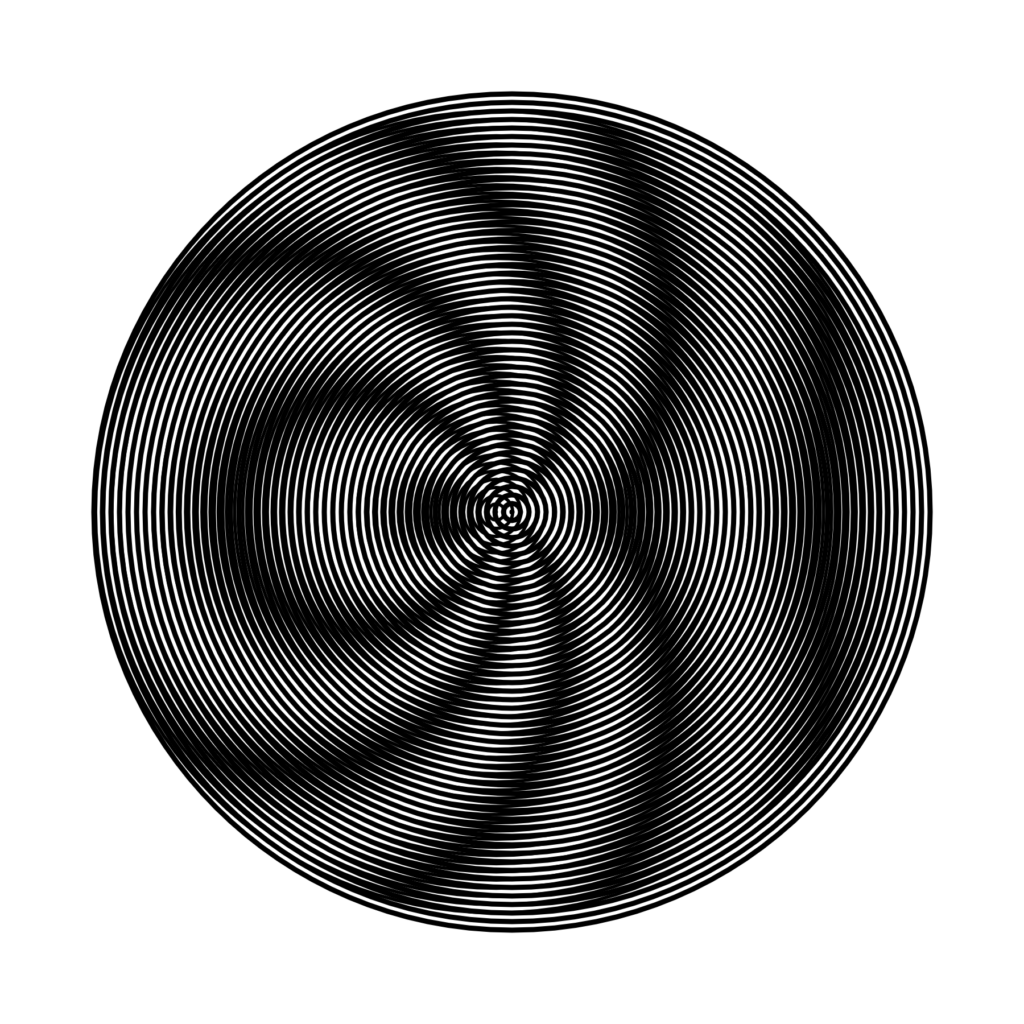
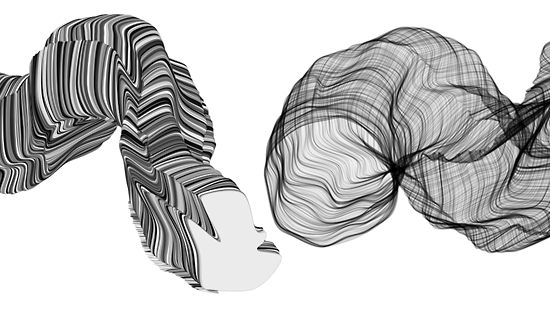
Fig. 1: p_2_1_5_01
Fig. 2: p_2_2_3_01
There is a pronounced effect of “calculation” in the results – an aspect of random generation combined with the perfectly, coldly calculated lines. The mathematical randomness of it reminds of the abstract-expressionist and dadaist art movements of the latter 20th century.
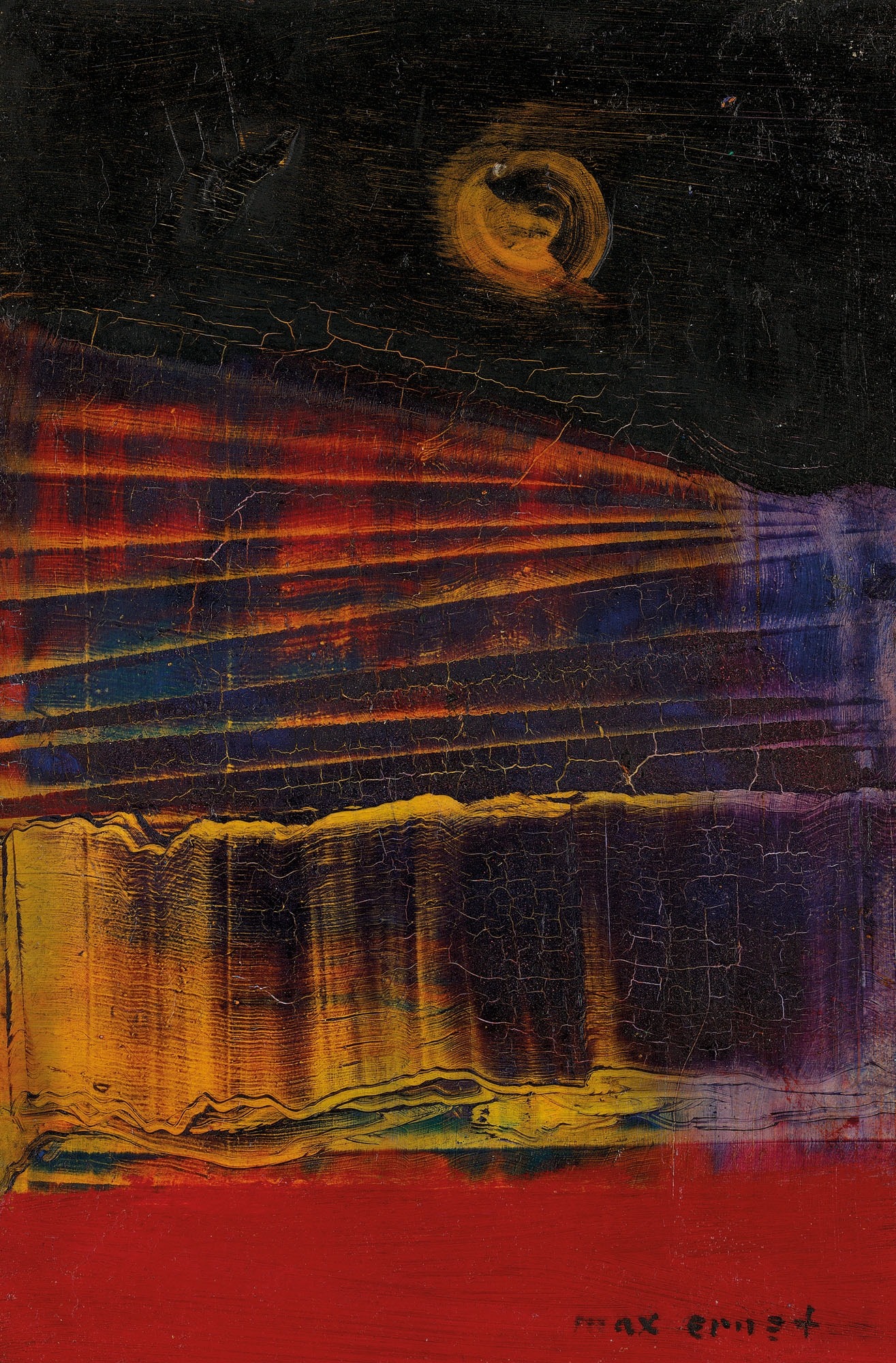
Fig. 3: Untitled by Max Ernst, 1958
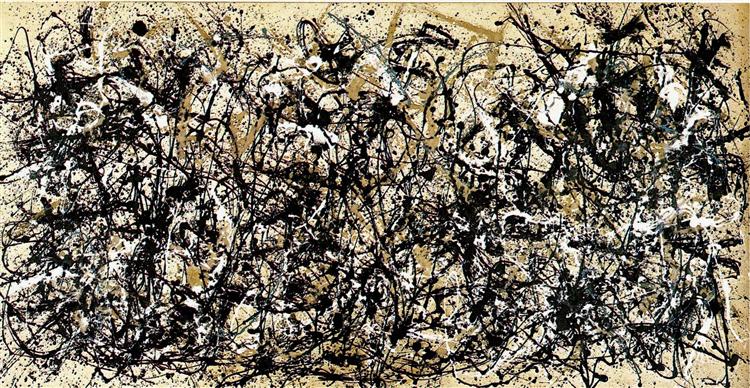
Fig. 4: Autumn Rhythm (Number 30) by Jackson Pollock, 1950
Why use Generative Art/Design at all? Galanter (2003) answers this question best:
“Generative art is a method of making art, but it carries with it no particular motivationor ideology. […][F]ilmmakers may use generative methods to synthesize imagery for purely economic reasons. At the other extreme some generative artists create works where there is no distance at all between the generative production method and the meaning of the work. These are generative artists exploring systems for their own sake. And of course there are numerous artists somewhere in between. There are as many reasons to use generative methods as there are generative artists. Perhaps more.”
References:
Gross, Benedikt et. al: Generative Design. Visualize, Program, and Create with JavaScript in p5.j.s 2018
Galanter, Philip: What is Generative Art? Complexity Theory as a Context for Art Theory. 2003
