2.1. Prototyping & Reflection of the Speed-Dating

My previous topic focused on the physical and digital worlds surrounding museums. Currently, my research does not provide any concrete ideas on what this entails. So, for this task, my thought process has led me to consider creating something that doesn’t rely on technology for its primary function. As a result, I created a collection of three prototype pencil holders. I chose to work with cardboard as my primary material because it is lightweight, easy to cut and shape, and allows for quick iteration. This choice allowed me to try out different structures and improve my ideas without the limits of more rigid materials.

Prototype 1: The House
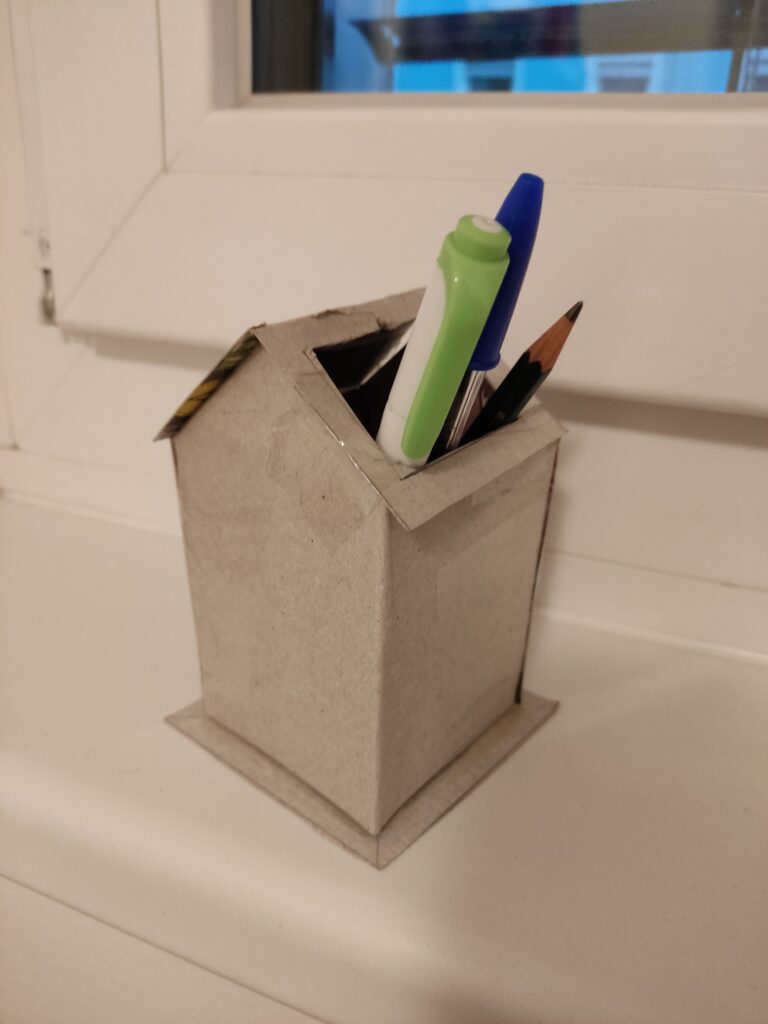
The first prototype takes the form of a small house, featuring a hole in its roof for storing pens, pencils, markers, and other writing instruments. This was the most complex design of the three, and due to its complexity, it took the longest to construct as I had to experiment with the angles of the roof and the positioning of the storage opening to achieve the right balance between aesthetics and usability.
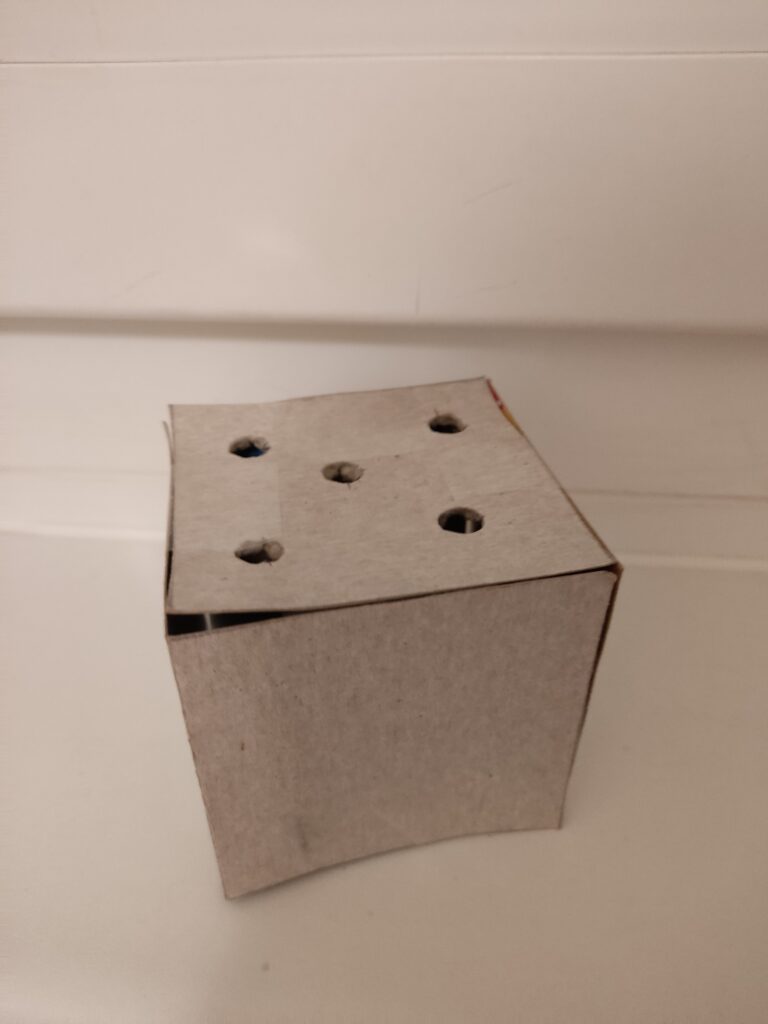
Prototype 2: The Cube
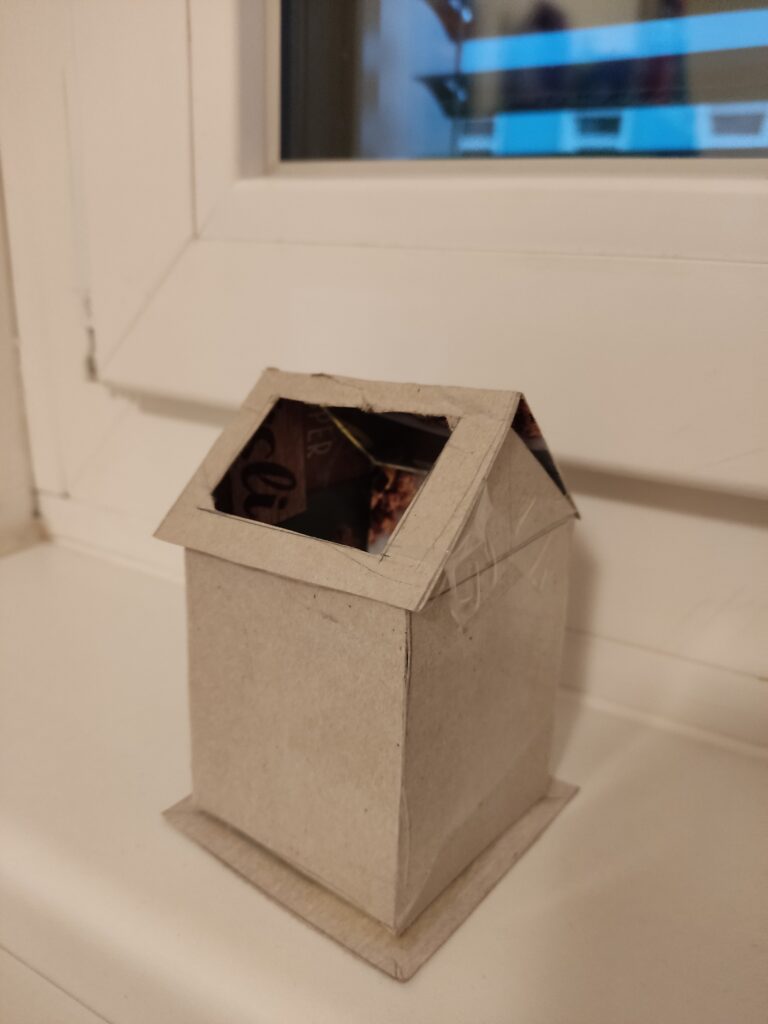
The second prototype is a simple cube with five holes on one side, designed to hold pens and pencils perfectly. Its geometric structure made it the easiest to assemble, as I only needed to ensure that the holes were the right size for standard writing tools.
Prototype 3: The Abstract Shape
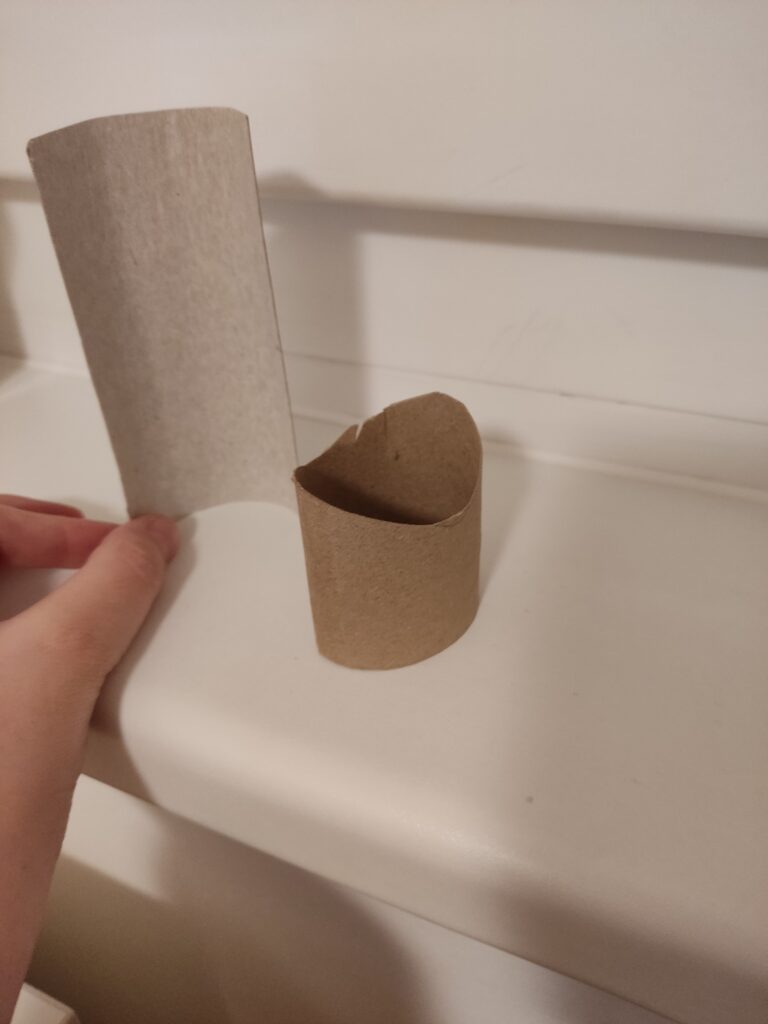
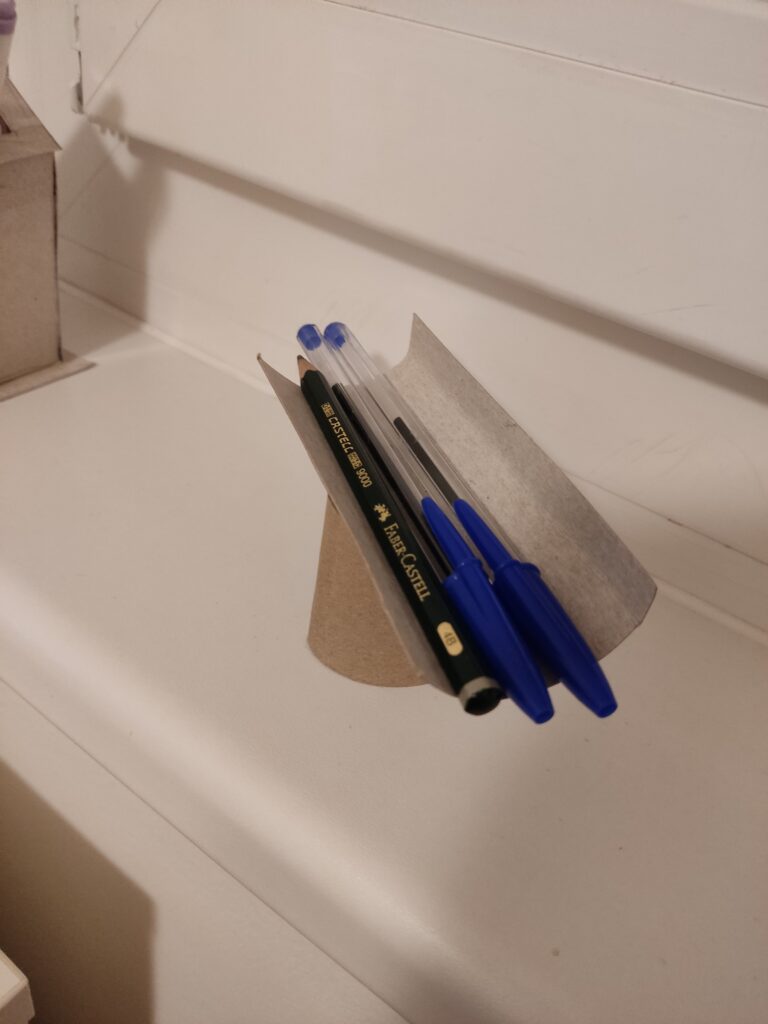
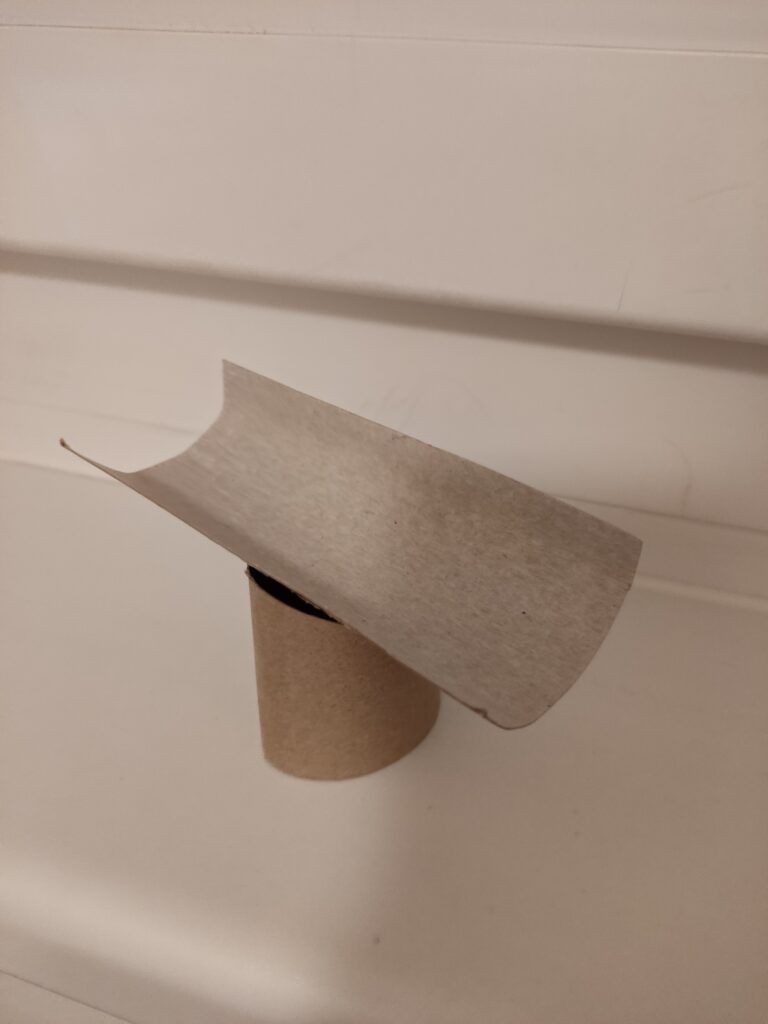
The third prototype differs from traditional forms, featuring a curved plank resting on a cylindrical base. Unlike the first two, which have clear, recognizable shapes, this design leans toward abstraction. Although this was the fastest prototype to construct, it required the most conceptual thinking. I spent a lot of time considering its form and how it could function as a pencil holder. The final piece is a sculpture that sparks interest while also being useful.
Observations from the Speed-Dating Session
For the in-class speed-dating session, I decided to bring Prototype 3. Given its abstract form, I was particularly interested in seeing how people would interpret it without any prior explanation. As the session began, people appeared uncertain about its intended function. Instead of immediately revealing its purpose, I encouraged them to make guesses based on its shape and structure.

Many speculated that it might serve as a rest for the chin or arm, while others imagined it as a support for chopsticks or another type of tool. When I revealed that it was meant to be a pencil holder, people had mixed reactions. Some were surprised, while others wondered if it really worked well for that purpose.

The most valuable feedback from this session suggested refining the concept by focusing on holding a single, special object rather than multiple everyday writing tools. One person suggested that the design could be changed from a typical pencil holder to a display case for a special calligraphy pen or another important writing tool. This idea created new options for how the prototype could become a more meaningful object.

Overall Thoughts
The speed-dating experience proved to be a valuable exercise in the iterative design process. Observing how people engaged with my prototype, interpreted its function, and provided feedback allowed me to rethink my approach and the intended use of the design. I realized that the way something looks affects how people understand and use it. It’s important to create ideas that clearly show what they are for or, on the other hand, encourage people to engage with them through uncertainty.
11 First Prototypes and Speed Dating

Th first new task I got this semester was to write six more blog posts and create (3) prototypes, of a possible project for my masters thesis. So naturally I asked myself, what could be a possible masters thesis and four different possible themes came to mind: 1. I could continue my bachelors thesis about digital mental health support programs. 2. I recently got into workshop facilitation & meeting facilitation, I thought the combination of being able to run workshops could be a great asset to every designer. 3. I could continue my research from last semester and deepen my knowledge in the understanding of biases. 4. Lastly I may get the opportunity to work together with a company to write about Design Systems.

Brainstorming

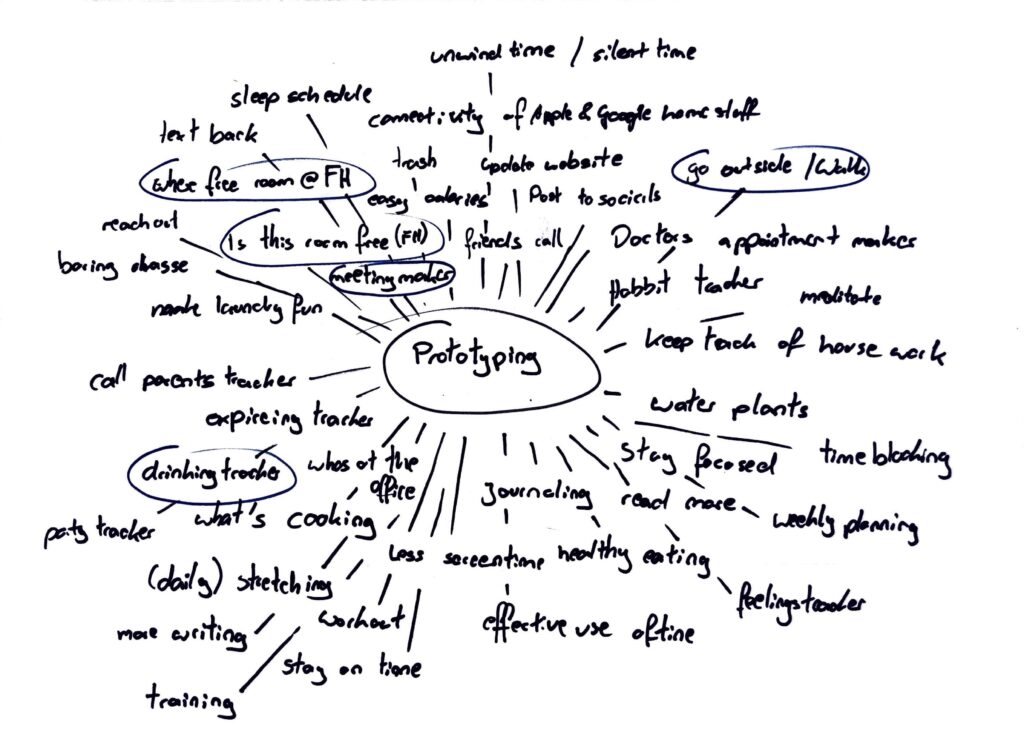
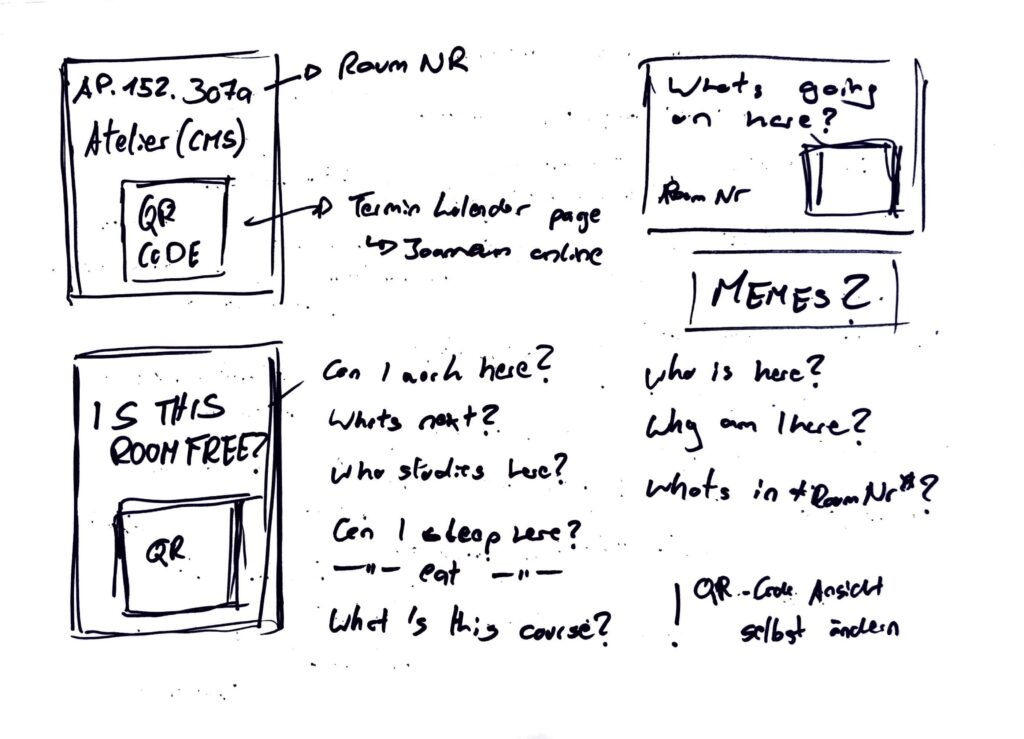
Naturally I couldn’t figure all of this out in one week, so I just started brainstorming, to figure out what problems I could solve with a quick prototype. On the picture below, you can see my ideas.

Four topics stuck with me: An app or similar digital solution that reminds you to go for a walk and motivate you to go outside. A drinking tracker, so you know how much you drank last night. A meeting maker, to help make meetings less confusing and draining. Lastly a solution for not finding a room at FH that is not occupied, to eat and work in.

Prototype 1

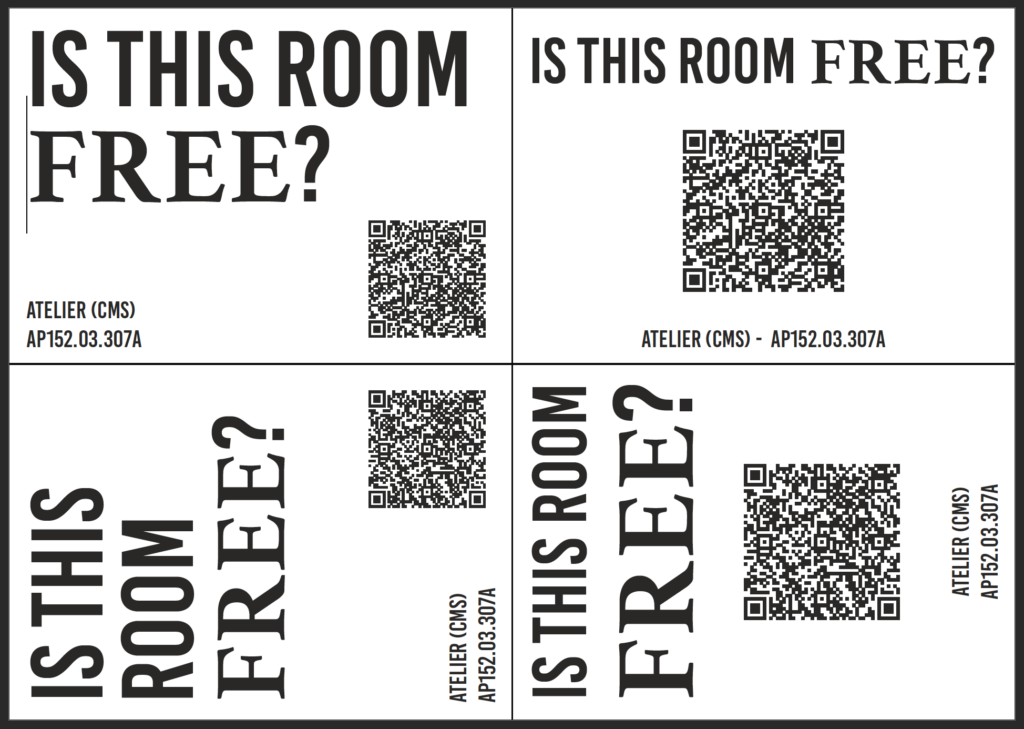
The last topic really stuck with me so I started a 20 minute timer and started sketching. After a quick research I found a way to see unoccupied rooms using Joanneum Online, but it’s confusing. So I tried a new approach, what if the process of checking a rooms schedule could be easier. My idea was to stick QR codes, next to every rooms sign, that lead to the rooms schedule. I started by sketching first ideas, of the signs and had just enough time to also create a first “mockup” of a sign. Later funny quotes or memes could be added to the signs, to make them more interesting.

Prototype 2

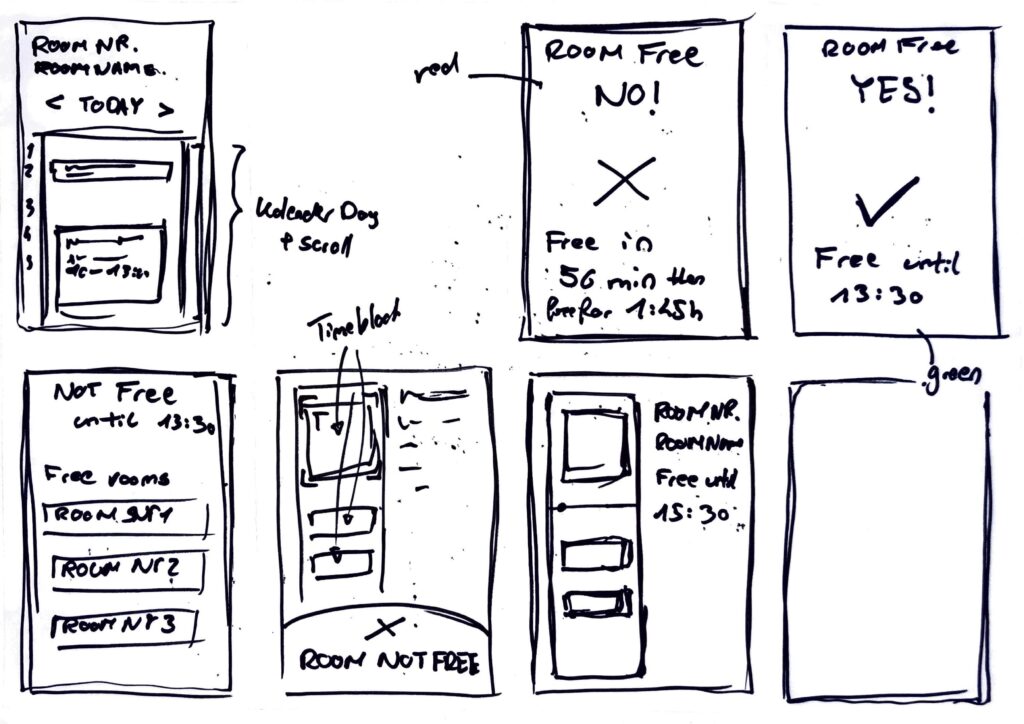
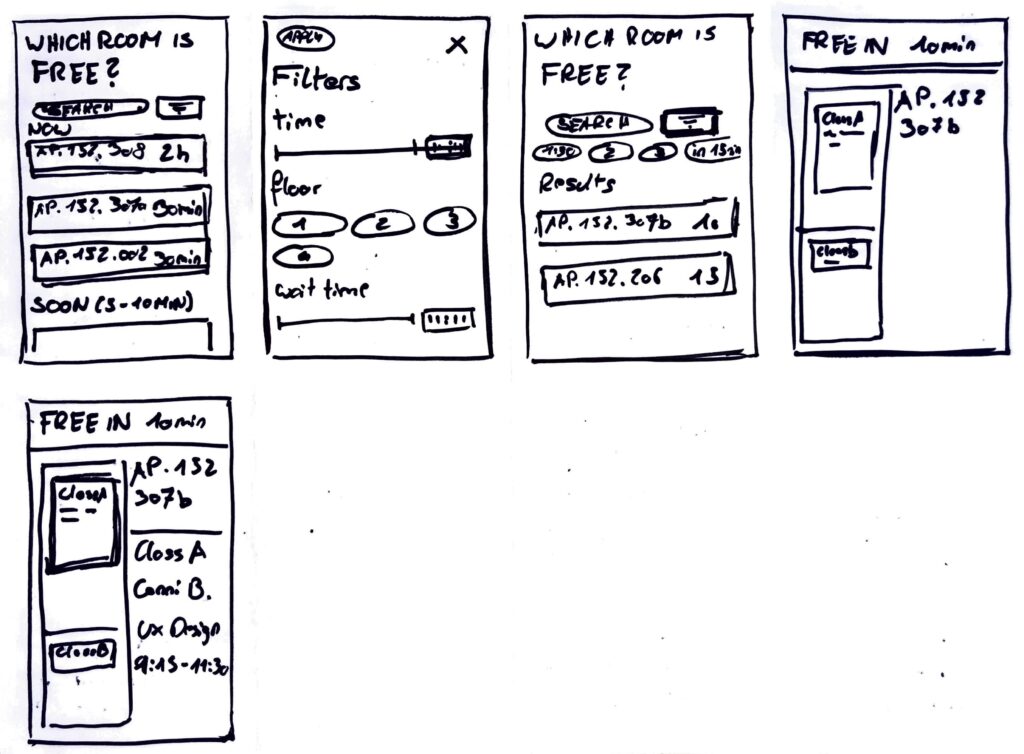
After creating the first prototype I got stuck on the idea of having an easy way to check for free rooms at our FH building. So continuing with the previous idea, I started another timer and started to generate first ideas for a website, that could display the desired information in a better way. Faster and easier to understand for the users. Since I love the crazy eight method, I used it to create this prototype

Prototype 3

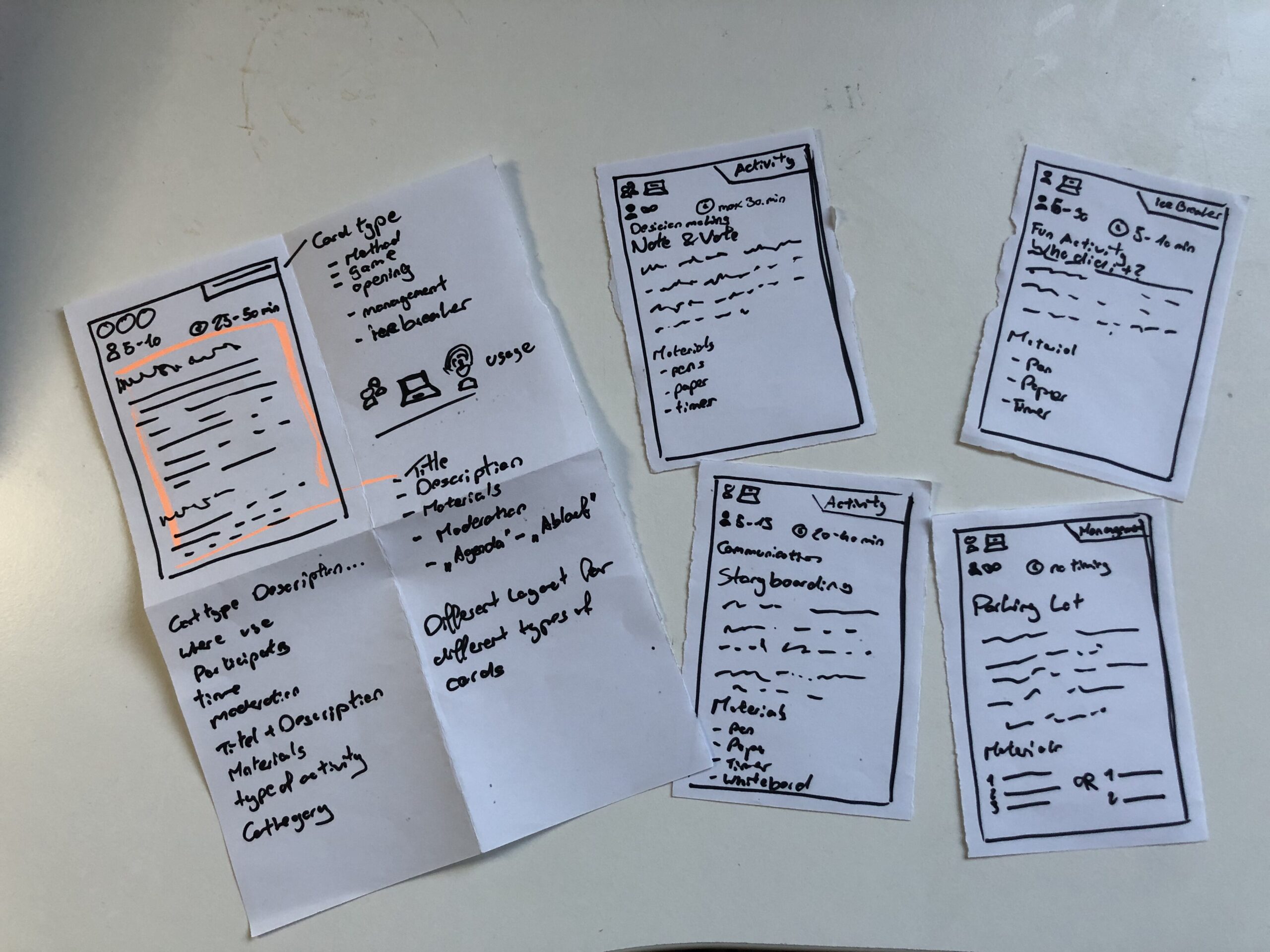
The last prototype went into a whole different direction, I still wanted to create something, that I could use for my masters thesis. So I just sat in my room thinking and then I had an idea. I could create a prototype for a card deck, that informs its owner about different work shop facilitation techniques. (Theoretically a card deck can be created for any topic, so I could also do one for biases and how to combat them) This is also the prototype I then brought to class, to discuss with my class mates.
The cards show what type of method you hold in your hands, if it can be used online or only live, how many people Ould participate, how long each activity takes, what you need to run it and of course the name and description of the method.

Speed Dating

So with my Prototype I headed to class, no clue, what was going to happen. In class we sat together, one on one and were given a task. Five rounds, each round with a new person and a new tasks. First we let the other person take a wild guess and describe the prototype to us. Next the partner had to give an idea for a new feature, without knowing the full potential of the prototype. This, was to create a dating profile for each prototype. Fourth, thinking big about the future and your prototype, maybe you are hosting a TED talk. Lastly we talked about the most unexpected feedback about our prototype. A very fun and insightful session, next I want to share my takeaways.

  1. Almost all of my “dates” mistook my playing cards, as wireframes for an app. Maybe, we all are a little biased towards digital solutions. But thinking about it makes something clear, my playing card prototype, doesn’t look like playing cards. Maybe it’s the size, the material or the way I drew on the paper.
  2. When I didn’t explain the prototype all of my partners needed the “instructions” to understand what the prototype was about and for what it could be used. This was also feedback I received, to add more and better instructions. ;D
  3. Additionally, most of them didn’t know, what to do with these flimsy pieces of paper. I figured, they didn’t want to break it.
  4. One “date” suggested to add QR codes to make the instructions on each card more accessible.
  5. I saved the best for last: When talking about the future of the prototype, I said I would have sold or given out a lot of decks and would be holding a TED Talk about a second version. Everything would be Creative Commons and open source, for everyone to use. The Interview partner then called me “the new Mark Zuckerberg, but with a conscious mind”.