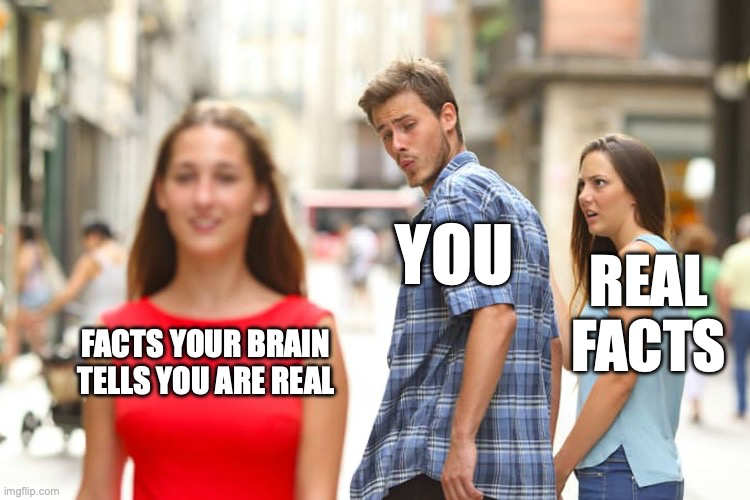
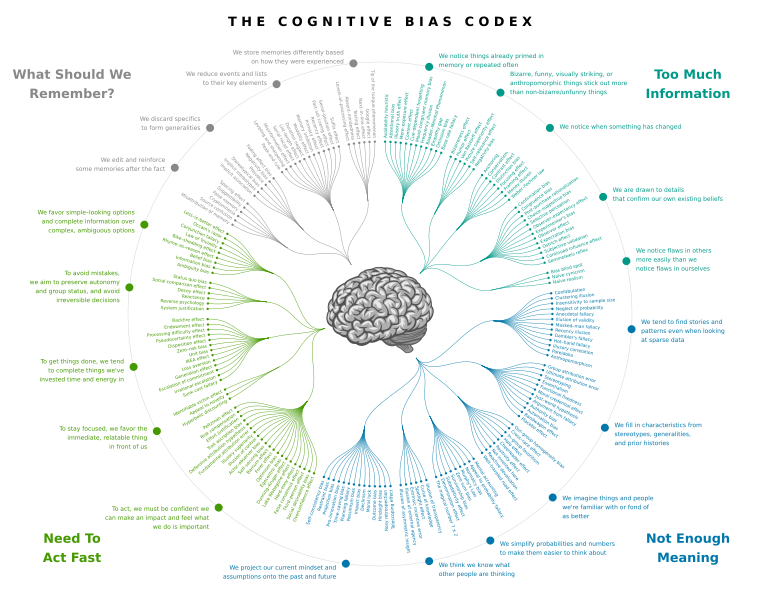
In my last blogpost, I linked a survey, which sadly no enough people answered, but what was it all about? I wanted to test something I read about while researching for my first blogpost: The bias blindspot. Explained simply this means, that we detect biases easier than in ourselves. Sadly not enough people took part, so I can’t make any assumptions on our study program. Still this is an important topic to talk about, this can pave the way for us to understand biases better and learn how to overcome their influence.
What is the Bias Blindspot exactly?
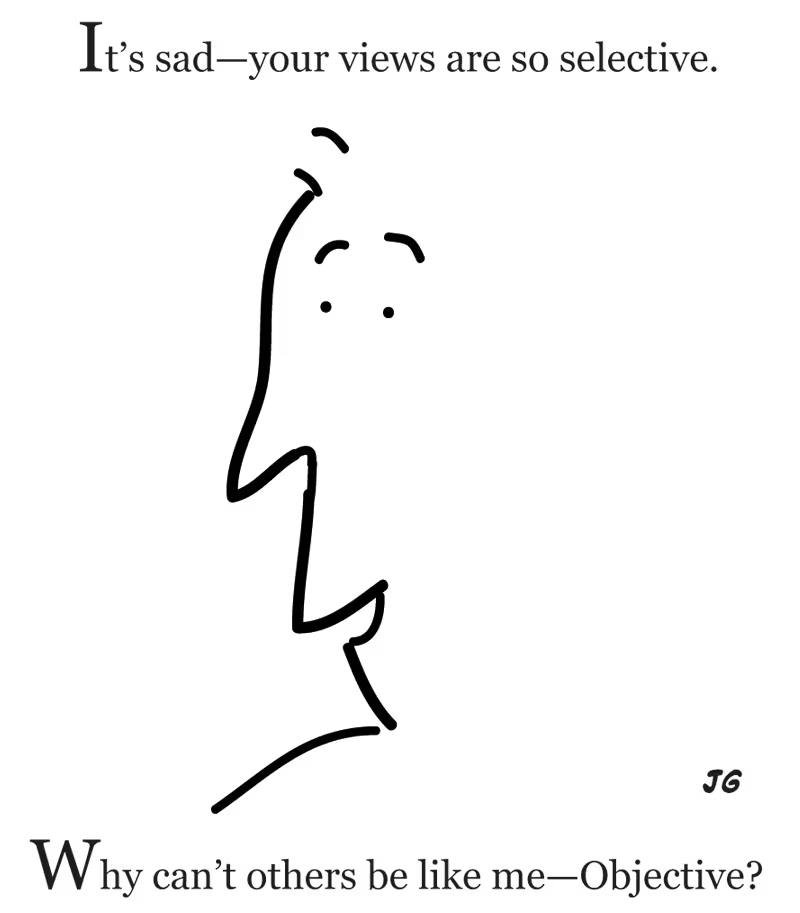
People are mostly unaware of their own biases, although they can easily detect them in the judgement of others. They tend to believe that they are less biased than their peers. There are many examples of this, that you will surely recognize, maybe you have already been in a similar situation before. If you ask physicians if gifts from pharmaceutical companies would influence their decision about what medicine they prescribe, most claim that they would not be influenced by this. If you turn the question around and ask if they think, other physicians would be influenced by gifts, most will agree. This disparity can occur in many different types of judgements or decisions. (cf. CMU)
A study found that only one out of 661 adults said, that they were more biased than the average person, all other 660 were sure, that they are less biased than the average person. In addition most people have no idea, how biased they actually are but are sure people around them are more biased than themselves. There is a good reason to why this happens, since society teaches us from a young age, that being biased is bad, we don’t want to see ourselves as people, who do bad things.(cf. IxDF)
The bias blindspot is a combination of two mental short cuts, the “introspection illusion” and “naive realism”. (cf. Scopelliti, Irene Scopelliti et. al.; pos. 1-2) The “introspection illusion”, says, that we tend to rely on our own thoughts and memories, when we think about whether we are biased or not. Although this introspection doesn’t reveal subconscious factors that are influencing us. (cf. Renascence) “Naive realism” describes, that we think we see the world how it is, without any distortion, although this is most likely not true. We underestimate the possibility that we are fooling ourselves. (cf. Medium a)
What is the influence of a Bias Blindspot?
The biggest problem of the bias is, if we operate within our blindspot, we are less likely to accept input from our peers and/or experts. In addition, we are less likely to benefit from education and training concerning our particular biases. (cf. IxDF) Not only that but we will underestimate the influence of our own biases, which can lead to skewed design decisions, that fail to cater to diverse user needs. Mitigating biases is essential to gain reliable insights into user behavior and preferences. (cf. Medium b)
So this means for UX Design, this means, that if we fail to learn about flaws in our design, we can’t create an experience that truly caters to the users needs. We might even make mistakes over and over again.
How can we overcome the Bias Blindspot?
First things first, overcoming bias is hard and takes a lot of work and self reflection. To overcome the bias blindspot is to be aware that it exists and it influences a lot of our decisions. Then to truly overcome the bias blind spot, UX designers have to engage in self-reflection, constantly challenge assumptions, and foster an open and inclusive design process. (cf. IxDF, cf. Medium b)
This is quite complex, and I want to give the topic of overcoming biases the room, that it deserves. There will be a follow up post about this topic.
Thanks for reading through my blog!
Leave a comment, if you are interested in this topic and tell me what you want to read about next! ;P
Fun Fact
While writing this blogpost, I realized, that I thought to myself: “That could never happen to me.”, a second later, I realized, that this was exactly what was going on. So even if you are aware that something like this exists, you will fall into your own traps, over and over again.