When I first tumbled across this topic it was mainly out of personal interest rather than the wish of taking on a year long journey through the depths of neurodesign. In 2022 during my Erasmus semester, between drinks and chips, I had a super interesting conversation with an international student from Sweden who previously studied psychology. He recommended me a book with the title “Neurodesign – What Design and Marketing can learn from neuroscience and psychology”. Funnily enough the author from this book was a professor at my home university, so as soon as I got back to Germany, I had a meeting with him. Afterwards I decided to take on this very new design discipline and turn it into my bachelor thesis. Pretty quickly I realized, that because of it’s depth and potential for a deeper understanding for any designer out there, this topic won’t be completely explored after my bachelor thesis. So what exactly is “Neurodesign”? A question some of you might probably ask yourselves and you’re not alone with this question.
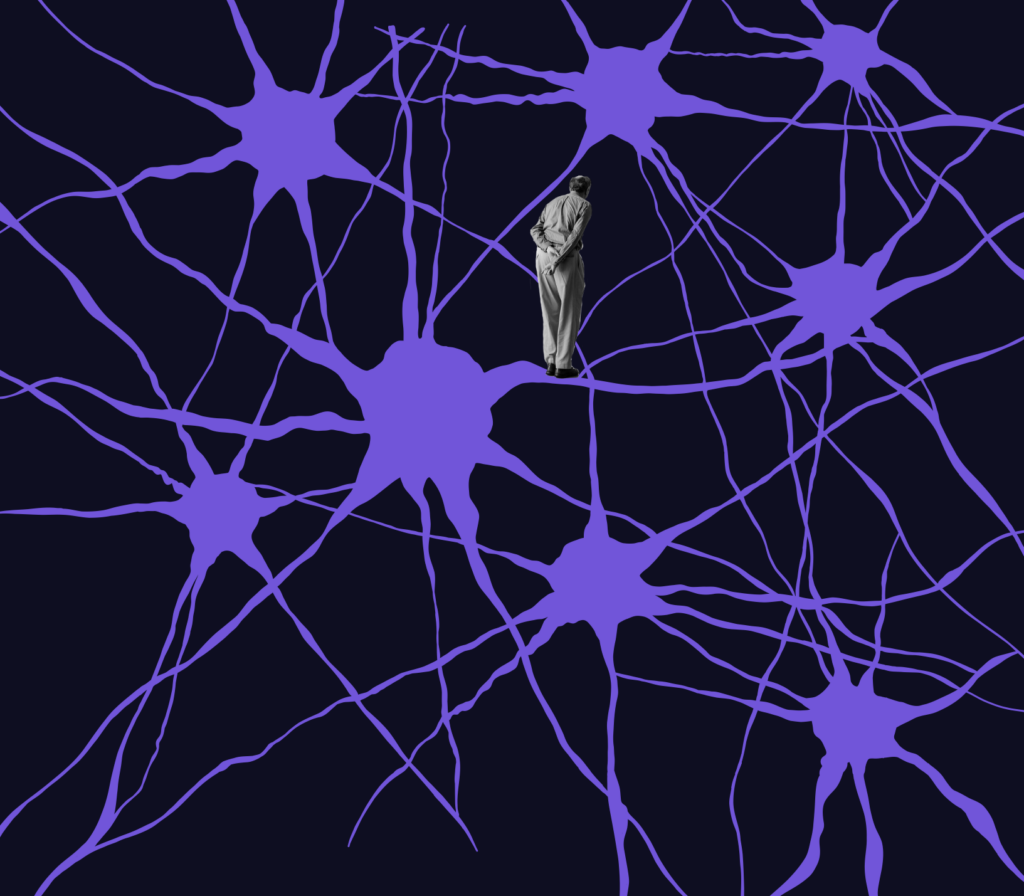
Neurodesign is an emerging field that draws on insights from neuroscience and it’s studies to create improved human centered designs. It recognizes the interplay between design elements and the cognitive patterns as well as functions of users and viewers. To make it a little bit more simple to understand- its basically finding out how our brains work and how to improve designs depending on environment, subconsciousness as well as psychology factors. A topic especially fascinating since we are living in a world where artificial intelligence is getting the overhand, even though we haven’t fully comprehended our own creativity and mind processes. A dangerous pathway we should not fully embrace. We should rather try and find a way to improve our knowledge about ourselves instead of escaping into an easy way out (AI).
In the ongoing research of my topic I want to shift my already existing methodical and scientific research into action, meaning that the exploration of neurodesign techniques in a practical form is my focus.
How can we change the way people perceive certain topics? How can we shift the perception of typography through certain impulses? For example, I stumbled upon a study where researchers in an academic environment tested the effects on students, when it came to the print quality of typography. As a design student the outcome of said study was especially surprising for me, because they found out that work sheets with less optimal print quality was crucial in the improvement of finishing given tasks. The group of students with worse print quality had to focus more on the contents hence why they performed better on the given taks handed to them. An outcome that changes the perception of all the principles we have learned in our studies , when it comes to aspects like readability, print quality and spacing. But why is this so interesting?
“We cannot solve problems with the same thinking we used when we created them.“
Albert Einstein
Thinking about the fact that most of the design principles we are following today found their origin in the late nineteenth century, the question for me is: Is there actual change really happening or are we just repeating what we already know works well enough? Reflecting on the work we see today not much has changed other than the technical advancements. Sure, concepts, trends and techniques might change but our fundamental way of thinking is still the same. Exploring Neurodesign in a more practical way might open new portals for a new and innovative way of designing not only for recipients but also for designers.