06 How Bias effects (UX) Design

“Life can only be understood backwards, but it must be lived forwards” ~ Soren Kierkegaard
A quote that is also very fitting, when talking about bias in design. Most of the time you can only understand, that a decision could have been made due to a bias, after the changes have already been deployed. Looking a bit deeper into the topic of biases and how they affect (UX) design, here are some interesting stories, how products turned out biased towards or against parts of their user groups.

1 – Spotify Shuffle Button

In a reddit form, a user requested, that the shuffle button in the Spotify app would have a circle around it, since they are color blind and have a hard time seeing the difference between the active and inactive shuffle button. (see picture below) (cf. Reddit) Put simply, this might have happened due to a blind spot affecting Spotifys design team. Not all people perceive colors the same way, some have a hard time, especially seeing red and green. Approximately 8% of men and 0.5% of women are affected by this type of color blindness. (cf. the Guardian) This simple change could be a big difference for certain subsets of users.
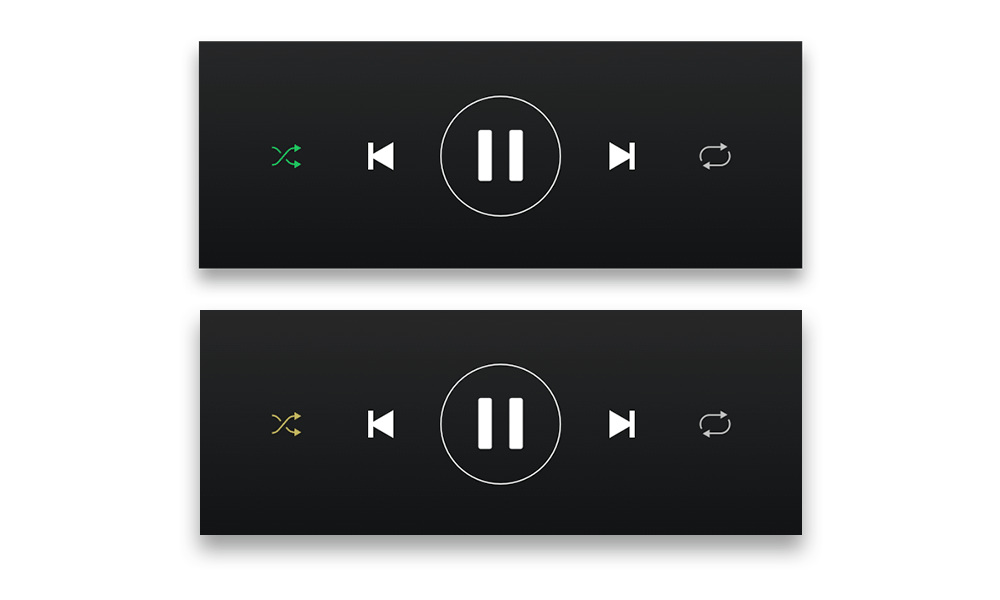
Approximation of how a colorblind user with protanopia color blindness may see the Shuffle button in Spotify. Source

2 – Cars and Seat Belts 

Here is a fun one, in the 1960s, most crash test for cars were done with crash test dummy, modeled after an average male physique (height, weight & stature). Therefore safety design decisions were mostly tailored to men, neglecting woman, children, smaller or bigger individuals. Although crash test have been conducted with “female” crash test dummies, but they were only placed in the passenger seat. (cf. User interviews) When talking about safety, one hopes, that all possible users have been considered.

This happened very likely due to the “sampling bias”: “Sampling bias occurs when a sample does not accurately represent the population being studied. This can happen when there are systematic errors in the sampling process, leading to over-representation or under-representation of certain groups within the sample.” (Simply Psychology)

3 – Facebooks “Year in Review” 

In 2014 Facebook introduced the “year in review” feature, which showed the user their best performing posts of the past year. The algorithm would identify the “best” posts/moments depending on the amount of likes. Now this is all fun and games, until you see a lost loved one in your year review. While the algorithm might work for most users, some will have a different, less satisfying experience. (cf. Forbes)

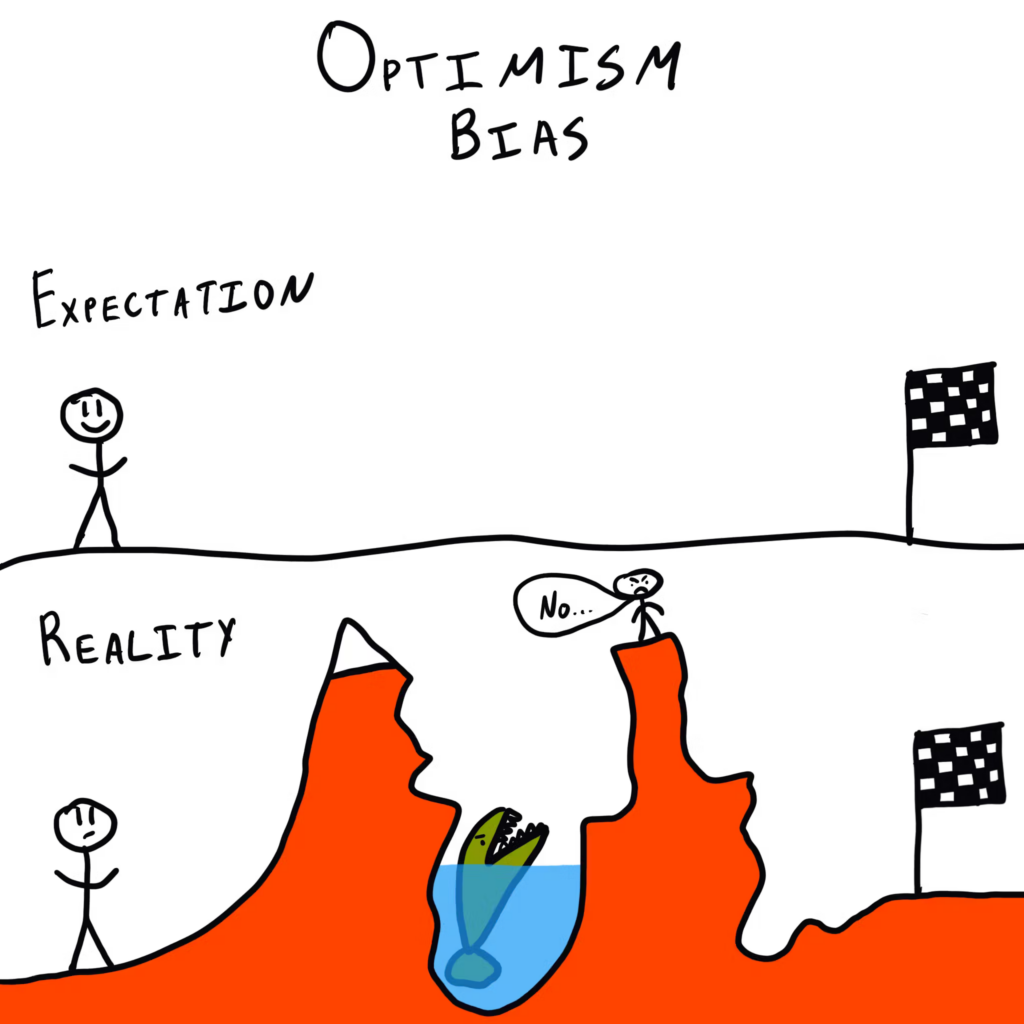
Who ever had the idea for this feature, handed their bias over to the algorithm who automatically creates these reviews. Due to the optimism bias people to believe that they are less likely to experience negative events and more likely to experience positive ones. This bias can lead to overly optimistic expectations about the future, underestimating risks, or failing to prepare for potential challenges. Designers assumed that users’ most engaged photos and moments would always be joyful, leading to a feature that unintentionally surfaced painful memories for some users.(cf. The Decision Lab)
Source

These are just three examples of how biases can affect design and there are many more, this was just the beginning. Although I have noticed, that a lot of bias related “fails” happened, because the designers or researchers focused on one part of their users. There is another bias, that might be the basis for all of this: The majority bias, cognitive bias where people focus on the larger or more visible part of a group, often overlooking minority perspectives. This bias assumes the majority is representative or correct, leading to the neglect of smaller groups or less common viewpoints. Which could lead to neglect of a bunch of smaller groups, which all together would form the majority. (cf Nature)


The Attention Economy

The Attention Economy: Designing for a Limited Resource

In the modern digital landscape, attention has become one of the most sought-after resources. The term “attention economy” refers to the economic principle where human attention is treated as a scarce and valuable product. In an age of information overload, countless platforms, apps, and advertisements compete to capture and hold our focus.

This concept, first popularized by economist and psychologist Herbert A. Simon (source at the end if you are interested), explains that an abundance of information creates a corresponding scarcity of attention. As our cognitive capacity remains finite, the demand for attention outpaces its availability. For businesses, capturing this resource often translates directly into revenue, as more time spent engaging with a product or service typically leads to higher advertising revenue, data collection, and user loyalty.

However, this relentless pursuit of attention poses challenges – not just for users but also for designers tasked with creating meaningful and ethical experiences.

How the Attention Economy Shapes Digital Experiences

The attention economy fundamentally shapes the way platforms and apps are designed. Features like infinite scrolling, autoplay videos, push notifications, and personalized recommendations are engineered to keep users engaged. Social media platforms such as Instagram, TikTok, and YouTube are particularly adept at exploiting these mechanisms. By using algorithms that surface highly relevant or emotionally charged content, they encourage users to spend hours scrolling, swiping, and clicking.

While these strategies are effective in increasing user engagement, they often lead to unintended consequences, such as:

  • Cognitive Overload: Constant exposure to information fragments makes it harder for users to focus or prioritize tasks.
  • Decreased Well-Being: Excessive engagement with digital platforms has been linked to anxiety, stress, and reduced mental health.
  • Erosion of Trust: Practices like dark patterns (e.g., deliberately misleading interfaces) undermine user confidence in technology.

The attention economy doesn’t just impact individual users – it influences society at large. Shortened attention spans, reduced capacity for deep work, and addictive behaviors are just a few of the cultural shifts driven by this phenomenon.

The Ethical Challenges of Competing for Attention

Designing within the attention economy comes with a significant ethical dilemma: Should businesses prioritize engagement at all costs, or should they take responsibility for the long-term impact of their designs on users?

Many platforms measure success using metrics like screen time, click-through rates, and daily active users. These KPIs encourage designs that exploit cognitive biases, such as:

  • The Zeigarnik Effect: Users feel compelled to complete tasks or consume unfinished content, such as an autoplay series or a “you’re almost there” progress bar.
  • FOMO (Fear of Missing Out): Platforms use notifications and alerts to create urgency, ensuring users return frequently to avoid missing updates or promotions.
  • Variable Rewards: Like a slot machine, apps randomize rewards (e.g., likes, comments, or surprises) to keep users hooked.

Designing Responsibly in the Attention Economy

Ethical design offers an alternative to the exploitative practices often associated with the attention economy. By focusing on user empowerment and long-term value, designers can create experiences that respect attention rather than monopolize it.

1. Reduce Cognitive Overload
Simplifying interfaces and prioritizing information helps users navigate digital spaces without becoming overwhelmed. For example, clear navigation menus and focused calls-to-action guide users effectively, reducing unnecessary distractions.

2. Encourage Mindful Engagement
Instead of maximizing screen time, platforms can promote conscious usage. Features like YouTube’s “Take a Break” reminders or Instagram’s “You’re All Caught Up” notification show how small interventions can nudge users toward healthier habits.

3. Avoid Dark Patterns
Transparency in design builds trust. For instance, making it easy to unsubscribe from a service or turn off notifications respects users’ autonomy, fostering loyalty over time.

4. Redefine Success Metrics
Moving away from engagement-focused KPIs toward metrics like user satisfaction, retention based on value, or task completion rates can help align business goals with ethical practices.

5. Design for Disengagement
Ironically, designing ways for users to log off or take breaks can create a more positive user experience. When users feel that a product respects their time, they are more likely to return willingly.

The Future of the Attention Economy

As awareness of the attention economy grows, users are becoming more discerning about how they spend their time online. This shift presents an opportunity for designers and businesses to rethink their approach. Emerging trends, such as digital wellness tools, context-aware systems, and AI-driven personalization, offer the potential to create user experiences that align with ethical standards.

The future of the attention economy doesn’t have to be about exploitation. By respecting the finite nature of human focus, designers can build systems that prioritize user well-being, fostering trust, satisfaction, and sustainable engagement.

Sources


Herbert A. Simon. Designing Organizations for an Information-Rich World (1971)

Nir Eyal.Hooked: How to Build Habit-Forming Products (2014)

Tristan Harris and the Center for Humane Technology: https://www.humanetech.com/

Sweller, J. (1988). Cognitive Load During Problem Solving: Effects on Learning. Cognitive Science, 12(2)

Daniel Kahneman. Thinking, Fast and Slow (2011)

https://medium.com/@Tathagat8889/attention-economy-designing-for-users-in-a-world-of-constant-distractions-30bda1160538#:~:text=The%20Future%20of%20Attention%2DAware,but%20also%20meaningful%20and%20mindful.

https://www.nngroup.com/articles/attention-economy