#2.02 Designing for Focus in an Age of Distraction

When I sit down to do work, I often only find myself deep in a rabbit hole of Reels or TikToks or reorganizing my phone, only after 30 minutes into the task. And to be honest even while working on this blog post I got distracted several times by my phone. This is why I decided to explore the topic of distraction in a digital life but I think it is also broadly relevant, since I feel like a lot of people struggle with getting distracted easily these days.

Are we living in an attention crisis?

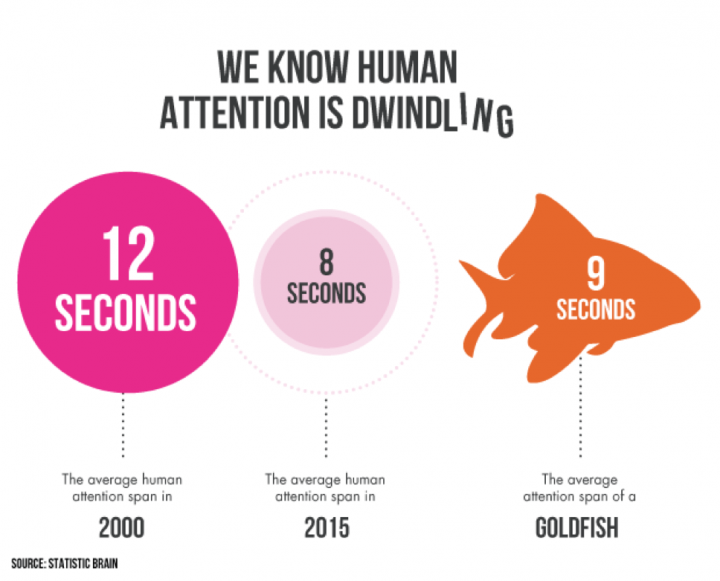
There is a rising discourse around attention crisis, brain rot and digital burnout, since our days are increasingly fragmented by notifications, being constantly online and temptation of endless scrolls. In his book Stolen Focus, Johann Hari, talks about the effects of this crisis such as reduced productivity, heightened stress levels and even a weakening of our capacity to build deep and meaningful relationships. [1] A study from Microsoft says that our attention span shrank from 12 seconds in 2000 to 8 seconds nowadays, leading to humans having a shorter attention span than a goldfish. [2]

On average, people spend 4.5 hours a day on their phones [3], with 2.5 of those hours dedicated to social media. [4] Big tech companies like Meta and Google generate revenue by maximizing user engagement, turning out attention into a profitable business model. As a result, we get bombarded with dopamine-driven feedback loops that make it extremely hard to put the phone away to concentrate on a single task. [5]

Spending so much time on social media and doom scrolling for hours also affects people. In October 2024 “Brain Rot” was chosen for the Oxford Word of the Year. Brain Rot refers to the cognitive decline and mental exhaustion experienced by individuals, particularly adolescents and young adults, due to excessive exposure to low-quality online materials, especially on social media.“ [6]

Brain rot is an emerging concern among adolescents and young adults navigating today’s tech-saturated word. Marked by symptoms such as brain fog and reduced concentration, this condition seems to worsen with excessive screen time and constant exposure to trivial online content, ultimately contributing to a decline in cognitive function. [6]

Creative professionals like designers, writers, artists, musicians need uninterrupted time to enter a state of flow, where ideas can surface and evolve without constant context-switching. But even with productivity tools, focus apps, and “Do Not Disturb” settings, our smartphones still act like behavioral magnets. They promise us connection, innovation, and escape and they’re designed to be hard to ignore. Notifications, dopamine loops, and habit-forming UX patterns pull us away from the present moment, often without us realizing it.

So, the central question guiding my prototype this semester is:
How might a tangible interface reduce smartphone-related distractions for creative professionals?

The Concept: A Lamp That Helps You Focus

Rather than building yet another app to solve the problem, I want to explore a physical, ambient object that supports intention and presence in a gentle, non-coercive way. My prototype will be a lamp/phone dock – a small, aesthetically calming object that lives on your desk and invites you to temporarily “put the phone away” without demanding rigid rules or screen-time shaming.

The lamp will produce a gentle, ambient light when the phone is in the dock; it may change color gradually to show how much time was spent in focused mode. The lamp may respond softly by changing its color temperature, dimming slightly, or providing a quite auditory cue if the phone is taken out too often. These feedback loops are intended to raise awareness, encourage behavior, and support the user’s initial goal of remaining focused on their job rather than to punish.

Why a Tangible Interface?

I’m interested in how tangible interaction, physically placing the phone somewhere, seeing a change in your environment, can help ritualize focus in a way that’s more embodied and emotionally resonant than tapping a digital button.

What’s next?

In my next blogpost I want to look at some theories and frameworks such as:

  • Theory of Flow
  • Calm Technology
  • Persuasive Design

After getting into those theories and frameworks I am going to start with the first simple prototype.


My goal isn’t to eliminate distractions entirely, that’s unrealistic and probably undesirable. Instead, I’m curious about how design can create moments of pause. How can we introduce friction in a respectful, aesthetic, and emotionally intelligent way? How might we design tools that gently invite reflection, rather than enforce rules?

Literature

[1] Johann Hari, Stolen Focus: Why You Can’t Pay Attention – and How to Think Deeply Again (New York: Crown Publishing, 2022)

[2] Microsoft Canada Consumer Insights Team. Attention Spans: Consumer Insights. Spring 2015. Toronto: Microsoft Canada.

[3] Fabio Duarte, “Time Spent Using Smartphones (2025 Statistics),” Exploding Topics (blog), June 5, 2025, https://explodingtopics.com/blog/smartphone-usage-stats.

[4] Josh Howarth, “Worldwide Daily Social Media Usage (New 2025 Data),” Exploding Topics (blog), June 5, 2025, https://explodingtopics.com/blog/social-media-usage.

[5] Shehzad Batliwala Do Mgm, “The Attention Crisis: A Visionary’s Perspective on the Stolen Focus Epidemic,” Medium, September 10, 2023, https://medium.com/@visionarydoc/the-attention-crisis-a-visionarys-perspective-on-the-stolen-focus-epidemic-eff6692abbf9.

[6] Ahmed Mohamed Fahmy Yousef et al., “Demystifying the New Dilemma of Brain Rot in the Digital Era: A Review,” Brain Sciences 15, no. 3 (March 7, 2025): 283, https://doi.org/10.3390/brainsci15030283.


The Attention Economy

The Attention Economy: Designing for a Limited Resource

In the modern digital landscape, attention has become one of the most sought-after resources. The term “attention economy” refers to the economic principle where human attention is treated as a scarce and valuable product. In an age of information overload, countless platforms, apps, and advertisements compete to capture and hold our focus.

This concept, first popularized by economist and psychologist Herbert A. Simon (source at the end if you are interested), explains that an abundance of information creates a corresponding scarcity of attention. As our cognitive capacity remains finite, the demand for attention outpaces its availability. For businesses, capturing this resource often translates directly into revenue, as more time spent engaging with a product or service typically leads to higher advertising revenue, data collection, and user loyalty.

However, this relentless pursuit of attention poses challenges – not just for users but also for designers tasked with creating meaningful and ethical experiences.

How the Attention Economy Shapes Digital Experiences

The attention economy fundamentally shapes the way platforms and apps are designed. Features like infinite scrolling, autoplay videos, push notifications, and personalized recommendations are engineered to keep users engaged. Social media platforms such as Instagram, TikTok, and YouTube are particularly adept at exploiting these mechanisms. By using algorithms that surface highly relevant or emotionally charged content, they encourage users to spend hours scrolling, swiping, and clicking.

While these strategies are effective in increasing user engagement, they often lead to unintended consequences, such as:

  • Cognitive Overload: Constant exposure to information fragments makes it harder for users to focus or prioritize tasks.
  • Decreased Well-Being: Excessive engagement with digital platforms has been linked to anxiety, stress, and reduced mental health.
  • Erosion of Trust: Practices like dark patterns (e.g., deliberately misleading interfaces) undermine user confidence in technology.

The attention economy doesn’t just impact individual users – it influences society at large. Shortened attention spans, reduced capacity for deep work, and addictive behaviors are just a few of the cultural shifts driven by this phenomenon.

The Ethical Challenges of Competing for Attention

Designing within the attention economy comes with a significant ethical dilemma: Should businesses prioritize engagement at all costs, or should they take responsibility for the long-term impact of their designs on users?

Many platforms measure success using metrics like screen time, click-through rates, and daily active users. These KPIs encourage designs that exploit cognitive biases, such as:

  • The Zeigarnik Effect: Users feel compelled to complete tasks or consume unfinished content, such as an autoplay series or a “you’re almost there” progress bar.
  • FOMO (Fear of Missing Out): Platforms use notifications and alerts to create urgency, ensuring users return frequently to avoid missing updates or promotions.
  • Variable Rewards: Like a slot machine, apps randomize rewards (e.g., likes, comments, or surprises) to keep users hooked.

Designing Responsibly in the Attention Economy

Ethical design offers an alternative to the exploitative practices often associated with the attention economy. By focusing on user empowerment and long-term value, designers can create experiences that respect attention rather than monopolize it.

1. Reduce Cognitive Overload
Simplifying interfaces and prioritizing information helps users navigate digital spaces without becoming overwhelmed. For example, clear navigation menus and focused calls-to-action guide users effectively, reducing unnecessary distractions.

2. Encourage Mindful Engagement
Instead of maximizing screen time, platforms can promote conscious usage. Features like YouTube’s “Take a Break” reminders or Instagram’s “You’re All Caught Up” notification show how small interventions can nudge users toward healthier habits.

3. Avoid Dark Patterns
Transparency in design builds trust. For instance, making it easy to unsubscribe from a service or turn off notifications respects users’ autonomy, fostering loyalty over time.

4. Redefine Success Metrics
Moving away from engagement-focused KPIs toward metrics like user satisfaction, retention based on value, or task completion rates can help align business goals with ethical practices.

5. Design for Disengagement
Ironically, designing ways for users to log off or take breaks can create a more positive user experience. When users feel that a product respects their time, they are more likely to return willingly.

The Future of the Attention Economy

As awareness of the attention economy grows, users are becoming more discerning about how they spend their time online. This shift presents an opportunity for designers and businesses to rethink their approach. Emerging trends, such as digital wellness tools, context-aware systems, and AI-driven personalization, offer the potential to create user experiences that align with ethical standards.

The future of the attention economy doesn’t have to be about exploitation. By respecting the finite nature of human focus, designers can build systems that prioritize user well-being, fostering trust, satisfaction, and sustainable engagement.

Sources


Herbert A. Simon. Designing Organizations for an Information-Rich World (1971)

Nir Eyal.Hooked: How to Build Habit-Forming Products (2014)

Tristan Harris and the Center for Humane Technology: https://www.humanetech.com/

Sweller, J. (1988). Cognitive Load During Problem Solving: Effects on Learning. Cognitive Science, 12(2)

Daniel Kahneman. Thinking, Fast and Slow (2011)

https://medium.com/@Tathagat8889/attention-economy-designing-for-users-in-a-world-of-constant-distractions-30bda1160538#:~:text=The%20Future%20of%20Attention%2DAware,but%20also%20meaningful%20and%20mindful.

https://www.nngroup.com/articles/attention-economy

Scenarios and Use Cases

How Short Attention Spans Impact Everyday Interactions

Picture this: You’re on a flight, settling into your seat, and the safety instructions start. In the past but still even today at short flights or cheap ones without a screen, flight attendants stand in the aisle demonstrating seatbelt use and emergency exits. Most passengers barely pay attention in this case. Now, airlines like Air New Zealand or Qatar Airlines play high-quality safety videos featuring celebrities, humor or even movie themes to capture your focus. It’s no longer just about compliance – it’s about engagement.

This is just one of many situations where attention makes all the difference. Let’s explore real-world use cases where shortened attention spans have reshaped how information is delivered and understood.

Scenario 1: Safety in Airplanes

In-flight safety instructions are crucial, yet passengers often ignore them. Airlines responded by turning mandatory safety briefings into mini-movies. Using famous actors, creative storytelling, and even animation, they transform what could be monotonous into something entertaining.

Use Case Example:
Qatar’s safety video has featured Kevin Hart. By tapping into comedy and acting, they ensure passengers actually pay attention – potentially saving lives in an emergency.

Scenario 2: Manuals

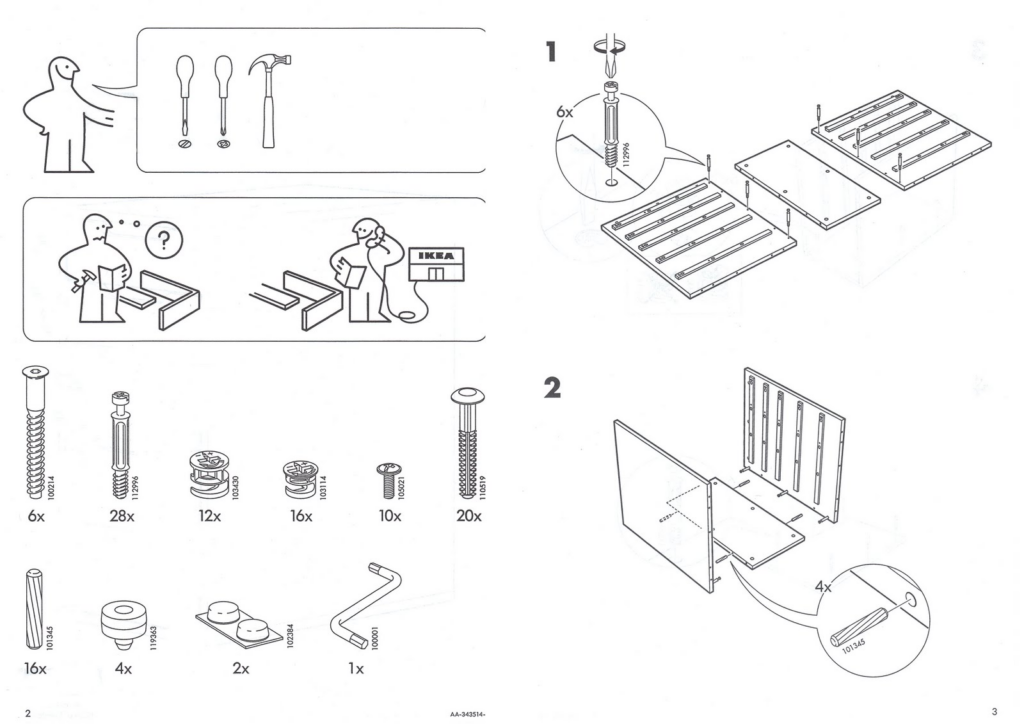
Instruction manuals have a bad reputation for being overwhelming and full of technical language. With shrinking attention spans, fewer people want to wade through dense text to figure out how to assemble furniture or install snow chains.

Use Case Example:
IKEA’s picture-based assembly instructions are a brilliant response to this challenge. By using simple visuals and step-by-step illustrations, they eliminate the need for lengthy explanations, making the process faster and frustration-free. Similarly, many car manufacturers now include video tutorials for tasks like attaching snow chains, further reducing cognitive load.

Scenario 3: Learning in the Digital Age

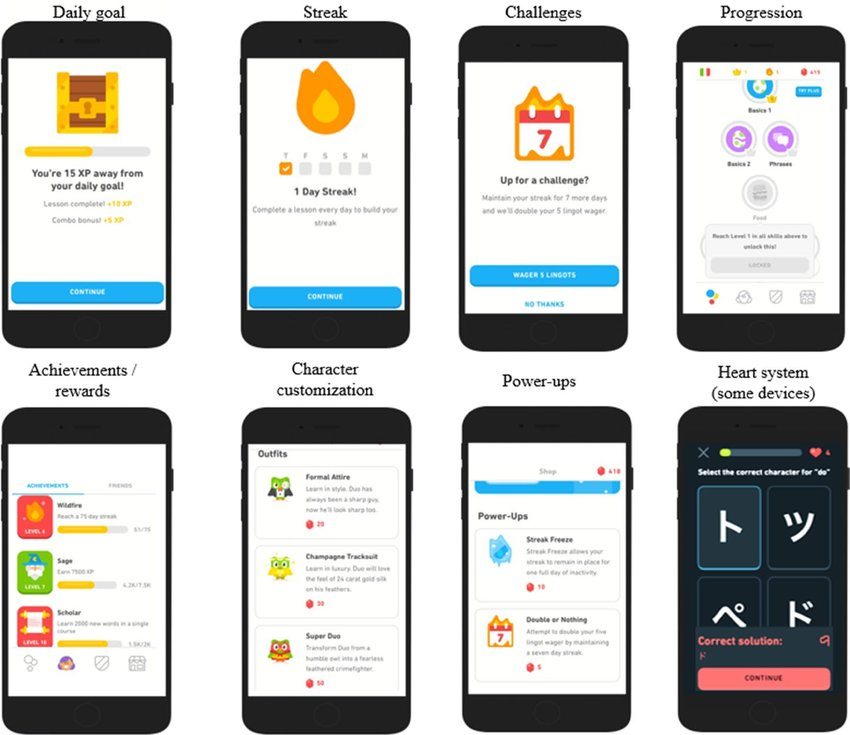
Attention challenges aren’t limited to entertainment or shopping, they’re reshaping education too. Microlearning apps like Duolingo and Blinkist are thriving because they align with modern attention spans, breaking complex topics into bite-sized lessons that fit into busy lives.

Use Case Example:
Duolingo uses gamification to keep users engaged, with short exercises, streaks, and rewards. Each lesson is designed to feel achievable, ensuring users stay motivated without feeling overwhelmed.

Why These Scenarios Matter

Each of these examples highlights how attention plays a critical role in real-life situations. From life-saving instructions to everyday usability, the ability to capture and guide attention isn’t just nice to have, it’s essential. Designers and creators must embrace these evolving behaviors to communicate effectively and create better experiences.

Stay tuned for the next post, where we’ll dive deeper into the ethical dilemmas of designing for attention.

Literature:

Safety Video with Basketball Team:

Flight attendant performs funny safety routine:
https://www.youtube.com/watch?app=desktop&v=JEyp2p-bzcU&t=65s

Qatar Airways with actors like a comedy movie:
https://www.youtube.com/watch?v=SNtlxmtH3ZA

IKEA:
https://www.ikea.com/

Duolingo:
https://www.researchgate.net/figure/duolingos-gamification-elements_fig1_351746804

What is Attention and why is it shrinking?

As humanity shifts more into the digital universe where the chances of distraction increase by the minute, understanding the science of attention is already a requirement. Attention is not a simple mental process that can be neglected, rather, it is the basic framework that we use to move, engage with and comprehend any given digital experience. For instance, designers need to have a sound understanding of attention so as to estimate the boundaries are designing user-interfaces that are friendly, engaging, and effective.

Types of Attention and Their Design Relevance

In psychology, attention has been subdivided into many forms and the following two are applicable in design:

Transient Attention

This is our brain’s quick concentration on anything for a micro duration, for example, how one would look at a notification for contact.

Relevance in Design: Many products define their features as impression creation. In such cases, content designers need to have simple and distinct content which is easy for users to focus on.

Sustained Attention

This means the ability of someone to concentrate with little or no distraction for a long period of time.

Relevance in Design: For elements that require more time like reading an article or filling forms. The standard interface design needs to be directly proportional to the time spent on navigating through several elements within that interface.

In the current attention economy, both of these types are under a lot of distress as users start adapting to new fast-moving platforms such as tiktok and instagram among others.

The Decrease of Attention in the Digital Era (Study Analysis)

Microsoft (2015), in a study that is much cited and discussed, claims that the average human attention span reduced from twelve seconds in the year 2000 to eight seconds. Not every individual agrees with these numbers, but what is unquestionable is the fact that we are getting worse at concentrating on a single thing. It is apparent that this regression is attributable to a number of interrelated factors:

Overconsumption: We are overfeeded with content from different devices and different mediums.

Desire of Immediate Satisfaction: There is a strong desire to interact with the app immediately providing quick reward as is the case with TikTok.

Cognitive Overload: There are too many alternatives or sources of stimulation which in turn causes our brains to evolve and opt for the quicker, more superficial engagement instead of deep thinking.

This requires, on the one hand, attention that needs to be drawn to the product, but on the other, there is the need to minimize user confusion.

Psychological Frameworks In Design

Cognitive Load: Psychologist John Sweller concept describes the information processing burden of an individual. Interfaces that are too busy or complex can quickly exhaust users, leading to frustration and drop-off.
Design Tip: Trim interfaces down and extract major functional purposes. Avoid any unnecessary interference.

Selective Attention: Our brains filter out irrelevant stimuli to focus on what’s important. Design Tip: Apply and yes even exploit the basic principles of design which are contrast, hierarchy and space to the users attention.

Attention Span Metrics: Working memory is always situational. For instance:
Social Media: Attention grabbing takes 1-3 seconds.
Reading: A user scans through content with a view of determining whether that worth reading or not.

The same set of principles affirms the need to design interfaces adapted to the short-lived focus of users as well as those supporting longer attention span when necessary.

Consequences for Designers

A profound grasp of attention is far more than an intellectual activity, it determines the success or failure of a digital product. Considering the fact that users are flooded with a range of stimuli, designers should understand that attention is a scarce commodity. This is a necessary consideration and failure to take it into account can result in:

User Drop-Off: Interfaces that fail to capture or sustain attention lose users quickly, often before they even engage meaningfully with the product.

Missed Opportunities: Any pertinent information, an urgent request or advertise, or some other valuable content may be missed provided it does not correspond to the user’s attention span.

Cognitive Overwhelm: If a person is exposed to overly intricate designs they will most probably become fatigued and that will lower their satisfaction and degree of convenience.

No one is saying that all the attention can be focused on the design, understanding the psychology users will be using to view and interact with the offered products is equally important, to put it into one’s design, all of these factors make the correct understanding of interaction between the elements and devising of possible problems a vital issue.

Literature:

Department of Education; Sweller, John: Cognitive Load Theory in Practice.

Microsoft Attention Span Research (2015):
chrome-extension://efaidnbmnnnibpcajpcglclefindmkaj/https://dl.motamem.org/microsoft-attention-spans-research-report.pdf

Smashing Magazine:
https://www.smashingmagazine.com/2020/09/designing-for-attention/

PMC:
https://pmc.ncbi.nlm.nih.gov/articles/PMC3882082

Interaction Design Foundation:
https://www.interaction-design.org/literature/topics/cognitive-load?srsltid=AfmBOorxdSOspYzd9iiUNoqJMX98LoCbl-tSMbZI7iAFoIc9BH2h2D69

Designing for short attention spans by reducing cognitive load in UI/UX Design

In a world where users attention spans are becoming increasingly shorter, the question arises:
How can designers create digital experiences that thrive in this new age of the attention economy?
Modern platforms like TikTok and Instagram Reels have fostered a culture where content must engage users within seconds. This shift not only changes how people consume media but also how they interact with digital products.

My Personal Motivation

I chose this topic because it is not only timely but also a crucial phenomenon shaping the future of UI/UX design. Understanding how to design for evolving user behaviors is not just about keeping up with trends, it’s about creating experiences that are inclusive, engaging and user-friendly. On a personal level, I’ve always been intrigued by the intersection of psychology and design. How do visual and interactive elements influence what we focus on? How can we use design to reduce frustration and enhance usability? These are questions that fuel my curiosity and drive my research. In this blog, I will explore (for now, I’ll see where this topic takes me) the challenges and opportunities posed by shortened attention spans and discuss smart design strategies that can deliver optimal user experiences.


Why This Topic Is More Relevant Than Ever

The relevance of designing for shortened attention spans has never been greater. As digital consumption habits evolve, designers are facing unprecedented challenges and opportunities. Here’s why this topic matters today:

Modern Digital Behaviors: As users attention spans are impacted by fast-paced platforms (TikTok, Instagram), they bring these expectations to every app or website they interact with. UI/UX design needs to adapt to keep users engaged without overwhelming them.

Optimizing User Performance: Reducing cognitive load helps users focus on key tasks, leading to better performance, conversions, and overall satisfaction.

The Rise of Short-Form Content

Platforms like TikTok, Instagram Reels, and YouTube Shorts have redefined how users consume media. According to a report by Statista (2023), TikTok users spend an average of 95 minutes per day on the app, often scrolling through hundreds of short videos. This trend has created an expectation for quick, engaging interactions across all digital platforms.
Users now demand:

  • Immediate gratification
  • Minimal friction in navigation
  • Engaging visuals that deliver value in seconds

Cognitive Overload in the Digital Age

The constant exposure to digital stimuli has a measurable effect on our cognitive capacities. Studies, such as one conducted by Microsoft (2015), suggest that the average human attention span has dropped from 12 seconds in 2000 to 8 seconds in 2015. This number is likely even lower today due to the rise of short-form content platforms.

For designers, this means that traditional, text-heavy or overly complex interfaces are losing effectiveness. The challenge is to simplify interactions without sacrificing functionality or depth.

Economic Impact

Shortened attention spans have direct implications for businesses:

  • E-commerce Conversion Rates: According to a Baymard Institute Report (2023), nearly 70% of online shopping carts are abandoned, often due to overwhelming or confusing interfaces.
  • Ad Revenue: Digital ads are now designed to capture attention within the first few seconds as users skip or scroll past them if they don’t immediately engage

Designers who fail to address these shifts risk losing users, revenue and relevance in competitive markets.

The Shift in Learning and Education

Attention spans are also affecting how people learn and process information. The rise of microlearning platforms like Duolingo or Blinkist reflects the need for bite-sized, focused content that aligns with modern user behaviors. Designing for shorter attention spans isn’t just about entertainment, it’s about enabling users to achieve their goals more effectively.

The Attention Economy

The concept of the attention economy – where attention is treated as a finite resource has become a central topic in UI/UX design. Every app, website and platform is competing for user attention, often at the expense of user well-being. The challenge is to design ethically, balancing engagement with cognitive health. When discussing “user well-being” I plan to dedicate an entire blog post to exploring the ethical implications and the darker side of digital products and platforms that exploit attention in harmful ways. This includes practices like Netflix Kids use of gamification to encourage binge-watching by rewarding children with patches for every movie they complete, highlighting how attention can be manipulated through design. But stay tuned for this one.

Why Designers Must Act Now

Addressing these issues isn’t optional, it’s a necessity. Designers must:

  1. Adapt to Changing Behaviors: Interfaces must align with the fast-paced consumption habits of today’s users.
  2. Reduce Cognitive Load: Simplified designs help users focus on key tasks and avoid frustration.
  3. Ensure Ethical Design Practices: Designers have a responsibility to create experiences that are engaging but not exploitative.


If this topic sparks your interest, join me on this journey as we delve deeper into the nuances of attention spans and design in the upcoming blog posts.

Literature:

Statista (2023)
https://www.statista.com/topics/8309/tiktok-marketing/#topicOverview

Microsoft Attention Span Study (2015)
chrome-extension://efaidnbmnnnibpcajpcglclefindmkaj/https://sherpapg.com/wp-content/uploads/2017/12/MAS.pdf

Baymard Institute Report (2023)
https://baymard.com/research/checkout-usability

Interesting talk about Designing for Short Attention Spans by Victor Yocco (UX Burlington 2019)
https://www.youtube.com/watch?v=6WBS6YYMAcE