Summary of the Research in Major Events Across All Continents

My research on major events across continents reveals a common pattern: many events maintain consistent corporate identities (CI) or logo designs, with only minor contextual changes over time.

Traditional festivals and cultural events, such as the Lunar New Year in Asia, Diwali in India, Holi, or Lantern Festivals, as well as European events like the Oktoberfest, rely on timeless, culturally rooted visuals that rarely evolve, preserving their heritage and recognition. Similarly, iconic modern festivals like Coachella (USA) and Tomorrowland (Belgium) maintain consistent branding, occasionally tweaking color schemes or adding seasonal updates, while the core identity remains stable.

In contrast, globally oriented or rotating events frequently embrace evolving designs to reflect their host cultures or respond to societal trends. Sporting events like the Olympics, FIFA World Cup, Asian Games, and African Cup of Nations redesign their logos and visual identities for each edition, incorporating local cultural elements and modern design trends.

Similarly, political gatherings such as G7 Summits or Climate Conferences (COP) adapt their branding to highlight global priorities like sustainability, innovation, or collaboration, often influenced by the host nation’s identity.

Overall, the balance between stability and adaptability varies across events. Traditional and brand-focused events prioritize continuity for global recognition, while international and rotating events use dynamic design languages to capture the diversity, values, and trends of their specific contexts. This duality reflects how events worldwide align with societal and cultural changes while maintaining their distinct identities.
Evolution of Graphic Design (1980s – 2020s)

1980s: Postmodernism and Abundance

Characteristics:
Bright neon colors, cluttered patterns, geometric shapes and 3D elements. The design was strongly influenced by pop culture, the Memphis design style and the onset of commercialization.

Examples:
MTV VMA branding, posters with surreal compositions, sports logos with eye-catching shapes.

Influence on events:
Logos became more colorful and eye-catching, e.g. at the 1984 Olympic Games in Los Angeles, which relied heavily on sponsorship and visual presence.


1990s: Minimalism and Digital Turnaround

Characteristics:
Return to minimalist designs, focus on clean lines, vector graphics and early computer-generated designs. The rise of the internet had a significant influence on design.

Examples:
Introduction of software such as Adobe Photoshop and Illustrator, simple websites with static designs.

Influence on events:
Logos became simpler and cross-media applicable to work equally well in print and digital media. Examples include the simple designs of the FIFA World Cup and the increasing digital representation of COP logos.


2000s: Globalization and Brand Identity

Characteristics:
Consistent branding becomes more important, designs become more flexible to adapt to global markets. Sustainability and user-friendliness come to the fore.

Examples:
Flat design begins to establish itself, first adaptive logos, unified brand identities.

Influence on events:
Global events such as the Olympic Games or the FIFA World Cup began to rely on uniform visual identities in order to create strong brand loyalty. Sustainability became a significant topic, especially at climate conferences.


2010s: Flat Design and Digital Mobility

Characteristics:
Flat design becomes the standard, with simple, clear shapes, without shading or 3D effects. Designs become responsive and mobile-optimized.

Examples:
Google Material Design, logos that can adapt to different media (responsive logos).

Influence on events:
Designs were thought digital-first, flexible for social media and mobile devices. Examples are the variable logos of the Olympic Games or interactive displays at the World Expos.


2020s: Sustainability, Diversity and Dynamism

Characteristics:
Focus on sustainability, diversity, wokeness and emotionally appealing designs. Organic shapes, natural colors and variable typography characterize the image.

Examples:
Logos that adapt dynamically (e.g. animated logos), include everyone and focus on community.

Influence on events:
Events such as the COP climate conferences and World Expos integrate environmental awareness or its visualisation directly into their visual identity. Modern logos reflect global diversity and flexibility. Formerly expressive logos are becoming calmer, more generic (MTV VMAs).


Summary as timeline topics:

1980s: Postmodernism and Abundance
garish, eye-catching, geometric

1990s: Minimalism and Digital Pioneering Work
clear lines, vector graphics

2000s: Brand Identity and Globalization
uniform branding, sustainability

2010s: Flat Design and Digital Mobility
minimalist, responsive, flexible

2020s: Sustainability and Diversity
organic, dynamic, inclusive

Research on European/American/Global Events

My research on major European and American events shows that, much like in Asian and African events, many of these events maintain a consistent corporate identity (CI) or logo language over time, with minimal changes. Unlike events that adapt to different host countries or cultural contexts, these events tend to preserve their core visual identity, using it as a recognizable symbol for their brand.

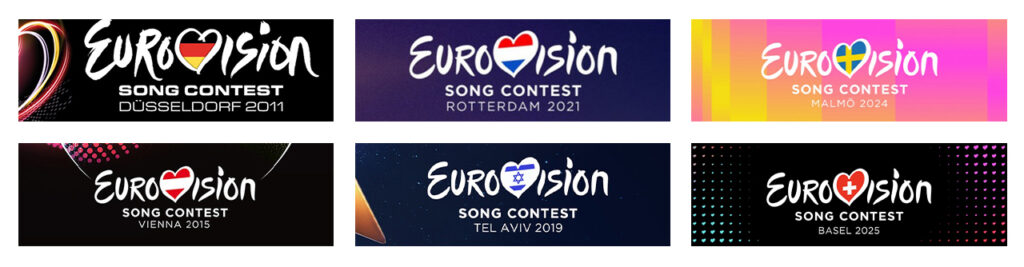
For example, festivals like Coachella and Tomorrowland rely on their iconic designs to create continuity and global recognition, making only minor updates such as color variations or seasonal design tweaks. Similarly, the Eurovision Song Contest modifies small elements—such as incorporating a heart in the host country’s flag colors—but its main logo remains constant.

Eurovision Song Contest // Logo over the years

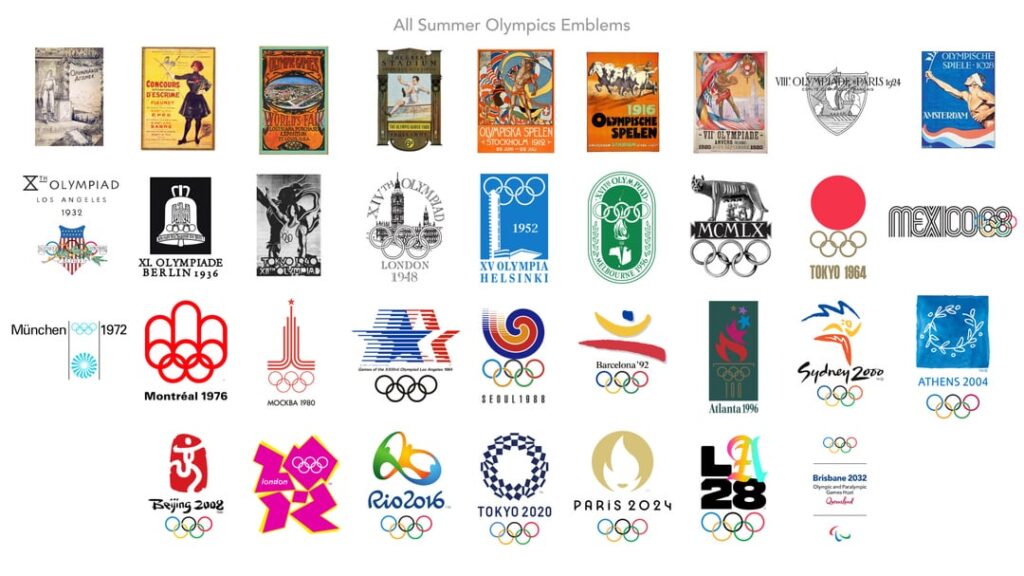
In contrast, a smaller but significant number of events exhibit a dynamic approach to design, often influenced by the need to reflect diverse cultural settings or shifting societal trends. Sporting events like the Olympic Games and the FIFA World Cup redesign their visual identity for every edition, incorporating the culture and aesthetics of the host nation. This approach creates a unique identity for each event while maintaining an overarching theme that ties back to the global brand. Similarly, international gatherings like Climate Conferences (COP) or the G7 Summits adapt their visual themes to reflect pressing societal issues such as sustainability, innovation, and global collaboration, while also acknowledging the cultural nuances of the host region.

Olympic Games // Logo Evolution

Overall, the evolution of designs in European and American events reflects a dichotomy between stability and adaptability. Events with strong cultural or brand roots often prioritize recognition and continuity over change, while globally-oriented or rotating events tend to embrace evolving design trends to capture the spirit of the host location and address contemporary issues. This balance allows some events to build long-term brand recognition while others use design as a flexible tool to engage audiences in a dynamic and relevant way.

Possible Examples from Europe/ America/ Global

Having explored major events on other continents, the next blog posts will shift focus to large-scale events in specifically in Europe and America, but also global large scale events, that change their venue every time. Building on the analysis of African and Asian events, the next phase will delve into significant events from the “Western World” exploring whether they also have events with a design history that merits further investigation.

These Events are:

1. Super Bowl (USA)

    2. Eurovision Song Contest (Europe)

    3. G7/ G20-Sumit (Global)

    4. Coachella Valley Music and Arts Festival (USA)

    5. Berlinale (Germany) und Sundance Film Festival (USA)

    6. Tomorrowland (Belgium)

    7. Biennale di Venezia (Italy)

    8. UEFA EURO (Europe)

    9. Olympic Games (Global)

    10. UN Climate Conference – COP (Global)

    11. World Expos (Global)

    12. FIFA World Cup (Global)

    Research on Asian Events

    My research about major Asian events shows that similiar to the african events, most of the asian events have strong cultural roots, but often do not have a regularly changing corporate identity (CI) or logo language.

    Traditional festivals such as the Lunar New Year, Holi or lantern festivals are based on stable, culturally influenced symbols that hardly change. These designs are usually timeless and traditional, with little influence from current design trends.

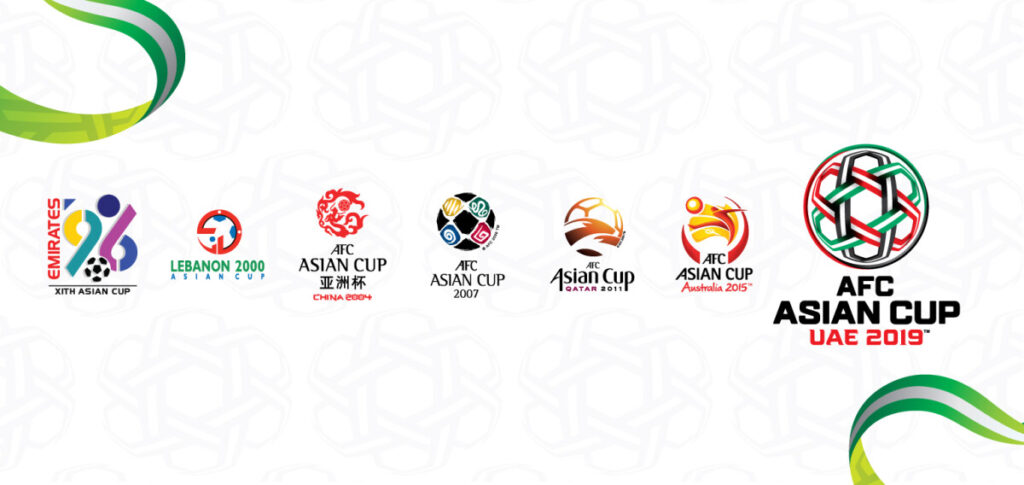
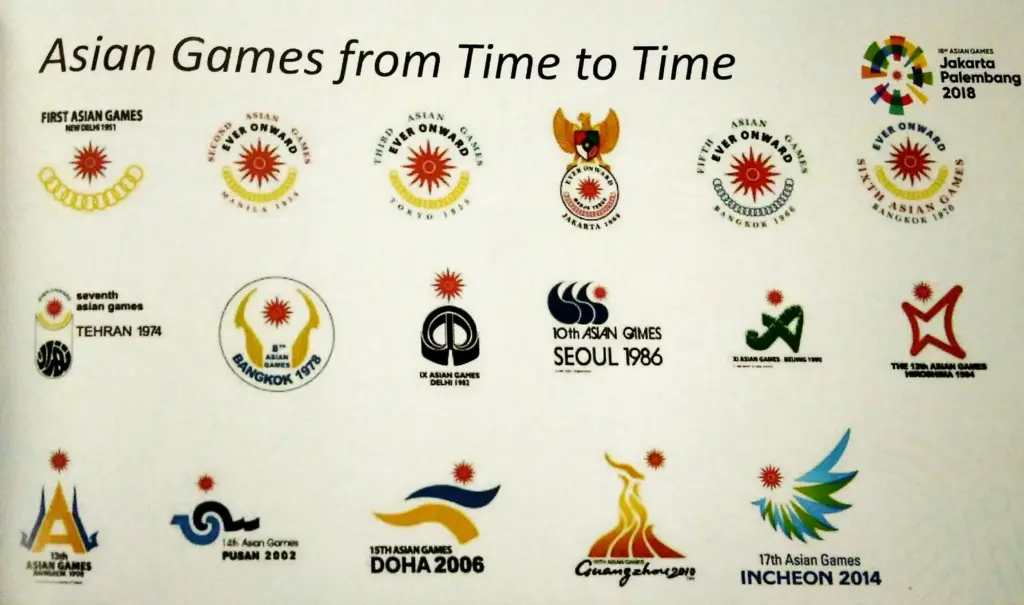
    In contrast, events such as the Asian Games or the Asian Cup of Nations offer regularly changing logos and visual identities that reflect social trends and design developments. Modern styles, color schemes and technologies can be seen here, which are combined with the cultural diversity of the host countries.

    Overall, the influence of design trends in Asia is more visible at sportive or international events, while traditional festivals and events typically retain a constant, culturally anchored design language.

    Asian Cup of Nations // Logo Evolution

    Asian Games // Logo Evolution

    Possible Examples from Asia

    As previously with African events, in the next step I would like to examine major events from the Asian region and find out whether they also have a design history as a basis that can be investigated further.

    Possible Events for Asia:

    1. Asian Football Championship (AFC Asian Cup)

    2. Asian Games

    3. Asian Art Biennale (Bangladesh)

    4. Diwali and similiar festival events

    5. Harbin International Ice and Snow Sculpture Festival (China)

    6. Tokyo Game Show (Japan)

    7. Lunar New Year Festivals

    8. Gwangju Biennale (South Korea)

    9. Shanghai Fashion Week (China)

    10. Holi Festivals (India)

    11. Pusan International Film Festival (South Korea)

    12. Lantern Festivals (China, Taiwan, South Korea)

    13. Cherry Blossom Festivals (Japan, South Korea)


    The next step will be about getting to know more about these events and if they could help to examine the interactions between social trends and the design language.

    Research on the African events

    After intensive research into the selected festivals, I found that it was surprisingly difficult to find detailed information about the individual events. Some of these festivals and events are somewhat more international and commercial due to their size, which makes it easier to find information.

    A good example of this is the AFCON, which radiates far beyond the African region due to its long tradition and the popularity of football. The importance of this tournament is also reflected in the extensive availability of information on the logo language and design of the event.
    Interestingly, the logos have hardly changed over the decades. They were also rarely adapted to the respective venues. Instead, there was a general logo in which only the name of the host nation was changed, while the design remained unchanged. There was one notable exception in 2010, when the logo was revised and retained in this form until 2023. It was only for the tournament in Côte d’Ivoire that a fresh look was developed, combining the trophy with the national colors. Whether this new logo, like its predecessors, will remain in place in the long term had not yet been officially confirmed in December 2024.

    On the other side is the FESTAC, which was only recently revived after a break of almost 50 years. With a completely new logo, which has not yet undergone any variations, it marks a new beginning in its visual identity.

    Other events such as the DIFF or the Cape Town Jazz Festival also have logos, but these remain unchanged for each edition. Only the design of the media in which the logo is used – for example on posters or websites – varies.

    The other major events listed, such as the Marathon des Sables or AFRIMA, do not change their logo design. The Lake of Stars Festival even uses a simple lettering as its logo, which only appears in a different font depending on the motto.

    Possible Examples from Africa

    In my first Blogpost I highlighted some large-scale events from around the world.
    These events are more or less connected to the western world or the way of living there.

    In the next steps I would like to find out if there are some similar events on other continents, that can highlight the change in culture and design through its appearance.

    Possible Events for Africa:

    1. African Football Championship (Africa Cup of Nations – AFCON)

    2. FESTAC – Festival of African Arts and Culture

    3. Durban International Film Festival (DIFF)

    4. Cape Town International Jazz Festival

    5. Lake of Stars Festival (Malawi)

    6. Marathon des Sables, Sahara

    7. Chale Wote Street Art Festival (Ghana)

    8. AFRIMA – All Africa Music Awards

    9. Nile Valley International Film Festival (Egypt)

    10. Afrochella (Ghana)


    The next step will be about getting to know more about these events and if they could help to examine the interactions between social trends and the design language on the African continent.

    Impact of Social and Cultural Trends on the Evolution of Design within the Visual Context of Major Events

    Impact of Social and Cultural Trends on the Evolution of Design within the Visual Context of Major Events explores how significant social and cultural shifts shape design language, particularly in the context of large scale events. These events – such as the Olympics or FIFA World Cups – serve as global stages where design reflects current societal values, cultural identities, and technological advancements.

    The project is working out how evolving trends like sustainability, inclusivity, and technological innovation influence the visual and thematic choices of event branding, logos, and overall aesthetics.
    It seeks to highlight the relationship between design and society, demonstrating how design not only reflects but also shapes public perception and values during large scale events. This analysis contributes to a deeper understanding of design as a tool for cultural communication and its responsiveness to the dynamic nature of social trends.


    Possible events to examine throughout this project work:

    Overall Sport Events like the Olympic Games
    The visual identity of the Olympic Games (logo, mascots, posters, colors) often reflects the zeitgeist, values, and culture of the host country. Each edition shows changes in the design language that emphasize social trends, environmental sustainability and cultural diversity. 

    Special Tournaments like FIFA World Cup or UEFA EUROs
    Similar to the Olympic Games, the design of the FIFA World Cup/ UEFA EURO reflects the host country and its cultural symbols. Trends such as the increasing importance of diversity and environmental protection can also be observed here. 

    International Fairs like World Expos
    Expo has a long tradition of presenting innovations and technological advances that also reflect design trends. For example, the countries’ pavilions showcase different approaches to architecture, ecology and interactive design.

    Political Conferences like G7 summit or UN climate conferences (COP)
    The design of these events (logo, color scheme, visual communication) has evolved towards sustainability, inclusivity and globalism, reflecting societal priorities.

    Events of pop-cultural importance like The Met Gala 
    The annual Met Gala is a cultural highlight in the fashion and design world and often focuses on socially relevant aspects. The choice of themes and the corresponding design of the exhibitions provide insights into cultural trends and the influence of social debates on visual design. 

    American Sports Events like Super Bowl and Halftime Shows
    The branding, commercials and stage design of the Super Bowl Halftime Shows often reflect current trends and social discussions, especially in pop culture and advertising. 

    Film Festivals like Cannes Film Fetsival and Oscars 
    The visual design and branding of these events have evolved with societal changes, such as an emphasis on diversity, cultural representation and sustainability. 

    Music Fetsivals like Coachella and Tomorrowland
    music festivals are a mirror for lifestyle and design trends. They often show social developments in the use of technology, sustainability and community spirit and provide creative ideas and inspiration for event design. 

    Fashion Weeks
    These annual fashion events set trends and represent cultural trends, values and social issues through visual presentations and staging of the latest collections. These events offer a variety of opportunities to analyze the development and transformation of design language in the context of social trends.