Understanding the empathy gap
Designers often aim to create inclusive, human-centered products, but there’s a subtle challenge that’s harder to overcome than accessibility or UI polish: the empathy gap. This term refers to the cognitive and emotional distance between people who have direct experience with a problem and those who don’t.
In UX design, the empathy gap becomes especially problematic when building products for people with disabilities, like for example celiac disease. While a user without celiac might casually browse for places to eat, someone with celiac approaches every food decision with caution, emotional tension, and risk assessment. Unfortunately, many restaurant apps and travel platforms fail to reflect this difference in urgency and vulnerability.
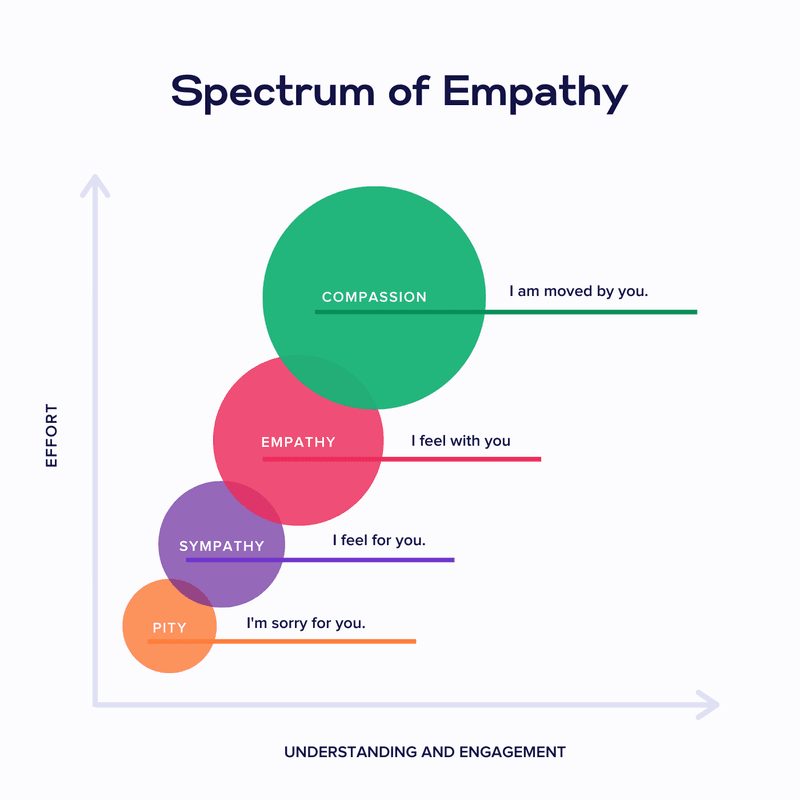
Storytelling and personas as empathy tools
Personas are more than just user archetypes. They act as bridges to lived experiences. When backed by emotional storytelling, personas help designers and stakeholders temporarily “step into someone else’s shoes,” fostering a deeper understanding of motivations, fears, and mental models. According to Cooper et al. (2014), personas are “a powerful design tool for communication and empathy-building” when they reflect real emotional contexts and not just demographics or goals.
Storytelling in UX amplifies this effect. Stories engage the emotional centers of our brains, making information more memorable and decisions more thoughtful (Norman, 2004). When personas are introduced within narrative frameworks, such as onboarding sequences that follow their journey, designers can simulate real-life decision-making environments. This helps foster emotional alignment with users, especially those whose needs are often overlooked.
For travelers with celiac disease, this emotional alignment is important. It’s not just about finding gluten-free options – it’s about feeling safe and understood in a world where a simple breadcrumb can cause days of illness.
Sources:
Norman, D. A. (2004). Emotional Design: Why We Love (or Hate) Everyday Things
Cooper, A., Reimann, R., Cronin, D., & Noessel, C. (2014). About Face: The Essentials of Interaction Design
Persona & User journey
For this prototype, my goal is to create a low-fidelity paper app to help travellers with gluten intolerance find safe places to eat and enjoy local cuisine.
To help me achieve this, I created a persona and user journey.
Anne – Celiac solo traveler
Name: Anne Bauer
Age: 29
Occupation: Freelance photographer
Location: Berlin, currently traveling through Italy
Health Context: Diagnosed with celiac disease 5 years ago
Tech Use: Heavy smartphone user, relies on travel and food apps
Personality: Curious, independent, sometimes anxious about eating out
Goals:
- Find places to eat safely while traveling abroad
- Avoid cross-contamination and gluten exposure
- Feel confident and supported in unfamiliar food cultures
Pain Points:
- Unclear menus and gluten-free claims
- Language barriers when asking staff about food safety
- Anxiety when eating in new places
- Lack of trust in unfamiliar restaurants
Emotional Triggers:
- Relief and happiness when finding verified safe spots
- Frustration when apps show “gluten-free” without proof
- Appreciation when her needs are clearly understood
User journey: Anne arrives in Bologna and needs dinner
- Trigger: Anne arrives in Bologna and feels hungry.
- Goal: She wants to find a celiac-safe restaurant nearby.
- Problem: She’s unsure which places are safe and trustworthy.
- Action: Opens the app and starts onboarding → begins search → filters results → reads restaurant details → picks a trusted place.
- Success: Finds a restaurant with verified reviews and clear allergen info.
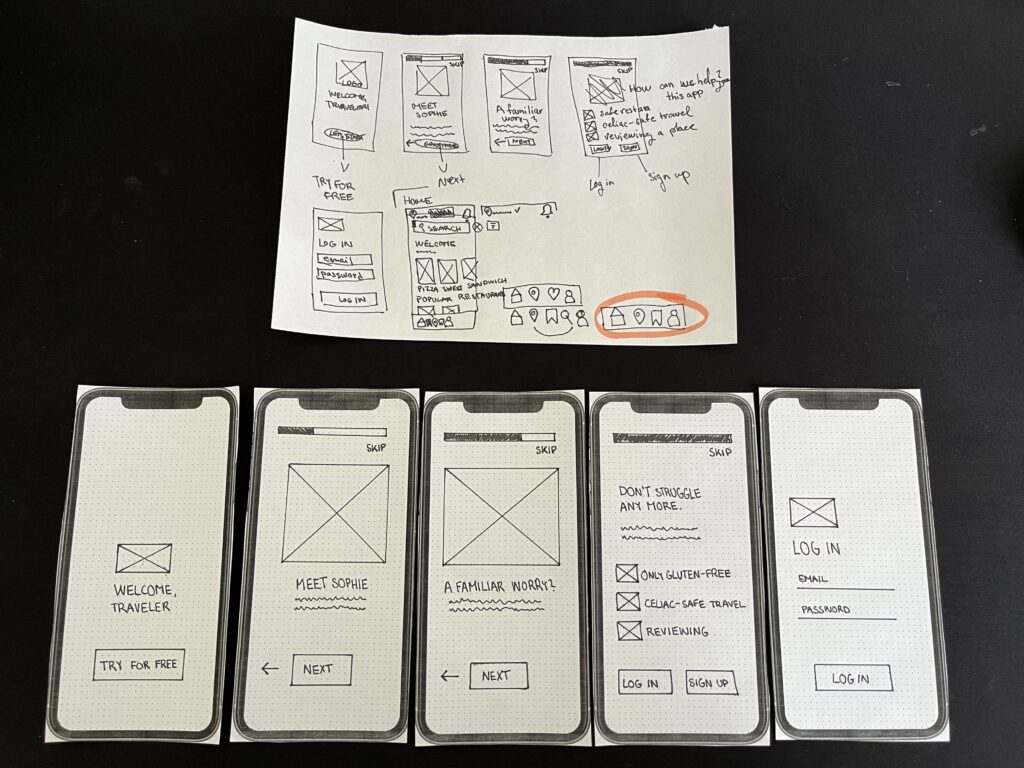
The first part of my work on the paper prototype involved creating an onboarding process for the application: