3D printing has expanded its applications in the art world, moving beyond sculptures and artifacts to include the replication of paintings. By capturing and recreating not just the colors but also the textures, relief, and even the gloss of original works, this technology opens up transformative possibilities for museum interactions. This post delves into how 3D printing of paintings enhances visitor engagement and interaction.
Tactile Exploration of Paintings
Traditionally, paintings have been viewed from a distance to preserve their integrity. However, 3D printing allows for the creation of touchable replicas that maintain the visual and physical characteristics of the original works. For example, museums can reproduce the brushstrokes, texture, and relief of a Van Gogh painting, enabling visitors to physically feel the intricacies of the artist’s technique.
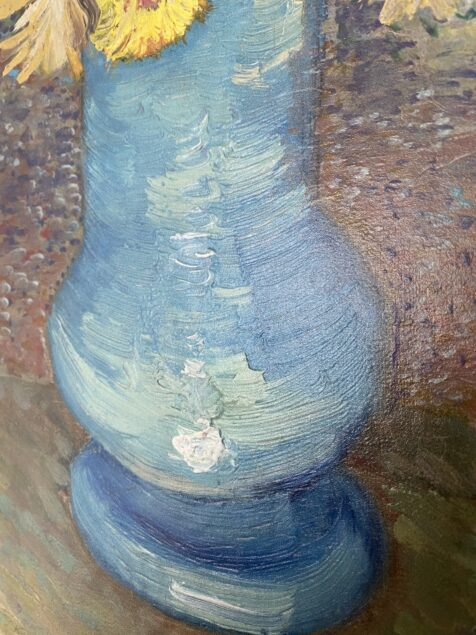
Close-up of a 3D print of Vincent van Gogh, Flowers in a Blue Vase, 1885, oil on canvas, 61.5 x 28.5 cm. Kröller-Müller Museum, Otterlo. Photo by author.
This tactile approach is particularly beneficial for visually impaired visitors. Being able to touch the contours and textures of a painting offers a unique sensory experience, allowing them to perceive the artwork in ways that were previously inaccessible.
Interactive Exhibits with 3D-Printed Paintings
3D-printed paintings can play a key role in interactive exhibits, making art more engaging and educational. Museums can encourage visitors to compare printed replicas with digital displays or augmented reality overlays to understand artistic techniques and historical context. Workshops could even invite visitors to paint or modify 3D-printed replicas, fostering creativity and deeper connections with the artwork.
Additionally, in a 3D print aspects of a work can be magnified and physicalized. For example, enlarging the eye of Vermeer’s Girl with a Pearl Earring makes it possible to understand the artist’s technique and the material changes the work has been through (e.g. the cracks on the surface become clearly visible).
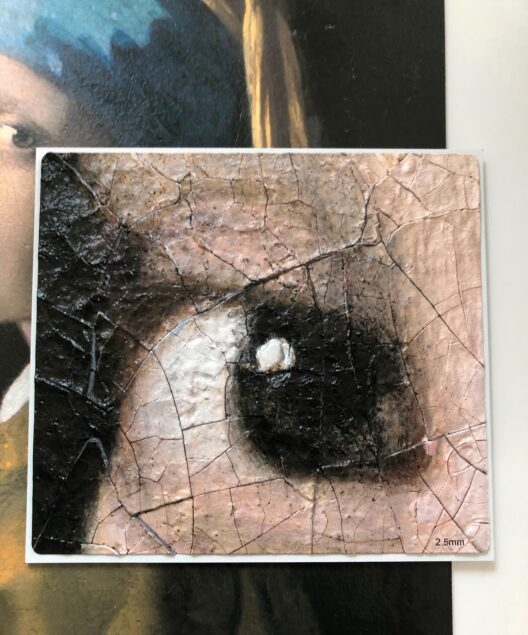
10 times enlarged 3D printed eye of Johannes Vermeer’s Girl with a Pearl Earring, 1665, oil on canvas, 44 x 39 cm. Mauritshuis, The Hague. Photo by author.
This technology also allows for recreations of lost or damaged paintings, providing a window into art history that might otherwise remain closed. Visitors can see and touch pieces of art that no longer exist in their original form, enriching their understanding of the artistic and cultural legacy.
Bridging the Gap Between Art and Audience
While curators may worry about the loss of aura associated with original paintings, 3D printing helps bridge the gap between art and audience by making these works more approachable. Replicas can be displayed in high-traffic areas, touched during guided tours, or used in educational settings without the risk of damaging the originals.
By creating interactive and tactile experiences, museums can attract younger audiences, families, and those who might feel intimidated by traditional gallery settings. This approach transforms the museum visit from a passive viewing experience into an active engagement with art.
Ethical Considerations and Challenges
Despite its advantages, 3D printing of paintings raises important ethical questions. How should replicas be labeled to distinguish them from originals? Could the availability of high-fidelity reproductions diminish the value of authentic artworks? Museums must navigate these issues carefully, ensuring transparency and maintaining the integrity of their collections.
Additionally, there is a need for precision and quality in reproductions. Capturing the intricate details of a painting’s texture and gloss requires advanced scanning and printing techniques, which may not always be accessible or cost-effective for smaller institutions.
A New Frontier for Museum Interaction
3D printing is reshaping how museums approach paintings, transforming them into interactive, accessible, and educational experiences. By providing tactile opportunities, fostering creativity, and connecting visitors more deeply with art, this technology brings a new dimension to the museum world. While challenges remain, the potential for innovation and engagement makes 3D printing an invaluable tool for the future of art and cultural heritage.
As museums continue to embrace this technology, they have the chance to redefine the way audiences experience paintings—not just as objects to admire but as pieces to explore and connect with on a profoundly personal level.
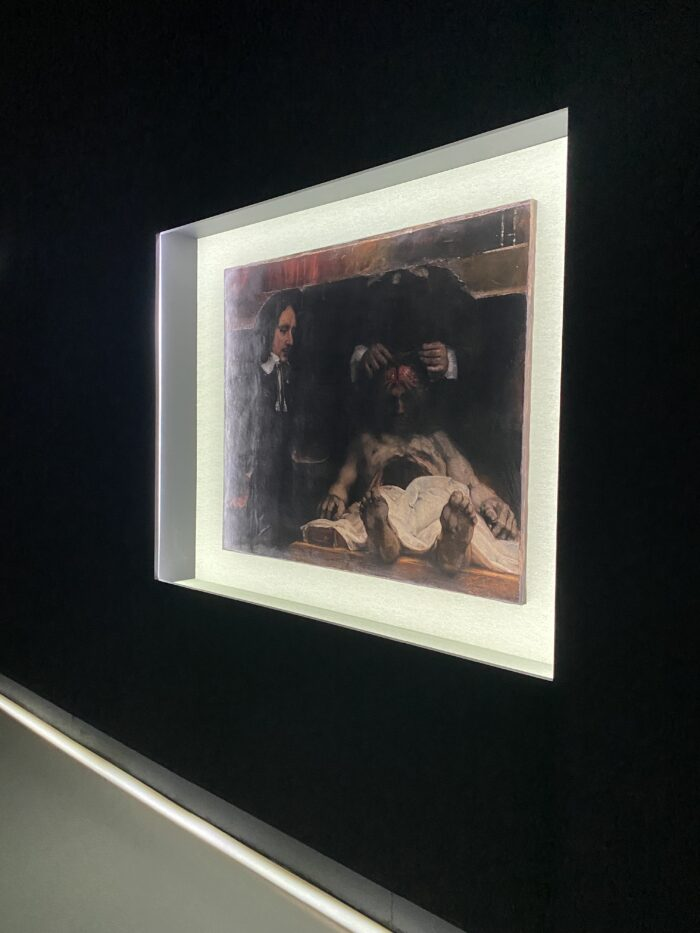
3D print of Rembrandt van Rijn, The Anatomy Lesson of Dr. Deijman, 1656, oil on canvas, 100 x 134 cm, Amsterdam Museum, Amsterdam
Photo by author, 3D print by Factum Foundation
References:
https://www.museumnext.com/article/how-museums-are-using-3d-printing/
