For my fourth impulse I focused on recent challenges in EV charging that question my initial research direction. I watched a podcast with Andrea Caviglia, Head of Global Product Management at Nidec, a major player in e-mobility charging solutions and brainstormed next research steps with the support of Perplexity. This reflection brings together my notes from the video and critical thoughts about my Master thesis after learning about Plug & Charge technology.
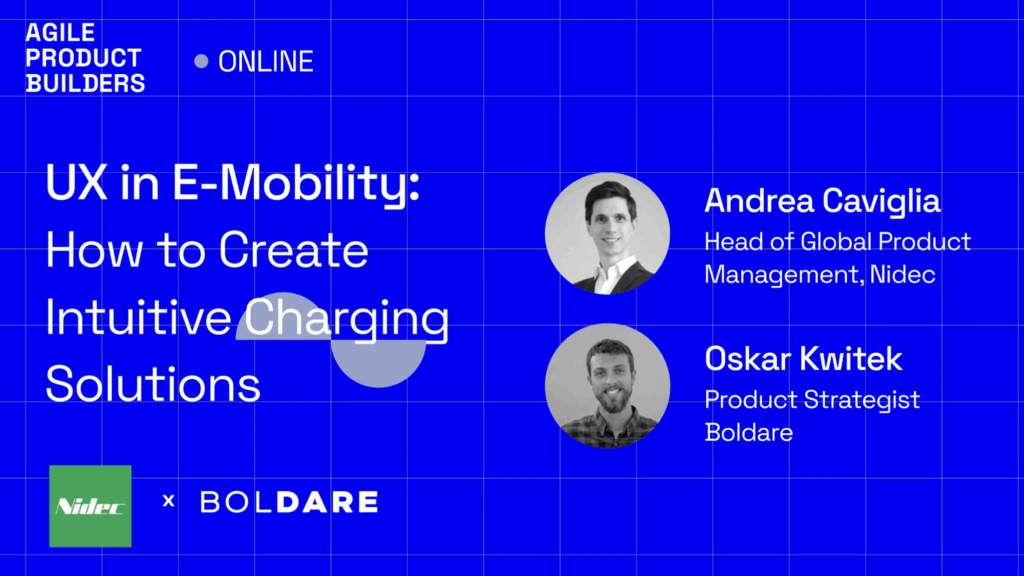
Andrea explained that many EV user experience challenges remain despite technical progress. The core problem is that charging is still a new technology creating friction, fear, and anxiety for users. Two main challenges he highlighted in video are “range anxiety” (thats the fear of not reaching the next charger) and the time users have to spend at chargers. This means the charging process must be fast and the waiting time should be used well. The interface (charger and app) should be intuitive and show clear real-time updates about charging status, kilowatts used, time remaining.
This confirms my thesis focus: user experience is central, but also complex and emotional, not just technical. Andrea mentioned multiple payment options are common in EV charging, with app subscriptions, RFID, credit cards, and even QR codes being used to make payments simple and flexible. This aligns with what I know, but also shows how the ecosystem is still diverse without a fully unified system.
The video also explained the fast-paced nature of the e-mobility market, constantly evolving with new charging standards like “mega charging” for buses and trucks. It showed that product design must carefully consider all touchpoints, ensuring hardware reliability, simplicity, and real-time communication within the IoT ecosystem. This means robust, user-friendly solutions are essential for customer satisfaction and reuse.
One highlight relevant for me is how Plug & Charge works. This new technology allows cars to register automatically and start charging on connection without manual steps to start or pay. This sounds like a great UX improvement but also challenges my thesis. If charging becomes nearly effortless for users, will detailed work on charging interfaces even be necessary?
I concluded that while Plug & Charge reduces friction at one stage, many other UX challenges remain:
- Where and how do users find chargers?
- How do they trust the charger and its status through app or physical signals?
- How inclusive and accessible are stations for all users?
- How can the waiting time be designed as valuable time?
- How do users handle errors or machine failures?
So, Plug & Charge is part of the solution but not the whole picture. For my next research steps, I want expand my focus beyond “start and pay UX” to the full charging experience ecosystem, including location, trust, accessibility and also cognitive/emotional factors.
I also openly admit that after watching this and discussing with AI (Perplexity), I had to rethink and refine my thesis topic and methods. I realize that being flexible and critically examining assumptions is crucial in fast-moving tech fields.
Next steps I will pursue:
- Refine my research questions to cover the broader user experience, not only payment and session start
- Include qualitative interviews that explore user fears, waiting time use and trust in automated systems
- Consider field visits to observe real user interactions with Plug & Charge and older systems
- Study accessibility and inclusivity aspects from both tech and human factors
- Follow the evolving standardization and AI integration in charging ecosystems
At the end i can really say that these impulse right now are really helpful for me to get my arse up and start doing something for the thesis because learning of these new technologies now is shifting my recent state of research to a really new approach. So this really deepened my understanding now and clarified that my thesis can add value by focusing on the unexplored parts beyond Plug & Charge’s convenience.
Reference:
Nidec Conversion. EV Charging Infrastructure. Nidec Conversion, 2025. https://www.nidec-conversion.com/
Podcast by Boldare, featuring Andrea Caviglia, Global Product Management Head at Nidec, 16.12.2024: https://www.youtube.com/watch?v=hxqNfUQ79P0
AI Disclaimer: AI helped me brainstorm next steps and organize my reflections.
