What happens after we die? It’s one of humanity’s oldest and most haunting questions. Phillipp Alexander’s “Reiseführer für Tote” (Travel Guide for the Dead) takes this universal fear and curiosity and turns it into something unexpected — a travel guide for the afterlife.
At first glance, the concept sounds absurdly fascinating: a Lonely Planet–style guide that helps you navigate heaven, hell, or reincarnation. But beneath the quirky premise lies a deeper intention — to make people reflect on death, religion, and what might await us after our final journey.
Exploring Death Through Design
Alexander’s goal is simple yet ambitious: to make people think more openly about the afterlife and perhaps ease the fear of dying. Rather than preaching or philosophizing, he invites readers to explore the topic — like travelers flipping through a guidebook before an adventure.
It’s an unusual approach, blending two very different worlds:
- Religion, with its strict rules, moral frameworks, and promises of eternal destinations.
- Travel guides, which celebrate freedom, curiosity, and self-directed discovery.
By merging these opposites, Alexander creates a tension that’s both intriguing and thought-provoking — though not without its flaws.
The project unfolds in two main parts:
- An overview of different religions and their interpretations of the afterlife — from heaven and hell to reincarnation and spiritual rebirth.
- A more subjective “expert analysis” of travel guides, where the author himself becomes the self-declared guide through these spiritual landscapes.
While the first section is well-researched and informative, the second feels more like a personal reflection than a structured analysis. There’s no clear conclusion — instead, it reads as an open-ended exploration rather than a destination reached.
Aesthetic and Presentation
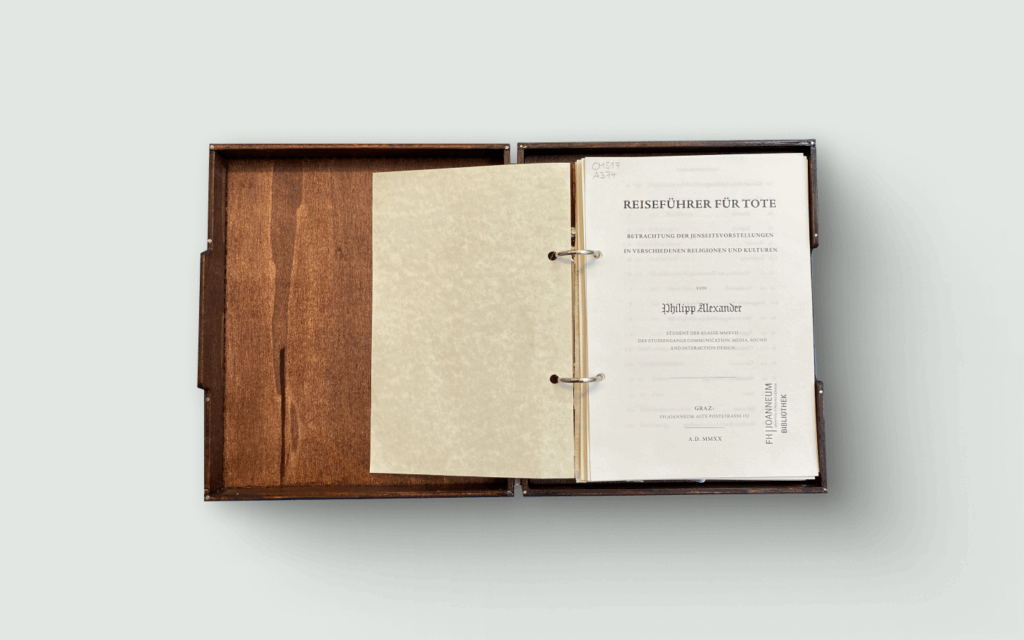
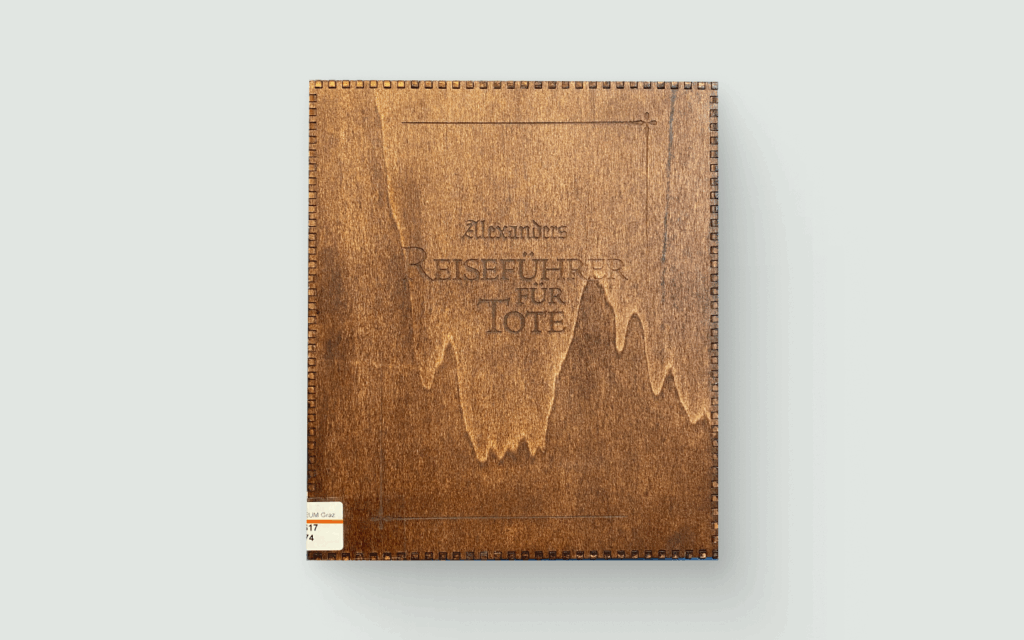
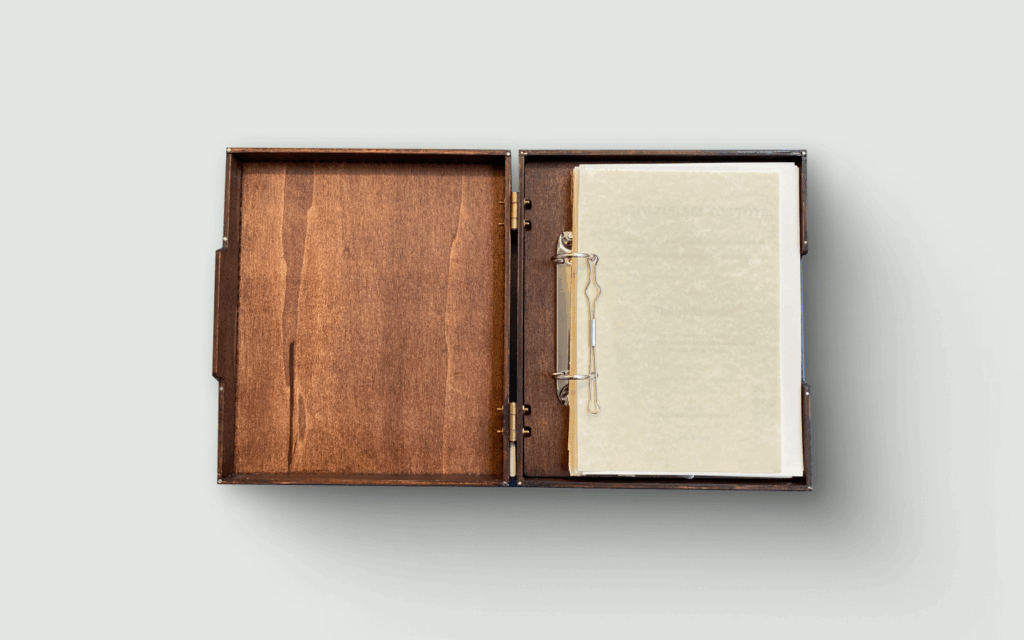
If there’s one thing that immediately captivates, it’s the presentation. The work comes encased in a beautiful wooden box, filled with bone-white paper — an eerily fitting design choice for a guide to the afterlife. The craftsmanship feels intentional and authentic, setting the right tone from the moment you open it.
However, the physical design, while visually striking, makes it somewhat uncomfortable to handle and read. The box, though conceptually clever, turns into a clumsy reading experience — a reminder that sometimes, aesthetics and usability don’t always align.
Originality and Design Relevance
Conceptually, “Alexander’s Travel Guide for the Dead” is fun, unique, and original. It stands out as a playful yet critical commentary on how we think about death and belief.
That said, the connection to design as a discipline feels weak. The piece is more of a philosophical or cultural exploration than a true contribution to design research or methodology. It’s a creative idea, executed beautifully, but it doesn’t quite push the boundaries of design thinking.
Final Thoughts
Overall, I’d rate the project a 3 out of 5. It’s a professional, well-executed piece with strong visuals and a memorable concept. However, the topic itself feels relatively easy, and the design implications are limited.
The biggest issue? The metaphor doesn’t entirely hold up. A travel guide suggests freedom, options, and agency — things that the afterlife, especially through religious frameworks, doesn’t really offer. In that sense, the piece feels more like a “religion guide for the living” than a genuine travel guide for the dead.
Still, it’s a creative and thought-provoking exploration — one that might not give you answers, but will definitely make you think twice about what lies beyond.