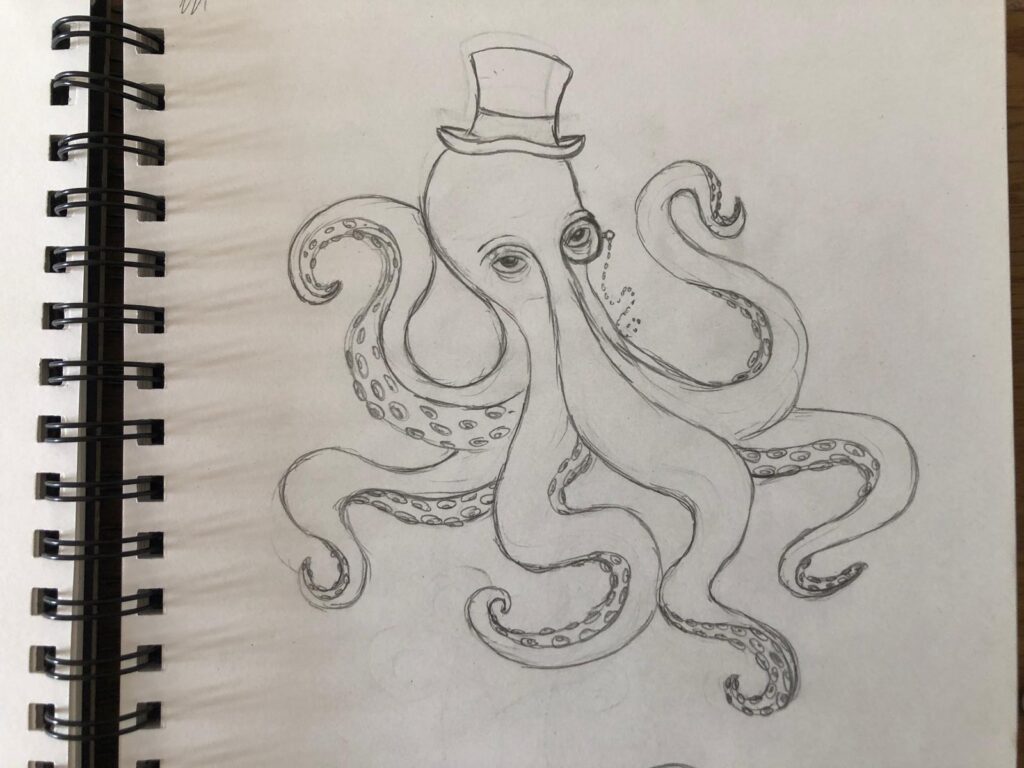
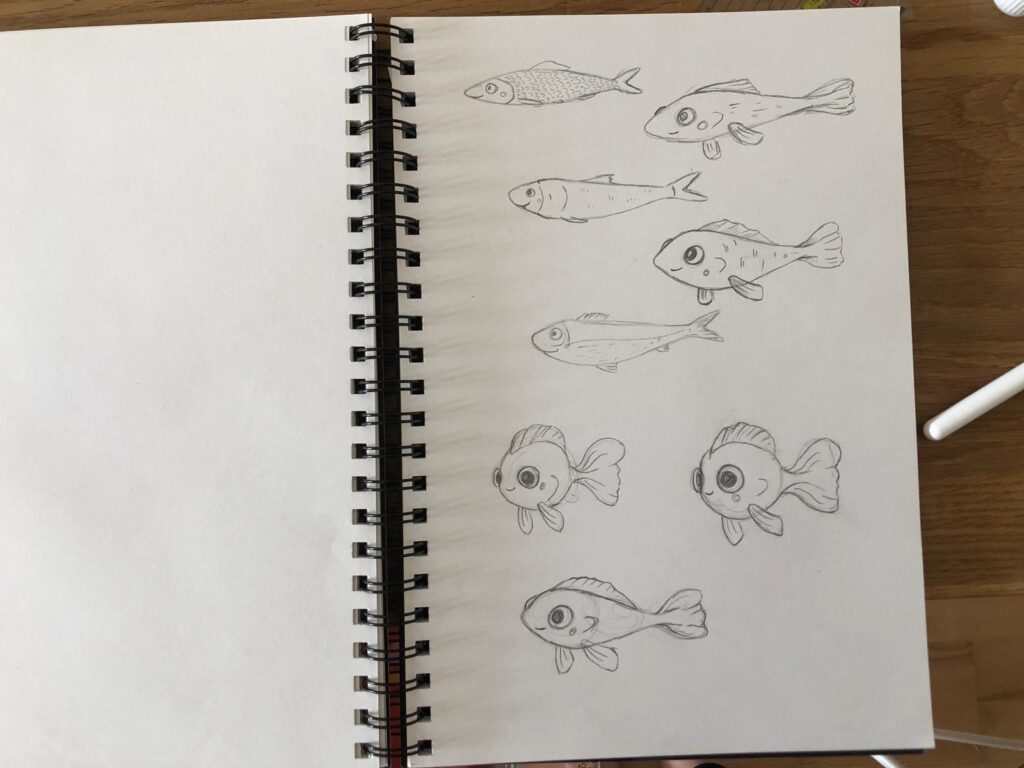
Whether in picture books, animated films, or comics: animal characters have always had a special place in illustration. Personally, I’ve started exploring this topic more deeply because I want to improve my skills in character design. Since illustrating stories is something I’m passionate about, learning how to develop compelling and expressive characters (especially animals ) feels like an essential step for me. Animal characters can be cute, funny, majestic, or intimidating – and that’s exactly what makes them so exciting to experiment with.
Why Animals?
Animal characters serve as projections. They allow us to express human traits in exaggerated or symbolic ways, often with more emotional distance than human figures. A fox can be clever, a bear cozy, a cat proud. These associations are culturally shaped and can be used intentionally or subverted creatively.
Experiment: Make a list of ten random animals and combine them with ten unusual personality traits or professions. What comes out of it? A shy shark, a philosophical hedgehog, a dancing seagull?
Sometimes the story comes first, sometimes the animal. When experimenting creatively, it can be fun to flip the process: Start with an animal (maybe even an unusual one) and ask yourself how it would behave in a particular role. What would a melancholic armadillo look like? Or a hyperactive snail?
Body, Shape and Silhouette
In illustration, the first impression counts. A strong silhouette tells us a lot about a character – posture, proportions, energy. With animal characters, exaggeration is your friend: A large head can seem childish and cute, long limbs can appear goofy or graceful, a round body suggests comfort.
Experiment: Sketch a range of silhouettes of the same animal with drastically different proportions. How does the personality change? Which variations spark your imagination the most?
Expression and Emotion
Animals don’t have the same facial features as humans, but to make them emotionally readable, some anthropomorphism is often necessary. The trick is finding the right balance: How much “human” does your animal character need? Big eyes? Eyebrows? A wide grin?
Tip: Observe animals in motion or watch videos. What does a suspicious dog really look like? How does a nervous rabbit move its ears?
Clothing, Accessories & Setting
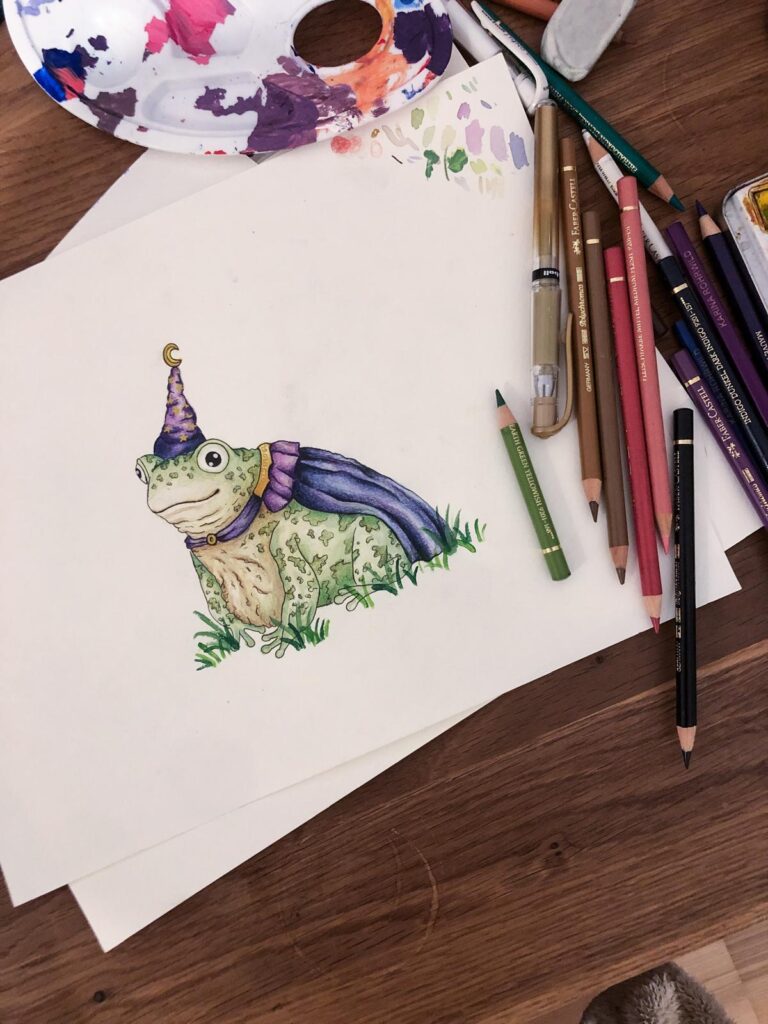
Depending on the setting, an animal character may not need any clothes – or it might wear a full tuxedo. Clothing is not just a stylistic element but also a tool for storytelling. The same goes for environment: Does your character live in a fantasy metropolis? A peaceful forest? A cozy bakery?
Experiment: Take one animal character and redesign it in three different genres: Fantasy, science fiction, and Victorian drama. How does the character evolve?
Final Thoughts
Developing animal characters is a creative playground full of possibilities. There are no fixed rules – only guidelines that you can twist or break as you wish. What matters most is that your character feels alive, with quirks, edges, personality, and charm.
For this Experiment I tried to design my own Charakters and here you can see my outcomes.