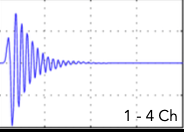
At the core of the app’s audio processing lies a precise method: convolution. By recording an impulse response of a space, we can digitally place any dry signal within it. But this only works if the IR is accurate.
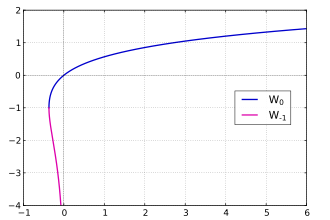
To achieve this, I implemented an exponential sine sweep generator with Lambert-W phase correction, ensuring high signal-to-noise ratio and spectral clarity. Deconvolution is then performed using regularized FFT division — a mathematically stable way to reverse-engineer the system response.
This combination allows fast, portable IR measurement without sacrificing detail. The result? Any sound — a whisper, a field recording, a voiceover — can be spatialized with the unique acoustic fingerprint of a room.