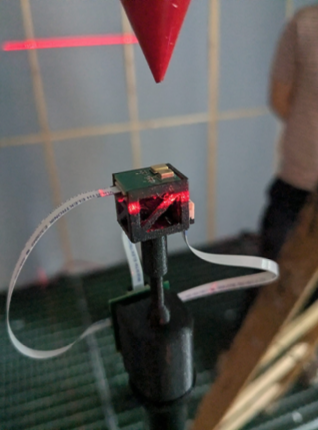
Traditional Ambisonics arrays are bulky and expensive. In contrast, MEMS (Micro-Electro-Mechanical Systems) microphones offer a promising alternative: they are tiny, digital, and energy-efficient.
This semester, I investigated how a tetrahedral MEMS array could be integrated into a mobile system. Calibrated for gain and phase alignment, and paired with head orientation data, such a rig could offer a portable first-order Ambisonics input for spatial field recording.
The challenge lies in the signal integrity: capsule mismatch, noise floors, and synchronization need to be addressed. But the vision is clear — a pocket-sized array that records the world in full 3D sound, for music, XR, and soundscape preservation.