In the landscape of UX design, we often prioritise the end user = the customer tapping on the app, making a reservation, or reading a restaurant review. But in service contexts like dining, the experience is co-created. Behind every safe and satisfying gluten-free meal is a team of restaurant staff managing food prep, communication, and customer care.
For individuals with celiac disease, eating out is a high-stress situation. The stakes are medical, not just personal. Users rely heavily on restaurant staff to understand and accommodate their needs. But the staff, in turn, must navigate complex orders, time pressure, and varying levels of knowledge – all while delivering consistent, empathetic service.
So, how can UX design empower both groups?
By designing systems that are intuitive, informative, and motivating, we can bridge this empathy gap and create experiences that feel safe, human, and trustworthy – for everyone involved.
Dual empathy in UX
Human-centered design isn’t just about the end user, it’s about every person who interacts with the system.
In a restaurant context, that includes:
- Kitchen staff interpreting special orders
- Waiters translating customer needs
- Customers navigating digital menus and allergy filters
This shared ecosystem requires tools that are mutually supportive, rather than one-sided.
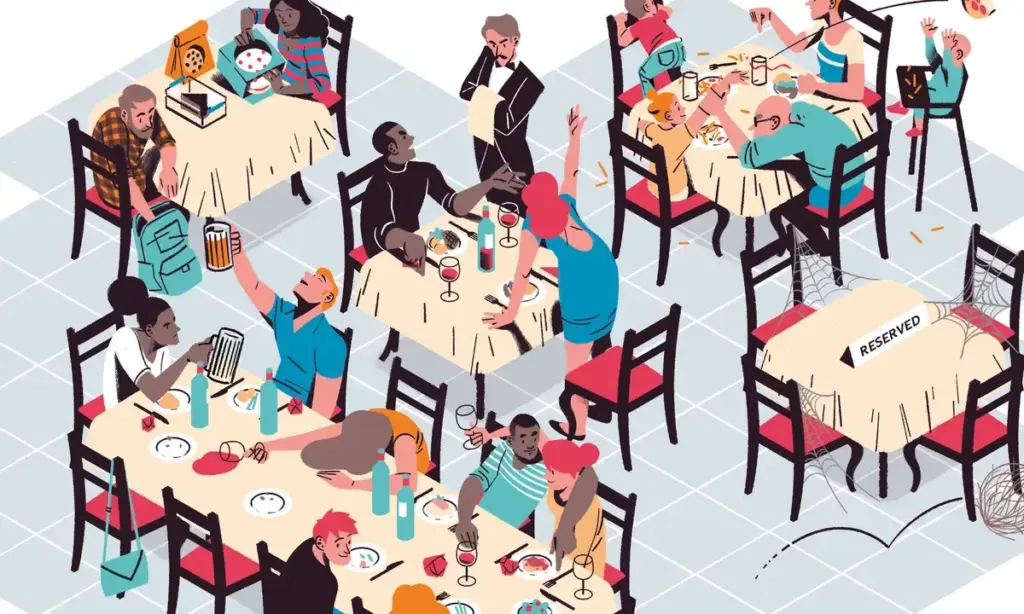
(Source: https://medium.com/@mis9385/ux-design-research-part-2-week-9-restaurant-design-function-af5407866d5b)
Empowering staff through UX features
Designers have an opportunity to reduce friction and boost trust by building restaurant-facing features that support communication and clarity.
- Live dietary alerts and preferences: for example a tablet in the kitchen or at the waiter station that instantly shows: “Table 4: Gluten-Free. Cross-contamination alert enabled.”
- Customer preference profiles: Frequent diners could have optional saved settings that flag dietary needs early in the booking or ordering process.
- Smart checklists for order confirmation: A visual checklist (“Separate cutting board used? Dedicated fryer confirmed?”) reinforces habits without slowing the workflow.
These features don’t just protect the user. They lighten the cognitive load for staff and create a system of shared responsibility.

(Source: https://www.eleken.co/blog-posts/14-impressive-ux-statistics-to-prove-the-value-of-great-design)
Designing the interface between two humans
At its core, this is about facilitating human connection through design. The app is the medium, but the real exchange happens between diner and staff.
- If the app provides transparency, both sides feel informed.
- If the system feels empathic, both sides feel heard.
- If the training is engaging, both sides benefit from better service and reduced anxiety.
This kind of design (dual-perspective UX) is where real inclusivity happens.
Creating safe, enjoyable restaurant experiences for celiac diners doesn’t stop at user interfaces. It extends to the tools, training, and touchpoints that staff rely on to deliver those experiences. When designers design for both diners and providers, they reinforce trust, reduce risk, and elevate hospitality from a transaction to a shared act of care. Good design doesn’t just protect the user, it equips the provider. And when both feel supported, the result is an experience that’s not just functional, but truly human.
Source:
https://uxdesign.cc/what-is-service-design-and-why-it-matters-e1ed3fc86e7b
https://www.broworks.net/blog/design-for-business-designing-for-a-real-users
https://www.kioskbuddy.app/blog/human-centered-design
https://codenomad.net/blog/how-to-design-a-user-friendly-restaurant-app-interface/
