After weeks of research and building up high expectations, my visit to OFFF Barcelona turned out quite differently than imagined—especially from a design perspective.
After my arrival in the city, I was surprised to discover that many locals didn’t even know what OFFF was. Taxi drivers, hotel staff, and even people near the venue hadn’t heard of the festival, let alone knew where it was taking place. There were no posters, billboards, or any kind of out-of-home advertising in public spaces or transit stations. Even at newspaper stands, no sign of the event — no coverage, no ads, nothing.
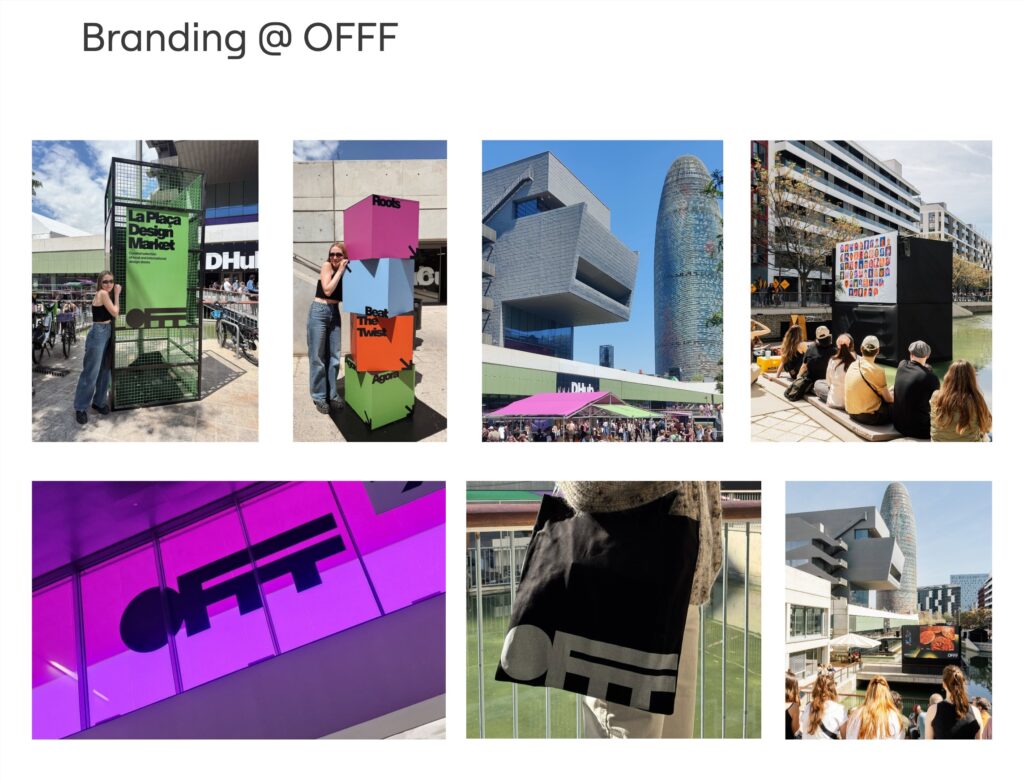
When we reached the venue the day before, I expected to see a strong, immersive visual identity, already promoting tomorrow’s event— but it just wasn’t there. There was no banner at the entrance, no large-format visuals, no color-coded areas, no vibrant signage like I had anticipated from their online presence. Just a few arrows here and there to guide people, and even those lacked any kind of pictogram or branding. No icons. No system.
And also with the start of the event, the only branded element that stood out were the OFFF tote bags given to visitors — perhaps the one visible touchpoint that tied back to the festival’s identity, cause you could always spot a “fellow designer” when you went for a stroll through the city. A few small logos could be spotted if you paid close attention, but overall, the visual consistency and presence were minimal.
Maybe what what I remember most: just 10 meters outside the venue, you were back in “normal” Barcelona. If you didn’t already know about OFFF, you never would have guessed that a major design event was happening just around the corner — even with some big design and art universities just around the corner(!).
For a festival that positions itself at the heart of contemporary creativity, the lack of physical branding and atmosphere was … kind of underwhelming. As a designer that was very keen on seeing how consistent design is realized on such a big stage, this difference between the strong online identity and the nearly invisible physical presence was not only unexpected. It was also an important lesson. A strong event identity doesn’t just live online — it has to be experienced.
And maybe (just maybe) the OFF organizers should think about hiring one of the guys talking about how awesome their designs are at their festival, to make their appearance just nearly as good, as the designs shown there.