Head-Up Display (HUD) design requires a deep understanding of human perception in order to create interfaces that are intuitive, easy to see, and minimally distracting. This blog post explores key human factors – visibility, colour psychology and motion dynamics – that influence effective HUD design.
Visibility: Reducing cognitive load
The ability of a driver to quickly and effortlessly take in information from a display is referred to as ‘viewability’. As prolonged focus on HUDs can increase the risk of accidents, designers need to ensure that vital information such as speed, navigation and warnings are readable at a glance. Strategies to improve readability include
Minimalist design: Avoiding clutter by displaying only the most important information.
Consistent layouts: Using predictable positioning for recurring elements to increase familiarity and speed recognition.
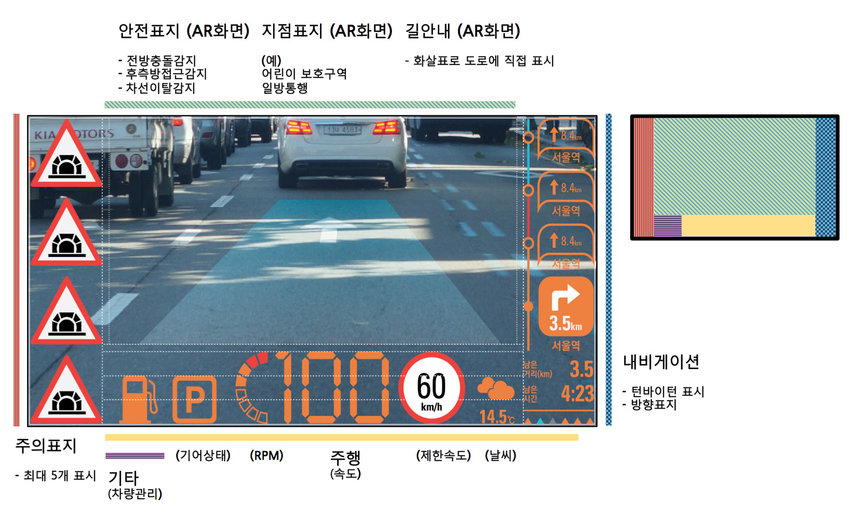
Colour Psychology: Effectively communicating meaning
Colours have a significant impact on how information is perceived and processed. Designers should use colour psychology to communicate meaning effectively:
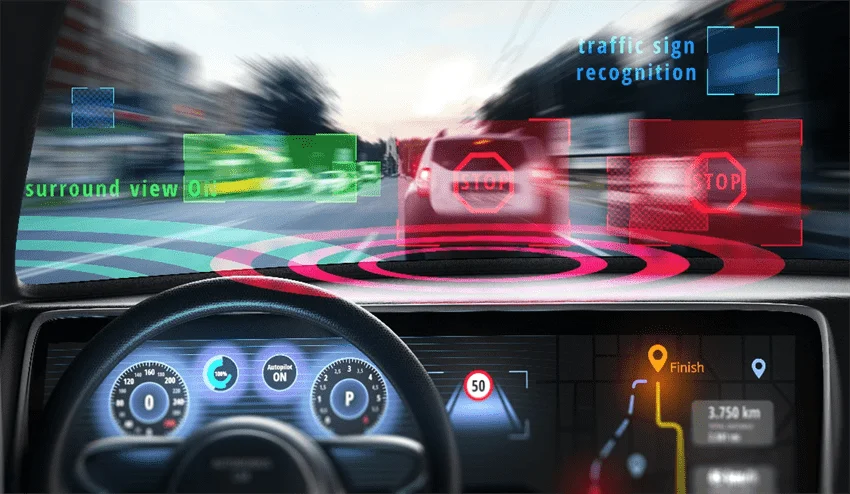
Red for warnings: Red is universally associated with danger or urgency, making it ideal for critical warnings.
Green for safe conditions: Green is calming and associated with safety, suitable for indicators such as cruise control.
Avoid Overuse: Overloading the display with too many colours can confuse the driver; a limited palette improves clarity.

(source: https://x3.xbimmers.com/forums/showthread.php?t=1676121)
Motion dynamics: Capturing attention without distraction
Motion can draw attention to important information, but it must be used judiciously to avoid distraction. Best practices include:
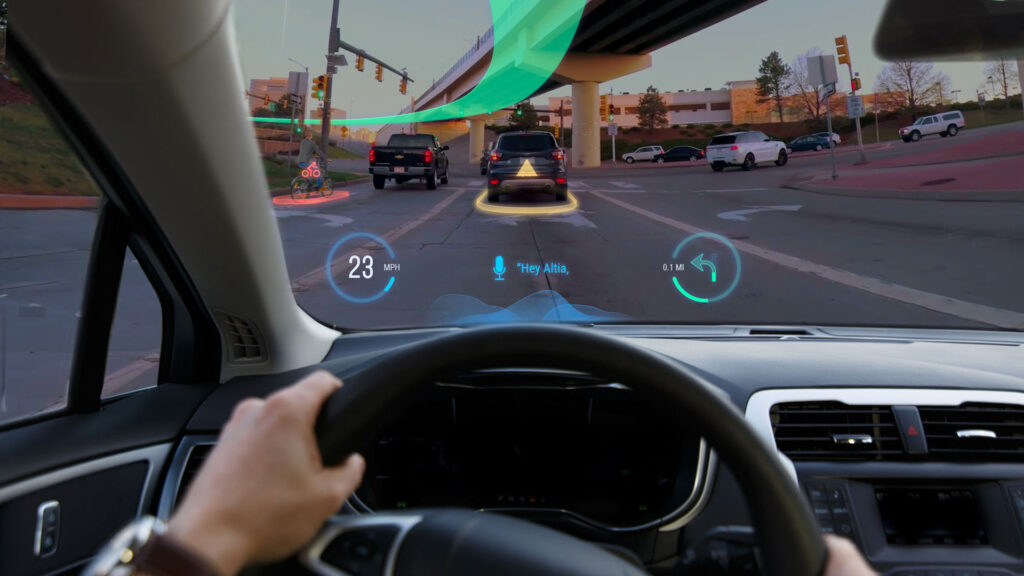
Subtle animations: Using smooth transitions and subtle animations to focus the driver’s attention without overwhelming them.
Directional cues: Using motion to highlight changes, such as an approaching curve or an impending collision warning.
(source: https://www.azooptics.com/Article.aspx?ArticleID=1878)
Real world applications
Leading car manufacturers have incorporated human factors into their HUD designs. For example, some manufacturers use simple layouts and colour-coded warnings to ensure visibility, while others use smooth animations to guide the driver’s attention without distracting.
Understanding human cognitive and perceptual limitations is critical to designing effective HUDs. By focusing on visibility, using colour psychology, and thoughtfully incorporating motion dynamics, designers can create interfaces that enhance safety and usability. As HUD technology evolves, the application of these psychological principles will remain key to minimising driver distraction.
(source: https://altia.com/de/2021/06/01/the-future-of-head-up-displays/)
References:
https://www.azooptics.com/Article.aspx?ArticleID=1878
https://wedesignmotion.com/blog/design/the-psychology-of-color-in-motion-design/
https://www.faa.gov/sites/faa.gov/files/data_research/research/med_humanfacs/oamtechreports/0117.pdf
https://www.tandfonline.com/doi/full/10.1080/00140139.2020.1758348
