At the core of K-Pop’s global success is its ability to create visually appealing, easily recognizable, and memorable identities for its idols and groups. K-Pop styling is carefully planned and coordinated, being an important tool for communicating with the audience. Each comeback, performance, and music video is an opportunity to reinforce the group’s image, update its concept, and reach new audiences through new aesthetics.
Styling is, therefore, the cornerstone of K-Pop branding, as it allows groups to position themselves within the landscape, serve specific target markets, and set their identity in an increasingly globalized entertainment industry.
Fashion as Personal Branding and Group Cohesion
While K-Pop groups often have a cohesive group identity, each member is also encouraged to develop their own individual fashion persona. This balance between individuality and group cohesion is key to the overall success of K-Pop, as fans become emotionally invested not only in the group as a whole but also in the unique characteristics of individual members.
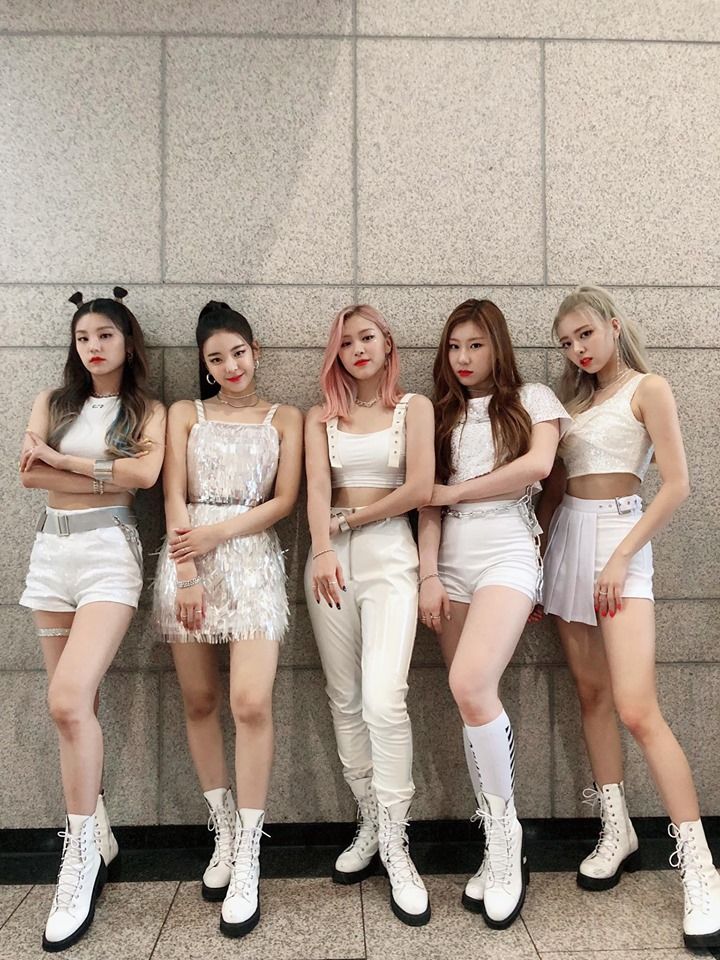
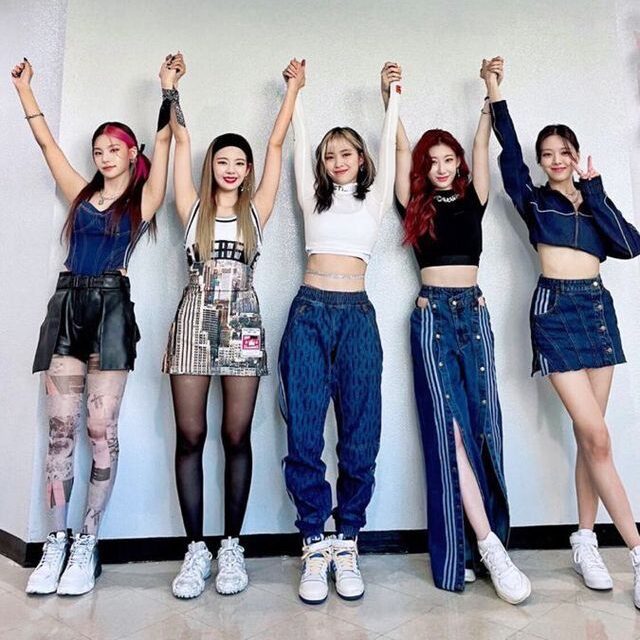
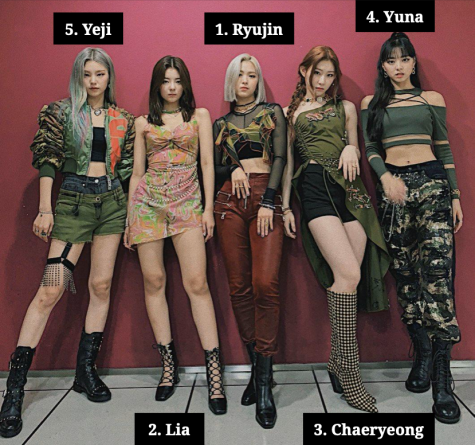
For example, in the case of ITZY, each member has a unique fashion style that mirrors her individual personality and role within the group. Yeji often opts for bold, edgy outfits that reflect her fierce, confident persona, while Lia’s wardrobe leans more towards soft, elegant styles that highlight her graceful and calm nature. This contrast in their styles allows fans to connect with each member on a deeper level, while the group’s overall aesthetic remains unified and dynamic.
ITZY:
left to right: Yeji, Lia, Ryunjin, Chaeryeong, Yuna
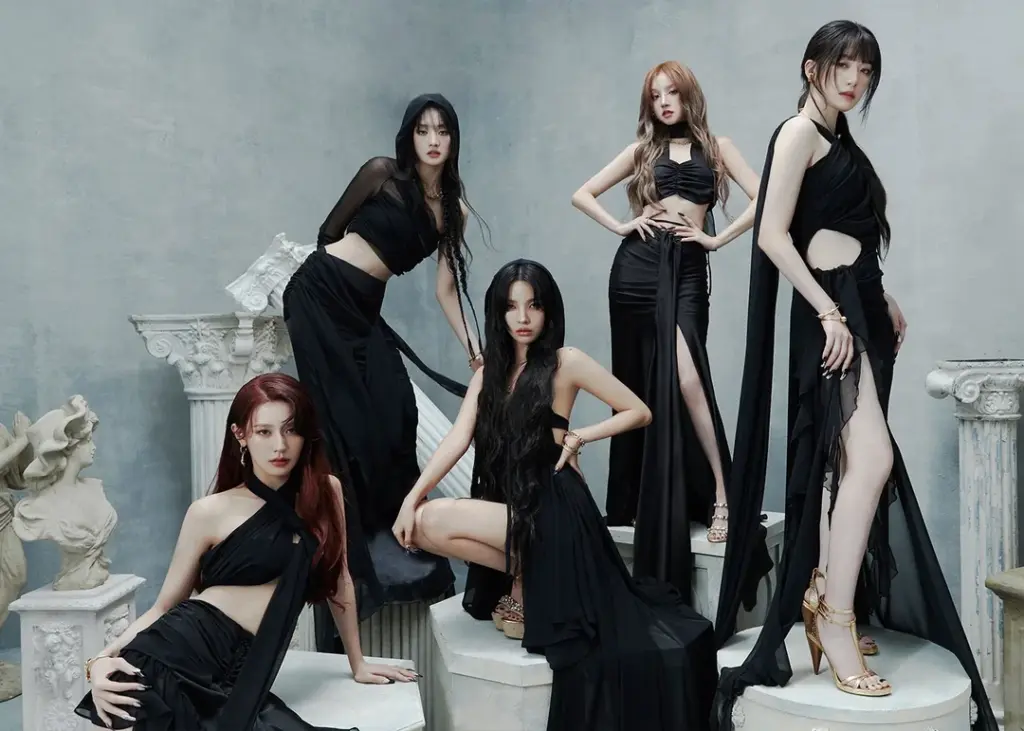
In addition to personal branding, fashion in K-Pop also serves to reinforce the group’s concept. The iconic “power” concept of groups like (G)I-DLE and Twice is reinforced through strong, bold fashion choices—such as leather jackets, studs, and sharp silhouettes—that visually communicate the group’s strength and independence.
(G)I-DLE:
Twice:

Fashion, therefore, becomes a tool for both individual expression and collective identity, creating a balanced narrative that supports both the music and the group’s image.
The Role of Fashion in Fan Culture and Merchandise
K-Pop fans, known for their passionate support, often emulate the fashion choices of their favorite idols, buying merchandise and clothing items associated with the group. This consumer behavior plays a significant role in the dissemination of K-Pop’s visual identity.
For instance, the popularization of certain trends can often be traced back to K-Pop styling. Items such as oversized hoodies, chunky sneakers, and brightly colored hair became popular worldwide after being featured in K-Pop music videos and performances. The rise of “K-Pop fashion” can be attributed to the influence of idols who are often seen wearing streetwear, designer pieces, or collaboration items with well-known fashion houses. Groups like *TWICE* and *Stray Kids* have contributed to making specific trends mainstream, while their fans, known as “K-Pop stans,” frequently purchase merchandise or emulate the style of their favorite idols.
Stray Kids Fashion Inspo:

Twice Fashion Inspo:
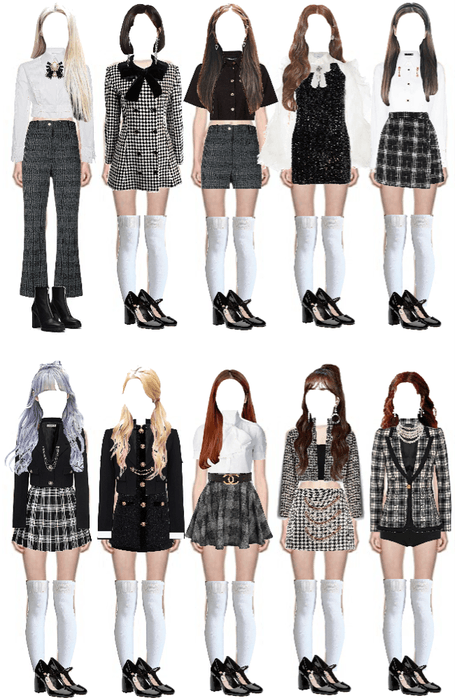
Furthermore, K-Pop’s styling is often inclusive, with a wide range of looks—spanning from hyper-feminine to androgynous, from hip-hop to avant-garde fashion—allowing fans of all gender identities and cultural backgrounds to find a connection to their favorite groups. K-Pop idols, with their diverse styling, encourage self-expression and empower fans to embrace their own individuality.
In this way, K-Pop styling also functions as a tool of identity creation, both for the artists and for their followers. Fans view their favorite idols as representatives of certain ideals, and styling becomes a visual shorthand for these ideals—be it youthfulness, power, luxury, or rebellion.
Conclusion
K-Pop styling is far more than a tool for aesthetics—it is a multifaceted branding mechanism that helps define the identity of both the artists and the industry. Through careful and strategic styling, K-Pop groups are able to create distinct personas, connect with diverse audiences, and influence global fashion trends. Fashion, makeup, and hair in K-Pop are integral to creating memorable, iconic images that resonate with fans and allow groups to maintain relevance in the fast-paced entertainment industry.
In a globalized entertainment landscape where image is everything, K-Pop has mastered the art of styling as a branding tool, proving that visual identity is just as essential as music in building a lasting, influential global presence.
Sources:
Han, S. (2019). Branding K-Pop: The Art of Creating Global Identities. Journal of Global Pop Culture, 7(2), 134-146.
Kim, Y. (2020). Fashion in K-Pop: Identity, Influence, and Global Appeal. Seoul University Press.
Lee, M. (2021). Styling K-Pop: A Study on Fashion’s Role in K-Pop Branding
Kim, Y. (2020). Fashion and K-Pop: The Role of Style in the Globalization of Korean Pop Culture. Seoul University Press.
Jung, E. (2018). The Visual Aesthetics of K-Pop: Fashion, Identity, and Global Influence. Asian Media Studies Journal, 12(3), 45-59.
Lee, M. (2019). K-Pop and Fashion: The Intersection of Music, Art, and Style. K-Pop Industry Review, 8(4), 78-91.
Nam, J. (2021). Fan Culture and Fashion: How K-Pop Influences the Global Fashion Landscape. Global Pop Culture Studies, 16(2), 112-130.
https://medium.com/free-code-camp/what-k-pop-can-teach-us-about-design-6253a85f469c
