– Stray Kids Felix as an Example
The practice of gender fluidity in K-pop boy groups is not just a product of individual styling, it is also a carefully created communicative strategy that challenges traditional gender norms and appeals to a global audience. In the following, it will be explored how K-pop boy groups, with a particular example of Stray Kids’ member Felix, use design principles to communicate and perform gender fluidity. By analyzing Felix’s styling, visuals, and public persona, it will be demonstrated how communication design—through fashion, visuals, and branding—functions as a key tool in creating and discussing fluid representations of gender.
The Role of Communication Design in K-Pop
In K-pop, design elements such as costumes, choreography, stage settings, music videos, and promotional materials work together to construct specific identities and narratives for each idol and group. These elements are carefully designed to communicate not only the group’s music but also their personas, values, and messages to their audience.
When it comes to gender fluidity, K-pop groups like Stray Kids use visual and stylistic choices to send subtle and overt messages about the fluidity of gender expression. This can be seen in the blending of traditionally masculine and feminine aesthetics.
Felix of Stray Kids: Visual Communication of Gender Fluidity
Felix’s role within Stray Kids offers a compelling example of how gender fluidity in K-pop is shaped. His styling, makeup, and stage presence are strategically constructed to convey an image that transcends conventional gender roles.
Stray Kids Felix:
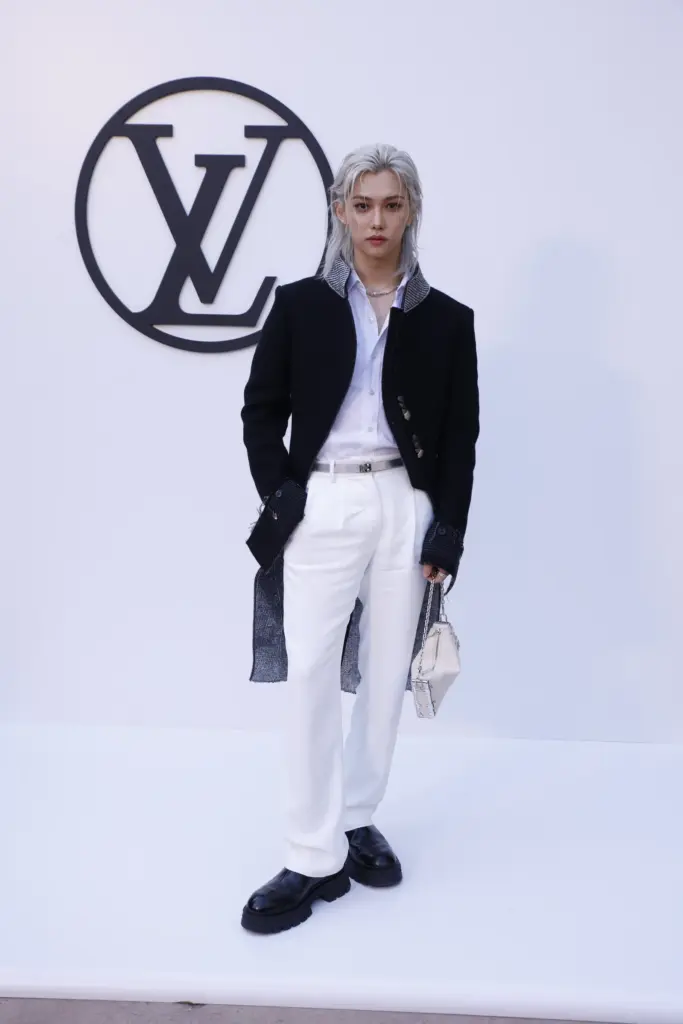

1. Fashion as Semiotic Communication
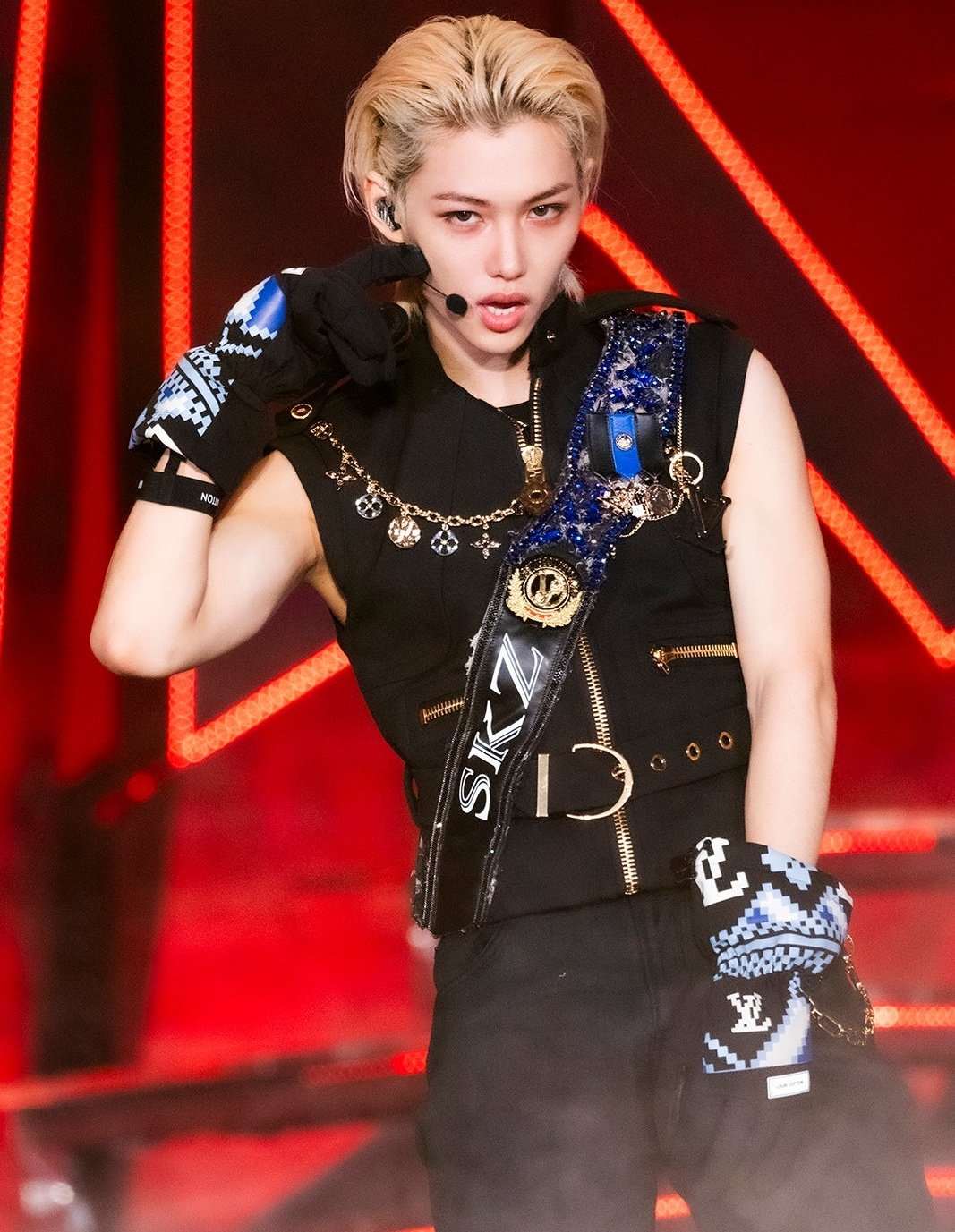
Fashion in K-pop is more than just a form of self-expression: it is a communicative tool designed to signal specific messages to the audience. In Felix’s case, his fashion choices blend masculinity with femininity, challenging the norms of male idol styling. By wearing flowing fabrics, skirts, makeup, long hair, and accessories typically associated with femininity, Felix’s image communicates gender fluidity while maintaining a sense of power and assertiveness – especially through his remarkable deep voice.
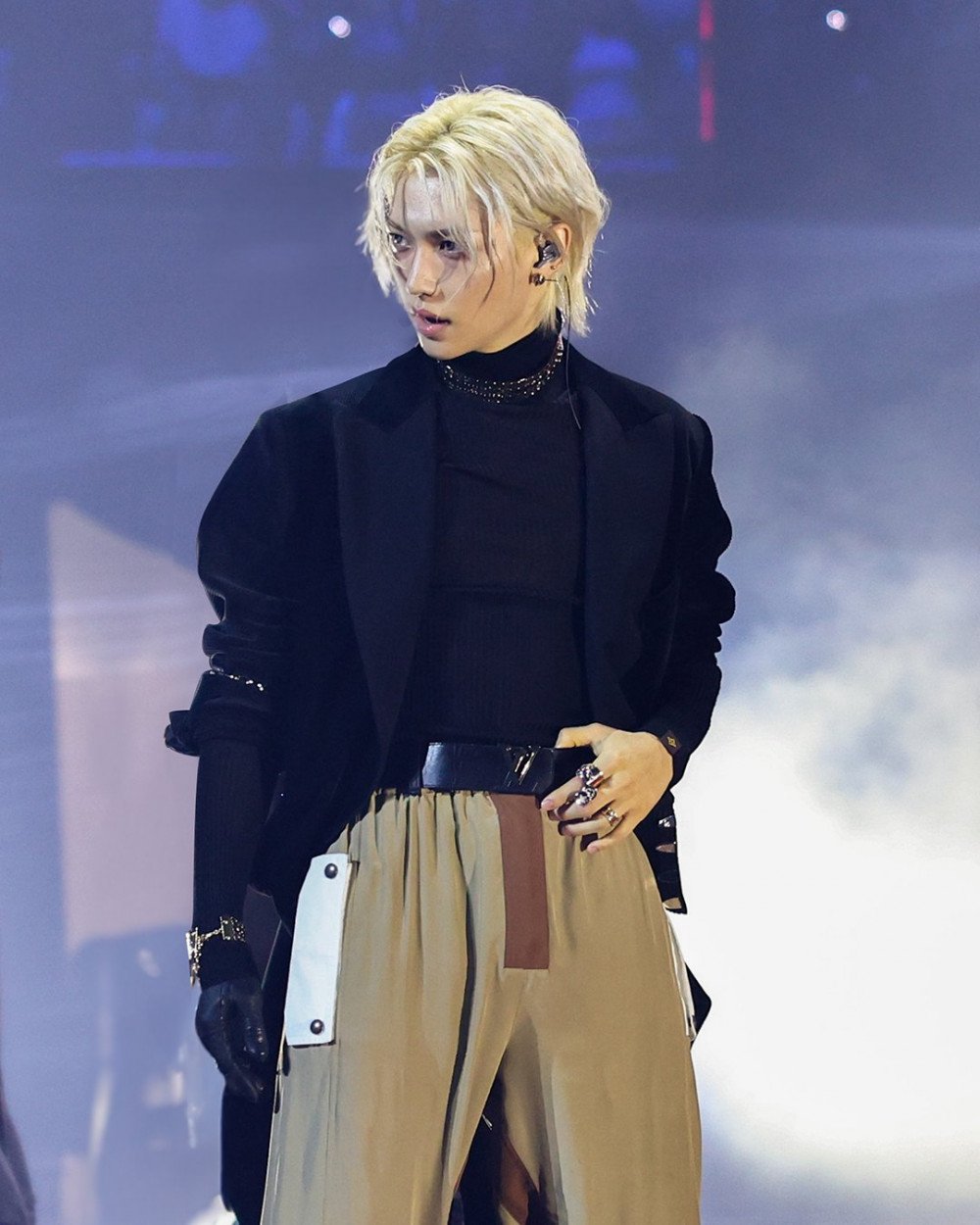
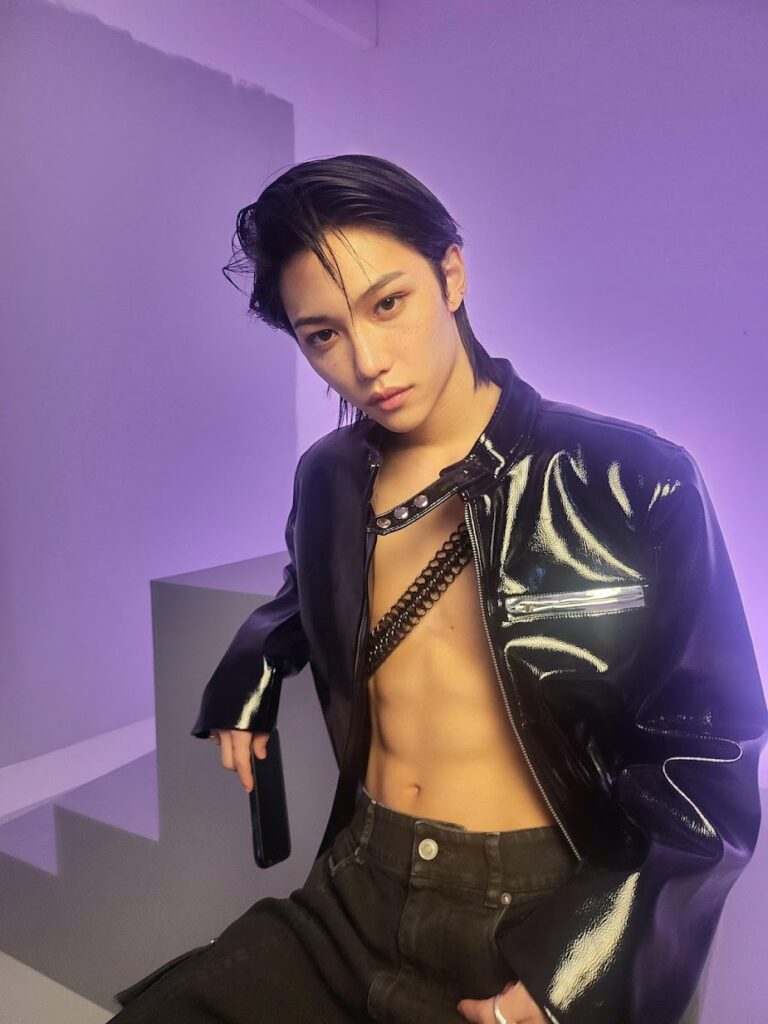
Design Semiotics: Felix’s fashion choices, like wearing pastel-colored shirts or fancy details, can be read as signifiers of gentleness, tenderness, or vulnerability. In contrast, more structured clothing, dark colors, and sharp cuts signify strength, confidence, and control.
Color Palette: Color plays a significant role in gendered communication. In the K-pop industry, colors like pink or lavender are often considered feminine, while black or deep red might be linked to masculinity. Felix’s wardrobe often mixes these contrasting colors—such as pairing pink with darker shades—which reinforces the message that masculinity and femininity are not opposing categories but can coexist in a single individual.
Felix traditionally more feminine representing:


Felix mixing traditionally more feminine AND masculine elements:


Felix traditionally more masculine representing:

2. The Branding and Visual Identity of Stray Kids
Beyond Felix’s individual styling, Stray Kids as a group employs visual design strategies to create a collective identity that embraces gender fluidity. In their music videos, promotional materials, and live performances, the group often uses androgynous aesthetics—unisex outfits, bold makeup, and fluid expressions of masculinity and femininity. The overall visual identity of Stray Kids communicates a message that aligns with inclusivity, where gender is not an obstacle but a space for creative expression.
Branding and Marketability: The visual branding of Stray Kids has been designed to appeal to a diverse global fanbase that includes individuals across the gender spectrum. Branding is not just about selling products but also about promoting an identity that resonates emotionally with consumers. Stray Kids’ embracing of fluid gender representations can be seen as a conscious effort to cultivate a brand that values self-expression, individualism, and inclusivity, which are key themes in the global conversations surrounding gender today.
The Impact of Visual Design on K-Pop Audiences
The design choices made by K-pop groups like Stray Kids have profound implications for their audience. By challenging traditional gender norms through styling, performance, and media presentation, K-pop idols create a visual language that communicates new possibilities for gender expression. This language speaks not only to fans within South Korea but also to a global audience, where conversations around gender fluidity are becoming more mainstream.
Conclusion
The visual and performative strategies employed by K-pop boy groups, particularly Felix of Stray Kids, highlight the important role of communication design in reshaping societal norms around gender. Using fashion, color, choreography, and branding, Felix embodies a fluid approach to gender identity, communicating new possibilities for self-expression and challenging the traditional boundaries of masculinity and femininity. By integrating gender fluidity into their visual strategies, K-pop groups provide both an aesthetic and a social commentary, promoting a global dialogue about the fluidity of gender in contemporary society. In this way, visuality not only shapes the public image of K-pop idols but also contributes to broader cultural and societal shifts towards more inclusive representations of gender.
Sources:
https://www.koreatimes.co.kr/www/art/2024/11/398_312285.html
https://research.library.fordham.edu/cgi/viewcontent.cgi?article=1106&context=international_senior
https://www.tatlerasia.com/lifestyle/entertainment/gender-neutral-androgynous-fashion-kpop
https://www.tandfonline.com/doi/abs/10.1080/14680777.2021.2006259
Kwon, H. J. (2017). K-Pop and the Globalization of Korean Popular Culture. Journal of Asian Studies, 76(2), 323-348.
Kang, H. (2020). The Androgynous Aesthetic in K-Pop: Gender Fluidity and Identities in the Performances of Korean Pop Stars. Media, Culture & Society, 42(6), 978-994.
Cho, H. (2021). Transcending Gender: The Visual and Performative Strategies of K-Pop Boy Groups. Asian Journal of Communication, 31(5), 513-531.
Choi, S. (2019). Fashion and Identity in K-Pop: The Role of Style in the Construction of Masculine Identities. Fashion Theory, 23(4), 489-514.
Song, J. (2022). Gender Fluidity in K-Pop: The Case of Stray Kids Felix. Global Music and Gender Studies, 8(3), 142-159.
