Whether we’re scrolling through TikTok, sharing moments on Instagram, or firing off texts and emails, our days are filled with digital interactions. These actions feel easy and harmless, but they carry an environmental cost many of us overlook. By understanding the true cost of our digital habits, we can take small, informed steps toward reducing our online carbon footprint.
Which age group has the biggest impact?
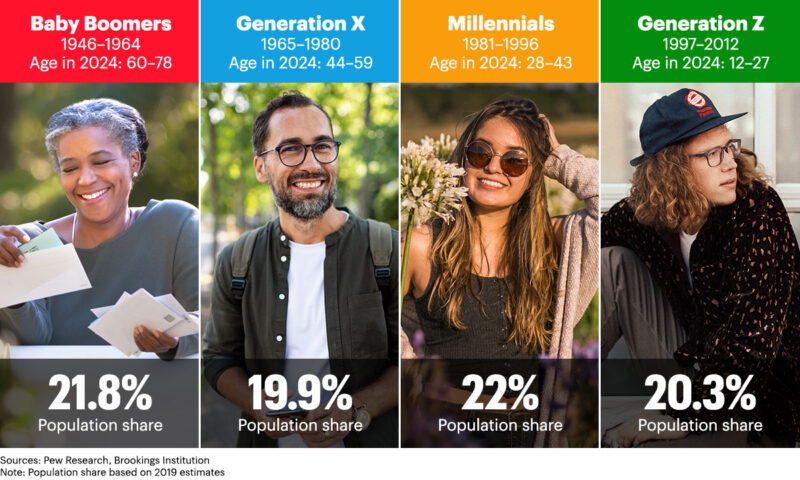
While all age groups contribute to the digital carbon footprint, it’s no surprise that Gen Z has the largest impact. Individuals aged 18-24 send an average of 124 text messages per day, which results in 652.3 grams of CO2 annually. This is roughly equivalent to a 5 km car ride! In comparison, older age groups, like those aged 55 and above, produce significantly fewer emissions. It’s important to recognize that while younger generations are the most active digital consumers, their habits also present an opportunity for change. [1]
The Environmental Impact Of “Doom Scrolling”
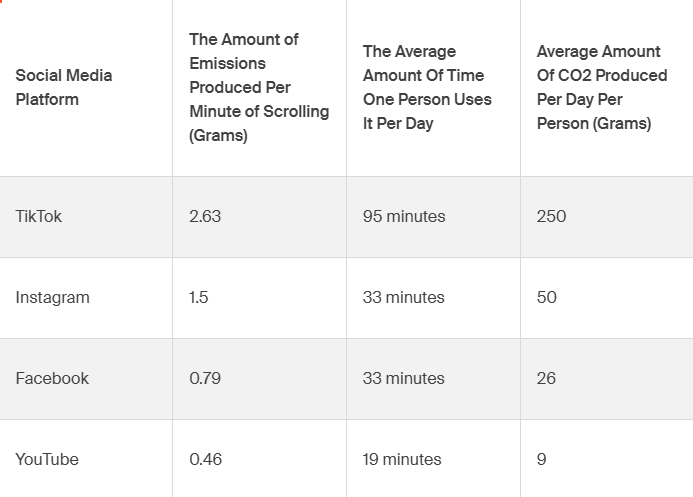
Social media platforms like TikTok and Instagram are part of daily life for billions of people. However, each minute spent scrolling contributes to a significant carbon footprint due to the energy consumption of the data centers that power these platforms. TikTok, for instance, emits 2.63 grams of CO2 per minute of use. With an average user spending 95 minutes per day on the app, this results in over 250 grams of CO2 daily, which is comparable to driving a car for 4 km. [1]
Which social media platforms produce the most emissions?
Not all social media platforms have the same environmental impact. TikTok leads the way in terms of emissions, as its video-heavy content consumes more data and energy. On average, TikTok emits 2.63 grams of CO2 per minute of use. Instagram follows closely behind, with its visual-based content requiring significant data storage. Platforms like Facebook and YouTube also contribute heavily due to their massive user bases and video streaming services, making them some of the most energy-intensive platforms to use.
“To put this even more into perspective, air travel emits around 133 grams of CO2 per mile per passenger for short-haul flights. So, doom-scrolling for one day equates, on average, to the same emissions for about seven passengers per mile on one of these flights.[1]”
The Environmental Impact Of Mindless Texts And Emails
Even sending a simple “LOL” or a quick “OK” by text adds up. In the U.S., the average person sends 61 texts per day, and each message emits 0.014 grams of CO2. Over a year, this equates to 310 grams of CO2, or the same as charging your phone 32 times. Similarly, sending work emails can have a surprisingly large environmental cost. On average, each email contributes about 2 grams of CO2, leading to over 2,000 grams per year.[1]
Resources:
[1] Cody Slingerland, Tech Carbon Footprint: How Much Does Online Activity Contribute To Emissions? https://www.cloudzero.com/blog/tech-carbon-footprint
